
Executive Overview
The contemporary jazz landscape is undergoing a vibrant resurgence, marked by a fascinating juxtaposition of timeless, acoustic intimacy and sprawling, boundary-pushing avant-garde orchestration. In this comprehensive review and industry analysis, we examine three major recent releases that are capturing the attention of critics and aficionados alike.
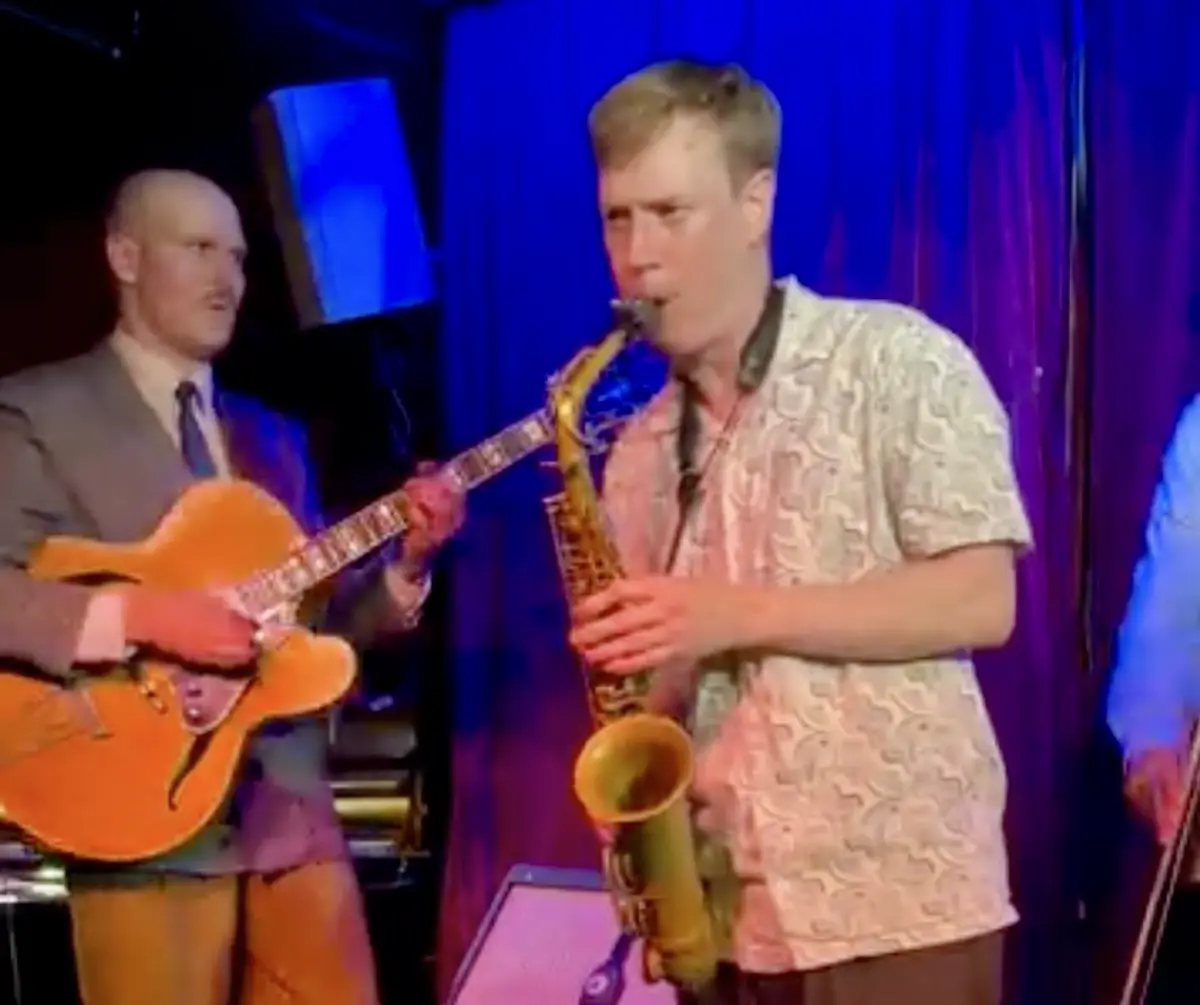
First, we explore A Sinner Kissed An Angel (Fresh Sound Records FSR-CD 514), the fourth full-length album from London-based alto saxophonist Sam Braysher, crafted alongside German-born guitar virtuoso Linus Eppinger, veteran Dutch drummer Eric Ineke, and American-French bassist Darryl Hall. Recorded over a compressed yet intensely collaborative three-day schedule in Utrecht, Braysher’s latest offering is a masterclass in classic, unhurried, hard-bop-adjacent small-group jazz that feels effortlessly rooted in the tradition of the past half-century.
Conversely, the tireless Japanese pianist, composer, and bandleader Satoko Fujii is dominating the large-ensemble sphere with a prolific output designed to recapture momentum lost during the global pandemic. We examine two distinct pillars of this orchestral wave: Live at Bunker Ulmenwall (Libra Records 218-083), a newly rediscovered 2014 live recording captured inside a converted World War II air-raid shelter in Bielefeld, Germany, and After The Storm (Libra Records 215-084), a brand-new, studio-crafted suite recorded in Kobe, Japan.
Together, these releases present a striking portrait of modern jazz: one half anchored in the sublime swing and relaxed rapport of a pick-up international quartet, and the other driven by the monumental, visionary architectures of modern large-scale compositions.
Detailed Chronology
The Utrecht Sessions: Sam Braysher & Linus Eppinger’s Rapid Ascent
The genesis of Sam Braysher and Linus Eppinger’s A Sinner Kissed An Angel is a testament to the telepathic communicative powers of seasoned jazz instrumentalists. Braysher, an established voice on the London scene, chose to front an international quartet for his fourth album. He brought in his long-standing collaborator Linus Eppinger—a guitarist originally from Germany now operating out of Amsterdam—alongside veteran Dutch percussionist Eric Ineke. The lineup was completed by American-born, France-resident bassist Darryl Hall, a player previously known primarily to Eppinger.
Following a brief introductory run of live performances in The Hague and Amsterdam, the quartet coalesced with remarkable speed. With only three days of collective experience under their belts, they entered a studio in Utrecht. Due to the minimal rehearsal time, complex charts were sidelined in favor of an organic, spontaneous approach that captured the relaxed, in-the-moment chemistry they had forged on stage.
The record opens with an easy, swinging rendition of A Smooth One (traditionally attributed to Benny Goodman or Charlie Christian). Braysher’s characteristically oblique phrasing is beautifully counterbalanced by Eppinger’s lilting, articulate guitar lines. The album traverses a diverse and thoughtfully curated tracklist: a groovy, blues-tinged homage to pop icon Dusty Springfield via Spooky; Vernon Duke’s Roundabout, taken at a heart-wrenchingly slow tempo; Horace Silver’s hard-bop workout Route 608 (listed as Room 608); and the exquisite title track, A Sinner Kissed An Angel, originally immortalized by a young Frank Sinatra with Tommy Dorsey’s Orchestra in 1941. The session concludes with a guitar-forward, mid-tempo interpretation of Charlie Parker’s Relaxing At Camarillo.
The Bielefeld Archival Discovery: Satoko Fujii’s Bunker Ulmenwall Orchestra
Moving from the intimate environs of Utrecht to the cavernous acoustics of a converted WWII air-raid shelter, we find one of the most remarkable archival excavations of recent years. Long-time concert promoter Wolfgang Gross, sorting through his personal archives, rediscovered a pristine live recording from November 22, 2014, featuring Satoko Fujii’s Bunker Ulmenwall Orchestra in Bielefeld, northwest Germany.
Gross sent the tape to Fujii, who was immediately struck by the vitality of the performance. "I was amazed at how beautifully we played, and with so much energy," Fujii remarked. Gross’s curatorial vision for the evening had been distinct: rather than assembling a purely professional touring ensemble, he purposefully integrated local music students into the lineup, empowering the younger generation to contribute original compositions and take the conductor’s podium.
The resulting double-album captures a sprawling musical journey. Disc One is entirely dedicated to Shiki, one of the most monumental architectural works in Fujii’s extensive catalog. Beginning as a subtle, quiet drone, the piece gradually builds in urgency, punctuated by intense drum duets, searing trumpet and saxophone solos, and a sparkling, aggressive piano solo from Matthias Klause. Disc Two showcases the multi-faceted talents of the orchestra’s resident writers: bass saxophonist Andreas Kaling conducts his riff-heavy, rock-infused Yamantaka (featuring a standout guitar performance by Lucy Liebe); trumpeter Natsuki Tamura offers the serene, structurally unique soundscapes of Jasper; alto saxophonist Luise Volkmann contributes the restless Antischwarm; and Fujii herself brings proceedings to a close with the celestial, meditative beauty of Gen Himmel.
The Kobe Manifestation: After The Storm
Hot on the heels of the Bunker Ulmenwall archival release comes a brand-new studio recording from Kobe, Japan. Unlike the Bielefeld performance, After The Storm was meticulously tracked in a studio environment from its inception, purposefully engineered to capture a definitive, studio-grade execution of Fujii’s post-pandemic vision.
Written as a four-part suite, After The Storm reflects Fujii’s emotional and philosophical processing of the COVID-19 pandemic. "I was dreaming that the world would finally find complete peace after the pandemic… I was dreaming we would have no war, no weapons, no violence," the pianist explained. Though global realities did not align with her utopian vision, she felt a profound artistic imperative to record this message of hope.
The suite unfolds in striking contrasts:
- Part 1: Opens with a stately, contemplative solo-bass theme before expanding into a glowing statement from trombonist Yuichiro Tamagaki, which subsequently erupts into a full-throated, abrasive tenor saxophone solo by Tsutomu Takei, backed by guitarist Takumi Seino.
- Part 2: Embraces a more radical, improvised framework, where individual soloists detach from and reintegrate into the orchestral body in a fluid, abrasive narrative.
- Part 3: Builds into a massive, shimmering wall of sound, anchored by Natsuki Tamura’s molten trumpet lines.
- Part 4: Concludes the suite on a surprisingly jaunty, upbeat note, culminating in a high-voltage guitar solo and a triumphant, star-burst ensemble finale.
Supporting Context & Metrics
To fully appreciate the scope of these releases, one must examine the quantitative and qualitative metrics defining their production, distribution, and historical placement within the global jazz ecosystem.
| Release Title | Artist / Ensemble | Primary Label | Format | Recording Date | Key Geographic Hubs |
|---|---|---|---|---|---|
| A Sinner Kissed An Angel | Sam Braysher & Linus Eppinger | Fresh Sound Records (FSR-CD 514) | CD (52:04) | 2025 (Estimated) | London, Amsterdam, Utrecht |
| Live at Bunker Ulmenwall | Satoko Fujii’s Bunker Ulmenwall Orchestra | Libra Records (218-083) | 2-CD Set (87:17 total) | November 22, 2014 | Bielefeld, Germany |
| After The Storm | Satoko Fujii Orchestra Kobe | Libra Records (215-084) | CD (57:17) | February 5, 2026 | Kobe, Japan |
Analytical Breakdown of Small-Group vs. Large-Ensemble Mechanics
While Braysher and Eppinger’s quartet recording relies on the minimalist subtraction of complex arrangements in favor of spontaneous, pocket-driven groove chemistry, Fujii’s orchestral work relies on maximalist collective discipline.
In the Braysher/Eppinger session, the rhythm section functions with metronomic precision mixed with subtle invention. Eric Ineke’s veteran cymbal work provides a plush, pillow-like bed for the front-line horns and strings, while Darryl Hall’s bass provides a grounding anchor. The resulting 52-minute runtime feels timeless, deliberately sideward-glancing at 1950s and 1960s small-group aesthetics without falling into the trap of mere pastiche.
Conversely, Fujii’s orchestral projects—representing her 24th and subsequent orchestral statements—push the boundaries of contemporary creative music. By blending seasoned improvisers with developing student musicians (as seen in Bielefeld) or highly synchronized regional professionals (as seen in Kobe), Fujii establishes a democratic hierarchy. Soloists are not merely executing changes over a static vamp; they are active agents in a shifting theatrical landscape where silence, drone, and cacophony hold equal weight.
Official Statements & Artistic Intentions
The creative motivations behind these releases offer deep insight into the mindset of modern jazz luminaries navigating post-pandemic realities and cross-cultural collaborations.
Sam Braysher on the Quartet’s Chemistry:
Though formal quotes from the sessions emphasize the organic nature of the group’s formation, critics have widely noted how the lack of rehearsal paradoxically heightened the artistic success of A Sinner Kissed An Angel. The quartet’s commitment to capturing the relaxed, unhurried atmosphere of their initial live shows in the Netherlands translated into a session characterized by what reviewers term "well-behaved elegance" and an almost uncanny timelessness.
Satoko Fujii on the Genesis of After The Storm:
Reflecting on the emotional core of her four-part Kobe suite, Fujii articulated a profound yearning for global harmony:
"I was dreaming that the world would finally find complete peace after the pandemic… I was dreaming we would have no war, no weapons, no violence. Even though the world did not turn out that way, I wanted to record this music as a testament to hope and human resilience through collaborative sound."
Promoter Wolfgang Gross on the Rediscovery of the Bunker Ulmenwall Tapes:
Gross, reflecting on the 2014 live performance that sat dormant in his archives for over a decade, underscored the educational and cultural value of integrating young musicians into vanguard orchestral settings:
"We wanted to create an environment where local music students could sit shoulder-to-shoulder with masters of the craft, not just to learn, but to author the very language of the evening through original composition and leadership."
Future Outlook
The release of these three distinct albums signals a hyper-productive period for both the European small-group circuit and the global avant-garde orchestral community.
For Sam Braysher and Linus Eppinger, A Sinner Kissed An Angel establishes a winning blueprint for transnational jazz collaboration. By prioritizing stylistic accessibility, historical reverence, and instantaneous rapport, the quartet proves that traditional small-group jazz still holds vast territories for fresh, unforced expression. Industry insiders anticipate further touring dates across the UK, Netherlands, and Germany as the album gains traction among traditionalist and modern mainstream audiences alike.
Meanwhile, Satoko Fujii’s release schedule is nothing short of staggering. Live at Bunker Ulmenwall and After The Storm are merely the opening salvos in a massive 2026 release campaign. Fujii has confirmed plans to issue three additional orchestral albums recorded in Berlin, Nagoya, and Tokyo by early November. This unprecedented wave of documentation highlights her indefatigable creative drive and cements her status as one of the most important large-ensemble architects of the 21st century.
As listeners digest these works—ranging from the gentle, brush-stroked elegance of Never Let Me Go to the towering, rock-guitar-laced architectural marvels of Yamantaka and Shiki—it is abundantly clear that jazz remains a genre of boundless elasticity. Whether through the quiet intimacy of a Utrecht studio or the thundering resonance of a German air-raid shelter turned jazz sanctuary, the art form continues to thrive on courage, collaboration, and an unwavering commitment to the present moment.