
Executive Overview
In the quiet corners of jazz history lie figures whose contributions shaped the trajectory of global music, yet whose names have faded from the mainstream consciousness. Amancio D’Silva is one such luminary. A virtuoso guitarist of the late 1960s and early 1970s, D’Silva was a trailblazer of what critics and historians came to label "Indo-Jazz"—an organic, genre-defying fusion of traditional Indian modal structures and the improvisational freedom of modern Western jazz. For D’Silva, however, such rigid stylistic categorizations were secondary. To him, there was only jazz: an infinite spectrum of human expression, shaped by distinct cultural voices and driven by raw emotional authenticity.
Today, D’Silva’s red Fender Stratocaster sits silently in the corner of a Hampshire living room, resting near a CD player. A near-fatal stroke in 1991 abruptly halted his active performance career, silencing an instrument that had once added a revolutionary voice to the British jazz renaissance. Yet, despite the physical challenges of a long and courageous recovery, D’Silva’s presence remains vibrant. Supported by Joyce, his wife of over thirty years, he continues to cast a long shadow over the generations of musicians he influenced as both a composer and an educator.
This retrospective examines D’Silva’s remarkable journey: from the thriving, cosmopolitan jazz clubs of mid-century Bombay to the avant-garde smoky venues of London; his legendary collaborations with British jazz titans such as Joe Harriott and Stan Tracey; his deep-rooted philosophy on the soul of jazz; and his enduring legacy as a rare, unheralded architect of cross-cultural musical dialogue.
Detailed Chronology
Roots in Bombay: The Cradle of a Musical Awakening
Amancio D’Silva’s relationship with the guitar began during his childhood in India, a period marked by a surprisingly vibrant and sophisticated mid-century jazz scene. Far from being isolated from Western artistic developments, cities like Bombay were bustling hubs where international touring acts converged with local talent.
During the 1950s and 1960s, Bombay hosted a "jazz week" every two to three months, drawing legendary performers from across the globe. D’Silva vividly recalls the visits of jazz royalty to the annual festival known as the Jazz Yatra (Jazz Pilgrimage). Luminaries such as Duke Ellington—operating globally as a cultural ambassador for American music—alongside the late Paul Desmond and Dave Brubeck, brought world-class improvisation directly to Indian audiences.
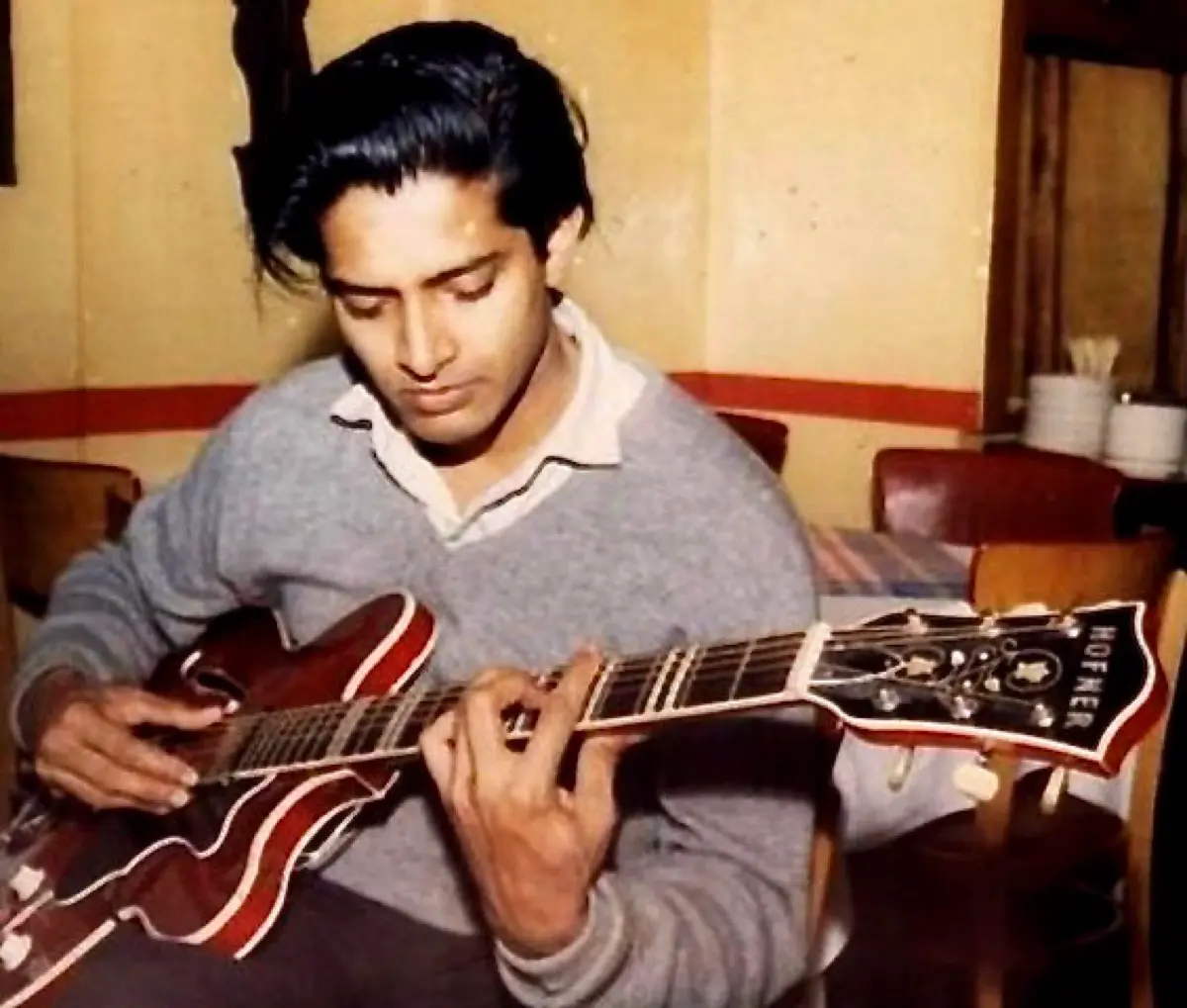
By the age of twenty-five, D’Silva had cultivated such an formidable reputation as a young gunslinger on the guitar that he caught the attention of the Maharani of Jaipur, a passionate connoisseur of jazz. Recognizing his immense potential, the Maharani became his early benefactor.
"I wrote a song on my first record. I called it Jaipur," D’Silva recalls with fondness. "She was a very good benefactor. She bought me a good guitar and she bought a lot of jazz records so I could hear the music."
During these formative years, D’Silva absorbed the styles of American jazz masters. His greatest early influence was Charlie Christian, whom D’Silva notes as the pioneer who brought the electric guitar to the forefront of jazz. Christian’s brief, meteoric tenure in the Benny Goodman Band—playing on hits like Flying Home and Seven Come Eleven before his tragic death from tuberculosis at a young age—left an indelible mark on D’Silva’s approach to the fretboard. Other foundational influences included melodic improvisers such as Wes Montgomery, Johnny Smith, Barney Kessel, Jim Hall, and Kenny Burrell.
A Twist of Fate: Relocation to the United Kingdom
A nearly tragic personal turn of events precipitated D’Silva’s migration to England. In India, he had met and married Joyce, who was working in the country as a teacher. Shortly after the birth of their son, Stephano, the infant fell gravely ill, necessitating emergency medical evacuation to Britain for specialized pediatric treatment.
Fortunately, Stephano made a full recovery, growing up to become an accomplished guitarist in his own right. Choosing to remain in England, D’Silva was introduced through a mutual friend to writer and director Jonathan Miller, who served as a vital bridge into the British jazz ecosystem. Miller connected D’Silva with the late Denis Preston, an influential record producer renowned for his work with progressive jazz artists. Preston immediately recognized D’Silva’s unique talent, facilitating the guitarist’s integration into London’s creative circles and setting the stage for landmark artistic collaborations.
The London Years and Critical Acclaim
D’Silva’s arrival in London coincided with a period of intense experimentation in British jazz. In 1969, he released his debut album, Integration – Introducing Amancio D’Silva (Columbia/EMI), which immediately turned heads across the European jazz community.
Writing in Jazz Monthly upon the album’s release, critic Don Locke captured the essence of D’Silva’s groundbreaking artistry:
"Just as Reinhardt was a gypsy playing his special brand of jazz, so Amancio D’Silva is an Indian playing his special brand of jazz, and in each case the music is distinctive and successful to the same degree…"
Unlike many session players of the era, D’Silva’s distinctiveness lay equally in his formidable skills as a composer. His recordings from this period—including the 1969 masterwork Hum Dono recorded with the Joe Harriott Quartet, and Reflections (1971), a sublime collaboration with pianist Stan Tracey—consisted predominantly of his own original compositions. These works married the complex, polyrhythmic cadence of Indian classical traditions with the harmonic sophistication of modern post-bop jazz.
Mentorship and Educational Legacy
Though illness eventually curtailed D’Silva’s active performance career, his contributions to the development of jazz pivoted toward education and mentorship. He dedicated substantial energy to nurturing up-and-coming young musicians, finding a home at Jenako Arts—an East London cultural center that served as an essential nexus for jazz and traditional artists from Africa, Asia, and South America during the 1980s.
D’Silva later continued his pedagogical work at the Krishnamurti International School at Brockwood Park, located near his home in Hampshire. By passing on his technical mastery, listening philosophy, and improvisational ethos to a new generation, D’Silva ensured that the spirit of cross-cultural musical exploration would endure long after he stepped away from the stage.
Supporting Context & Metrics
The Extinction of a Discography: A Rare Heritage
Today, tracking down Amancio D’Silva’s recorded output is an exercise in archaeological patience for collectors and jazz historians. None of his foundational albums remain actively in print, rendering physical pressings highly sought-after artifacts of a golden era in British jazz fusion.
+-----------------------------------------------------------------------------------------+
|                                AMANCIO D'SILVA DISCOGRAPHY                              |
+-----------------------------------+-----------------------------------+-----------------+
| Album Title                       | Collaborators / Key Artists       | Release Year    |
+-----------------------------------+-----------------------------------+-----------------+
| Integration – Introducing...      | Solo / Ensemble                   | 1969            |
| Hum Dono                          | Joe Harriott / Amancio D’Silva    | 1969            |
| Jazz Explosion (Comp.)            | Various Artists                   | 1969            |
| Reflections                       | Amancio D’Silva / Stan Tracey     | 1971            |
| Dream Sequence                    | Cosmic Eye                        | 1972            |
+-----------------------------------+-----------------------------------+-----------------+
As illustrated above, D’Silva’s core recorded legacy spans a tight, highly productive window from 1969 to 1972. Albums like Cosmic Eye: Dream Sequence (1972) further pushed the boundaries of psychedelic and spiritual jazz, blending eastern mysticism with western instrumentation long before "world music" became a recognized commercial category.
Anatomy of a Genius: Working with Joe Harriott
Among D’Silva’s myriad collaborations, none looms larger than his work with the legendary Jamaican-born alto saxophonist Joe Harriott, a pioneer of Indo-Jazz fusion in his own right. Reflecting on Harriott’s enigmatic genius, D’Silva speaks with reverence:
"Joe was not from this planet."
D’Silva recalls the rigorous preparation behind their performances. While the band would spend an entire week intensely rehearsing complex arrangements, Harriott would routinely arrive merely fifteen minutes before showtime, lock himself away in a room to concentrate entirely on the music, and then step onto the stage to deliver an astonishing performance—playing with the flawless cohesion of someone who had practiced alongside them every single day. In the recording studio, Harriott possessed the uncanny ability to nail complex tracks to absolute perfection in a single take.
Yet, this image of an other-worldly musical titan stands in sharp contrast to Harriott’s private persona. Far from the hostile, brooding avant-garde stereotype often projected onto him by observers, Harriott was deeply warm and humane. "He was so good with children… with his own and mine," D’Silva notes. "Some people thought he was hostile. No way!"
Enduring Partnerships
Beyond Harriott, D’Silva forged lifelong bonds within the British jazz fraternity. His 1971 collaboration with pianist Stan Tracey on Reflections cemented a friendship that weathered decades, providing critical emotional support through life’s triumphs and trials—not least of which was Tracey standing by D’Silva during his stroke recovery. Furthermore, D’Silva maintained a prolific, long-standing association with horn player Ian Carr and bassist Dave Green, both of whom anchored the rhythmic and melodic architecture of his studio sessions.
Official Statements & Philosophy
The Soul Versus Technique: A Critique of Modern Jazz
Despite stepping back from the active touring circuit, Amancio D’Silva remains an acute, uncompromising observer of the contemporary jazz landscape. While he acknowledges the emergence of technically brilliant young players, his perspective is tempered by a critical philosophy regarding the evolution of the genre.
In D’Silva’s view, modern jazz has drifted perilously close to the sterile perfection of classical music, sacrificing emotional resonance in pursuit of sheer mechanical dexterity:
"Technically today we are miles ahead, but . . . no feeling. Why do they have to go play jazz? These people are playing classical music. Jazz is something from the heart."
This statement encapsulates D’Silva’s core artistic creed. To the Indo-Jazz pioneer, the true currency of jazz is not speed, complexity for its own sake, or academic execution; rather, it is the unfiltered expression of human experience, identity, and raw emotion channeled directly through improvisation.
Future Outlook
As the decades press forward, the imperative to preserve, archive, and properly contextualize the contributions of first-generation fusion pioneers like Amancio D’Silva becomes increasingly urgent. With his physical archive resting quietly in Hampshire—comprising rare test pressings, unreleased tapes, and the silent red Stratocaster—there is a growing call among contemporary jazz historians, record labels, and cultural institutions to remaster and reissue his out-of-print catalog.
D’Silva’s legacy demonstrates that cross-cultural collaboration in music is not a modern marketing construct, but a deep, spiritual lineage forged by artists willing to cross geographical and stylistic borders. While the physical toll of his 1991 stroke silenced his personal performances, the seeds he planted across Bombay, London, and the classrooms of Hampshire continue to bloom. Amancio D’Silva remains a towering reminder that when music comes from the heart, its resonance transcends time, borders, and definitions.