

Executive Overview
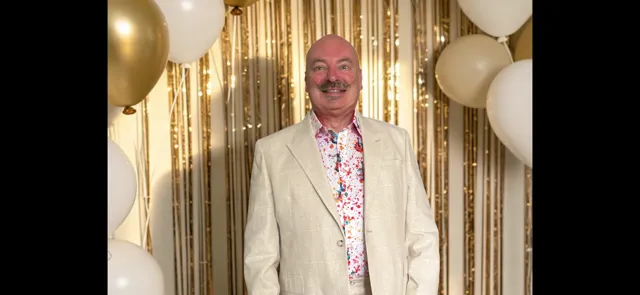
In a striking fusion of the visual and performing arts, the LA Opera has officially announced a major artistic commission for its upcoming 2026–27 season. Cuban-born, Los Angeles-based artist and academic Enrique Martínez Celaya has been tapped to create a monumental, approximately 70-foot-wide mainstage curtain entitled The Things We Know. This large-scale visual centerpiece will serve as the physical and metaphorical threshold for every mainstage production housed within the prestigious Dorothy Chandler Pavilion throughout the entire season.
Far more than a conventional safety barrier or decorative drop-down, The Things We Know is conceived as an active participant in the theatrical ecosystem. Martínez Celaya—an acclaimed multi-disciplinary artist, physicist-trained thinker, and Provost Professor of Humanities and Arts at the University of Southern California (USC)—approaches the medium of the opera curtain not as a static canvas, but as a dynamic entity that exists in time. By design, the massive textile work will breathe, wait, rise, and descend, integrating its own physical motion into the psychological and narrative architecture of the operatic works it precedes.
This high-profile commission represents a continued institutional commitment by the LA Opera to blend world-class musical direction with cutting-edge contemporary visual art. Underwritten generously by prominent arts patron and philanthropist Mei-Lee Ney, the project underscores Los Angeles’s thriving reputation as a global nexus where multidisciplinary artistic practices converge. As the LA Opera looks ahead to its 2026–27 season, The Things We Know promises to redefine the traditional boundary between the audience and the stage, transforming the pre-show ritual into an immersive artistic prologue before a single note of orchestral music is played.
Detailed Chronology and Genesis of the Project
The realization of The Things We Know is the culmination of a rigorous, multi-year developmental trajectory characteristic of major institutional commissions in the performing arts. While the public announcement formally introduces the artwork to the operatic community, the conceptual groundwork for the collaboration between the LA Opera and Enrique Martínez Celaya stretches back through a quiet period of dialogue, curatorial visioning, and spatial assessment within the Dorothy Chandler Pavilion.
The Conceptualization Phase
The genesis of the project began when leadership at the LA Opera sought a visual artist capable of transcending the traditional limitations of theatrical soft goods. Mainstage curtains in major opera houses are utilitarian objects by design, functioning as acoustic barriers, fire safety measures, and visual delineators between the bustling auditorium and the cavernous stage house. However, company executives envisioned an intervention that could subvert this utilitarian legacy.
Enrique Martínez Celaya was approached due to his unique capacity for handling scale, metaphor, and emotional resonance. Known for installations that probe memory, identity, time, and the human condition, Martínez Celaya immediately recognized the temporal paradox of the opera curtain. Unlike a painting hung in a gallery—which exists in a state of continuous, unmoving presence—the opera curtain is defined by anticipation, concealment, revelation, and absence.
Materialization and Scale
Spanning approximately 70 feet in width, The Things We Know requires unprecedented engineering and artistic precision. Translating Martínez Celaya’s signature textural, poetic visual language onto a textile surface of this magnitude involves close collaboration between the artist’s studio team, specialized fabricators, and the LA Opera’s technical production staff. Every square foot of the massive drop must be calibrated to withstand the rigorous mechanical demands of daily theatrical operations—raising and lowering multiple times a week—while retaining the subtle painterly nuances, depth, and luminosity characteristic of the artist’s oeuvre.
Integration into the 2026–27 Season
The unveiling of The Things We Know will coincide with the opening nights of the LA Opera’s 2026–27 season. Rather than being relegated to a single exhibition space or a temporary foyer installation, the artwork will occupy the primary sightline of every opera-goer entering the Dorothy Chandler Pavilion for mainstage performances throughout the year. This integration ensures that thousands of patrons will encounter the piece repeatedly, watching how the artwork’s visual narrative interacts with the diverse operas programmed across the season, ranging from grand 19th-century repertoire to contemporary masterworks.
Supporting Context & Metrics: The Artist, The Institution, and The Patron
To fully grasp the cultural weight of this commission, it is essential to examine the ecosystem surrounding its creation: the extraordinary career of Enrique Martínez Celaya, the institutional pedigree of the LA Opera, and the vital role of philanthropic underwriter Mei-Lee Ney.
Enrique Martínez Celaya: A Global Footprint
Born in Cuba in 1964, Martínez Celaya’s biographical trajectory is as varied as his artistic output. Before dedicating himself fully to art, he trained as a applied physicist, earning degrees from Cornell University and pursuing doctoral studies at the University of California, Berkeley, where he focused on quantum electronics and lasers. This scientific rigor continues to inform his artistic investigations into light, space, and perception.
Martínez Celaya’s work is held in more than 60 prestigious public collections globally, cementing his status as one of the defining visual artists of his generation. His institutional pedigree includes representation in:
- The Metropolitan Museum of Art (New York)
- The Whitney Museum of American Art (New York)
- Los Angeles County Museum of Art (LACMA) (Los Angeles)
- The Museum of Fine Arts, Houston (Houston)
In addition to traditional museum acquisitions, he has executed major site-specific projects and international installations for legendary institutions, including the State Hermitage Museum in St. Petersburg, The Phillips Collection in Washington, D.C., the Berliner Philharmonie in Germany, and the Museo Nacional de Bellas Artes in Havana.
Locally, Martínez Celaya maintains deep roots in Southern California. As the Provost Professor of Humanities and Arts at the University of Southern California (USC), he actively shapes the next generation of creative minds, bridging theoretical inquiry with practical studio execution from his base in Los Angeles.
The Dorothy Chandler Pavilion and LA Opera
The venue for this monumental commission, the Dorothy Chandler Pavilion, has served as the crown jewel of Los Angeles’s performing arts scene since its opening in 1964. As the historic home of the LA Opera—founded in 1986—the venue marries mid-century civic grandeur with state-of-the-art theatrical production capabilities.

The LA Opera has steadily built an international reputation for artistic ambition, vocal excellence, and innovative staging. By commissioning site-specific visual art for its primary performance space, the company mirrors the multidisciplinary spirit of modern opera houses in Europe, where visual artists, architects, and film directors are frequently invited to reimagine the operatic space. The Things We Know joins a lineage of institutional initiatives designed to make the Dorothy Chandler Pavilion not just a venue for auditory consumption, but a dynamic museum of contemporary visual culture during every performance.
Philanthropic Support: Mei-Lee Ney
Ambitious cultural infrastructure and high-level artistic commissions do not happen in a vacuum. The Things We Know is made possible through the generous underwriting of Mei-Lee Ney, a prominent Los Angeles philanthropist and arts patron whose dedicated support has consistently propelled the region’s cultural institutions forward. Ney’s investment in this project reflects a deep understanding of how philanthropic funding can bridge the gap between traditional performing arts and contemporary visual art, enabling institutions like the LA Opera to take bold, creative risks that enrich the cultural fabric of the entire community.
Official Statements and Critical Perspectives
The philosophical implications of The Things We Know have been elaborated upon by both the artist and the leadership of the LA Opera, highlighting a shared desire to transform the psychological experience of attending an opera.
The Artist’s Perspective: Time, Movement, and Anticipation
In an official press release detailing the commission, Enrique Martínez Celaya offered deep insight into why the medium of the curtain fascinated him:
"A curtain is different from a painting on a wall because it has a life in time," Martínez Celaya remarked. "A curtain waits. Then it moves. I wanted that movement to be part of the work rather than merely something that happened to it."
This perspective reframes the physical mechanics of the theater. Typically, the curtain is viewed as an inert partition that separates the audience from the magic behind the scenes. By designing the artwork with its future kinetic life in mind, Martínez Celaya acknowledges that the curtain’s ascension and descent are narrative acts in their own right. The artwork does not simply sit in front of the stage; it anticipates the drama, echoing the themes of time, revelation, and transition that are central to the art form of opera itself.
Institutional Vision: Christopher Koelsch on the Visual Prelude
Echoing the artist’s sentiments, LA Opera President and CEO Christopher Koelsch emphasized how The Things We Know alters the psychological landscape of the audience’s arrival:
"’The Things We Know’ transforms the curtain from a boundary into a kind of visual prelude, making the audience’s arrival part of the artistic experience before a single note is heard," Koelsch stated.
In contemporary opera production, audience engagement often begins the moment a patron steps into the lobby. By extending this experiential threshold directly into the auditorium through a museum-quality contemporary artwork, the LA Opera is breaking down the barrier between passive spectatorship and active engagement. Patrons settling into their velvet seats are invited into an immediate aesthetic dialogue with Martínez Celaya’s imagery, setting an elevated, reflective tone well before the orchestra tunes its instruments.
Future Outlook: A New Paradigm for LA Opera’s 2026–27 Season
As the cultural sector continues to navigate post-pandemic audience development, shifting demographic expectations, and the demand for holistic artistic programming, initiatives like The Things We Know point the way forward. The commission is not merely a decorative addition to a single season; it represents a strategic evolution in how multidisciplinary collaborations can elevate an entire performing arts season.
Setting a Precedent for Interdisciplinary Collaboration
By inviting a major contemporary visual artist of Martínez Celaya’s caliber to intervene in the physical space of the Dorothy Chandler Pavilion, the LA Opera sets a high benchmark for future seasons. The project demonstrates that opera companies need not rely solely on traditional stage design to create visual impact. Instead, by integrating gallery-level contemporary art directly into the mainstage architecture, the institution broadens its appeal, attracting visual art enthusiasts, contemporary culture critics, and traditional opera-goers alike.
The Legacy of 2026–27
When the 2026–27 season finally opens and The Things We Know makes its theatrical debut, the artwork will bear witness to dozens of performances, countless rehearsals, and the collective emotional responses of hundreds of thousands of audience members. It will absorb the soundwaves of Wagner, Verdi, Mozart, and contemporary American compositions alike, serving as a silent, monumental guardian of the operatic art form.
Ultimately, The Things We Know stands as a testament to the power of cross-disciplinary imagination. By marrying Enrique Martínez Celaya’s poetic vision with the grand scale of the LA Opera, the commission promises to make the 2026–27 season an unforgettable milestone in the cultural history of Los Angeles—proving once again that the most profound artistic experiences often happen precisely at the boundaries where different artistic worlds meet.