
Executive Overview
Ask any music educator what keeps them up at night, and their answers will likely pivot through a predictable roster of institutional frustrations: tightening school budgets, crumbling infrastructure, scheduling nightmares, or the ancient, wheezing sound systems echoing through school auditoriums. Yet, when surveyed anonymously, music teachers point overwhelmingly to an entirely different, more elusive challenge—one that outstrips all administrative headaches combined by a margin of more than two to one.
That challenge is deceptively simple: getting students to practice.
It is the silent variable that dictates the trajectory of every young musician’s journey. The student who practices consistently grows, blossoms, and discovers a lifelong passion. The student who does not practice inevitably plateaus, faces mounting frustration, and eventually reaches a heartbreaking conclusion: "I’m just not musical."
Every music teacher knows the profound untruth of that statement. They can hear the latent potential hanging in the balance, recognizing exactly what the student could become with just twenty minutes of focused, daily application. But therein lies the logistical wall: an educator cannot sit in thirty different living rooms every evening.
For generations, this gap between the classroom and the home has been accepted as an immutable law of music pedagogy. However, a quiet revolution is underway. Educators, researchers, and technology developers are re-evaluating the mechanics of home practice, discovering that the traditional barrier was never a lack of student motivation or laziness—it was a critical absence of real-time feedback. With the advent of interactive platforms like MakeMusic Cloud, the landscape of musical instruction is shifting, transforming the lonely, guessing-game isolation of home practice into a guided, responsive, and deeply motivating experience.
Detailed Chronology: The Evolution of the Practice Dilemma
To understand why the practice crisis persists in modern music education, one must trace the historical development of how musical skills have been transmitted from master to pupil across the centuries.
The Era of Oral Tradition and Direct Supervision
In early Western classical traditions, musical instruction was intensely localized and communal. Apprentices spent hours directly under the watchful eye and ear of a guild master or court composer. Corrections were immediate. If a chorister flatted a pitch or dragged a rhythm, the master intervened instantly. Practice and performance were virtually indistinguishable; the student practiced only under supervision, ensuring that bad habits rarely took root.
The Industrialization of Music Lessons and the Birth of the "Practice Room"
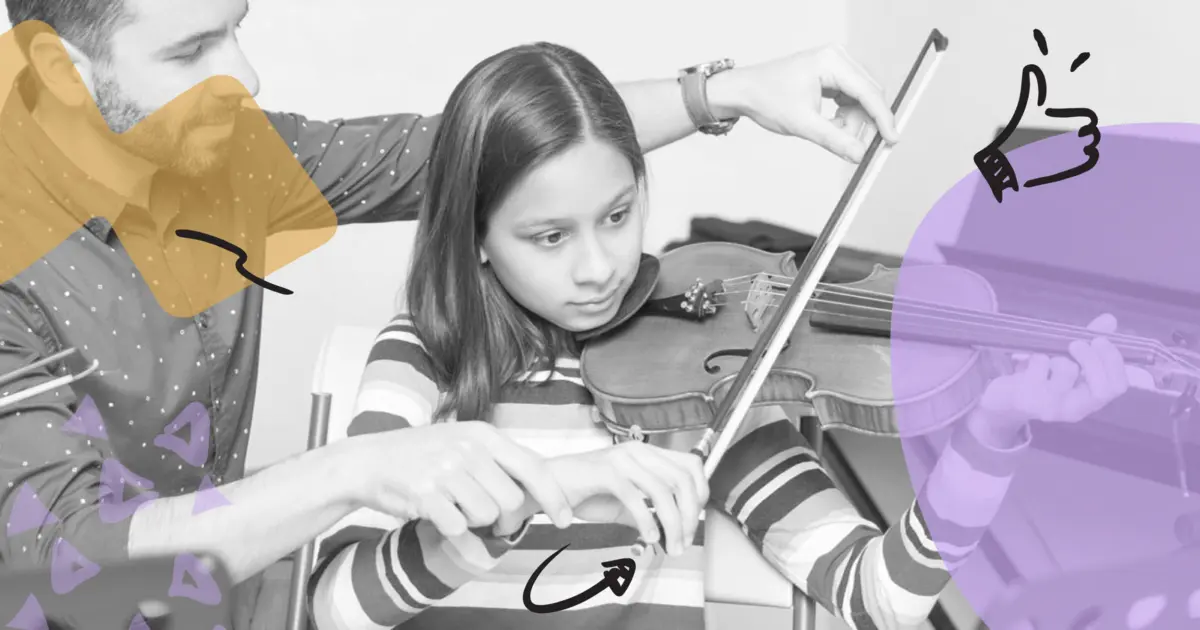
As music education transitioned into institutional settings—conservatories, public school systems, and private suburban studios—the ratio of teacher to student shifted dramatically. A single instructor was suddenly tasked with overseeing dozens, sometimes hundreds, of students per week.
This structural evolution birthed the modern private lesson model: thirty to sixty minutes of face-to-face instruction once a week, followed by six days of independent, unsupervised isolation at home. The burden of maintaining pedagogical momentum was inadvertently shifted onto children and adolescents who lacked the metacognitive tools to teach themselves. The "practice room" became an island, and the acoustic connection between teacher and student was severed for 95% of the week.
The Analog Arsenal: Metronomes, Paper, and Prayer
Throughout the 20th century, attempts to bridge this gap relied on analog tools: mechanical metronomes, printed method books, cassette tapes, and later, compact discs. While these tools provided reference points, they remained entirely passive. A metronome clicks relentlessly whether the student is playing the correct notes or descending into total musical chaos. Paper sheet music cannot wince when a fingering is botched or applaud when a difficult passage is finally mastered.
The Digital Turn: The Advent of Interactive Pedagogy
The turn of the 21st century introduced digital audio workstations and basic practice apps, but these early iterations were often clunky, expensive, or overly rigid. It was not until the convergence of cloud computing, high-precision pitch-and-rhythm recognition software, and comprehensive digital sheet music libraries that a true paradigm shift became possible. Platforms began to emerge not merely as digital music stands, but as active, responsive partners capable of listening to a student perform in real time and providing instantaneous, actionable feedback.
Supporting Context & Metrics: The Anatomy of the Practice Problem
To grasp the true magnitude of the practice dilemma, one must examine the psychological, cognitive, and logistical factors at play when a student closes their instrument case and walks out of the lesson room.
The Myth of the "Lazy Student"
A persistent cultural myth paints the modern student as distracted, impatient, and fundamentally unwilling to apply effort. Educators on the front lines, however, reject this narrative entirely.
"Most kids who don’t practice aren’t refusing to," notes a veteran middle school band director. "They just don’t know how. Practicing an instrument alone in a bedroom is genuinely difficult, psychologically daunting, and fundamentally lonely."
Consider the cognitive load placed upon a young instrumentalist practicing independently:
- Decoding: Translating visual symbols on a page into physical fingerings or embouchures.
- Execution: Coordinating fine motor skills across both hands (or breath control, posture, and intonation).
- Evaluation: Listening to the resulting sound and objectively determining whether it matches the desired artistic output.
For a developing brain, managing all three stages simultaneously is an overwhelming cognitive juggling act. Without an external ear to guide them, students inevitably gravitate toward the path of least resistance.
The Pathology of Practicing Mistakes
When a student sits down with a challenging piece of music in their bedroom, without a teacher present, a dangerous psychological loop begins. If they encounter a difficult passage and play a wrong note or misjudge a rhythm, they have no immediate mechanism to correct it.
If they play that incorrect passage twenty times in a row, convincing themselves that it "feels fine," they are not practicing—they are rehearsing a mistake until it becomes permanent.
[Student Plays Passage Incorrectly at Home]
       ↓
[No Immediate Feedback Mechanism Available]
       ↓
[Passage Repeated Multiple Times ("Practiced")]
       ↓
[Mistake Becomes Neurologically Entrenched]
       ↓
[Student Arrives at Next Lesson Demoralized by Correction]
When the student returns to their weekly lesson confident that they conquered the homework, only to be immediately corrected by their instructor, a deep sense of demoralization sets in. Doing this week after week erodes self-efficacy. Eventually, the student stops trying, shrugs off the teacher’s inquiries with a casual "it went good," and mentally categorizes themselves as unmusical. The problem was never a deficit of effort; it was the total absence of a real-time feedback loop.
The Power of the Immediate Feedback Loop
In cognitive psychology and educational theory, the feedback loop is the undisputed engine of skill acquisition. When a teacher is physically present, that loop is compressed to fractions of a second. A raised eyebrow, a whispered "try that again," or a hummed correction closes the loop instantly. The student adjusts their technique before the incorrect neural pathway can solidify.
The pedagogical challenge of the 21st century has thus crystallized: How do you place that instantaneous feedback loop into the hands of the student for the six days a week they are not in the studio?
Official Industry Perspectives & Technological Solutions
Music technology companies and forward-thinking pedagogues are rallying around digital ecosystems designed to replicate the supportive, diagnostic environment of a private lesson within the home environment.
MakeMusic Cloud: A Virtual Co-Pilot for the Home Studio
Platforms such as MakeMusic Cloud have emerged as direct responses to the isolation of home practice. By integrating a massive, legally licensed library of interactive sheet music with advanced, real-time assessment algorithms, the platform acts as an intelligent practice assistant.
When a student plays an assignment within MakeMusic Cloud, the software listens via the device’s microphone, actively tracking pitch and rhythm against the score.
- Visual Confirmation: Correct notes illuminate in green, while errors or rhythmic discrepancies are highlighted in real time.
- Accompaniment Integration: Students can practice alongside professional audio backings or slowed-down accompaniment tracks, developing crucial ensemble listening skills while practicing solo.
- Immediate Correction: Instead of waiting seven days to discover an error in measure 42, the student receives immediate diagnostic data, allowing them to stop, correct, and master the passage on the spot.
Empowering the Educator Through Data
The benefits of this technological integration extend far beyond the student’s bedroom; they radically transform how the teacher utilizes valuable instructional time.
Traditionally, a significant portion of a private lesson or sectional rehearsal is consumed by "detective work"—the teacher listening to the student play through a piece to diagnose what went wrong over the previous week.
With cloud-connected practice platforms, educators gain unprecedented visibility into home practice habits prior to the lesson. Teachers can access detailed analytics reports showing:
- Exactly how many minutes a student practiced.
- Which specific measures or passages caused the most errors.
- The overall accuracy percentage of the student’s performance.
Armed with this data, the teacher walks into the lesson space already knowing precisely where intervention is required. Lesson time is instantly liberated from diagnostic guessing games, shifting entirely back to what it was always meant to be: high-level artistic instruction, interpretation, and mentorship.
Future Outlook: The Next Horizon in Music Pedagogy
As artificial intelligence, machine learning, and audio-recognition technologies continue to advance at an exponential rate, the future of music education is poised for even more profound transformations.
Predictive Pedagogy and Adaptive Learning
Future iterations of practice software will likely move beyond simple error-detection into predictive pedagogy. By analyzing patterns across thousands of student performances, algorithms will be able to anticipate where a specific student is likely to stumble based on their historical tendencies, proactively suggesting targeted warm-ups or alternative fingering strategies before the student even encounters the roadblock.
Bridging the Equity Gap in Music Education
One of the most profound implications of digital practice tools is their potential to democratize access to high-quality music education. Private tutors capable of providing one-on-one daily supervision are a luxury unavailable to many families due to economic constraints. By embedding intelligent, responsive coaching directly into software accessible via standard school-issued devices or home tablets, educational platforms help level the playing field. A student in a rural or underfunded school district gains access to a persistent, patient practice partner that helps them navigate the complexities of their instrument outside of school hours.
Re-Enchanting the Practice Room
Ultimately, the integration of real-time feedback technology does not mechanize or cold-fy the artistic process—it protects it. By removing the grinding frustration of unsupervised mistakes and the demoralizing cycle of unguided repetition, technology clears away the administrative and technical friction that stifles young musicians.
When students are equipped with the tools to understand their mistakes immediately, practice transforms from an isolated chore into a voyage of discovery. The anxious shrug in response to "How was practice this week?" gives way to enthusiastic engagement: "Wait, listen to what I figured out."
And for the music educator, hearing those words remains the ultimate reward—the definitive proof that the invisible wall has finally been torn down.