
Executive Overview
As Anaïs Mitchell and Rachel Chavkin’s critically acclaimed, mythic musical Hadestown celebrates its monumental seventh year on the Broadway stage, the production remains a towering pillar of modern theatrical storytelling. Set against a stylized, depression-era backdrop where the classic Greek myths of Orpheus and Eurydice, as well as Hades and Persephone, are re-imagined through a smoky, jazz-infused lens, the musical has captured the global cultural zeitgeist. Central to this immersive experience is not merely the tragic romance at its core, but the theatrical framing device itself—a role anchored by one of the most vital, charismatic characters in contemporary musical theater: Hermes, the Messenger of the Gods.
Serving as the audience’s primary guide down the metaphorical and literal "Road to Hell," Hermes acts as narrator, master of ceremonies, moral compass, and divine observer. Over its illustrious history—spanning its early developmental workshops, its celebrated off-Broadway run, its international transfers, and its enduring Broadway residency at the Walter Kerr Theatre—a select group of extraordinary performers have stepped into the winged shoes of this iconic deity.
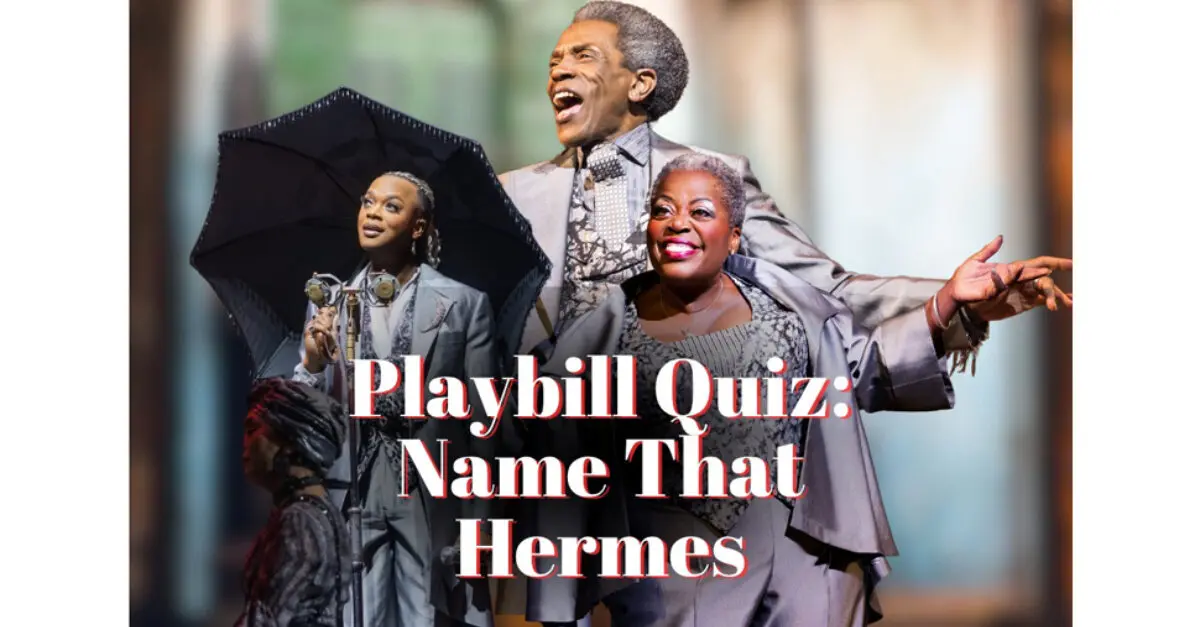
To mark this seven-year milestone, Playbill has released a specialized interactive trivia challenge designed to test the mettle of even the most dedicated "Hadestown" devotees. This retrospective explores the lineage of the artists who have breathed life into Hermes, analyzing the distinct vocal textures, dramatic interpretations, and legacy each performer has contributed to the Broadway phenomenon. From original Tony Award-winning progenitors to crossover icons who originated roles in other generation-defining musicals, the lineage of Hermes is a masterclass in theatrical casting, vocal versatility, and narrative presence.
Detailed Chronology: The Evolution of Broadway’s Hermes
The role of Hermes requires an extraordinary balancing act. The actor must possess a commanding yet approachable stage presence, the vocal agility to navigate spoken-word cadence blended with soaring melodies, and the emotional intelligence to ground a cosmic narrative in raw, human empathy. Tracing the chronology of who has worn the metallic coat and boots of Hermes reveals how the character has subtly shifted, molded by the unique artistry of each actor while remaining steadfast to the original vision of director Rachel Chavkin and creator Anaïs Mitchell.
The Genesis and Off-Broadway Foundations
Long before Hadestown claimed the Best Musical trophy at the 73rd Tony Awards, the project existed as a conceptual community theater tour and a critically lauded 2010 concept album. In those early iterations, the vocal styling and thematic framing of Hermes were established through indie-folk aesthetics. However, when the production underwent its major theatrical transformation for its 2016 world premiere at New York Theatre Workshop (NYTW) and its subsequent 2017 run at the Citadel Theatre in Edmonton, the role required a theatrical anchor.
It was during these crucial developmental milestones that the blueprint for the modern Broadway Hermes was forged. The production needed an artist who could effortlessly bridge the gap between downtown folk-rock and classical theatrical storytelling, setting a high artistic bar for anyone who would eventually follow.
The Original Broadway Cast: Setting the Gold Standard
When Hadestown officially opened on Broadway at the Walter Kerr Theatre on April 17, 2019, the theater world was introduced to a definitive interpretation of Hermes courtesy of theatrical royalty. This original performance established the physical and vocal vocabulary of the character—from the sharp, rhythmic gestures to the knowing, world-weary smile that welcomes the audience into the tragic loop of the narrative.
The impact of this inaugural Broadway performance cannot be overstated. It earned widespread critical acclaim, cemented the character’s place in modern musical theater history, and set a daunting benchmark for all subsequent casting iterations. The original actor infused the role with a paternal warmth and a gritty, street-smart urbanity that made the mythological framework feel intensely contemporary and urgently relevant.
The Successors: A League of Extraordinary Artists
Over the subsequent seven years, the mantle of Hermes has been passed to a carefully curated roster of luminaries. Each successor has brought a distinct flavor to the Walter Kerr stage, proving the remarkable elasticity of the role:
- The Trailblazing Crossover Icons: Among the most celebrated developments in the casting history of Hadestown has been the recruitment of performers who have left indelible marks elsewhere in the musical theater canon. Notably, actors who originated beloved, complex characters in other long-running, generation-defining contemporary musicals have crossed over to take on the Road to Hell. These performers bring built-in fanbases and a profound understanding of modern ensemble-driven storytelling, seamlessly transitioning from contemporary pop-rock or hip-hop idioms to Mitchell’s syncopated, New Orleans-infused jazz score.
- The Vocal and Dramatic Variations: While some actors have leaned into the higher, more soaring vocal registers of the score—emphasizing the ethereal, divine nature of the messenger—others have grounded their performances in a rich, gravelly baritone that echoes the dust of the depression-era road. This diversity in vocal coloring ensures that returning audiences experience a fresh psychological dynamic between Hermes and the mortal protagonists, Orpheus and Eurydice.
- The Global and Touring Lineages: Beyond Broadway proper, the international and national touring productions have expanded the Hermes lineage even further. Actors on the road have adapted the role for cavernous performing arts centers and intimate regional spaces alike, proving that the narrator’s direct address to the audience functions universally, regardless of venue size.
Supporting Context & Metrics: The Cultural and Critical Footprint of Hadestown
To fully appreciate the significance of the Hermes lineage, one must examine the broader metrics of Hadestown’s unprecedented run on Broadway. Entering its seventh year places the production in an elite echelon of contemporary theatrical longevity, achieved by only a handful of shows in the post-pandemic landscape.
Box Office Longevity and Attendance
Since its opening night, Hadestown has consistently maintained a formidable presence at the box office. Operating out of the intimate Walter Kerr Theatre—which seats approximately 945 patrons—the production relies heavily on word-of-mouth and the fervent dedication of its fan base, affectionately known as "Hadestown Workers."
- Capacity Metrics: The show frequently hovers near or at 100% capacity, proving that atmospheric, non-traditional musicals can sustain long-term commercial viability on Broadway.
- Demographic Reach: Audience metrics indicate a remarkably diverse demographic spread. While traditional theatergoers form a steady baseline, the show has uniquely captured younger millennial and Gen-Z cohorts, largely driven by the show’s original cast recording streaming numbers, which boast tens of millions of plays globally.
The Critical Reception of Character Adaptations
Theater critics have consistently highlighted Hermes as the structural glue of Hadestown. Without a traditional book-musical exposition, the audience relies entirely on Hermes to explain the stakes: "It’s a old song / It’s a sad song / But we gonna sing it anyway."
Analytical reviews across major publications have noted how different actors alter the emotional temperature of the evening. When a Hermes plays the role with sharp, cynical detachment, the tragedy feels inevitable and bleak. Conversely, when a Hermes performs with overt emotional vulnerability and fierce protective instincts over Orpheus, the musical’s cyclical ending feels all the more heartbreaking, as if the messenger is desperate to change an outcome he already knows by heart.
Official Statements and Industry Insights
The casting process for a role as pivotal as Hermes is subject to rigorous creative oversight by director Rachel Chavkin, creator Anaïs Mitchell, and lead producers such as Mara Isaacs.
In past interviews regarding the casting evolution of Hadestown, Chavkin emphasized that the production actively seeks out artists who possess distinct, unreplicable personal authority. "You cannot simply plug a standard musical theater archetype into Hermes," Chavkin noted during a press retrospective on the show’s Broadway residency. "The actor playing Hermes must hold the room like a great jazz soloist or a charismatic spoken-word poet. They own the space between the stage and the house."
Anaïs Mitchell has similarly reflected on how different performers uncover hidden layers within her lyrical composition. "When you write a song, you hope it has enough structural integrity to survive different interpretations," Mitchell shared in an interview celebrating the show’s anniversary milestones. "Watching various artists step into Hermes has been one of the greatest joys of this journey. Each actor brings their own cultural background, their own vocal weight, and their own lived experience to the road. They don’t just play the role; they inhabit it, transforming the narrative in subtle, profound ways."
Industry analysts point out that the strategic casting of well-known stage veterans in the role of Hermes has served as a masterstroke for box office renewals. By introducing fresh, highly recognizable talent into a stable, long-running hit, producers stimulate renewed media coverage, drive ticket sales spikes, and invite critical re-evaluations of the production.
Future Outlook: The Road Ahead for Hadestown and Its Messengers
As Hadestown firmly establishes its roots as a modern classic, the horizon looks exceptionally bright for the production and its rotating cast of deities. With international productions continuing to expand—including successful stagings in London’s West End, across North America, and upcoming regional and international licensing agreements—the mythology of Hadestown is cementing itself in the global theatrical canon.
Educational and Fan Engagement Initiatives
Playbill’s latest interactive trivia challenge—designed to test fans’ knowledge of every actor who has stepped onto the Road to Hell—is symptomatic of a larger trend in modern theater fandom. Audiences today do not merely consume art; they curate deep institutional knowledge of casting trees, vocal variations, and theatrical history. Initiatives like this quiz keep the community engaged, fostering a sense of shared ownership and celebration over the show’s legacy.
What Lies Ahead for the Walter Kerr Stage
Looking forward, producers have signaled that Hadestown will continue its tradition of innovative, boundary-pushing casting. As the theatrical landscape evolves, future iterations of Hermes will undoubtedly bring new perspectives to the timeless refrain. Whether future casting announcements feature seasoned Broadway veterans, crossover pop icons, or rising stars making their Broadway debuts, the core mission of the messenger remains unchanged: to lead the audience down the road, to tell the old, sad song, and to remind us of the enduring power of art, faith, and human connection in the face of darkness.
For those eager to test their expertise before the gods pass final judgment, the ultimate challenge awaits. Head over to Playbill’s official quiz section, test your knowledge of the actors who have guided us down the Road to Hell, and discover whether your theatrical erudition is enough to win over Hades himself.