
Executive Overview
As the United States approaches the solemn twenty-fifth anniversary of the September 11 terrorist attacks, the cultural fabric of New York City prepares to reflect once again on a defining juncture in modern history. At the heart of this civic and spiritual remembrance is the New York Philharmonic. Under the visionary guidance of Music & Artistic Director Gustavo Dudamel, the institution is mounting a profound commemorative effort designed to offer solace, preserve collective memory, and bridge generational divides through the transcendent power of orchestral music.
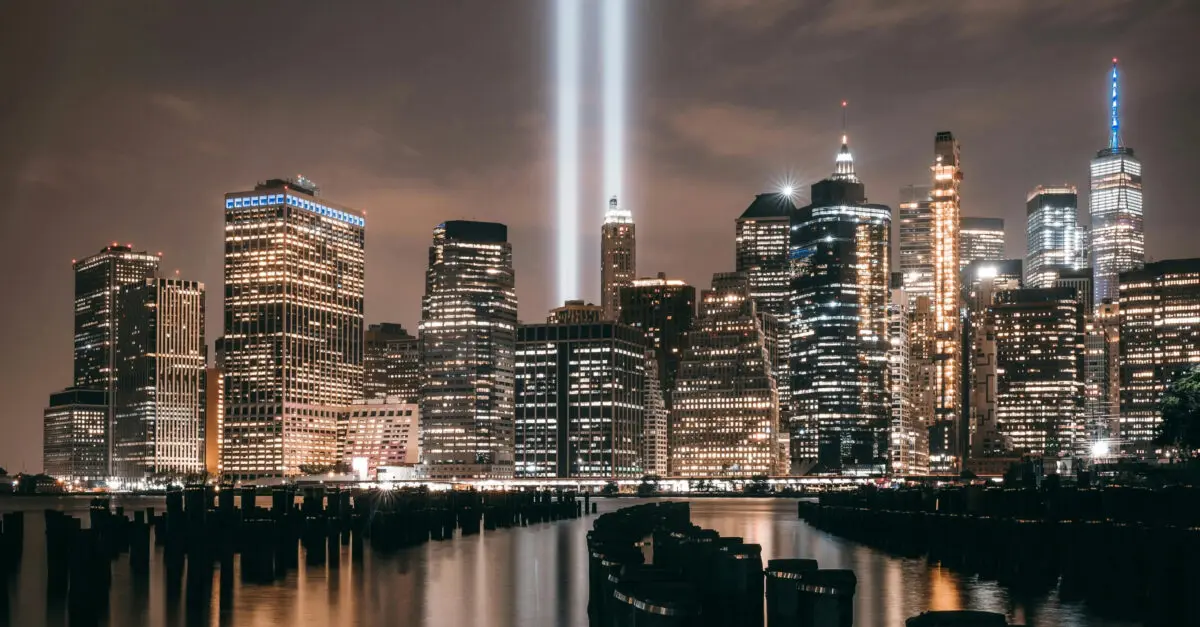
The commemorative events, scheduled for September 2026, span multiple symbolic locations across Manhattan. Performances will take place at Ground Zero itself, within the intimate confines of the Perelman Performing Arts Center (PAC NYC), and inside the newly revitalized acoustic environment of David Geffen Hall. The centerpiece of this week of reflection is a series of performances of John Adams’s Pulitzer Prize–winning masterwork, On the Transmigration of Souls. Following its New York presentation, the Philharmonic will carry this monumental "memory space" across the Atlantic for an extensive European tour in October 2026.
This upcoming observance is not merely a retrospective; it represents the continuation of a decades-long tradition. Since the dark days of September 2001, the Philharmonic has repeatedly stepped into the role of a civic comforter. By transforming auditoriums and public plazas into sanctuaries of shared grief, the orchestra has consistently demonstrated how classical music can articulate the inexpressible, bind a wounded community together, and serve as an enduring archive of human resilience.
Detailed Chronology: From the Ashes of 2001 to the Quarter-Century Milestone
September 2001: The Immediate Aftermath and Brahms’s German Requiem
Just days after the collapse of the World Trade Center towers, New York City was draped in a shroud of smoke, shock, and suffocating silence. In a city paralyzed by grief and fear, the arts offered an early, fragile lifeline. On September 20, 2001—barely nine days after the tragedy—then-Music Director Kurt Masur led the New York Philharmonic in a performance of Johannes Brahms’s A German Requiem (Ein deutsches Requiem).
Conceived as more than a standard fundraising benefit for disaster relief, the concert was broadcast nationwide and screened free of charge to thousands gathered on Lincoln Center’s Josie Robertson Plaza. Masur made a daring and psychologically astute artistic choice for the evening: he requested absolute silence from the audience, stripping away the ritualistic applause that typically punctuates classical concerts.
This self-imposed quiet transformed the performance into a vast, communal civic liturgy. For an audience grappling with sudden, catastrophic loss, the soaring chorales and comforting orchestral textures of Brahms offered a safe harbor. It was an unmistakable declaration that while buildings could fall, the human spirit—channeled through art—would endure.
September 2002: The Birth of a "Memory Space"
One year later, as the city and the nation began the arduous process of rebuilding, the Philharmonic, in co-commission with Lincoln Center, debuted a work written specifically to capture the trauma and haunting emptiness left by the attacks: John Adams’s On the Transmigration of Souls.
Adams constructed the piece not as a traditional requiem, but as a sonic memorial. The composition weaves together three distinct layers: the orchestra and chorus performing haunting, minimalist harmonies; pre-recorded soundscapes featuring the ambient sounds of New York City streets; and a quiet, spoken litany of the names of the victims, interspersed with fragments of missing-person flyers posted frantically across the city by desperate loved ones.
Describing the work, John Adams famously characterized it as a "memory space"—an acoustic architecture designed so that listeners could enter, withdraw from the clamor of the world, and confront their deepest emotions in solitude. The premiere left audiences spellbound, cementing the Philharmonic’s role not just as an entertainment enterprise, but as a vital custodian of contemporary history.
September 2026: The Twenty-Fifth Anniversary Commemoration
Twenty-five years later, the passage of time has transformed the tragedy of 9/11 from a raw, contemporary wound into an indelible historical milestone. Under the baton of Gustavo Dudamel, the New York Philharmonic is returning to this foundational repertoire to bridge an expanding generational divide.
The commemoration kicks off on September 11, 2026, with reflective programming at Ground Zero and the Perelman Performing Arts Center. This is followed by performances of On the Transmigration of Souls at David Geffen Hall from September 16 through September 19. By revisiting Adams’s masterpiece a quarter-century after its creation, the orchestra is intentionally targeting two distinct audiences: those whose lives were permanently altered by the events of that Tuesday morning, and a younger generation of concertgoers who were either infants or not yet born when the towers fell.
Supporting Context & Metrics: The Orchestral Archive of Tragedy
The relationship between the New York Philharmonic and the city’s historic traumas is deeply embedded in its institutional DNA. Orchestras are living museums, preserving centuries-old scores while interacting directly with the immediate, changing world around them.
The Weight of History: Mahler, Firefighters, and Sonic Resonance
Institutional memory within an orchestra is passed down not merely through written chronicles, but through shared experiences and physical spaces. Philharmonic trumpet player Thomas Smith, a veteran musician who performed through the 2001 and 2002 eras, reflects on the unique perspective of younger musicians who have joined the orchestra in the intervening years. These newer members possess no visceral, firsthand memory of the falling towers or the military jet streaking over the East River. Instead, they rely on history books, documentary footage, and the oral traditions passed down by their senior colleagues.
Smith highlights how musicians naturally seek out the historical context of the music they play, often turning to veteran players with inquiries about what the city endured. This inquiry transforms performances into living history lessons.
To illustrate the deep temporal echoes that reverberate through Lincoln Center, Smith points to a poignant geographic and historical coincidence. David Geffen Hall sits mere blocks away from Engine 40 / Ladder 35 firehouse. In the weeks following September 11, the orchestra’s musicians watched a heartbreaking sequence of funeral cortèges file past for each of the dozen firefighters lost from that single station house.
Remarkably, this haunting urban rhythm connects to a century-old Philharmonic memory. Almost one hundred years prior, legendary Philharmonic Music Director Gustav Mahler stood in the streets of Vienna and witnessed a firefighter’s funeral. The steady, unyielding drum stroke from that procession etched itself into Mahler’s consciousness, eventually resurfacing in the desolate, halting rhythms of his unfinished Symphony No. 10. Through these invisible threads, the orchestra connects past and present, binding the grief of 1900s Europe to the modern trauma of New York City.
Generational Shifts in the Concert Hall
As the 25-year mark approaches, demographic shifts within both the orchestra and its audiences present a unique communicative challenge:
- First-Hand Witnesses: Older patrons and veteran musicians carry the somatic memory of the day—the smell of smoke, the sirens, the sudden quiet of grounded airplanes, and the heavy pall over the metropolitan area. For them, performances of Brahms and Adams function as communal therapy and validation of survival.
- The Post-9/11 Generation: Young adults attending the 2026 concerts belong to a demographic that studies 9/11 the way previous generations studied the Kennedy assassination or Pearl Harbor. For them, music serves as an empathetic bridge, bypassing intellectual detachment to instill an emotional comprehension of collective grief.
Official Perspectives & Oral Testimonies
To understand the profound weight of these performances, one must listen to the artists who lived through the crisis and continue to bear the artistic standard of the institution.
Sheryl Staples on the Power of Silence
Sheryl Staples, the Philharmonic’s Principal Associate Concertmaster, vividly recalls the psychological atmosphere of September 2001. "It’s one of those events in life where everybody remembers exactly where they were and what they were doing," she notes.
Staples remembers the historic Brahms concert conducted by Kurt Masur as a watershed moment in her artistic life.
"It was just so powerful. Masur asked that there be no applause, and that brought the feeling of doing something so meaningful. As a musician, when some huge tragedy occurs, it’s easy to wonder, ‘What am I doing here? I’m just playing my violin,’ but then I think about Bernstein’s response to President Kennedy’s assassination: ‘We will make music more intensely and more beautifully and more devotedly than ever before.’"
Reflecting on the programmatic arc from the immediate, mourning-centric Brahms performance to the architectural, memory-preserving Adams commission a year later, Staples emphasizes the necessity of pacing in collective healing. "A year later we had enough space that we could handle listening to that," she observes, referring to On the Transmigration of Souls. "It becomes very important to remember, especially for those who don’t have that immediate personal memory."
Thomas Smith on Bringing the Notes to Life
Trumpet player Thomas Smith expands on this sentiment, viewing music through the lens of a time machine where ink on paper is brought back to breath and vibration in the present moment.
"Hopefully, we can shed some light on it, take a little bit more out of it than just the notes on the page," Smith says regarding the orchestra’s mission for the 2026 anniversary.
By engaging with the historical tragedies embedded in their surrounding streets—from the Engine 40 / Ladder 35 memorial cortèges to the broader landscape of urban resilience—Smith believes the musicians of the New York Philharmonic act as conduits. They transform sound into a living archive, ensuring that subsequent generations of New Yorkers can feel the heartbeat of a city that refused to break.
Future Outlook: The International Journey of Remembrance
The impact of the New York Philharmonic’s twenty-fifth-anniversary commemoration will extend far beyond the borders of Manhattan. While the September events at Ground Zero, PAC NYC, and David Geffen Hall will anchor the domestic observance, the orchestra’s mission of global remembrance will enter a new phase in October 2026.
The European Tour
Following the domestic performances of On the Transmigration of Souls, the Philharmonic will embark on a major European tour under Gustavo Dudamel’s leadership. Transporting John Adams’s American "memory space" across international capitals serves a dual purpose:
- Global Solidarity: September 11, 2001, was not merely an American tragedy; it was a watershed moment that reshaped global geopolitics, security paradigms, and international consciousness. International audiences share in the ongoing legacy of that day.
- Universal Artistic Language: By sharing this distinctly New York-centric work with European concertgoers, the orchestra reinforces the concept that localized grief can be universalized through symphonic art. Listeners in foreign cultural capitals will be invited to step into Adams’s acoustic memorial, reflecting on their own collective histories of conflict, loss, and endurance.
The Everlasting Civic Mandate
As the New York Philharmonic looks toward September 2026 and beyond, its leadership and musicians reaffirm a foundational truth: art is not a luxury to be enjoyed only in times of peace and prosperity. Rather, it is an essential tool for survival, interpretation, and healing when stability shatters.
Through the passionate advocacy of Gustavo Dudamel, the historical continuity preserved by musicians like Sheryl Staples and Thomas Smith, and the enduring relevance of masterworks by Brahms and Adams, the Philharmonic proves that music does more than entertain.
Music remembers. And in remembering, it ensures that humanity builds a bridge from the darkest chapters of history toward a shared, compassionate future.