
As the Teatro Colón continued its ambitious 2026 season away from its home stage, it brought a stirring, concert-version production of Giacomo Puccini’s Manon Lescaut to the acoustically dynamic yet problematic Auditorio Nacional of the Palacio Libertad in Buenos Aires. Marking another high-profile collaboration for Argentina’s premier opera house, this presentation of Puccini’s sweeping tragedy offered a fascinating study in spatial acoustics, orchestral restraint, and vocal heroism.
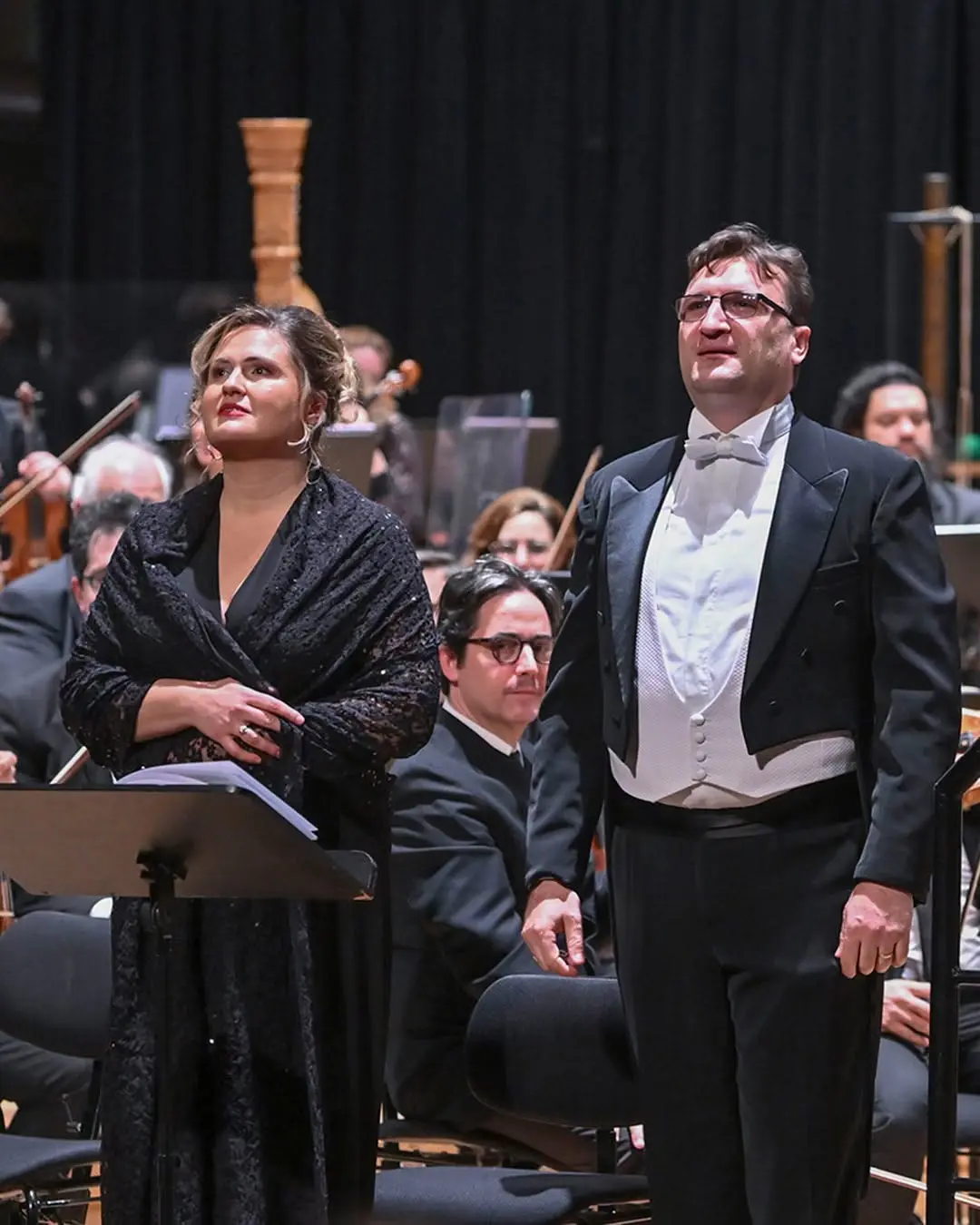
The production featured a powerhouse international cast led by Italian soprano Chiara Isotton in the title role and tenor Francesco Pio Galasso as Renato Des Grieux, under the baton of conductor Henrik Nánási. While the evening was ultimately defined by a mesmerizing, star-making performance from Isotton, it also served as a compelling critique of architectural acoustics in modern symphonic halls. The venue’s rich, volcanic resonance frequently created an uphill battle for the vocal soloists, challenging the musical forces to achieve a cohesive balance.
Despite architectural headwinds, the production succeeded on the strength of committed musicianship, disciplined conducting, and vocal performances that pierced through the acoustic storm. For opera aficionados in Buenos Aires, this Manon Lescaut will be remembered as a masterclass in emotional resilience—proving that when score, singer, and space align, Puccini’s timeless pathos can transcend even the most daunting structural hurdles.
Detailed Chronology
Act I and II: The Architectural Crucible
The evening began with high expectations as the sleek wooden aesthetics of the 1,750-seat Auditorio Nacional welcomed the opening bars of Puccini’s score. The venue immediately demonstrated its complex acoustic profile. The orchestra, positioned center stage, produced a sound that was both volcanic at its peak and intricately clear during delicate passages. Similarly, the chorus—stationed intelligently in a seated rear tier above the central stage—benefited from acoustics so responsive that even whispered passages carried cleanly across the hall.
However, these structural advantages quickly revealed a severe structural flaw for the vocal soloists. Placed at the front of the stage, as is traditional for concert performances, the singers found themselves fighting an acoustic tide. Acts I and II are dense with heavy orchestration, complex choral interjections, and bustling ensemble writing. During these early phases, trying to isolate the soloists amidst the sweeping maelstrom of sound proved a frustrating exercise.
Tenor Francesco Pio Galasso, stepping into the role of Renato Des Grieux, felt the brunt of these balance issues early on. While he delivered "Donna non vidi mai" with an elegant and polished legato line, his voice occasionally sounded pushed, throaty, and unsupported when navigating the high tessitura against the thick wall of sound.
Yet, even within this acoustic turbulence, Italian soprano Chiara Isotton announced her command of the evening. As the eponymous heroine, Isotton was the sole voice consistently capable of cutting through the dense textures of the orchestra and the rear-positioned chorus. Her utterances of "Manon Lescaut mi chiamo" in Act II were delivered with a silky, smooth articulation. When she launched into "In quelle trine morbide," she began with an intentionally soft, lingering tone before building rapidly to a soaring, resplendent climax. Her breathtaking Act II duet with Galasso showcased a soprano matching immense physical stamina with pristine vocal flexibility, valiantly riding the crest of the massive orchestral sound.
Act III: The Turning Point and Intermezzo
The production’s sonic tide began to turn in Act III, aided by the layout of the score and a brilliant orchestral intermezzo. Conductor Henrik Nánási carefully balanced the chamber-music structure of the opening Intermezzo preceding the third act, allowing the delicate flutter of strings to breathe naturally within the wooden hall.
Visually and dramatically, this act belonged entirely to Isotton. Seated quietly while the music swelled, she maintained an ironclad focus, radiating the intense physical and emotional pain of Manon’s impending exile. Though she stood on the opposite end of the podium from Galasso, her magnetic stage presence bridged the physical gap, anchoring the concertante with searing emotional clarity.
For Galasso, Act III marked a stunning redemption. Shedding the vocal tightness that plagued his early scenes, he transformed into a completely different singer. His delivery of "Ah! Non v’avvicinate!… No! no! Pazzo son!" was met with tremendous solidity and intensity. His phrasing grew increasingly aggressive and accented, capturing the visceral despair of Des Grieux. Cutting through the auditorium like a bright beam of sound, his tenor finally conquered the hall’s acoustic quirks, drawing an enthusiastic and raucous ovation from the audience.
Act IV: A Masterclass in Tragic Resolution
By the time the performance reached its fourth and final act, all elements of the production clicked into rare artistic alignment. Act IV proved to be the finest portion of the evening, largely because it strips away the chorus entirely, leaving only two soloists to grapple with Puccini’s devastating emotional finale. Nánási capitalized on this reduction in sonic weight, displaying a profound connection with both his orchestra and his lead vocalists.
Isotton turned her intensity up to an unforgettable zenith. Portraying a woman on her absolute last legs, her singing carried an earthy desperation, bitterness, and fury during the heart-wrenching aria "Sola, perduta, abbandonata." Her upper register was vigorous, round, and remarkably resonant—culminating in a "No! No! Non voglio morir!" that scaled up to a high B-flat, ranking among the most devastatingly powerful vocal moments heard in Buenos Aires this season.
Galasso matched this dramatic intensity stride for stride. Though his high B-flat early in the act showed slight signs of strain on "Ah! Manon!", he recovered swiftly, executing a brilliant interpolated high C alongside Isotton moments later. Conveying a nervous, desperate helplessness through forceful and pointed singing, his final vocal plea—"Tutto il mio sangue per la tua vita"—was delivered with a blazing upper register. Their physical commitment to one another, clinging to each other to evoke the desolate isolation of a barren desert, cemented an unforgettable theatrical climax.
Supporting Context & Metrics
Architectural Acoustics and Venue Dynamics
The Auditorio Nacional of the Palacio Libertad is a marvel of modern design, featuring a 1,750-seat capacity and warm, sleek wooden architecture designed to maximize reverberation. However, as this production demonstrated, high resonance is a double-edged sword:
- The Choral Advantage: The rear-seated chorus benefited immensely, requiring only a whisper to project cleanly. However, any dynamic push above a mezzo-forte caused the choral sound to turn piercing and aggressive due to over-resonance.
- The Orchestral Dynamic: The orchestra enjoyed a volcanic lower-end projection, though it occasionally drowned out front-stage soloists. Delicate interludes, such as the Act III Intermezzo, fluttered gracefully within the space.
- The Soloist Dilemma: Placed traditionally at the front of the stage, vocalists lacked the elevation or acoustic shell afforded to the chorus, forcing them to push unnaturally against the room’s structural physics during heavy tutti sections.
- Surtitle Visibility: Placed on two small screens near the apex of the hall, the surtitles favored upper-tier patrons while forcing orchestra-level audience members to rely heavily on binoculars.
Ensemble and Supporting Cast Breakdown
While the evening belonged to the principal leads, the supporting cast navigated the uneven acoustics with varying degrees of success:
- Baritone Junhyeok Felix Park (Lescaut): Delivered a sturdy, fluid performance with a consistent vocal line that anchored the secondary plotlines effectively.
- Bass-Baritone Ricardo Seguel (Geronte) & Tenor Andrés Cofré (Edmondo): Both displayed professional vocal polish but fell occasional victim to the unpredictable sound imbalances of the house.
- Ramiro Pérez (Dance Master) & Lidice Robinson (Musician): Benefited greatly from the generous high-tier acoustics of the chorus perch, delivering refined and confident cameos.
Official Statements & Artistic Insights
Reflecting on the production’s musical philosophy, conductor Henrik Nánási’s approach to Puccini’s score offered a refreshing antidote to modern directorial tendencies. Unlike many contemporary conductors who indulge in endless rubato, over-articulation, and grandstanding gestures, Nánási played the score relatively straight. This structural discipline served the music—and crucially, the beleaguered soloists—magnificently. By resisting the urge to make himself the center of attention, Nánási allowed the dramatic extremes of Puccini’s orchestration to unfold with natural, unforced momentum.
Chiara Isotton’s portrayal cemented her status as an emerging global force in the dramatic soprano repertoire. Speaking on her preparation for concert-version opera, critics and colleagues alike noted her rare ability to utilize physical stillness and micro-expressions to bridge the gap left by the absence of full theatrical staging.
"When a singer can make you feel the grit of a desert floor and the absolute chill of approaching death without a single theatrical prop or costume change, you are witnessing the birth of a major operatic star," noted one seasoned critic present at the performance.
Future Outlook
As the Teatro Colón continues its 2026 season away from its permanent architectural home, this production of Manon Lescaut offers crucial lessons for future symphonic and operatic collaborations at the Auditorio Nacional.
- Acoustic Engineering Adjustments: Future opera productions utilizing concert stagings in the Palacio Libertad must rethink soloist placement. Had the vocal soloists been positioned on the elevated tier typically occupied by the chorus, many of the balance issues that plagued Acts I and II might have been averted.
- Maestro Coordination: Conductor Henrik Nánási’s flexible approach provides a blueprint for how upcoming guest conductors must manage the hall’s heavy reverberation, proving that dynamic restraint from the pit is non-negotiable for vocal clarity.
- The Rise of a New Generation: The triumphant performances of Chiara Isotton and Francesco Pio Galasso signal a bright future for international casting in Buenos Aires. Isotton’s powerhouse display in particular guarantees that she will be warmly welcomed back for future headlining engagements as her star continues to ascend on the global stage.
Ultimately, despite the acoustic hurdles of the venue, the raw emotional power of Puccini’s masterpiece shone through, delivering a transcendent evening of opera that justified the price of admission and left audiences eager for the next chapter of the Teatro Colón’s 2026 season.