

Executive Overview
In the highly specialized landscape of music education, few skills remain as universally revered—and as notoriously difficult to master—as sight reading. For instrumentalists and vocalists alike, the ability to interpret and perform a musical score accurately at first glance is the ultimate gateway to professional versatility, ensemble participation, and lifelong musical enjoyment. Yet, for decades, students have grappled with a critical bottleneck: the scarcity of high-quality, professionally composed practice material tailored to exact proficiency levels, coupled with a lack of individualized, real-time pedagogical feedback.
Enter SightReadingMastery, a pioneering digital platform founded in 2011 by musician, software engineer, and educator Evan R. Murphy. Designed from the ground up to demystify and democratize sight-reading education, the platform has consistently relied on handcrafted, original compositions rather than sterile, algorithmically generated MIDI exercises.
In a major strategic announcement, SightReadingMastery has rolled out a sweeping suite of platform enhancements designed to fundamentally transform how musicians practice. Most notably, the platform has officially eliminated its historical practice caps, ushering in an era of unlimited sight reading for subscribers on qualifying tiers. Complementing this milestone is the official launch of private video lessons with professional music teachers—formerly known as "Personal Workshops"—engineered to break through learning plateaus and accelerate student development.
Furthermore, the platform has expanded its foundational curriculum with the rollout of new grade levels, streamlined its user experience with intuitive tier name updates (shifting from traditional solfège syllables to clear professional tiers), and maintained its rock-solid commitment to accessible pricing. This comprehensive update represents a watershed moment not only for SightReadingMastery as a company but for digital music education at large, proving that scale and artistic integrity can successfully coexist.
Detailed Chronology: The Evolution of SightReadingMastery
To fully appreciate the significance of this latest platform evolution, one must examine the trajectory of SightReadingMastery since its inception in Seattle, Washington, over a decade ago.
2011–2015: The Solitary Composition Era
When Evan R. Murphy founded SightReadingMastery in 2011, the platform’s foundational philosophy was distinct: students deserved better than the mechanical, computer-generated exercises that dominated early digital music software. Drawing on his academic and professional background in music composition, Murphy personally wrote the initial library of sight-reading pieces. Every measure, harmony, and rhythm was meticulously crafted to ensure pedagogical efficacy while retaining musical soul.
However, this handcrafted model presented an immediate operational hurdle. The demand for fresh, diverse sight-reading material among dedicated students vastly outpaced the output capacity of a single composer. To manage library consumption and ensure sustainable operations, the platform—like many digital subscription services of the era—implemented monthly usage caps. While effective for server load and resource management, these limits occasionally frustrated avid learners who wanted to push through multiple exercises in a single sitting.
2015–2022: Scaling the Composer Collective
Recognizing that the demand for authentic, human-composed sheet music was insatiable, Murphy transitioned from a solo operation to building a robust, distributed team of talented professional composers. This shift allowed SightReadingMastery to dramatically accelerate its output, diversifying the library across a wider array of instruments, time signatures, keys, and stylistic nuances.
Concurrently, the platform refined its underlying software architecture, making it easier for users to filter exercises by difficulty, instrument, and clef. Yet, despite an exponentially expanding library, the legacy restriction on monthly practice volume remained a persistent operational baseline—until now.
Late 2023–Present: The Unlimited Horizon
The culmination of years of sustained library growth and technical scaling has brought SightReadingMastery to its current milestone. By expanding the composer collective and optimizing its digital infrastructure, the company has reached a critical inflection point: the complete abolition of monthly practice limits.
Simultaneously, the platform has transitioned its pedagogical offerings from purely asynchronous sheet music generation to a hybrid model that integrates live, human-to-human mentorship. By rebranding its pricing structure to transparent, universally understood tiers (Student, Musician, and Pro) and introducing vital new grade levels, SightReadingMastery has positioned itself as a comprehensive, end-to-end ecosystem for musical literacy.
Supporting Context & Metrics: Breaking the Practice Bottleneck
The decision to lift practice caps and introduce live mentorship is deeply rooted in contemporary music pedagogy and cognitive science. To understand why these updates matter, one must analyze the unique psychological and technical barriers inherent in sight-reading acquisition.
The Psychology of Sight-Reading Frustration
Unlike standard repertoire study—where a musician spends weeks or months polishing a single piece until it becomes second nature—sight reading requires rapid pattern recognition, instantaneous motor translation, and absolute cognitive flexibility. It is an inherently high-friction activity.
When a student sits down to sight read, they are constantly confronting their own technical limitations. Mistakes are frequent; discouragement is common. Without structured guidance, learners frequently encounter plateaus where their reading speed and accuracy flatline. Historically, when students hit these walls in a digital environment, the combination of restricted library access and a lack of human encouragement often led to plummeting user engagement or outright abandonment of the practice habit.
By removing monthly reading caps for Musician and Pro tier subscribers, SightReadingMastery has eliminated the anxiety of artificial scarcity. Musicians can now engage in deep, exploratory practice sessions without constantly glancing at a meter tracking their remaining allotment.
+-------------------------------------------------------------------------+
|                  SIGHT-READING MASTERY EVOLUTION METRICS                |
+---------------------------+---------------------------------------------+
| Founding Year             | 2011 (Seattle, WA)                          |
| Initial Composition Model | Solo (Founder Evan R. Murphy)               |
| Current Content Model     | Curated Team of Professional Composers      |
| Practice Volume Cap       | REMOVED (Unlimited on Musician/Pro tiers)   |
| Live Pedagogy Integration | 30-Minute Video Private Lessons             |
| Plan Nomenclature         | Updated to Student, Musician, Pro           |
+---------------------------+---------------------------------------------+
The Power of Leverage Points in Practice
An often-overlooked aspect of instrumental practice is the Pareto Principle (the 80/20 rule): a small fraction of practice habits often yields the vast majority of performance improvements. However, identifying these micro-inefficiencies in one’s own playing is exceptionally difficult.
A violinist might consistently misread compound meters, a pianist might tense their wrists during unexpected chromatic shifts, or a flutist might fail to scan ahead visually—a critical cognitive habit of elite sight readers known as "eye-hand span."

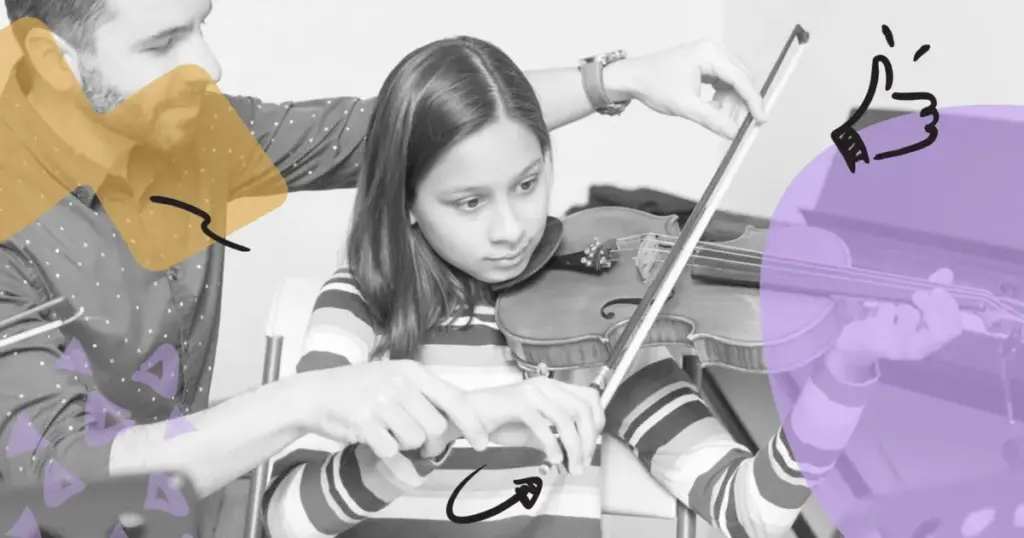
By institutionalizing live private lessons (formerly styled as "Personal Workshops"), SightReadingMastery bridges the gap between software-based practice and human mentorship. These 30-minute, one-on-one video consultations allow professional music educators to diagnose subtle mechanical or cognitive flaws in real time, offering targeted "leverage points" that can instantly redirect a student’s practice routine toward exponential growth.
Official Statements and Architectural Breakdown
In detailing these updates, founder Evan R. Murphy emphasized the company’s core mission: making high-level musical literacy attainable, sustainable, and deeply rewarding for musicians across the globe.
1. Unlimited Sight Reading: Quality Meets Abundance
Reflecting on the journey from a solo composition project to a thriving digital platform, Murphy noted the philosophy driving the removal of usage caps:
"We’ve always prided ourselves on using professionally-composed music here at SightReadingMastery. I have a background in composition, so when we were just starting out, it was me writing all the pieces. Later we grew a team of talented composers who could create music much faster and at an even higher quality. Still, a big challenge that remained taking this handcrafted approach was how to keep up with the constant demand from our sight readers for new music."
By scaling the composer collective, the platform has successfully reconciled the tension between artisanal quality and industrial scalability. Murphy elaborates on the consumer benefit:
"One way we dealt with this challenge in the past was to put a cap on the amount of music you could sight read each month. But as we’ve hired more composers and our library of music has grown increasingly vast, we no longer need to impose this limitation. This is great for customers. Now, if you’re on the Musician or Pro plans, you can sight read to your heart’s content without concern for limits. Unlimited sight reading means unlimited potential for your musical growth."
2. Live Help from Music Teachers: A Lifeline for Struggling Learners
Mastering an instrument is rarely a linear path. Recognizing the psychological and technical hurdles that derail students, SightReadingMastery has formalized its private lesson infrastructure:
"Mastering sight reading is no walk in the park. Maybe you’ve already encountered obstacles or had times when you felt discouraged, frustrated or unmotivated. When you get stuck, not only does forward progress stop, but you’re in danger of giving up. Private lessons are your lifeline when the going gets tough."
Furthermore, these sessions are designed not merely for remediation, but for optimization:
"Even if things are going well with your sight reading, there may be little things you could be doing differently to progress much faster. Talking to a music teacher can help you identify these powerful leverage points in your practice and really take your sight reading to the next level."
These 30-minute video-call sessions are included as a core benefit for all customers on the Musician and Pro tiers, ensuring that software convenience is seamlessly backed by human expertise.
3. Curriculum Expansion and Plan Modernization
To ensure the platform remains accessible and logically structured, SightReadingMastery has implemented two additional structural upgrades:
- New Grade Levels: The platform has continuously rolled out granular new difficulty tiers across supported instruments, ensuring that students experience a smooth, micro-progressional curve rather than steep, intimidating leaps in complexity. Up-to-date mappings can be tracked via the platform’s dedicated instruments and grade levels directories.
- Streamlined Pricing Tiers: Abandoning the legacy nomenclature of Do, Re, and Mi, the subscription tiers have been renamed to Student, Musician, and Pro. Crucially, these plans remain at their established, highly accessible price points while delivering vastly expanded feature sets. New users can also take advantage of an introductory free trial to explore the platform risk-free.
Future Outlook: The Intersection of Technology and Tradition in Music Education
As SightReadingMastery looks toward the horizon, the platform’s recent updates signal a broader trend within the digital music education sector: the move away from purely automated, gamified gimmicks toward hybridized, human-centric ecosystems.
While artificial intelligence and algorithmic generation continue to make inroads into various facets of software development, SightReadingMastery’s doubling down on human composition and live pedagogy underscores a fundamental truth about art: musical expression is an inherently human endeavor. By utilizing software to eliminate administrative friction—such as instant music generation, limitless library access, and streamlined scheduling—while leveraging human teachers for nuanced, empathetic instruction, the platform has established a compelling blueprint for the future.
For the independent musician, the amateur enthusiast preparing for local auditions, and the serious instrumentalist seeking professional-grade facility, these updates remove the traditional barriers of cost, material scarcity, and instructional isolation. With unlimited reading potential, expert guidance a video call away, and an ever-expanding library of handcrafted repertoire, SightReadingMastery is not simply teaching musicians how to read notes on a page—it is empowering them to unlock their ultimate musical potential.
To explore the updated pricing tiers, review instrument availability, or initiate a risk-free trial, visit the official SightReadingMastery platform today.