
By Francisco Salazar
Published exclusively by OperaWire
Executive Overview
The intersection of high art and global pop culture is rarely quiet, but a single remark delivered from a podium at the Denyce Graves Foundation Harvest Moon Gala has sent shockwaves through both the classical music establishment and the pop stratosphere. Peter Gelb, the visionary General Manager of the Metropolitan Opera, dropped a tantalizing hint that could bridge two seemingly disparate worlds: Grammy-winning pop phenomenon Dua Lipa—boasting a staggering social media footprint of 88 million followers—might make a high-profile appearance at the opening night of the Met’s upcoming contemporary opera, Lincoln in the Bardo.
According to Gelb, the international superstar is not merely casually aware of the production; she is reportedly "excited" about the Met’s high-stakes premiere and could potentially arrive with a full camera crew in tow. While insiders and cultural analysts immediately debate whether Gelb’s statement was delivered in earnest or as playful industry hyperbole—or perhaps momentarily conflated with her rumored attendance at Teatro alla Scala’s season-opening production of La Traviata earlier this September—the mere suggestion highlights a calculated, modern push by legacy cultural institutions to court digital-age tastemakers.
Far from being a random pairing, however, a potential appearance by Dua Lipa at the Metropolitan Opera is rooted in an authentic, documented intellectual engagement with the source material. In 2024, the pop icon hosted acclaimed author George Saunders on her celebrated lifestyle and culture podcast, Service95. During the interview, Lipa did not merely exchange polite industry pleasantries; she raved about Saunders’s literary catalog, confessing that she is a massive admirer of his work and actively evangelizes his novels to her global audience.
Now, Saunders’s magnum opus—the Booker Prize-winning, surrealist masterpiece Lincoln in the Bardo—has been transformed into a major operatic event. Featuring an innovative score by celebrated American composer Missy Mazzoli and a sharp, evocative libretto by Royce Vavrek, the Met’s production stands as one of the most anticipated cultural milestones of the theatrical season.
This comprehensive report examines the genesis of Gelb’s remarks, the deep literary connection binding Dua Lipa to George Saunders, the formidable creative apparatus behind the opera, and the broader implications of infusing traditional opera houses with the gravitational pull of twenty-first-century pop royalty.
Detailed Chronology: From Podcast Studio to the Met Stage
The Intellectual Seed: The Service95 Encounter (2024)
To understand why a pop superstar with tens of millions of followers is even remotely linked to a Met Opera debut about Abraham Lincoln’s grief, one must trace the timeline back to 2024. Dua Lipa, through her literary and cultural platform Service95, has consistently positioned herself as an intellectual curator, regularly platforming high-brow authors, artists, and thinkers alongside contemporary pop culture icons.
During an episode of the podcast recorded earlier this year, Lipa welcomed George Saunders to discuss his writing process, philosophy, and particularly his genre-defying 2017 novel, Lincoln in the Bardo. The conversation revealed a genuine, unforced synergy. Lipa openly praised Saunders’s empathetic approach to narrative structure, telling her listeners that she considers herself a "huge fan" and passionately recommending every title in Saunders’s bibliography.
For Saunders, whose work is celebrated for its postmodern pyrotechnics combined with deep, emotional humanism, the endorsement introduced his literary universe to an entirely new, digitally native demographic. Little did listeners know at the time, this literary crossover was quietly laying the groundwork for a major theatrical adaptation’s cross-promotion strategy.
The Harvest Moon Gala Revelation (September 2025)
The narrative accelerated dramatically during the Denyce Graves Foundation Harvest Moon Gala. Peter Gelb, taking the podium to discuss the future of the Metropolitan Opera and its ongoing mission to attract diverse, modern audiences, addressed the upcoming premiere of Lincoln in the Bardo.
It was during these remarks that Gelb casually—yet pointedly—alluded to Dua Lipa’s purported enthusiasm for the production. To an audience steeped in the classical arts, the mention of a pop star with 88 million followers caught many off guard. Gelb suggested that Lipa’s excitement for the Met’s new offering ran so deep that she was seriously considering attending the premiere night, potentially accompanied by a production or documentary camera crew to capture the historic crossover.
Naturally, veteran arts journalists immediately contextualized Gelb’s statement with a degree of healthy skepticism. Industry observers noted the possibility that Gelb may have delivered the remark with theatrical tongue-in-cheek humor, or perhaps momentarily conflated the Met’s event with whispers of Lipa’s potential presence at Teatro alla Scala’s high-society opening of La Traviata in Milan earlier that same month. Nevertheless, whether literal or partially jesting, the statement instantly succeeded in its primary objective: shifting the cultural spotlight onto the Met’s avant-garde calendar.
Supporting Context & Metrics: Bridging the Digital Divide
The Mathematics of Modern Cultural Outreach
To fully grasp the magnitude of Peter Gelb invoking Dua Lipa’s name within the hallowed halls of the Met, one must examine the contemporary media landscape through the lens of audience metrics.
- The Follower Economy: Dua Lipa commands an active global audience exceeding 88 million followers across Instagram, TikTok, and other platforms. By comparison, major global opera houses typically struggle to aggregate a fraction of that reach across their cumulative digital channels. For instance, the Metropolitan Opera—while digital pioneers through their Live in HD cinema broadcasts and streaming apps—hovers in the low millions across its core social architectures.
- The Demographic Imperative: Legacy opera companies face an existential imperative: aging audiences. While subscribers remain loyal, securing the patronage of Millennials and Generation Z requires cultural validators. When a tastemaker of Lipa’s stature—synonymous with fashion, high-end pop music, and intellectual curiosity—validates a literary or operatic work, it signals to millions of young consumers that the art form is not an archaic relic, but a vibrant, living medium worthy of exploration.
Anatomy of the Opera: Lincoln in the Bardo
The work drawing this unprecedented level of crossover attention is no standard repertory warhorse like La Bohème or Carmen. Lincoln in the Bardo is a complex, deeply philosophical, and stylistically adventurous contemporary opera.
- The Creative Force: The production features an electrifying score composed by Missy Mazzoli, widely regarded as one of the most vital and distinct voices in contemporary American composition. Paired with a sophisticated, emotionally resonant libretto by Royce Vavrek, the creative team has taken on the monumental task of translating Saunders’s structurally unique novel into a unified musical language.
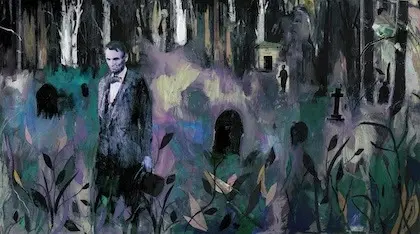
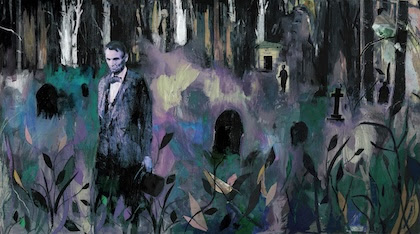
- The Narrative Premise: Set in the "bardo"—a Tibetan Buddhist concept of the transitional state between life and rebirth—the story unfolds in a metaphysical graveyard populated by restless spirits who refuse to accept their mortal fates. The emotional anchor of the narrative is the historical grief of Abraham Lincoln, whose nocturnal, grieving visits to the tomb of his prematurely deceased 11-year-old son, Willie, inadvertently trap the boy’s spirit in limbo, preventing him from moving on to the next plane of existence.
- Vocal and Musical Powerhouses: To bring this supernatural drama to life, the Met has assembled an elite cast of vocalists. The production is conducted by the Met’s dynamic Jean-Dumont Music Director, Yannick Nézet-Séguin. The stellar principal cast features baritone Peter Mattei as Abraham Lincoln, alongside world-class vocalists soprano Christine Goerke, mezzo-soprano Stephanie Blythe, and countertenor Anthony Roth Costanzo.
Official Statements and Industry Reactions
The intersection of Peter Gelb’s gala remarks and Dua Lipa’s established literary interests has sparked intense commentary across arts and entertainment circles. While neither Lipa’s management nor the Metropolitan Opera’s official press office has issued a binding confirmation regarding her red-carpet attendance or camera crew logistics, insiders suggest that negotiations or logistical planning may be quietly underway.
Cultural critics have noted that Gelb’s public teasing represents a masterclass in modern arts PR. By publicly linking the institution to a global pop titan, the Met reinforces its narrative as an agile, culturally relevant institution capable of intersecting with mainstream pop culture without compromising its artistic integrity.
Furthermore, literary circles have celebrated the unexpected spotlight cast upon George Saunders’s work. The adaptation of a contemporary American novel into a major operatic world premiere is rare enough; having it intersect with the cultural commentary of a top-tier pop star elevates contemporary literature and classical music into the shared cultural zeitgeist.
Future Outlook: What a Crossover Means for the Future of Opera
As opening night approaches, all eyes will be trained on the red carpet at Lincoln Center. Will Dua Lipa materialize with a camera crew to document her transition from podcast interviewer to opera patron? Or will the moment remain a brilliant piece of theatrical speculation designed to ignite the cultural conversation?
Regardless of whether the pop star steps foot inside the auditorium on opening night, the ripples of Peter Gelb’s announcement have already achieved a vital strategic victory. They have forced a mainstream audience to ask questions about contemporary opera, contemporary composition, and literary adaptation.
If the Metropolitan Opera successfully continues to forge organic bridges with figures like Dua Lipa—artists who straddle the line between mass commercial appeal and genuine intellectual curiosity—the institution may well discover the blueprint for sustaining classical music in the digital age. Lincoln in the Bardo promises to be a watershed artistic achievement on its own merits; paired with the electrifying possibility of pop royalty in the audience, it cements itself as the must-see cultural event of the season.