
Executive Overview
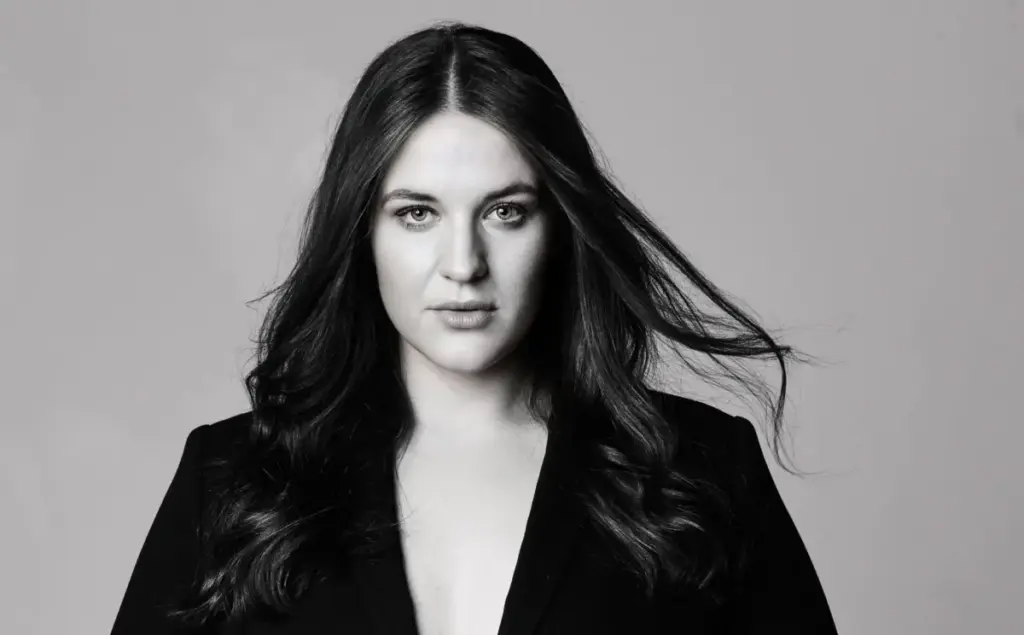
The American theatrical landscape is continually sustained by the discovery and cultivation of fresh, daring voices. Continuing this vital tradition, the Roundabout Theatre Company has officially announced the upcoming world premiere of The Blue Parts, a new play written by acclaimed dramatist Liba Vaynberg and directed by Obie Award-winning director Lee Sunday Evans.
Slated for the latter half of the 2026–2027 Off-Broadway season, this highly anticipated production is set to anchor the latest iteration of the esteemed Roundabout Underground initiative. Originally commissioned by the Working Theatre, The Blue Parts will begin preview performances on February 18, 2027, ahead of an official opening night on March 11, 2027. The limited engagement is scheduled to run through April 18, 2027, housed intimately within the Black Box Theatre at the Harold and Miriam Steinberg Center for Theatre in New York City.
In a bold move designed to champion accessibility and eliminate traditional socioeconomic barriers to live theatre, Roundabout Theatre Company has announced that tickets for The Blue Parts will be sold on a pay-what-you-wish pricing scale, starting at a mere $10. This innovative ticketing strategy serves as both a nod to the foundational ethos of the Roundabout Underground program and a major statement of intent for the company’s new artistic leadership.
As described by the creative team, The Blue Parts is an intimate, singular exploration of migration, generational divides, and human connection, set against the idiosyncratic backdrop of Brighton Beach. Centered around a fierce storm that traps a mature store owner and an idealistic teenage activist together, the play promises to examine the vast emotional oceans that separate individuals, while simultaneously bridging them through shared vulnerability and resilience.
With casting and the complete creative team yet to be announced, anticipation is already mounting within the New York theatrical community. This comprehensive report explores the genesis of the production, the institutional history of Roundabout Underground, the artistic vision of its creators, and the broader economic and cultural implications of democratizing access to Off-Broadway theatre.
Detailed Chronology: From Commission to Stage
The journey of The Blue Parts to the Roundabout Underground stage is a testament to the rigorous, organic development process that defines contemporary American playwriting.
The Genesis and Commissioning
The project was originally commissioned by the Working Theatre, an institution historically dedicated to producing theatre that speaks directly to the experiences of working-class people. Liba Vaynberg, known for her incisive, emotionally resonant writing, utilized the commission to explore the specific cultural ecosystem of Brighton Beach—a coastal Brooklyn neighborhood famously recognized for its rich immigrant history, particularly its vibrant Russian-speaking community.
Vaynberg’s writing process involved deep dives into themes of displacement, environmental anxiety, and the psychological weight of physical spaces. The play evolved into a tight, highly focused two-hander that examines how individuals weather literal and metaphorical storms.
Entering the Roundabout Underground Incubator
Following its initial development phase, the play caught the attention of the programming team at Roundabout Theatre Company. It was selected to be part of Roundabout Underground, an initiative specifically designed to nurture plays that do not necessarily fit the commercial demands of Broadway or large-scale Off-Broadway houses, but which possess immense artistic merit and raw creative urgency.
Under the guidance of director Lee Sunday Evans, The Blue Parts began a secondary phase of dramaturgical refinement. Evans, celebrated for her physically kinetic and textually rigorous approach to new work, immediately recognized the play’s unique theatricality. The production timeline was formally locked in during the late summer of 2026, with an announcement made public on September 29, 2026, by Playbill and major cultural news outlets.
Upcoming Milestones
As the production builds toward its early 2027 premiere, key operational milestones include:
- Fall 2026: Finalization of casting and announcement of the complete design team (set, lighting, costume, and sound).
- January 2027: Commencement of table reads and formal rehearsal processes in Manhattan.
- February 18, 2027: First preview performance at the Black Box Theatre in the Harold and Miriam Steinberg Center for Theatre.
- March 11, 2027: Official opening night and press performance.
- April 18, 2027: Final performance of the limited engagement.
Supporting Context & Metrics: The Power of Roundabout Underground
To fully appreciate the significance of The Blue Parts arriving at the Black Box Theatre, one must examine the institutional history, impact, and economic architecture of the Roundabout Underground program.
The Legacy of Todd Haimes and the Underground
Founded under the visionary leadership of the late Todd Haimes, Roundabout Theatre Company’s former artistic director and CEO, the Underground program was established with a singular, radical mandate: to provide emerging playwrights with the institutional resources, professional space, and artistic freedom required to take genuine creative risks.
Haimes understood that commercial pressures often force regional and Off-Broadway theaters to rely on safe, pre-tested titles. Roundabout Underground was built as a counterweight to this reality—a safe harbor where writers early in their careers could see their work fully produced to the highest professional standards, free from the crushing box-office expectations of commercial theatre.
Over the years, the program has launched the careers of numerous prominent contemporary playwrights, serving as the birthplace for critically acclaimed works such as Stephen Karam’s Speech & Debate, Steven Levenson’s The Unavoidable Disappearance of Tom Durnin, Joshua Harmon’s Bad Jews, Anna Ziegler’s Boy, and Jolyon Gray’s more recent contributions. These works have gone on to be produced globally, cementing the Underground’s reputation as one of the most successful new-play incubators in the United States.
The Economics of Access: The Pay-What-You-Wish Model
The announcement that The Blue Parts will utilize a pay-what-you-wish ticketing model starting at $10 represents a major strategic shift in how institutions combat the rising cost of attending live performance in New York City.
In recent years, the escalating cost of theater tickets has sparked intense industry-wide debate regarding socio-economic equity, diversity of audiences, and the long-term sustainability of cultivating younger or lower-income theatergoers. By lowering the financial barrier to entry to a nominal $10 baseline—with the option for patrons of greater means to pay more to support the theatre—Roundabout is effectively democratizing the cultural space.

| Metric / Detail | Description |
|---|---|
| Venue | Black Box Theatre at the Harold and Miriam Steinberg Center for Theatre (Off-Broadway) |
| Preview Date | February 18, 2027 |
| Opening Night | March 11, 2027 |
| Closing Date | April 18, 2027 |
| Ticketing Structure | Pay-What-You-Wish (Starting at $10) |
| Playwright | Liba Vaynberg |
| Director | Lee Sunday Evans |
| Original Commissioning Body | Working Theatre |
This pricing strategy directly aligns with the mission of the Underground. If the program exists to take risks artistically, it follows that the audience model should similarly take risks structurally—prioritizing community engagement and radical accessibility over maximal box-office yield.
Official Statements and Artistic Vision
The announcement of The Blue Parts was accompanied by powerful statements from the leadership of Roundabout Theatre Company, shedding light on the philosophical foundations of both the production and the program at large.
Christopher Ashley on the Next Chapter of Underground
Christopher Ashley, the Artistic Director of Roundabout Theatre Company, emphasized the continuity of the institution’s core values while signaling an eagerness to evolve under his leadership:
"Roundabout Underground grew from Todd Haimes’ belief that emerging artists deserve the space and resources to take risks and develop their voices. With the support of our Board and our entire team, it became a home where writers early in their careers could see their work fully produced," Ashley stated.
He continued, "I’m excited to build on that vision in Underground’s next chapter. To mark it, tickets for The Blue Parts will be pay-what-you-wish, starting at $10. It’s a fitting way to begin, and it means anyone who wants to see this work can."
Ashley’s statement underscores a dual commitment: honoring the legacy of institutional risk-taking while aggressively expanding audience access to ensure that economic privilege does not dictate cultural participation.
The Thematic Universe of The Blue Parts
While detailed plot synopses remain deliberately focused to preserve the surprises of the live theatrical experience, promotional materials released by Roundabout provide a vivid poetic description of the play’s thematic landscape:
"Water. Salt. VHS tapes. When a powerful storm traps Marina in her store with a teenager petitioning to Save The Whales, they have to swim the gulf between them, vast and alive as the Atlantic Ocean. The Blue Parts is a singular, intimate tale of migration to and from Brighton Beach."
This evocative imagery points to several trademark elements of Liba Vaynberg’s writing style: the blending of mundane, tactile objects (VHS tapes, salt) with vast cosmic or environmental forces (the ocean, a massive storm). The juxtaposition of a mature store owner and a youthful environmental activist creates an immediate generational friction, forcing both characters to confront their respective values, histories, and personal migrations.
Brighton Beach functions not merely as a geographic setting, but as a psychological landscape. Known historically as "Little Odessa," the neighborhood has long served as a crucial landing point for waves of immigrants, imbuing the local storefronts and boardwalks with a unique sense of displacement, memory, and adaptation. The storm in the play acts as a narrative catalyst—a pressure cooker that forces characters to look inward and confront the "blue parts" of their own histories that remain submerged or unresolved.
Future Outlook: The Evolution of Off-Broadway Playwriting
As the New York theatrical ecosystem continues to navigate the post-pandemic economic landscape, productions like The Blue Parts serve as crucial barometers of artistic health and institutional adaptability.
The Role of New Play Development
The commercial theater model has increasingly leaned toward familiar intellectual property, jukebox musicals, and star-studded revivals to guarantee financial returns. In contrast, the Off-Broadway and non-profit sectors remain the primary engines of original storytelling. By providing a dedicated incubator like Roundabout Underground, institutions ensure that the American canon does not stagnate.
Projects commissioned by specialized organizations like the Working Theatre and subsequently developed by major houses like Roundabout demonstrate a healthy cross-pollination within the theatrical community. This collaborative ecosystem allows plays to undergo multiple iterations of feedback, workshop readings, and structural revisions before facing the critical gaze of New York opening nights.
What Lies Ahead for Roundabout Underground
With The Blue Parts spearheading the program’s latest chapter under Christopher Ashley, industry observers will be watching closely to see how the pay-what-you-wish pricing model impacts audience demographics, attendance rates, and institutional fundraising models. If successful, this initiative could serve as a replicable blueprint for other non-profit theaters struggling to balance earned revenue with the imperative of community inclusivity.
Furthermore, the creative pairing of Liba Vaynberg and Lee Sunday Evans signals a formidable artistic alignment. Vaynberg’s sharp, empathetic ear for dialogue paired with Evans’ visceral, spatially inventive direction promises an evening of theatre that is as intellectually stimulating as it is emotionally arresting.
As rehearsals approach in early 2027, anticipation will undoubtedly build around the casting announcements and design reveals. For theatergoers eager to witness the genesis of tomorrow’s major dramatic works, the Black Box Theatre at the Steinberg Center will undoubtedly be the place to be this spring.
Summary of Key Takeaways
- Production: World premiere of The Blue Parts by Liba Vaynberg, directed by Lee Sunday Evans.
- Venue: Black Box Theatre at the Harold and Miriam Steinberg Center for Theatre (Roundabout Underground).
- Dates: Previews begin February 18, 2027; Opening night is March 11, 2027; Closes April 18, 2027.
- Accessibility: Tickets are sold on a pay-what-you-wish scale, starting at $10, in a major push for audience equity.
- Themes: Migration, generational divides, environmental activism, and personal history set against the backdrop of Brighton Beach during a fierce storm.
- Institutional Context: Marks a new chapter for Roundabout Underground under Artistic Director Christopher Ashley, honoring the legacy of founder Todd Haimes.