
Executive Overview
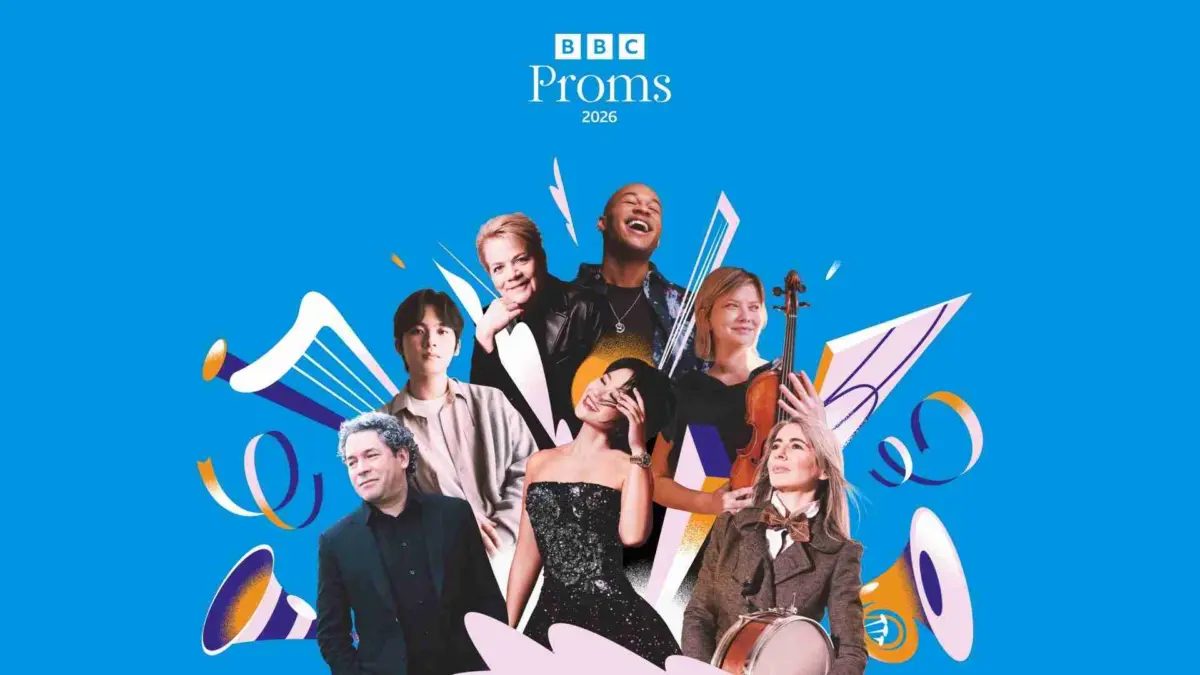
The curtain is set to fall on another spectacular summer of classical music as the 2026 BBC Proms reaches its crescendo. On Saturday, 12 September, the Royal Albert Hall will host the crown jewel of the classical music calendar: the Last Night of the Proms. Bringing together traditional pageantry, world-class artistry, and a surprising tribute to country music royalty, this year’s grand finale promises to be a joyous celebration of a deeply successful season.
Chief Conductor Sakari Oramo will lead the BBC Symphony Orchestra & Chorus, alongside the BBC Singers, for classical music’s biggest party. They will be joined by a stellar lineup of guest artists, including virtuoso pianist Yuja Wang and acclaimed Scottish tenor Nicky Spence. Adding a unique cross-genre flavor to the evening, the concert will also feature a special tribute to the late Dolly Parton, performed by an all-star cast comprising Sheridan Smith, Beverley Knight, and country-pop duo Ward Thomas.
Beyond the electric atmosphere of the Royal Albert Hall, the 2026 season has proven to be a historic triumph for the BBC. Spanning eight weeks and featuring 86 concerts—72 at the iconic London venue and 14 at various locations across the UK—the festival has welcomed approximately 300,000 live attendees. More impressively, the season has broken digital engagement records. Interim figures reveal that BBC Sounds and BBC iPlayer have reached 1.7 million accounts—a striking 32% year-on-year increase—generating 6.8 million plays and an astounding 3.4 million listening and viewing hours.
As the classical world looks ahead to the centenary of the BBC Proms next year, the 2026 finale stands as both a celebration of contemporary musical innovation and a testament to the enduring power of public service broadcasting.
Detailed Chronology: The Last Night Programme
The Last Night of the Proms is renowned for its eclectic mix of high art, contemporary commissions, and flag-waving theatricality. The 2026 programme is no exception, striking a balance between demanding masterworks and crowd-pleasing entertainment.
Part 1: Symphonic Masterworks and World Premieres
The evening opens with high energy as Sakari Oramo leads the BBC Symphony Orchestra through Leonard Bernstein’s sparkling Candide: Overture. This sets a lively tone before the orchestra shifts into the reflective mood of Joseph Foulds’s Keltic Suite, specifically the second movement, "Lament."
The vocal performances begin with a dramatic flourish as acclaimed Scottish tenor Nicky Spence takes the stage. Joined by the BBC Symphony Chorus and the BBC Singers, Spence will perform excerpts from Act I of Antonín Dvořák’s opera Rusalka ("Vidino divná, přecladká"). This operatic intensity is promptly balanced by the sweeping, cinematic strains of Smetana’s Má vlast (specifically "Vltava"), celebrating the rich heritage of Czech symphonic writing.
A major highlight of the early programme is the world premiere of Dithyramb, a BBC commission by the celebrated Canadian composer and conductor Samy Moussa, written specifically for the combined forces of the BBC Symphony Chorus and the BBC Singers.
Virtuosity and Country Roads
Following the contemporary premiere, the concert welcomes world-renowned pianist Yuja Wang. Known for her staggering technical brilliance and magnetic stage presence, Wang will give the first-ever Proms performance of Samuel Barber’s Pulitzer Prize-winning Piano Concerto.
Following the Barber masterpiece, the atmosphere pivots sharply toward popular culture with To Dolly, With Love. Arranged by Fiona Brice, this specially curated medley pays tribute to the late, legendary Queen of Country, Dolly Parton. The segment features a powerhouse all-star cast:
- Sheridan Smith will belt out an energetic rendition of 9 to 5.
- Beverley Knight will lend her soulful, soaring vocals to I Will Always Love You.
- Ward Thomas will bring their signature vocal harmonies to Jolene.
The musical journey continues with Gustav Holst’s immortal The Planets—specifically "Jupiter, the Bringer of Jollity"—before Yuja Wang returns to the stage for a dazzling change of pace, performing Alexander Tsfasman’s jazzy Suite for Piano and Orchestra.
The Road to the Finale
As the evening progresses toward its legendary second half, Nicky Spence returns alongside Stuart Calvert’s arrangement of Scotch Snap. This leads into the second world premiere of the evening: Iris of Life, a BBC commission by Academy Award-winning British composer Anne Dudley, performed with the BBC Singers.
Spence then showcases his theatrical versatility with a crowd-pleasing performance of "Sit Down, You’re Rockin’ the Boat" from Frank Loesser’s Guys and Dolls (arranged by Mark Cumberland), backed by the full weight of the BBC Symphony Chorus and Singers.
The Traditional Proms Finale
No Last Night would be complete without its beloved, time-honoured traditions. The programme culminates in Henry Wood’s Fantasia on British Sea Songs, Thomas Augustine Arne’s Rule, Britannia! (arranged by Malcolm Sargent), Edward Elgar’s Pomp and Circumstance March No. 1 (Land of Hope and Glory), and Hubert Parry’s Jerusalem (orchestrated by Edward Elgar).
The formal concert concludes with Benjamin Britten’s arrangement of The National Anthem before closing with the universal fellowship of Auld Lang Syne, arranged by Paul Campbell.
Supporting Context & Metrics: A Record-Breaking Season
To understand the magnitude of the Last Night, one must examine the monumental scale of the 2026 Proms season as a whole. Over eight grueling weeks, the festival delivered 86 distinct concerts. While the Royal Albert Hall remained the spiritual heartland of the festival with 72 performances, the BBC successfully decentralized classical music, staging 14 concerts at diverse venues across the United Kingdom.
The Digital Revolution in Classical Music
While live attendance figures remain robust—drawing approximately 300,000 people across all events—the true story of the 2026 season lies in its unprecedented digital expansion. In an era where traditional arts institutions often struggle to capture younger or more dispersed demographics, the BBC Proms has leveraged digital platforms with staggering success.
Interim metrics released by the BBC outline a watershed moment for classical music broadcasting:
- 1.7 million accounts have accessed Proms content via BBC Sounds and BBC iPlayer between 13 April and 6 September 2026. This represents a remarkable 32% year-on-year increase.
- This engagement translated into 6.8 million individual plays.
- Audiences consumed a massive 3.4 million combined listening and viewing hours.
Furthermore, Radio 3’s weekly accounts on BBC Sounds experienced a 10% year-on-year surge for the week commencing 17 August 2026—a peak period that featured high-profile international residencies and guest appearances from world-class ensembles such as The Met Orchestra, the Oslo Philharmonic, and the Berlin Philharmonic.
These numbers demonstrate that the BBC’s dual strategy of maintaining rigorous live programming while maximizing on-demand accessibility is paying substantial dividends, ensuring that classical music remains vibrant, relevant, and widely accessible.
Official Statements
The leaders behind the festival have expressed immense pride in the achievements of the 2026 season, while casting an eager eye toward the future.
Sam Jackson, Controller of BBC Radio 3 and BBC Proms, reflected on the emotional and quantitative success of the summer:
"This year’s Last Night of the Proms promises to be a joyous celebration, bringing together world-class performers, much-loved repertoire and memorable musical moments. Across eight weeks, audiences have embraced the Proms in record numbers on our broadcast platforms, while around 300,000 people have joined us at the Royal Albert Hall and at venues across the UK. We very much look forward to the centenary of the BBC Proms next year, but for now, we can’t wait to celebrate the end of the 2026 season in style!"
Echoing these sentiments, Suzy Klein, Head of Arts and Classical Music TV, emphasized the unifying power of public service broadcasting:
"The BBC Proms has once again connected audiences across the UK and beyond through an extraordinary summer of live music. We’re incredibly proud of the range and quality of concerts across BBC television and BBC iPlayer, and the Last Night will provide the perfect finale to an unforgettable season. And while the season may be drawing to a close, audiences will be able to enjoy the Proms on BBC iPlayer for a whole year afterwards."
Future Outlook: Looking Toward the Centenary
As the final notes of Auld Lang Syne ring out across the Royal Albert Hall on 12 September, the classical music community will not have long to dwell on the conclusion of 2026. Attention is already shifting rapidly toward the horizon.
Next year marks a monumental milestone for the institution: the centenary of the BBC Proms. Founded in 1895 by Robert Newman with the noble objective of making classical music accessible to wider audiences through low ticket prices and a relaxed atmosphere—a vision subsequently championed and sustained by Sir Henry Wood—the Proms have evolved into the world’s largest classical music festival.
The record-breaking digital metrics of 2026 prove that the appetite for orchestral music, contemporary commissions, and boundary-pushing cross-genre collaborations is healthier than ever. By successfully marrying its historic traditions with cutting-edge digital distribution, the BBC Proms enters its centenary year not merely as a preserved relic of British cultural heritage, but as a dynamic, forward-looking global phenomenon.
How to Watch, Listen, and Catch Up
For those unable to secure a golden ticket to the Royal Albert Hall, the BBC has ensured comprehensive multi-platform coverage:
- Radio Broadcast: The entire evening will be broadcast live on BBC Radio 3 and BBC Sounds starting at 7.10pm, expertly presented by Petroc Trelawny and Georgia Mann.
- Television – Part 1: Coverage begins on BBC Two and BBC iPlayer at 7.10pm, presented by Katie Derham and Nick Mohammed, with backstage reporting by Tina Daheley.
- Television – The Finale: Viewers can transition to BBC One and BBC iPlayer at 9pm for the iconic second half and traditional flag-waving finale.
- On-Demand Availability: If you miss the live broadcasts, audio streams will remain available on BBC Sounds for 30 days, while television broadcasts will be hosted on BBC iPlayer for a full year following the event.