
Executive Overview
"Why be an artist if we can’t enjoy the things we create?"
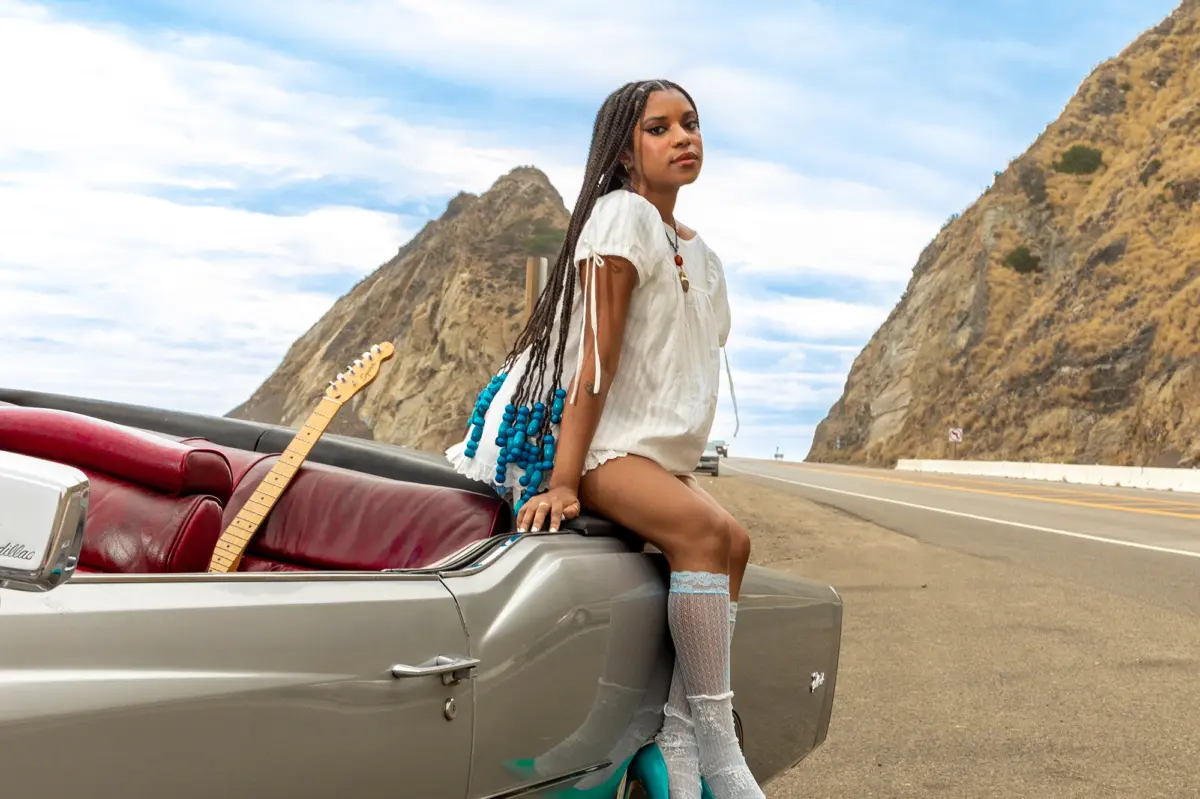
This central, piercing question serves as the heartbeat of Dani Offline’s viral Substack essay, "everyone wants to be a DJ, no one wants to dance." In an era dominated by hyper-curated aesthetics, algorithmic metrics, and the relentless commercialization of culture, Dani Offline—a self-produced, self-sustained cultural polyglot—has emerged as a refreshing antidote to industry fatigue.
As the music world eagerly unpacks her debut LP, Lover’s Discourse, it becomes abundantly clear that joy through active participation is not merely a thematic element of her work; it is her foundational creative philosophy. Bridging the gap between high academia—bolstered by her PhD in Comparative Literature—and the rich, visceral traditions of Black musical heritage, Dani Offline is carving out a unique lane for herself.
Her debut project is a masterclass in conceptual depth, drawing inspiration from 1970s "quiet storm" R&B, Roland Barthes’ structuralist explorations of affection, and bell hooks’ profound critiques of modern romance. Far from being a detached academic exercise, Lover’s Discourse is a living, breathing, deeply funky exploration of human vulnerability. As she prepares to take her genre-bending sound on an international tour spanning Portland, San Francisco, Los Angeles, and London, Dani Offline stands as both a rigorous cultural historian and a fearless contemporary innovator.
Detailed Chronology: From Kindergarten Keys to Critical Acclaimed Polyglot
The Early Foundations: Classical Discipline Meets Jazz Improvisation
The artistic trajectory of Dani Offline did not begin in a corporate boardroom or a hyper-optimized bedroom studio; it started on the piano bench in kindergarten. Introduced to the keys at an extraordinarily young age, she spent her formative years navigating the structured, often rigid pathways of classical music. While she humorously admits that she "wasn’t always the best student," her dedication to the instrument persisted well into her high school years, laying a technical bedrock that would later inform her self-production capabilities.
The true catalyst for her musical awakening, however, arrived during her tenure in the jazz program at Princeton University. Immersed in an environment that prized spontaneity, emotional communication, and rigorous listening, her understanding of what music could achieve shifted fundamentally.
"I had some classical training in choirs growing up, but studying jazz really opened my eyes to what it could look like to create music and improvise," Dani reflects. "I think my taste and style have really been shaped by that experience, as well as the music my parents played in the car growing up. A lot of jazz, 70s soul, classic R&B, that sort of thing."
This eclectic sonic diet—fusing the structured discipline of choir and classical piano with the fluid, improvisational ethos of jazz and soul—would eventually become the DNA of her artistry.
The Crucible of Creation: Writing Through Insecurity
As Dani neared the completion of Lover’s Discourse, she found herself grappling with the existential dread that plagues many modern creators: the erosion of genuine joy in consumption versus the relentless pressure of production. This introspection birthed both her viral Substack piece and the thematic core of her album.
Rather than viewing her intellectual pursuits (including her doctoral studies in Comparative Literature) as separate from her musical output, Dani synthesized them. Finalizing the songwriting process required her to confront her own vulnerabilities head-on.
"When I was in the process of songwriting, I had to think really deeply about my relationship with music, my insecurities, and the love I feel for creating. Writing out those thoughts is how I worked through all of it," she explains. "Listening to music is why I love making music in the first place, and I think I needed to remember that."
This self-awareness is precisely what elevates Lover’s Discourse above standard contemporary R&B offerings. It is an album born out of a psychological reconciliation with the very act of art-making.
Supporting Context & Metrics: Cultural Literacy and Sonic Architecture
The Sound: Reviving the Quiet Storm
Sonically, Lover’s Discourse finds its aesthetic roots in the 1970s "quiet storm"—a smooth, sensual, and emotionally nuanced subgenre of R&B pioneered by soul legends like Smokey Robinson. Characterized by lush instrumentation, laid-back grooves, and intimate vocal delivery, the quiet storm provides the ideal canvas for Dani Offline’s introspective lyricism.
Yet, the project never risks feeling like a mere pastiche or museum piece. By anchoring 70s aesthetics in contemporary production techniques, she achieves a delicate balance: honoring historical Black musical heritage while maintaining absolute relevance in the 2020s landscape.
The Intellectual Framework: Barthes, hooks, and Modern Romance
The intellectual scaffolding of the album borrows heavily from Roland Barthes’ seminal 1977 text, A Lover’s Discourse: Fragments, which maps the internal monologues, anxieties, and ecstasies experienced by those navigating romantic love.
This conceptual depth is visually and culturally amplified in the playful, high-concept music video for the funky lead single, "ouch!" Taking inspiration from the 1960s and 70s game show The Dating Game (akin to Blind Date), Dani pulls off a remarkable artistic feat: she plays the contestant, the show’s host, and every single one of the prospective male suitors.
Explaining the creative rationale behind this casting choice, she notes:
"I wanted to play with the idea of being someone’s type, so I cast myself as the girl, all the men who are the love interests, and the host too. We’re all born naked, and the rest is drag!"
Within this visual satire lies a brilliant Easter egg. One of the prospective suitors—a quintessential "performative modern male" clutching an appropriately performative matcha latte—is seen reading bell hooks’ All About Love: New Visions. The inclusion of hooks’ work, which famously dismantles the notion of love as a passive emotion in favor of viewing it as an intentional, continuous practice, serves a dual purpose. It nods to Dani’s deep engagement with feminist literature while skewering the archetype of the "performative lover boy"—the socially conscious, well-read intellectual who is nonetheless fully capable of devastating emotional destruction. It is a blink-and-you-miss-it detail that cements the track’s formidable cultural literacy.
Official Statements & Discourse: Navigating Universality and Identity
When examining a work of art so deeply tied to literary theory and historical frameworks, questions of universality inevitably arise. During our discussion, the conversation naturally turned toward the intersection of identity and art. Given that Lover’s Discourse leans heavily into Barthes’ European structuralist traditions, the question must be asked: Does a 21st-century Black woman navigating love arrive at different conclusions than a 20th-century white male French literary theorist?
Dani Offline’s response is as concise as it is definitive:
"Honestly? Listen to ‘ouch!’ and tell me if a white man could write that song. I don’t think so…"
With that single statement, she cuts through academic abstraction, reasserting that lived experience is the ultimate validator of artistic truth. While theoretical frameworks provide useful scaffolding, the emotional resonance of Lover’s Discourse is undeniably rooted in the specific, unreplicable perspective of a Black woman operating at the intersection of modern culture, literature, and sound. It is a reminder that universal themes of love and heartbreak are always refracted through the intensely personal lens of identity.
Future Outlook: The International Tour and the Next Era of Independent Artistry
With Lover’s Discourse now streaming worldwide, Dani Offline is translating her recorded vision into a live theatrical and musical experience. Her upcoming tour will bring her unique blend of intellectual rigor and effortless groove to key cultural hubs, including Portland, San Francisco, Los Angeles, and London.
For audiences attending these shows, the experience promises to transcend a traditional concert. If the album is any indicator, fans will witness an artist who effortlessly blurs the lines between DJ and dancer, participant and spectator. In an industry increasingly obsessed with passive consumption and algorithmic conformity, Dani Offline offers a vital alternative.
She proves that an artist can be simultaneously a meticulous historian and a fearless innovator—someone who not only analyzes the mechanics of love and culture, but invites us all onto the dance floor to actively participate in the joy of creation.