
Executive Overview
On October 17, the Metropolitan Opera’s globally acclaimed, pioneering cinematic initiative—The Met: Live in HD—will continue its ongoing mission to democratize and globalize grand opera by beaming Giuseppe Verdi’s psychological masterpiece, Macbeth, directly into movie theaters worldwide. This high-definition transmission promises to bring the opulent halls of Lincoln Center to audiences across continents, offering an immersive, front-row cinematic experience of one of the repertory’s most harrowing and musically thrilling works.
At the helm of this monumental production is a powerhouse ensemble of operatic superstars. Baritone Quinn Kelsey, celebrated globally for his commanding stage presence and nuanced vocal artistry, assumes the formidable title role. Opposite him stands soprano Lise Davidsen, a vocal phenomenon of our time, who brings her rich, soaring instrument and searing dramatic intensity to the role of Lady Macbeth. The principal quartet is rounded out by two of today’s most sought-after artists: tenor Freddie De Tommaso as the tragic hero Macduff, and bass-baritone Ryan Speedo Green as the ill-fated Banquo.
Musically, the performance is guided by Yannick Nézet-Séguin, the Met’s Jeanette Lerman-Neubauer Music Director, whose visionary leadership continues to shape the contemporary identity of the company. Visually and theatrically, the production is helmed by stage director Louisa Proske, whose striking theatrical concepts have drawn critical acclaim. Meanwhile, the cinematic translation of the evening is curated by veteran director Gary Halvorson, ensuring that the visual language of the stage is brilliantly adapted for the screen. Adding an extra layer of intimacy and insight for moviegoers, countertenor Anthony Roth Costanzo serves as the live host of the transmission, offering viewers exclusive behind-the-scenes access, intimate artist interviews, and a glimpse into the intricate mechanics of putting on a world-class opera during the intermissions.
This particular staging of Macbeth arrives with a complex critical legacy. When it first premiered, it sparked robust artistic debates among critics and audiences alike. As noted by industry publication OperaWire, the opening night was characterized as an evening where "Quinn Kelsey & the Metropolitan Opera Chorus Electrify in an Uneven Opening Night." Yet, it is precisely this theatrical tension—the friction between daring directorial choices and transcendent vocalism—that makes this upcoming Live in HD broadcast a must-watch event for global operatic aficionados and newcomers alike.
Detailed Chronology: From Shakespeare’s Page to Verdi’s Score and the Met’s Modern Stage
To fully appreciate the weight of the October 17 transmission, one must understand the rich, tumultuous history of Macbeth—both as a theatrical work and as a cornerstone of the Metropolitan Opera’s modern programming.
The Genesis of Verdi’s Shakespearean Obsession
Giuseppe Verdi’s lifelong fascination with the works of William Shakespeare is well-documented, but Macbeth represents his first foray into adapting the Bard’s theatrical canon. Premiering at the Teatro della Pergola in Florence on March 14, 1847, the opera marked a radical departure from the standard Italian bel canto conventions of the era. Working closely with librettist Francesco Maria Piave (with supplementary text by Andrea Maffei), Verdi stripped away the traditional romantic subplots to focus laser-like on the psychological rot of the Scottish usurper and his ruthlessly ambitious wife.
Verdi demanded acting that was as fierce as the singing. He famously asked for Lady Macbeth not to possess a beautiful voice, but rather one that was "harsh, choked, and dark"—an aesthetic directive that paved the way for the dramatic soprano repertoire of the late 19th and 20th centuries. The opera features some of Verdi’s most atmospheric and daringly innovative music, from the eerie, prophecy-chanting witches’ choruses to the spine-chilling sleepwalking scene (“Una macchia è qui tuttora”), which remains one of the greatest psychological portraits in all of dramatic music.
The Met’s Evolution and the Birth of Live in HD
Fast forward nearly two centuries, and Verdi’s tragedy remains a vital touchstone for the Metropolitan Opera. Under the general management of Peter Gelb, the Met made a historic gamble in 2006 by launching The Met: Live in HD. Recognizing that the traditional operatic demographic was aging and that geographic barriers prevented millions from experiencing the company live in New York, the Met leveraged state-of-the-art digital satellite technology to transmit live performances into cinemas globally.
Over the past decade and a half, the series has grown from a modest experiment into a global cultural phenomenon, reaching millions of audience members across thousands of theaters in more. It has fundamentally altered the economics and sociology of opera production, incentivizing directors and designers to create stagings that can withstand the intense, magnifying scrutiny of high-definition camera lenses.
The Rehearsal Process and Opening Night Dynamics
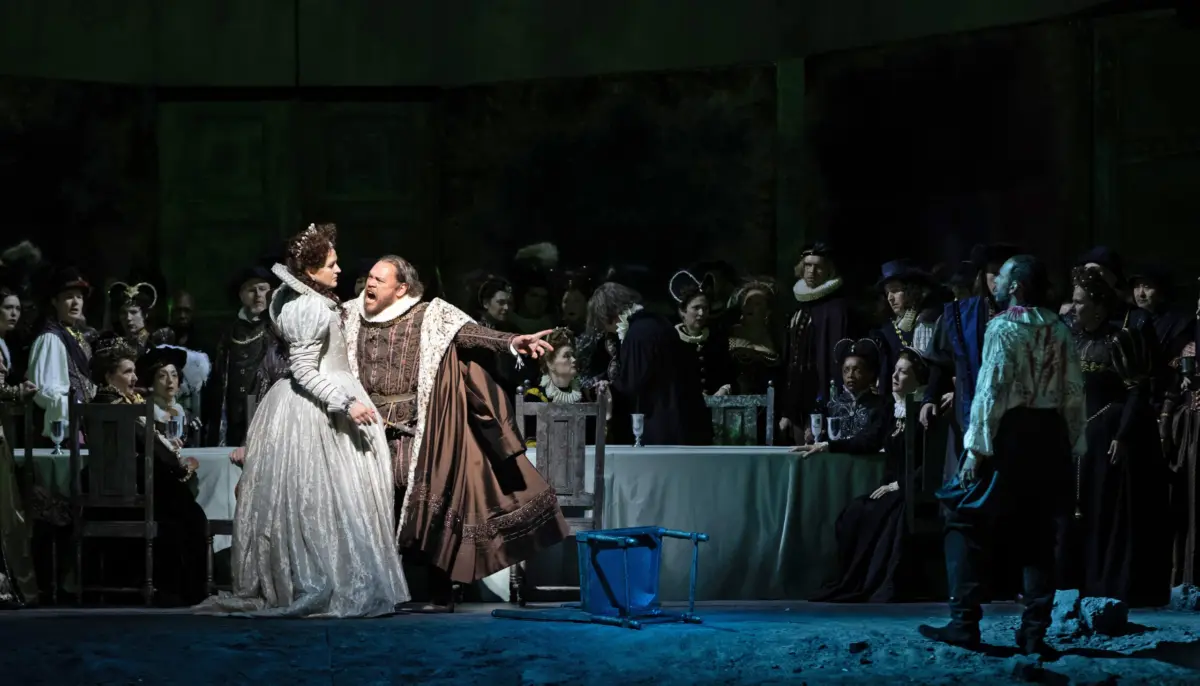
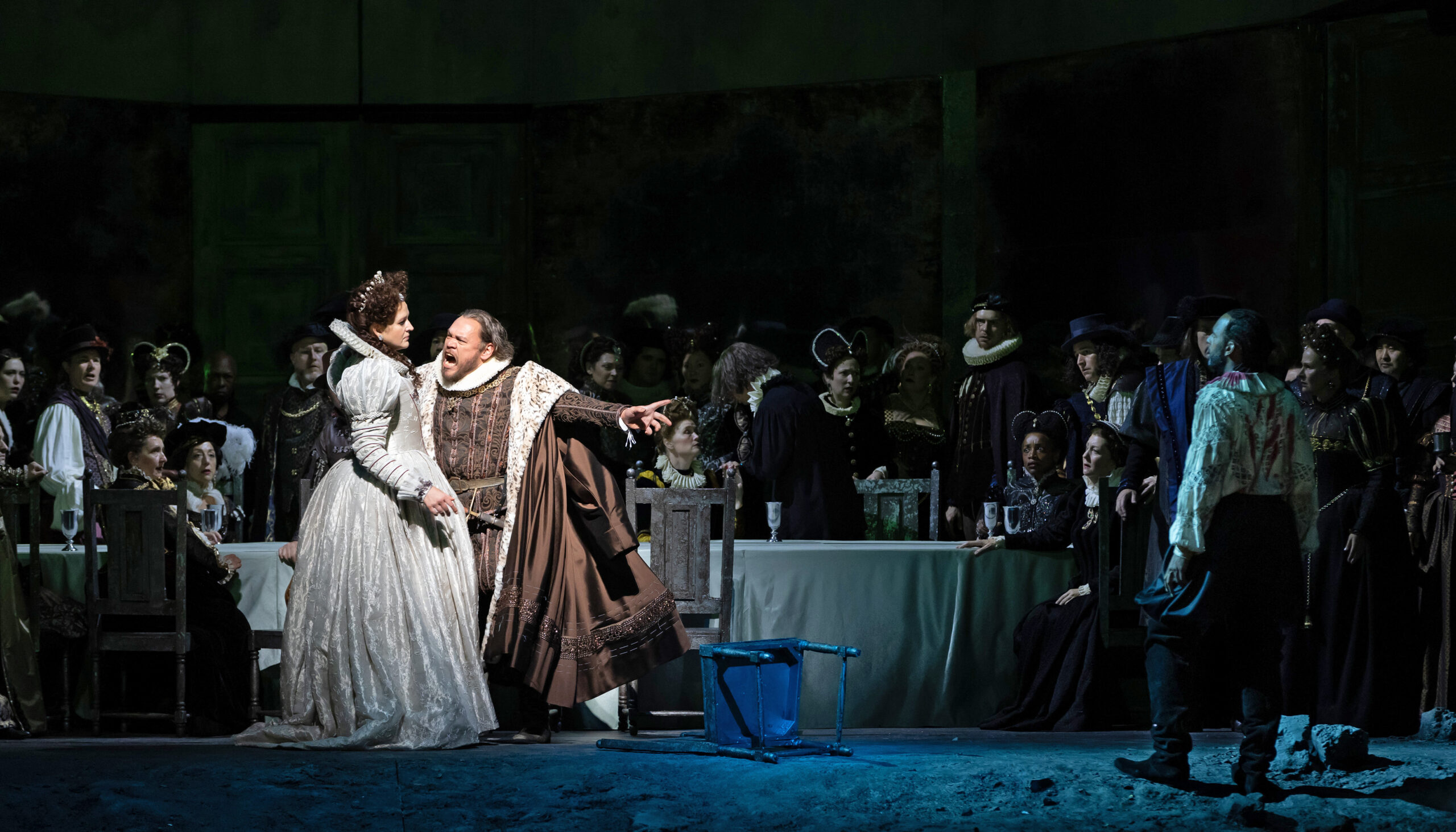
The journey of the current production to the Live in HD screen was forged in the rehearsal rooms of Lincoln Center, where director Louisa Proske worked meticulously with the cast to strip away operatic clichés and unearth the visceral, visceral human terror at the heart of Shakespeare’s Scottish Play. Proske’s staging relies heavily on stark imagery, psychological claustrophobia, and a shifting sense of reality, mirroring the hallucinations that plague the royal couple.
When the production initially took to the stage, it received a mixed yet intensely passionate response. Critics pointed out the immense disparity between bold, sometimes polarizing directorial concepts and the sheer, unadulterated vocal brilliance of the cast. Quinn Kelsey’s portrayal of the title character was widely hailed as a masterclass in baritonal acting—possessing the burnished tone, legato line, and emotional vulnerability required to make a tyrant sympathetic in his descent into madness. Alongside him, Lise Davidsen’s Lady Macbeth offered vocal pyrotechnics of staggering proportions, cutting through the heavy orchestration with laser-like precision and effortless power.
Supporting Context & Metrics: The Anatomy of a Global Cinematic Broadcast
The logistics behind The Met: Live in HD series are staggering, representing a massive convergence of high art, cutting-edge broadcast engineering, and international distribution logistics.
Technical Specifications and Global Reach
Producing a live cinematic broadcast from the stage of the Metropolitan Opera House requires a mobile television studio’s worth of equipment operating within a historic 19th-century-style theater environment.
- Camera Array: Multiple high-definition robotic and operator-manned cameras are strategically placed throughout the auditorium—ranging from the orchestra pit and the proscenium boxes to the remote-controlled devices hovering above the stage—to capture every nuance of the performers’ facial expressions and stage blocking.
- Audio Engineering: Capturing a live orchestra of nearly 100 musicians alongside world-class vocalists without amplification in the house—while balancing a separate mix for cinema surround-sound systems—demands world-class audio engineering. Microphones are delicately rigged above the stage and throughout the hall to preserve the natural acoustics of the Met while delivering pristine clarity to moviegoers.
- Global Distribution: The feed is transmitted via satellite to cinemas across North America, Europe, Asia, South America, and Australia. In many regions, scheduling adjustments are made to account for time zones, ensuring that audiences can experience the performance either live or via delayed encore screenings.
The Economic and Cultural Impact
The Live in HD series has proven to be an essential financial and cultural lifeline for the Metropolitan Opera.
- Audience Expansion: While the historic opera house in New York seats approximately 3,800 patrons, a single Live in HD transmission can reach upwards of 200,000 to 300,000 viewers worldwide in a single day.
- Demographic Shift: Cinema audiences tend to be younger and geographically more diverse than the traditional New York subscription base, serving as a vital funnel for long-term audience development.
- Artist Visibility: For stars like Quinn Kelsey and Lise Davidsen, the global broadcast elevates them from regional operatic favorites to international household names, amplifying their career trajectories and cementing their places in operatic history.
Official Statements and Critical Perspectives
The convergence of traditional operatic mastery and modern cinematic distribution naturally invites commentary from the artists, administrators, and critics who shape the industry.
Artistic Leadership and Vision
Yannick Nézet-Séguin has frequently spoken about the unique responsibilities of conducting Verdi for both a live house and a global camera lens. In past interviews regarding his approach to the Met’s core Italian repertoire, Nézet-Séguin emphasized the importance of breathing with the singers while maintaining the propulsive, relentless rhythmic drive that defines Macbeth.
"Verdi wrote a score that is essentially a psychological thriller," Nézet-Séguin noted during discussions surrounding the company’s Italian slate. "Every tremolo in the strings, every jagged brass intervention, every sudden shift in tempo is designed to make the listener feel the psychological unraveling of the characters. When you translate that to the screen, the music must do the heavy lifting of telling the story when the camera zooms in close on a character’s trembling eye or clenched hand."
Director Louisa Proske has similarly defended the theatrical risks taken within the production, viewing Shakespeare and Verdi as endless vessels for contemporary psychological exploration. "A masterpiece does not survive for centuries by remaining static," Proske explained during pre-production press events. "It must speak to our modern anxieties, our obsessions with power, guilt, and the ways in which human ambition corrupts the soul. Our production leans into the dark, shadowy realms of the human unconscious."
Critical Reception: Navigating the "Uneven" Opening
The critical landscape surrounding the production has been a subject of intense discussion among classical music critics. As OperaWire astutely observed in its opening night review, productions that attempt bold modern reinterpretations often walk a tightrope between theatrical innovation and musical integrity.
While certain visual and directorial choices drew scrutiny from purists, the unanimous praise heaped upon the vocal core drowned out any structural skepticism. Quinn Kelsey’s interpretation of Macbeth was lauded for avoiding the cartoonish villainy that often plagues lesser portrayals; instead, Kelsey infused the Scottish tyrant with a tragic dignity, portraying a man thoroughly broken by his own unchecked ambitions and the psychological manipulation of his wife.
Lise Davidsen, meanwhile, has continually redefined what is vocally possible in the dramatic soprano repertoire. Critics have marveled at how she navigates the treacherous vocal leaps and extreme dynamic range of Lady Macbeth’s music without ever sounding strained or forced. Her partnership with Kelsey represents one of the most compelling dramatic pairings on the contemporary operatic stage—a chemistry that will be magnified tenfold when captured in close-up by Gary Halvorson’s cinematic lenses.
Future Outlook: The Evolution of Opera in the Digital Age
As The Met: Live in HD series prepares for its October 17 transmission of Macbeth, the initiative stands at a fascinating crossroads of tradition and technological innovation. The ongoing success of these broadcasts begs the question: how will the art form continue to evolve in an increasingly digital world?
Bridging the Gap Between Stage and Screen
The integration of cinema broadcasting has permanently altered how opera directors approach stage design. Sets can no longer be designed solely for the viewer sitting in the Family Circle or the Orchestra; they must also possess a cinematic photogenicity that rewards the intimacy of a close-up camera shot. This dual-purpose requirement has led to more sophisticated lighting designs, more intricate makeup and costume work, and a greater emphasis on naturalistic acting on stage.
Furthermore, the inclusion of hosts like Anthony Roth Costanzo—who guide viewers through the intermission with exclusive backstage tours, set-change time-lapses, and unscripted artist interviews—humanizes the art form. It breaks down the perceived elitism of grand opera, transforming an intimidating high-art experience into an accessible, educational, and deeply engaging cultural event.
What Lies Ahead for the Met Season
The broadcast of Macbeth is merely one jewel in a glittering crown of upcoming transmissions for the Metropolitan Opera’s season. As Peter Gelb and his team continue to curate seasons that balance beloved crowd-pleasers with daring contemporary works, the Live in HD series remains the primary vehicle for ensuring the Met’s global cultural relevance.
For audiences sitting in movie theaters from London to Los Angeles, Tokyo to Buenos Aires, the October 17 screening offers more than just entertainment; it offers a shared, synchronous global moment of communion around the timeless power of human storytelling, sublime vocalism, and Verdi’s immortal score. As the house lights dim in cinemas around the world and the unmistakable, ominous brass chords of the witches’ prophecy ring out, viewers will once again bear witness to the enduring magic of the Metropolitan Opera—proving that even centuries after its creation, Verdi’s Macbeth retains its terrifying, electrifying grip on the human imagination.