As the autumn academic term progresses, music educators across middle and high school landscapes face a familiar, high-stakes juncture. The initial chaos of student roster adjustments, instrument rental logistics, and the foundational struggle of shaping disparate voices and instruments into a cohesive ensemble has largely stabilized. Yet, educators now confront a more nuanced pedagogical challenge: accurately gauging individual student comprehension, technical proficiency, and practice habits before the closing of the first grading period and the onset of high-pressure fall concert preparations.
In response to this critical phase in the academic calendar, MakeMusic—a premier digital platform widely utilized in instrumental and vocal music education—has announced the rollout and broader integration of two highly flexible assessment modalities: Audio/Video-Only Assignments and Multiple Choice Assessments. Designed to complement traditional performance-based tasks sourced directly from the standard Music Catalog, these new tools offer music directors unprecedented visibility into student progress both inside and outside the rehearsal space.
By expanding the analytical toolkit available to educators, MakeMusic aims to bridge the gap between rehearsal-room performance and independent home study. These features empower directors to implement formative assessments that evaluate not only how a student plays, but how they practice and how well they understand foundational music theory before putting bow to string or breath to brass. Coupled with administrative conveniences such as automated Google Classroom gradebook synchronization via Google Grade Passback, this technological evolution represents a significant leap forward in modern music pedagogy.
Detailed Chronology: Navigating the Critical Early-Term Transition
To understand the strategic timing of MakeMusic’s feature emphasis, one must examine the operational timeline of a typical academic school year for instrumental music programs.
Phase 1: The Administrative Onboarding (Weeks 1–3)
The academic year opens with logistical hurdles. Educators must manage instrument fittings, rental distribution, chair placements, and basic technique refreshers. During this window, student assessment is largely informal—relying on quick visual checks, tone matching, and basic ensemble listening. Software tools like MakeMusic are primarily used to establish digital routines, distribute foundational sheet music, and familiarize students with the interface.
As the dust settles, the reality of independent practice sets in. Directors often find that while students can perform assigned pieces during in-class rehearsals with the support of the group, their individual home practice sessions lack direction, self-correction, and foundational theoretical understanding. It is precisely at this juncture—the sweet spot of the early term—that educators must establish new behavioral and analytical routines before chronic bad habits solidify.
Phase 3: The Integration of Flexible Assessment Modalities
Recognizing this operational bottleneck, MakeMusic has elevated its alternative assessment formats from secondary features to primary instructional recommendations.
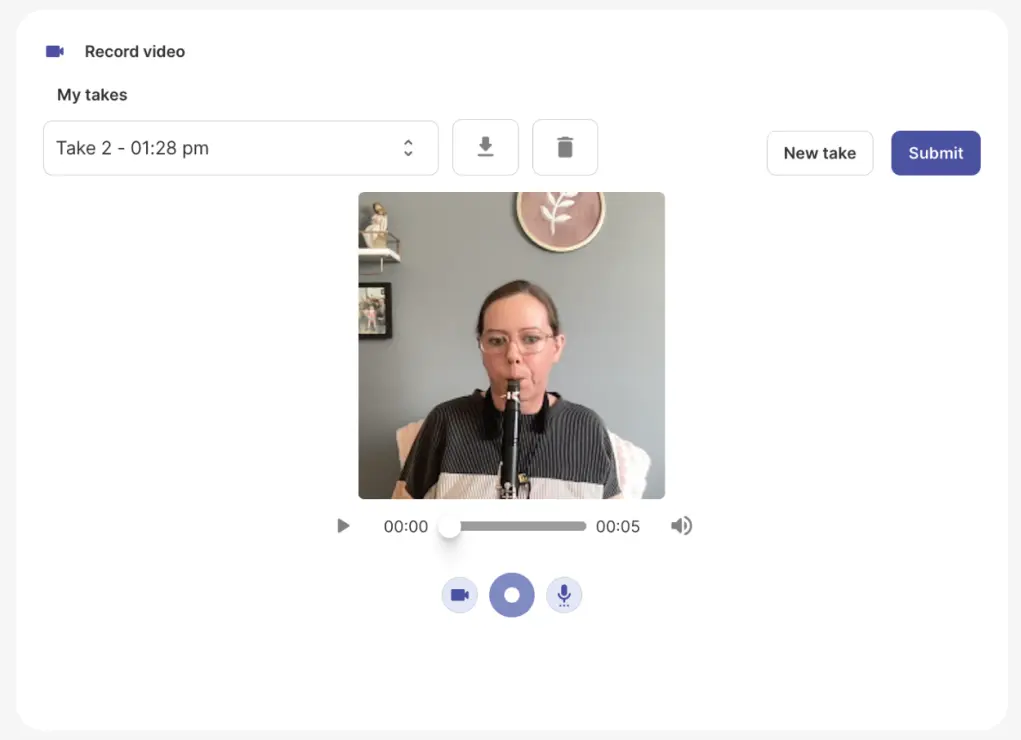
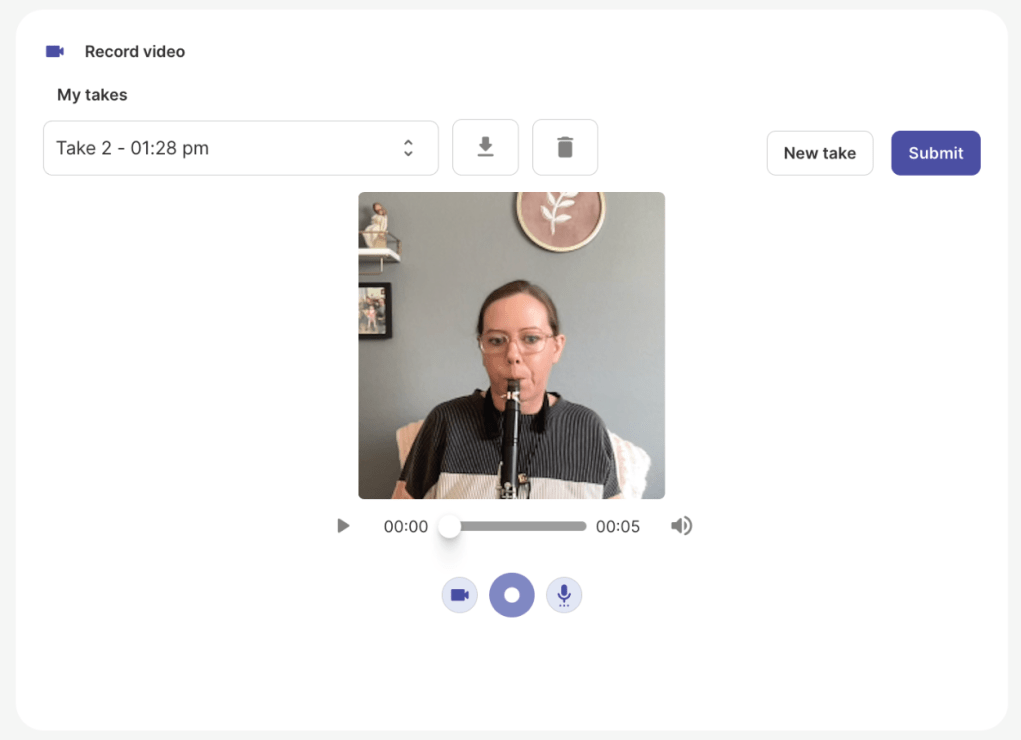
Deployment of Audio/Video-Only Assignments: Recognizing that traditional notation-tracking software only captures whether notes are correct, MakeMusic’s A/V-only feature turns the camera inward. By requiring students to record and submit video clips of their home practice routines, educators can analyze physical posture, hand positioning, and instrument alignment—elements critical to long-term technical health and injury prevention.
Deployment of Multiple Choice Assessments: In a departure from purely auditory evaluations, MakeMusic introduced written, theory-based evaluations. Educators can now craft custom multiple-choice queries incorporating text and image assets. This allows directors to test knowledge of key signatures, time signatures, specific rehearsal markings, and structural landmarks before students attempt to play the repertoire.
Supporting Context & Metrics: The Science of Student Practice and Assessment
The pedagogical philosophy underpinning MakeMusic’s latest update is rooted in decades of music education research regarding deliberate practice, metacognition, and formative feedback loops.
The Problem of the "Black Box" of Home Practice
For generations, music education has suffered from what researchers term the "black box" of home practice. A student takes sheet music home, spends 30 minutes practicing, and returns to the next rehearsal. If the student has spent those 30 minutes repeating a rhythm incorrectly or maintaining an improper embouchure, the rehearsal time is largely wasted correcting deeply ingrained errors.
Traditional music software often exacerbates this by focusing exclusively on correct pitch and rhythm generation via automated scoring. While effective for note-learning, standard automated scoring rarely addresses how the student achieved the result. Did they strain their wrists? Is their posture collapsing? Are they looking at the music with comprehension, or are they relying on trial-and-error repetition?
Metrics of Engagement: Audio/Visual Feedback Loops
By integrating Audio/Video-Only assignments into weekly routines, MakeMusic addresses the metacognitive gap. According to internal platform utilization metrics, students who review video recordings of their own playing demonstrate a significantly higher rate of self-correction compared to peers who rely solely on auditory feedback.
Posture and Ergonomics: Physical alignment is the primary predictor of sustained instrumental longevity and tone quality. A/V assignments enable directors to spot tension in the shoulders, incorrect bow holds, or improper wind instrument posture before physical strain turns into injury.
Reflective Practice: When students are tasked with a simple 15-minute home assignment—such as "Record, Watch, Fix"—they transition from passive execution to active self-critique. They become their own first teachers.
Theoretical Comprehension via Multiple Choice
Similarly, Multiple Choice assessments address cognitive bottlenecks. Music theory and notation literacy are frequently taught in isolation from ensemble repertoire. By embedding custom multiple-choice checks as pre-practice gateways, MakeMusic bridges theory and application.
Pre-Practice Prep Time: Data indicates that students who complete a brief 5-minute digital check on key signatures and structural anomalies before touching their instruments reduce their error rates during initial run-throughs by up to 40%.
Targeted Intervention: Educators receive instantaneous data analytics showing precisely which students misunderstand a specific dynamic marking or time signature change, allowing for targeted small-group intervention during subsequent class periods.
Official Statements and Pedagogical Frameworks
Industry experts and curriculum designers have praised the flexibility of the platform’s updated assignment architecture, emphasizing that technology should serve to reduce teacher burnout while elevating instructional quality.
"You’ve learned the names, survived instrument rental week, and your ensemble is starting to sound like an ensemble. Now comes the tricky part: finding out what every student actually knows and can do before the first grading period closes and fall concert prep takes over," notes the MakeMusic pedagogical team in their official curriculum guides. "It’s still early enough in the year to set new routines. By balancing performance tasks with visual self-assessment and written theory checks, directors gain a holistic view of musicianship."
Designing Balanced Weekly Routines
To prevent educator overwhelm, MakeMusic’s framework emphasizes that a comprehensive assessment strategy does not require an overhaul of existing syllabi. Instead, directors are encouraged to weave different assessment types into a sustainable weekly rotation:
Monday/Tuesday: Introduce new concert repertoire accompanied by a Multiple Choice "Pre-Practice Check." Students verify their understanding of key signatures, tricky rhythmic motifs, and musical terminology before playing a single note.
Wednesday/Thursday: Assign standard Music Catalog performance tracks to build technical fluency, rhythmic accuracy, and pitch stability.
Friday: Assign an Audio/Video-Only practice reflection ("Record, Watch, Fix") focusing on physical technique, posture, breath support, and self-evaluation.
This balanced approach covers performance, theoretical understanding, and physical technique without demanding hours of additional grading labor from the educator. Furthermore, through automated integrations such as Google Grade Passback, scores generated across all assignment types sync seamlessly into the educator’s Google Classroom gradebook, cutting administrative friction to a minimum.
Future Outlook: The Evolution of Digital Music Classrooms
As music education continues to embrace hybrid and technology-enhanced learning environments, platforms like MakeMusic are setting new benchmarks for comprehensive student evaluation. The introduction of flexible assignment types signals a broader industry shift away from one-size-fits-all software toward customizable, multimodal instructional ecosystems.
Looking ahead, educational technologists anticipate further integration of artificial intelligence and machine learning to assist educators in analyzing audio and video submissions. While human oversight remains irreplaceable in the emotional and artistic guidance of an ensemble, automated preliminary screening of posture, intonation tendencies, and rhythmic precision will likely become standard features in the coming years.
For now, the immediate focus remains on practical empowerment. Music directors operating under tight schedules and heavy class loads are being encouraged to start small—incorporating a single alternative assessment type into their weekly plans to evaluate its impact.
For educators currently utilizing the platform, accessing these features requires simply logging into MakeMusic and navigating to the "Create" menu. Meanwhile, educators who have yet to experience the ecosystem are being offered comprehensive trial pathways to test the complete suite of performance, visual, and theoretical assessment tools before their next major rehearsal cycle.
As ensembles press forward toward the fall concert season, the integration of these nuanced, multifaceted assessment tools ensures that directors will no longer be flying blind, but rather leading informed, technically sound, and musically literate ensembles toward artistic excellence.