
Executive Overview
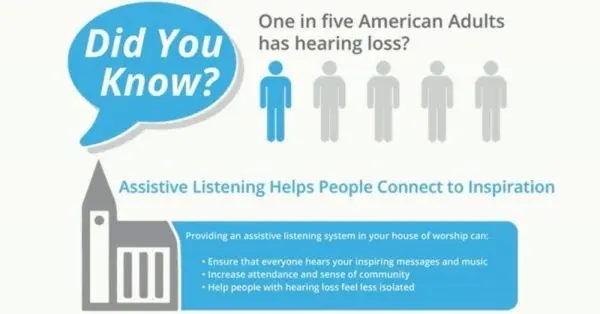
In an era where houses of worship strive to cultivate environments of radical hospitality, inclusivity, and spiritual connection, one critical barrier to entry frequently remains overlooked: hearing loss. For millions of congregants globally, attending a weekly service does not yield an uplifting immersion into fellowship and spoken word; rather, it manifests as an exercise in frustration, acoustic fatigue, and eventual isolation. Reverberant sanctuaries, distant soundboards, and ambient room noise transform sermons and music into unintelligible murmurs for individuals experiencing auditory challenges.
Addressing this silent barrier is no longer merely a matter of hospitality; it is an essential component of modern ministry and community outreach. Implementing a robust Assistive Listening System (ALS) bridges the acoustic gap, ensuring that every member of the congregation—regardless of hearing acuity—can fully experience the beauty, nuance, and emotion of worship services.
However, deploying such technology requires more than a casual hardware purchase. It demands a strategic, multi-phased approach that encompasses data-driven assessments, budgetary forecasting, comprehensive staff training, and proactive community outreach. This exhaustive report provides leadership teams, AV technicians, and ministry directors with a comprehensive framework for understanding, selecting, and successfully integrating an Assistive Listening System into their worship facilities. Drawing on industry insights, expert consultations, and deployment strategies from leading audio authorities like Listen Technologies and CCI Solutions, this guide charts the course toward a more inclusive and connected faith community.
Detailed Chronology: The Four-Step Implementation Roadmap
Successfully introducing an Assistive Listening System into a house of worship requires a methodical, step-by-step approach. Rphasing the deployment without proper groundwork often leads to underutilized equipment, frustrated users, and wasted capital. Below is the definitive four-step chronology designed to ensure seamless integration.
Phase 1: Understand Your Congregational Needs
The foundational rule of acoustic accessibility is simple: never assume you know your congregation’s needs—ask them. Before requesting quotes or browsing hardware catalogs, church leadership must conduct a thorough assessment of the community’s specific listening challenges.
- Deploying Congregational Surveys: The most effective initial step is designing and distributing a survey specifically targeting hearing health and service experiences. Questions should probe directly into how well individuals hear during various parts of the service (e.g., spoken sermons versus choir performances), whether they utilize hearing aids, and crucially, whether those hearing aids are equipped with telecoils (t-coils).
- Analyzing Acoustic Environments: Beyond self-reported data, leadership should evaluate the physical acoustic profile of the sanctuary. Are there dead zones? Does the architecture create excessive reverberation? Combining qualitative survey data with quantitative acoustic awareness ensures that the chosen solution addresses real-world pain points rather than hypothetical scenarios.
Phase 2: Fully Understand Your Technical and Financial Options
Once the congregation’s needs are mapped, leadership must investigate the technological and financial landscape. Selecting the wrong system can result in high maintenance overhead, poor audio quality, or incompatibility with modern hearing aids.
- Evaluating System Types: Facilities must weigh the benefits of various technologies, including Radio Frequency (RF) systems, Infrared (IR) systems, and Wi-Fi-based audio streaming. Systems that broadcast directly to t-coil equipped hearing aids via neck loops or induction loops offer an exceptionally seamless user experience, as congregants do not need to wear extra hardware.
- Budgeting and Free Consultations: Estimating the total cost of ownership involves looking beyond the base hardware to account for transmitters, receivers, charging stations, and signage. Partnering with technical solution providers—such as CCI Solutions—can streamline this process. These organizations often offer free consultations to help churches navigate expense forecasting, equipment selection, and budgetary alignment.
- Exploring Fundraising and Grants: To offset capital expenditures, churches frequently leverage targeted fundraising campaigns, memorial gifts, or specialized grants dedicated to accessibility and disability inclusion. Framing the investment as a vital mission of inclusion often inspires generous giving from the broader community.
Phase 3: Prepare for Operational Success
Hardware is only as effective as the people managing it. The third phase focuses on human infrastructure, ensuring that staff, AV technicians, and volunteers are fully prepared to support the new system.
- Establishing "Assistive Listening Ambassadors": Ministry staff and welcome-team volunteers must receive rigorous, hands-on training regarding the operation, maintenance, and distribution of the assistive listening devices. These individuals serve as the frontline Ambassadors of accessibility. When a device is checked out, the volunteer should take a moment to politely instruct the user on its basic functions, volume controls, and proper positioning.
- Creating Quick-Reference Support Materials: To mitigate volunteer hesitation and ensure consistency, administrative teams should create laminated FAQ (Frequently Asked Questions) sheets. Placing these reference guides directly at the welcome desk or device-distribution counter empowers volunteers to troubleshoot minor issues quickly and confidently.
Phase 4: Create Awareness and Community Outreach
An exceptional sound system provides zero value if no one knows it exists. The final phase of the rollout centers on marketing, communication, and cultural integration.
- Universal Signage: Proper signage is both a legal requirement under accessibility standards (such as the ADA in the United States) and a practical necessity. Clearly display international symbols for accessibility, indicating that Assisted Listening Devices are available and directing visitors precisely where to acquire them.
- Multichannel Announcements: Keep the technology top-of-mind by integrating reminders into weekly printed bulletins, digital newsletters, and pre-service multi-media slide presentations.
- Live Demonstrations: Consider hosting a dedicated live training or orientation session after a service. Allowing congregants to test the technology in a low-pressure environment removes the stigma often associated with hearing assistance and helps users familiarize themselves with the equipment.
- External Community Outreach: Do not limit communication to current members. Advertising your new accessibility capabilities to the surrounding geographic community can attract individuals who previously abandoned church attendance due to hearing loss. When word spreads that a facility actively accommodates auditory impairments, new and returning visitors will flock through the doors.
Supporting Context & Metrics: The Imperative of Inclusion
To fully appreciate the necessity of an Assistive Listening System, one must examine the broader demographic and sociological landscape surrounding hearing loss. Auditory decline is one of the most prevalent chronic conditions affecting adults globally, yet it remains largely invisible, earning the moniker of the "hidden disability."
Demographic Realities and Auditory Decline
According to public health data, millions of individuals experience disabling hearing loss, with prevalence increasing sharply with age. In a typical house of worship demographic—often skewed toward older adults—the percentage of congregants struggling to follow spoken dialogue during services is significantly higher than the general population average.
When older adults or individuals with sudden hearing loss find themselves straining to catch every tenth word of a sermon, cognitive fatigue sets in. Over time, this friction leads to withdrawal. Congregants quietly stop attending, transitioning from active community participants to isolated individuals.
The Economic and Social Cost of Disconnection
From an institutional perspective, failing to address hearing accessibility carries a steep cost:
- Attendance Retention: A congregation that loses touch with its senior members or hearing-impaired demographic gradually erodes its foundational core of wisdom, history, and active volunteering.
- Mission Alignment: Most faith traditions emphasize radical welcome, caring for the vulnerable, and ensuring that no member of the flock is left behind. Allowing architectural or acoustic barriers to exclude individuals directly contradicts these core tenets.
- Intergenerational Disconnect: Hearing loss does not exclusively affect the elderly; younger individuals with congenital or noise-induced hearing loss also attend services. Failing to provide modern, discreet listening options alienates younger demographics who expect digital-age integration and universal design.
Official Statements and Industry Insights
Industry leaders and accessibility advocates have long championed the integration of assistive technologies in public spaces. Below are synthesised perspectives from AV engineering firms, accessibility consultants, and auditory health specialists regarding the deployment of systems in houses of worship.

"Reaching out to those who feel disconnected from your community due to hearing loss is central to sharing the message of inclusion. Genuinely compassionate service involves being aware of and caring for the needs of everyone, especially those dealing with impairments. Make sure they are able to hear the beauty and emotion of the spoken word in your church by providing them with the equipment they need to stay connected."
— Accessibility Advocacy Consortium
Audio engineers specializing in architectural acoustics frequently emphasize that high-end main loudspeaker arrays alone cannot solve room-specific intelligibility problems. As technical consultants note:
"You can invest thousands of dollars into line arrays, digital mixing consoles, and acoustic treatment, but if the sound wave still has to travel through twenty feet of ambient room reverberation to reach an impaired ear, clarity is lost. An Assistive Listening System bypasses the room acoustics entirely, delivering a clean, direct feed straight to the listener’s ear or hearing aid. It is the ultimate equalizer in worship audio."
— Senior Audio Systems Integrator
Furthermore, educational resources provided by manufacturers such as Listen Technologies highlight that administrative success relies heavily on institutional ownership:
- “Technology deployment fails when treated as an isolated IT or AV project,” notes a Listen Technologies deployment brief. “It succeeds when embraced as a ministry initiative. When greeters, pastors, and audio techs view assistive listening devices as tools of grace rather than pieces of plastic hardware, the entire culture of the church shifts toward genuine, barrier-free hospitality.”
Future Outlook: The Next Generation of Acoustic Accessibility
As audio technology continues its rapid evolution, the future of Assistive Listening Systems in houses of worship points toward greater integration, wireless sophistication, and personalized user control.
The Rise of Personal Audio Streaming (Wi-Fi ALS)
Traditional RF and IR systems are increasingly sharing space—and in some cases, being supplanted—by Wi-Fi-based audio streaming solutions. These modern platforms allow congregants to download a dedicated app on their personal smartphones, connect to the church’s secure local Wi-Fi network, and stream real-time, zero-latency audio directly to their personal earbuds, headphones, or Bluetooth-enabled hearing aids.
This shift offers several distinct advantages for houses of worship:
- Reduced Hardware Overhead: Churches no longer need to manage, clean, and store dozens of physical receivers and proprietary headphones.
- Elimination of Stigma: Users utilize their own smartphones and personal listening accessories, removing the self-consciousness sometimes associated with requesting a specialized assistive device at a welcome desk.
- Scalability: Wi-Fi systems can easily scale to accommodate hundreds or even thousands of simultaneous users without requiring a proportional increase in physical inventory.
Integration with Modern Hearing Aid Ecosystems
The proliferation of Bluetooth Low Energy (BLE) and Auracast broadcast audio technology promises to revolutionize how individuals interact with public sound systems. Future-proofed houses of worship are already investigating transmitters that broadcast public audio directly into the global Auracast standard. This means a visitor walking into a sanctuary will be able to lock onto the church’s audio stream as effortlessly as connecting to a wireless router, directly interfacing with their modern hearing aids or cochlear implants.
Conclusion and Actionable Next Steps
Implementing an Assistive Listening System is a transformative investment in the life of a faith community. By methodically assessing needs, understanding technical choices, preparing operational teams, and broadcasting awareness, houses of worship can dismantle invisible walls and welcome every soul back into the auditory fellowship of worship.
For church leaders ready to take the next step, comprehensive resources are readily available. Organizations like Listen Technologies offer exhaustive implementation guides—such as their House of Worship Assistive Listening Toolkit—which provide sample surveys, ready-to-print signage templates, and bulletin announcements.
To evaluate whether your worship facility could benefit from a state-of-the-art assistive listening upgrade, reach out to certified AV integration specialists today and take the definitive step toward a truly inclusive ministry.