
Executive Overview
In the modern music classroom, few skills are as universally acknowledged as vital—yet as notoriously difficult to teach consistently—as sight-reading. Educators have long recognized that strong sight-readers learn musical compositions faster, experience more streamlined and productive rehearsals, and walk into high-stakes festival sight-reading evaluations with self-assurance rather than anxiety. Beyond the academic environment, independent music reading serves as the ultimate gateway for lifelong musicianship, empowering students to continue performing long after they leave formal schooling behind. Whether joining a vibrant community wind ensemble, contributing to a Sunday church choir, or launching a garage band with peers, the ability to interpret unfamiliar notation independently is what transforms a temporary student into a lifelong participant in the arts.
Yet, music educators have perpetually faced a frustrating bottleneck: sight-reading only improves through steady, deliberate practice with fresh repertoire—material the student has never seen before. Traditional printed method books, while pedagogical marvels in their own right, possess a finite amount of exercise space. Once a student plays through a particular page two or three times, cognitive recognition is replaced by rote memorization. The student is no longer actively decoding pitches, rhythms, and intervals; instead, they are relying on muscle memory and recall.
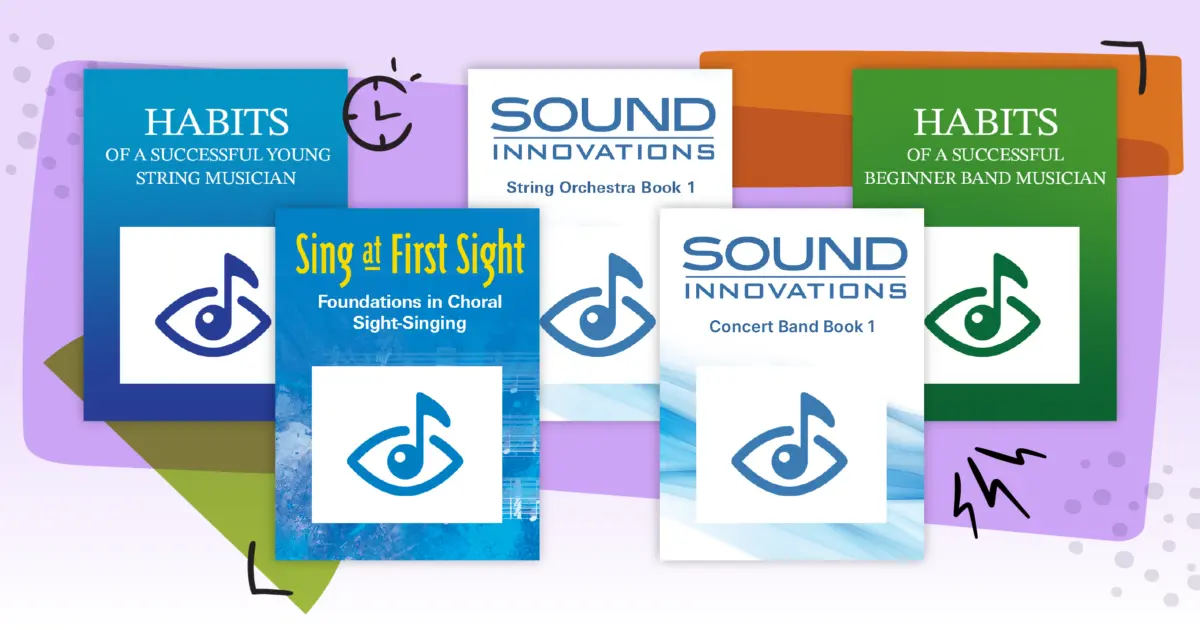
To solve this persistent pedagogical challenge, MakeMusic has officially launched its new Correlated Sight Reading Templates within Sight Reading Studio. This groundbreaking suite of tools is engineered to transform standard, widely adopted method books into an endless, infinite supply of fresh sight-reading exercises. By seamlessly aligning with trusted curriculum sequences lesson-by-lesson, these digital generators eliminate hours of weekly prep time for educators while providing students with a continuous stream of appropriately leveled, unique musical challenges.
This article explores the mechanics behind MakeMusic’s latest innovation, detailing its pedagogical framework, practical applications inside the classroom and at home, the broader implications for music educators reclaiming their planning hours, and a future outlook on how artificial intelligence and adaptive generation are reshaping music pedagogy.
Detailed Chronology: The Evolution of Sight-Reading Pedagogy and the Birth of Automated Generation
To fully appreciate the significance of MakeMusic’s Correlated Sight Reading Templates, it is essential to examine the historical trajectory of how sight-reading has been taught, and where traditional systems have continually fallen short.
The Era of the Static Method Book
For generations, music instruction has relied heavily on printed method books. These texts—carefully curated by master pedagogues—introduced musical concepts incrementally. A typical sequence might begin with quarter notes and half notes on a limited three-line staff, gradually introducing new notes, dynamic markings, key signatures, and complex rhythmic subdivisions like sixteenth notes and syncopation.
While these books provided a solid foundation, they suffered from an economic and physical limitation: paper and ink are finite. Publishers could realistically include only two to four short sight-reading examples per lesson. For an average student, these examples were exhausted within a single week—or even a single class period.
The Photocopy Era and Digital Fragmentation
As educators realized that students needed more practice material than the method books provided, they resorted to manual labor. Throughout the late 20th and early 21st centuries, music teachers spent countless hours combing through anthologies, scanning pages from secondary method books, transposing melodies by hand using early notation software, or photocopying disparate exercises.
This patchwork approach created significant pedagogical friction. Often, supplementary exercises did not match the exact pedagogical sequence of the primary method book. A teacher might introduce a specific note or rhythm on Tuesday, only to find that available sight-reading worksheets either introduced too many advanced concepts simultaneously (causing cognitive overload) or lagged behind the curriculum (failing to reinforce the newly introduced skill).
The Rise of Digital Music Suites and the Advent of Sight Reading Studio
The founding and evolution of digital platforms like MakeMusic Cloud (formerly SmartMusic) fundamentally altered the landscape by introducing interactive assessment, immediate feedback, and vast digital libraries. However, even within advanced digital ecosystems, the creation of leveled sight-reading material remained largely static. Teachers could assign pre-made exercises from a library, but finding a piece that matched the precise micro-level progress of a specific classroom cohort remained a manual search process.
Recognizing this gap, MakeMusic’s product development teams spent months collaborating with experienced instrumental and vocal educators. The core objective was clear: bridge the gap between static curriculum method books and dynamic, infinite digital generation. The result is the new suite of Correlated Sight Reading Generators—a system designed to read the DNA of established method books and autonomously generate endless, pedagogically pure variations that mirror those exact learning milestones.
Supporting Context & Metrics: The Science of Sight-Reading and Educator Burnout
The Cognitive Science of Music Literacy
Why does sight-reading matter so profoundly? Cognitive psychologists and music educators point out that sight-reading is the musical equivalent of reading comprehension in language arts. When a child learns to read text, sounding out every single letter eventually gives way to recognizing whole words and phrases. Similarly, a proficient sight-reader processes clusters of notes, harmonic structures, and rhythmic patterns instantaneously.
Research into music cognition demonstrates that active, sight-reading practice stimulates neuroplasticity, enhances multi-sensory integration, and improves working memory. Yet, studies consistently show that students experience "sight-reading anxiety"—a psychological barrier driven by the fear of making mistakes in front of peers. By removing the fear of failure through endless, low-stakes, automated practice, tools like MakeMusic’s correlated generators help desensitize students to unfamiliar scores, building psychological safety and technical competence concurrently.
The Administrative Burden on Music Educators
Behind every successful school concert, marching band performance, or choral festival is a staggering amount of behind-the-scenes administrative and prep work. Recent educational surveys highlight that music teachers routinely work well beyond contractual hours, with a significant portion of unpaid time dedicated to:
- Locating, scanning, and formatting supplementary instructional materials.
- Writing custom sight-reading examples to match specific curricular pacing.
- Differentiating instruction for diverse ability levels within the same ensemble.
By introducing automated, method-correlated generation, MakeMusic directly targets one of the most persistent drains on teacher energy. Instead of spending Sunday evenings drafting sight-reading exercises or hunting across the internet for leveled melodies, educators can deploy precision-engineered exercises in seconds. This administrative relief translates directly into reduced burnout and more mental bandwidth dedicated to expressive, human-to-human mentorship.
Implementation Strategies: In the Classroom and At Home
The true power of MakeMusic’s Correlated Sight Reading Templates lies in their radical flexibility. They are designed to integrate frictionlessly into existing pedagogical workflows, whether used in a live ensemble rehearsal or assigned as independent home practice.
Transforming the Classroom Experience
In a group instructional setting—such as a middle school band room, high school orchestra, or community choir—time is the most precious commodity. Every minute spent transitioning between activities or explaining setup parameters is a minute lost to music-making.
- Seamless Warm-Up Integration: Directors can open the template corresponding to the week’s current lesson plan as students enter the room. Projected on a smartboard or distributed via student devices, the freshly generated exercise serves as an immediate, focused sight-reading warm-up.
- Instant Re-Generation for Mastery: If the first generated example reveals a widespread misunderstanding of a newly introduced rhythm—say, an eighth-quarter-eighth syncopation pattern—the teacher does not need to scramble for alternative material. With a single click, the software generates a brand-new exercise utilizing the exact same parameters. This allows the ensemble to practice the concept multiple times without falling into the trap of memorization.
- Differentiated Group Work: Because the generators span multiple method books and varying difficulty tiers, teachers can easily assign different tracks to distinct sections of the ensemble, supporting remedial learners while challenging advanced players simultaneously.
Empowering Independent Practice at Home
Practice habits formed outside the classroom dictate long-term musical retention. However, students frequently avoid sight-reading at home because they lack guidance on what to practice, or they quickly memorize the limited examples printed in their books.
- Targeted Homework Assignments: Teachers can assign specific correlated templates through MakeMusic Cloud, ensuring that home practice directly reinforces the concepts introduced during the school day.
- Self-Paced Mastery: Students can generate infinite variations of their current lesson’s exercise, allowing them to practice independently until they achieve fluency. The immediate feedback loop of digital assessment platforms helps students self-correct pitch and rhythm errors without direct teacher intervention.
- Building Lifelong Confidence: By removing the mystery and intimidation associated with unfamiliar scores, routine exposure to fresh, appropriately leveled sight-reading fosters genuine musical independence. Students realize they possess the tools to decode any piece of music placed before them.
Official Statements and Pedagogical Philosophy
Industry leaders and educational developers at MakeMusic emphasize that technology should never replace the human element of music teaching; rather, it should strip away the tedious administrative friction that stands in the way of meaningful instruction.
"We listened closely to what instrumental and vocal teachers told us was consuming their prep time," noted a product development representative for MakeMusic. "Teachers want to teach music; they don’t want to spend their weekends copying notes onto staff paper or hunting through three different books to find an exercise that matches what they taught on Tuesday. By building templates that correlate directly with trusted, widely used methods, we’ve created a bridge between standard curriculum and infinite variety. It respects the teacher’s expertise while automating the heavy lifting."
Pedagogical advisors stress that the integrity of the method book sequence must be preserved. The new templates are not random assortments of notes; they are mathematically and musically calibrated to respect the exact pedagogical pacing established by master educators. When a student encounters a generated exercise, it honors the developmental milestones they have achieved up to that exact page in their book—no more, no less.
Future Outlook: The Next Horizon in Digital Music Literacy
As educational technology continues to evolve at a rapid pace, the introduction of method-correlated sight-reading generators represents a major stepping stone toward a more intelligent, adaptive future in music classrooms.
What Lies Ahead?
Looking forward, industry analysts predict several key advancements stemming from this technological foundation:
- Adaptive Difficulty AI: Future iterations of sight-reading generators may incorporate machine learning algorithms that analyze a student’s specific error patterns (such as consistent struggles with minor thirds or dotted rhythms) and automatically adjust the generated exercises to target those specific weaknesses in real-time.
- Expanded Method Integration: While current templates support widely adopted foundational methods, future expansions are expected to encompass advanced collegiate methodologies, specialized jazz improvisation sequences, and global folk music traditions.
- Cross-Platform Collaboration: Enhanced integration with digital audio workstations (DAWs) and cloud-based student portfolios will allow student sight-reading progress to be tracked comprehensively across entire school districts over multi-year periods.
Ultimately, the goal remains unchanged: to cultivate confident, independent musicians who view the written score not as a cryptic barrier, but as an invitation to create art. By eliminating prep fatigue and flooding the classroom with endless, perfectly leveled material, MakeMusic’s Correlated Sight Reading Templates mark a pivotal advancement in music education technology.
Getting Started Today
For educators eager to reclaim their planning hours and elevate their students’ sight-reading fluency, getting started is straightforward and accessible.
- Log In: Access your account by navigating to MakeMusic Cloud.
- Explore the Library: Search for the new Correlated Sight Reading Templates.
- Select and Generate: Locate the specific method book you currently teach from, jump directly to your current lesson number, and click generate to provide your students with a completely fresh, beautifully formatted sight-reading exercise today.