
Executive Overview
The contemporary jazz landscape exists in a perpetual state of dynamic tension, continuously negotiating the boundaries between venerated historical traditions and bold, cross-cultural experimentation. In this comprehensive critical review, we examine three distinct pillars of the global jazz ecosystem: the cutting-edge, regionally immersive work of modern master trombonist Ryan Keberle; the genre-defying, eclectic chamber-jazz explorations of the Holland Court Jazz Trio; and an archival reappraisal of Chet Baker’s tumultuous yet brilliant Italian sojourns.
These three releases—spanning modern South American homages, New York-based genre-bridging, and classic late-1950s European-American collaborations—offer a profound snapshot of the idiom’s past, present, and future. Keberle’s Here Is Donato! underscores the continuing vitality of Brazilian bossa nova through the lens of a DownBeat-topping virtuoso. Conversely, the Holland Court Jazz Trio’s Inverted Tango defies categorization, effortlessly blending minimalist classical motifs, Astor Piazzolla-inspired tango, and the raw fury of Jimi Hendrix within a sophisticated acoustic piano-trio framework enriched by violin. Finally, the re-examination of Chet Baker’s 1959 Italian recordings highlights the fragile brilliance of a jazz icon on the precipice of personal tragedy, supported by the elite vanguard of the Italian modernist jazz movement. Together, these recordings demonstrate that jazz remains a global lingua franca, endlessly adaptable and eternally rooted in emotional authenticity.
Detailed Chronology
Ryan Keberle’s Collectiv Do Brasil: Here Is Donato! (Recorded Live in São Paulo, 2024)
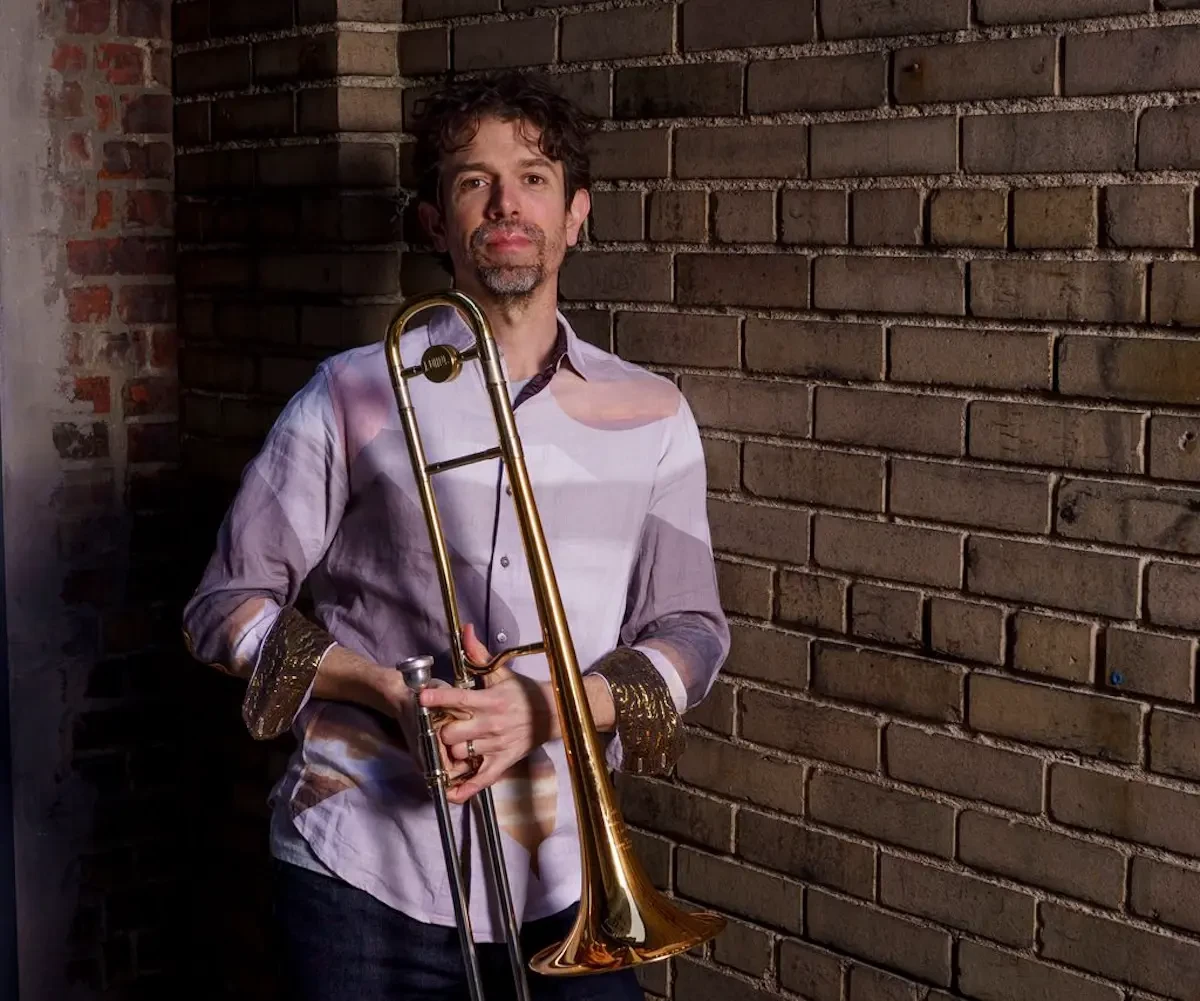
Master trombonist Ryan Keberle has long established himself as a sonic chameleon, equally at home navigating the rigorous harmonic complexities of large-ensemble modern jazz and the infectious, syncopated rhythms of Latin America. His academic pedigree—honed under the tutelage of trombone luminaries Steve Turre at the Manhattan School of Music and Wycliffe Gordon at Juilliard—provided him with a formidable technical foundation. Over a glittering career that has seen him collaborate with luminaries such as Maria Schneider, Wynton Marsalis, David Bowie, and Justin Timberlake, Keberle has ascended to the upper echelons of the contemporary brass hierarchy. This status was authoritatively confirmed in the 2024 DownBeat Critics Poll, where he tied for the top spot in the trombone category alongside Michael Dease.
For his 14th recording as a leader, released via Alternate Side Records (ASR 022), Keberle turned his focus toward the monumental catalog of João Donato. A towering figure in the evolution of bossa nova and Brazilian popular music, Donato was himself a formidable trombonist who shared stages with Latin jazz pioneers like Eddie Palmieri and Tito Puente. Captured over three days (January 17–19, 2024) in São Paulo, Brazil, Here Is Donato! finds Keberle joined by an exceptional local rhythm section: pianist and electric pianist Felipe Silveira, bassist and electric bassist Felipe Brisola, drummer Paulinho Vicente, and percussionist Guegue Medeiros.
Free from the constraints of mutes, Keberle deploys an open, uninhibited sound that evokes the golden-era legato timbre of trombone greats like Andy Martin and Urbie Green. The album opens with the delightful Tema Teimoso, featuring an extended montuno—a structural cornerstone of Latin music—that showcases vibrant, telepathic interplay between Keberle and Silveira. Tracks such as E Menina and Celestial Showers thrive on bustling, high-energy Afro-Cuban rhythms that push Keberle to his expressive peak. Meanwhile, Nao Tem Nada Nao highlights Silveira’s adventurous bitonality, and ballads like Mentiras and Ate Quem Sabe reveal Donato’s profound melodic gift, crying out for lyrical adaptation.
Holland Court Jazz Trio: Inverted Tango (Recorded in Brooklyn, NY, June 2025)
Moving from the sun-drenched studios of São Paulo to the urban pulse of Brooklyn, New York, the Holland Court Jazz Trio presents a strikingly idiosyncratic debut with Inverted Tango, issued on Composers Concordance Records. Led by bassist Frank Wagner—an alumnus of the Berklee College of Music who studied under Steve Swallow and Ron McClure, and whose professional CV boasts collaborations with Buddy Rich, Glenn Miller, Milt Jackson, and Eartha Kitt—the trio features pianist Dave Marck and drummer Dave Meade. (Wagner and Meade previously teamed up in 1988 for the award-winning Jazzheads release Past, Present and Future).
Recorded on June 18 and 19, 2025, in Brooklyn, Inverted Tango defies genre norms from its opening downbeat. The title track opens with Wagner’s resonant, hypnotic bass ostinato, blooming into a minor-key theme that channels the eccentric minimalism of Erik Satie before shifting into an impassioned homage to Astor Piazzolla, the undisputed master of modern Argentine tango.
The program continually pivots across stylistic boundaries. Hi-Ya, despite its lighthearted title and Caribbean-inflected rhythm, is an intricate contrafact of Thelonious Monk’s Bye-Ya, utilizing a rigid 32-bar AABA framework anchored by accented quarter-notes. On Phrygian Natural Fix, drummer Dave Meade delivers a masterclass in Latin-funk grooves, executing imaginative percussive textures reminiscent of West Coast legend Shelly Manne.
The trio also pays homage to the jazz composition canon, with Marck delivering an inspired, delicate reading of Billy Strayhorn’s 1946 masterpiece A Flower Is a Lovesome Thing, originally penned as a showcase for Johnny Hodges within the Duke Ellington Orchestra. Yet, perhaps the most startling moment arrives when the trio, augmented by guest violinist Ben Sutin, tackles Jimi Hendrix’s Manic Depression. By translating the blistering rock anthem into an acoustic jazz-chamber context, the ensemble generates an astonishing degree of fury, passion, and harmonic tension.
Chet Baker Sextet & Quartet: Chet Baker in Milan (Recorded in Milan, Italy, September–October 1959)
Stepping back into the historical archives, WaxTime’s reissue of Chet Baker’s seminal 1959 Italian recordings—marketed under Sextet & Quartet—revisits a pivotal, fragile epoch in the trumpeter’s biography. Recorded in Milan between September 25 and October 6, 1959, the album captures Baker at the epicenter of his complex, deeply romantic, and ultimately tragic love affair with Italy.
By 1959, Baker was already a global icon of the Cool Jazz movement, though his life was increasingly overshadowed by the narcotics addiction that would derail his career. His European sojourns had begun triumphantly in 1955, but turned somber following the tragic death of his pianist, Dick Twardzik, from a drug overdose in Paris. Nonetheless, Baker gravitated back to Italy, finding a creative sanctuary among the elite members of the burgeoning Italian modern jazz scene.
For these Milan sessions, Baker surrounded himself with multi-instrumentalists Glauco Masetti and Gianni Basso—key architects of the Italian jazz renaissance. Confined here to the alto saxophone, Masetti projects a fluent, West Coast-inflected tone recalling Herb Geller, while Basso’s tenor saxophone swings with the relaxed, Lester Young-inspired elegance of the Lesterians. Rounded out by pianist Renato Sellani, bassist Franco Cerri, and drummer Gene Victory, the ensemble performs with an aesthetic so thoroughly saturated in the idioms of the West Coast school that the album could easily be subtitled Chet Baker in Los Angeles.
The repertoire balances bebop standards with Baker’s signature ballad interpretations. The group tackles Tadd Dameron’s Lady Bird, Charlie Parker’s sinuous blues Cheryl, and Sonny Rollins’ intricate original composition Pent-Up House (recorded here for the very first time by Baker, who would return to it frequently throughout his career). Demonstrating his characteristic lyrical sensitivity, Baker drops the horns for two sublime ballad features: My Old Flame and Indian Summer. Tragically, this creative peak was short-lived; mere weeks after these sessions concluded, Baker was arrested in Lucca, Tuscany, and sentenced to 18 months in prison—a harrowing chapter in a life defined equally by exquisite beauty and profound self-destruction.
Supporting Context & Metrics
To fully appreciate the scope of these three releases, it is instructive to examine their structural and demographic metrics:
| Release Title | Primary Leader | Geographic Origin / Recording Locale | Primary Genre Focus | Run Time (Minutes) | Key Guest Artists / Collaborators |
|---|---|---|---|---|---|
| Here Is Donato! | Ryan Keberle | São Paulo, Brazil | Brazilian Jazz / Bossa Nova | ~40:35 | Felipe Silveira, Guegue Medeiros |
| Inverted Tango | Frank Wagner | Brooklyn, New York | Chamber Jazz / Avant-Garde | ~56:57 | Ben Sutin (Violin) |
| Sextet & Quartet | Chet Baker | Milan, Italy | West Coast / Cool Jazz | ~48:01 | Glauco Masetti, Gianni Basso |
- Geographic Range: The sonic geography covered by these albums spans three continents—stretching from the vibrant acoustic environments of São Paulo and the avant-garde lofts of Brooklyn to the historic jazz clubs of mid-century Milan.
- Generational Synthesis: Across these recordings, we witness a masterclass in cross-generational mentorship. Keberle channels the teachings of Turre and Gordon; Wagner reflects the lessons of Swallow and McClure; and Baker stands as the progenitor who inspired an entire generation of European modernists.
- Instrumentation Diversity: From Keberle’s unmuted, vocal trombone timbre and Silveira’s bitonal piano voicings to Ben Sutin’s soaring violin lines on Manic Depression and the rich double-reed and brass textures of the mid-century Italian sessions, textural innovation remains a defining thread linking all three projects.
Official Statements and Critical Commentary
The conceptual integrity of these releases is best understood through the frameworks articulated by their creators and contemporary critics:
- Ryan Keberle on the Legacy of João Donato:
"João Donato was not merely a contributor to the Brazilian songbook; he was an architect of its harmonic and rhythmic soul. Approaching his catalog required stepping outside of standard American jazz paradigms and surrendering to the elastic, hypnotic pulse of bossa nova."
- Critical Reception of Frank Wagner’s Holland Court Jazz Trio (DownBeat / Jazz Press Consensus):
"Inverted Tango is a masterclass in stylistic juxtaposition. By treating Erik Satie, Astor Piazzolla, Thelonious Monk, and Jimi Hendrix as members of the same stylistic neighborhood, Wagner and his trio have forged a chamber-jazz statement of rare intelligence and emotional breadth."
- Archival Assessment of Chet Baker’s 1959 Italian Sessions:
"Baker’s Milan recordings capture a fleeting moment of grace before institutional shadows closed in. Supported by Masetti and Basso, Baker did not merely play American jazz abroad; he synthesized it with a distinctly European melancholy, cementing Italy as his spiritual second home."
Future Outlook
As the global jazz community navigates the mid-2020s, the trajectory of the genre points toward an increasing dissolution of national and stylistic borders. The three recordings surveyed here—Ryan Keberle’s reverent yet exploratory dive into Brazilian bossa nova, the Holland Court Jazz Trio’s fearless genre-collapsing chamber jazz, and WaxTime’s timely archival restoration of Chet Baker’s Italian period—serve as roadmaps for where the music has been and where it is heading.
Looking forward, we can anticipate several key developments in contemporary improvised music:
- Heightened Cross-Cultural Collaboration: As demonstrated by Keberle’s work with São Paulo rhythm sections, American jazz artists will continue to seek out authentic regional partnerships, avoiding superficial exoticism in favor of deep, immersion-based co-creation.
- Expansion of the Chamber-Jazz Canon: Projects like Inverted Tango prove that modern audiences and musicians are increasingly comfortable erasing the lines between classical minimalism, tango, rock, and jazz. Expect more acoustic ensembles to incorporate unconventional source material (such as Hendrix or Satie) into sophisticated jazz frameworks.
- Re-evaluation of Mid-Century Archives: As physical and digital archival curation grows more sophisticated, releases like Baker’s Sextet & Quartet remind us that historical reissues are not merely nostalgic exercises, but vital cultural corrections that recontextualize the struggles and triumphs of jazz icons.
Ultimately, these releases affirm that jazz remains a living, breathing art form—one that honors its foundational legends while fearlessly charting courses into uncharted sonic territory.