
Executive Overview
In the upper echelons of classical music, few institutions hold the career-defining gravity of Operalia, the World Opera Competition. Founded in 1993 by legendary tenor and arts administrator Plácido Domingo, the competition has spent more than three decades serving as the ultimate launching pad for the vocalists who eventually come to define the genre. Today, the stakes of the global lyric stage are higher than ever, and the machinery behind discovering the next generation of operatic superstars has officially shifted into high gear.
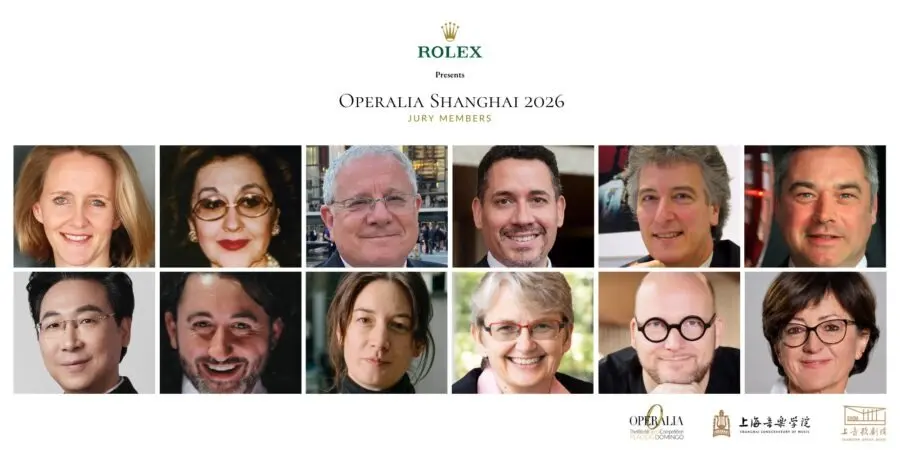
Organizers have formally announced the illustrious, highly specialized international jury for the 2026 Operalia Competition. Bringing together an unprecedented coalition of general directors, casting masterminds, artistic administrators, and conservatory leaders from the world’s most prestigious cultural capitals, this year’s panel reflects the deeply globalized, fiercely competitive nature of contemporary opera.
Simultaneously, Operalia has confirmed the dates and host institutions for its highly anticipated return to East Asia. From October 26 to November 1, 2026, the competition will be hosted in partnership with the Shanghai Conservatory of Music and the Shangyin Opera House. This marks a watershed moment for the competition, underscoring Shanghai’s rapid ascent as a vital epicentre for classical performance, advanced pedagogical training, and international artistic exchange.
This comprehensive report examines the composition of the 2026 jury, analyzes the strategic significance of the Shanghai partnership, traces the historical legacy of past laureates who have conquered the world’s stages, and projects what this upcoming cycle means for the future of the lyric arts.
Detailed Chronology: The Road to Shanghai 2026
The announcement of the 2026 jury and venue is the culmination of a multi-year planning process that aligns Operalia’s nomadic, global scouting model with the surging operatic infrastructure of the Asia-Pacific region. While Operalia has historically rotated its host cities across Europe, the Americas, and Asia to democratize access and tap into localized pools of talent, the selection of Shanghai for the autumn of 2026 represents a meticulously orchestrated logistical and artistic timeline.
The Planning Phase and Institutional Partnerships
Conversations between Operalia’s executive leadership and the administration of the Shanghai Conservatory of Music began in earnest following the post-pandemic stabilization of international touring. The conservatory, under the leadership of President Liao Chiangyong (who also serves on the 2026 jury), has invested heavily in state-of-the-art performance facilities, most notably the architecturally striking Shangyin Opera House.
Equipped with cutting-edge acoustics, flexible stage machinery, and world-class rehearsal spaces, the Shangyin Opera House provides an ideal crucible for a competition that demands absolute vocal clarity, dynamic range, and dramatic versatility.
The 2026 Competition Itinerary
- Spring 2025 – Winter 2025: Global preliminary auditions. A panel of scouts reviews hundreds of video submissions from young hopefuls representing dozens of nations, eventually narrowing the field down to roughly forty semi-finalists.
- October 25, 2026: Arrival of contestants, media, and the international jury in Shanghai, followed by the mandatory rehearsal schedule and the official allocation of competition order via public or private draw.
- October 26 – 28, 2026: Quarter-finals and Semi-finals held at the Shangyin Opera House, where competitors must perform a curated selection of operatic repertoire ranging from bel canto pyrotechnics to Verismo intensity.
- October 29 – 30, 2026: Masterclasses and cultural exchange programs hosted by the Shanghai Conservatory of Music, allowing contestants to interact directly with elite casting directors.
- November 1, 2026: The Grand Finals. The finalists perform with a full professional symphony orchestra before a live audience and the discerning eyes and ears of the twelve-member jury, culminating in the live announcement of the 2026 Operalia laureates, Zarzuela winners, and Audience Prize recipients.
Supporting Context & Metrics: The Anatomy of the 2026 Jury
To understand the immense weight carried by an Operalia victory or placement, one must examine the professional pedigree of the individuals holding the keys to the world’s most prominent stages. The 2026 jury is not merely a panel of passive judges; it is a working assembly of the most powerful casting executives in the industry. Securing the approval of these twelve individuals effectively places a young singer on the radar of every major opera house on Earth.
Below is the complete roster of the 2026 Operalia jury, detailing their institutional affiliations and their profound influence on the global classical ecosystem:
1. Sophie de Lint
- Role: Director, Dutch National Opera (Amsterdam)
- Significance: Known for championing bold, conceptually rigorous stagings and maintaining high vocal standards, de Lint scouts singers who can marry rich musicality with sophisticated theatrical interpretation.
2. Marta Domingo
- Role: Stage Director and Co-founder of Operalia
- Significance: As a foundational pillar of the competition alongside Plácido Domingo, Marta Domingo brings decades of institutional memory, theatrical vision, and an intimate understanding of the exact qualities required to sustain an international career.
3. Jonathan Friend
- Role: Casting Consultant, Houston Grand Opera | Artistic Advisor, Irish National Opera (Dublin) | Casting Consultant, Royal Swedish Opera (Stockholm)
- Significance: Friend’s tri-continental portfolio makes him one of the most widely traveled and broadly knowledgeable casting minds in the business, bridging North American house standards with the stylistic demands of European repertoires.
4. Michael Heaston
- Role: Deputy General Manager, The Metropolitan Opera (New York)
- Significance: Representing the largest opera organization in the United States, Heaston holds immense influence over the casting rosters of the Met, making his presence on the jury a direct pipeline to New York’s Lincoln Center.
5. Peter Katona
- Role: Director of Casting, Royal Ballet and Opera (London)
- Significance: Katona is legendary in the opera world for his discerning ear and decades-long tenure at Covent Garden, where he has helped shape the careers of numerous vocal legends.
6. Robert Körner
- Role: Casting Director, Wiener Staatsoper
- Significance: Stationed at the historic Vienna State Opera, Körner evaluates singers against the rigorous demands of the house’s intensive, high-turnover repertory system, where stylistic authenticity in Mozart, Strauss, and Italian masterworks is paramount.
7. Liao Chiangyong
- Role: President, Shanghai Conservatory of Music | President, Shangyin Opera House
- Significance: As the host-institution leader, Liao represents the rapidly expanding influence of Asian academic and performance institutions in shaping the future of global classical music pedagogy.
8. Erik Malmquist
- Role: Head of Casting, Bayerische Staatsoper (Munich)
- Significance: Operating out of one of Europe’s most prolific and artistically daring opera houses, Malmquist looks for distinctive vocal timbres and fearless dramatic commitment.
9. Isla Mundell-Perkins
- Role: Director of Artistic Administration, Festival d’Aix-en-Provence
- Significance: Mundell-Perkins brings the perspective of the world-renowned summer festival circuit, where modern premieres, baroque masterpieces, and fresh conceptual interpretations take center stage.
10. Christina Scheppelmann
- Role: General and Artistic Director, La Monnaie/De Munt (Brussels)
- Significance: A seasoned executive with leadership experience across Europe and the Americas, Scheppelmann champions artistic integrity, vocal health, and stylistic versatility.
11. Sebastian F. Schwarz
- Role: Casting Manager, Teatro alla Scala di Milano
- Significance: Representing Milan’s hallowed Teatro alla Scala—the spiritual home of Italian opera—Schwarz evaluates candidates on their mastery of Italian diction, stylistic purity, and the ability to project over a massive orchestra in a historic acoustic environment.
12. Evamaria Wieser
- Role: Casting Consultant & Director of the Young Singers Project, Salzburg Festival | European Casting Consultant, Lyric Opera of Chicago
- Significance: Wieser is arguably the world’s preeminent developer of young vocal talent. Through her work at the Salzburg Festival’s Young Singers Project, she has mentored hundreds of artists who now dominate international stages.
Official Statements and Industry Perspective
While formal press releases from cultural ministries and institutional boards often employ diplomatic boilerplate, the subtext of the 2026 Shanghai announcement reveals a strategic alignment between Western artistic institutions and the vibrant, resource-rich classical market of East Asia.
Speaking on the upcoming partnership, local cultural administrators in Shanghai have emphasized the city’s ambition to become a global hub for the performing arts. The collaboration with Operalia is viewed not merely as a hosting duty, but as a transformative educational opportunity for domestic students and young professionals across China. By bringing the twelve casting directors of the world’s elite houses directly to the Shangyin Opera House, the competition creates a localized nexus of opportunity that transcends geographical barriers.
From the perspective of the jury members, the 2026 cycle arrives at a fascinating moment for vocal art. In recent years, the industry has wrestled with shifting audience demographics, the demands of high-definition cinema broadcasts, and the necessity for performers to be fully rounded theatrical actors rather than merely "park-and-bark" vocalists.
"An Operalia laureate cannot simply possess a gorgeous instrument," noted one anonymous European casting executive familiar with the competition’s inner workings. "They must demonstrate intellectual curiosity, physical stamina, stylistic flexibility across centuries of repertoire, and the psychological resilience required to survive the grueling international touring schedule. This jury possesses the collective experience to test every single one of those parameters."
Future Outlook: The Operalia Legacy and What Lies Ahead for 2026
To understand the magnitude of what is at stake in Shanghai in October 2026, one need only look at the alumni network of past Operalia competitions. The competition’s historical track record for identifying generational talent is virtually unmatched in the performing arts.
A Hall of Fame of Modern Opera
The roll call of past Operalia winners and top placers reads like a who’s who of contemporary classical music. Artists who launched their international trajectories through the competition include:
- Xabier Anduaga: The Spanish tenor whose sparkling bel canto mastery has made him a fixture at the Metropolitan Opera, Vienna State Opera, and Teatro Real.
- Adela Zaharia: The celebrated Romanian soprano renowned for her breathtaking agility and dramatic depth in Handel, Mozart, and Donizetti.
- Levy Sekgapane: The South African tenor whose luminous high notes and stylistic elegance have conquered the major stages of Europe and North America.
- Adriana Gonzalez: The Guatemalan soprano whose glowing lyricism has captivated audiences from Paris to New York.
- Juliana Grigoryan, Anthony León, Kathleen O’Mara, Le Bu, Mihai Damian, and Ekaterine Buachidze: A diverse cohort of rising stars who continue to secure principal contracts at premier global houses.
The Evolution of the Operatic Landscape
As the classical music industry looks toward the late 2020s and beyond, competitions like Operalia serve as vital barometers for the health and direction of the art form. The geographic shift toward Shanghai for the 2026 edition highlights an undeniable reality: the future of opera is increasingly polycentric. While historical European capitals and North American epicentres remain the primary employers of operatic talent, the pipeline of extraordinary vocal training originating from Asia, Latin America, and Eastern Europe continues to expand exponentially.
For the young singers preparing their audition packages for the 2026 cycle, the stakes could not be higher. They are stepping into a tradition that launched the careers of global icons, performing before a jury that holds the keys to the kingdom, and competing on a stage that bridges East and West in a shared celebration of the human voice.
When the doors of the Shangyin Opera House open on October 26, 2026, the global classical community will turn its collective gaze toward Shanghai, waiting to discover which unknown voice will rise from the competition to define the next chapter of opera history.