
Executive Overview
Music education is a discipline defined by passion, precision, and performance, yet those who teach it often face a grueling professional reality. Between managing sprawling rehearsal schedules, tracking nuanced individual student progress, designing complex theory assignments, and handling administrative burdens, music educators frequently find themselves racing against the clock. The traditional image of the lone band director or choir master burning the midnight oil to grade scores and draft lesson plans is deeply romanticized, but it is also a primary driver of educator burnout.
Recognizing this persistent structural challenge, platforms within the educational technology space are shifting their focus toward connection and community. Chief among them is MakeMusic, which has rolled out a suite of powerful updates designed to dismantle the silos that so often isolate music teachers. By introducing sophisticated co-teaching capabilities and streamlined intra-organizational assignment sharing, the platform is addressing a fundamental truth of pedagogy: teaching music is inherently collaborative, and the workflow supporting it should be, too.
This article explores the modern landscape of music education logistics, examining how institutional isolation affects teachers, the mechanics of new digital co-teaching frameworks, and the broader pedagogical implications of resource sharing across school districts and departments. Through an investigative lens, we look at how these technological advancements are not merely saving time, but fundamentally elevating the quality of musical instruction worldwide.
Detailed Chronology: The Evolution of Music EdTech Collaboration
To understand the significance of recent updates to platforms like MakeMusic Cloud, one must first look at how music educators have historically communicated, shared resources, and managed joint classrooms. The journey from isolated paper scores to integrated digital ecosystems tells a story of technological necessity.
The Era of Analog Isolation (Pre-2000s)
For decades, music education operated almost entirely in physical silos. A high school band director in one district had virtually no insight into the curriculum, testing methods, or repertoire choices of a colleague across town, let alone across the state. Collaboration was limited to regional association meetings, occasional clinic weekends, and physical mailings of hand-notated worksheets. Within individual schools, co-teachers—such as a primary conductor and an assistant director—relied on paper seating charts, shared physical clipboards, and verbal handoffs between class periods. If a student teacher stepped into the classroom, they essentially had to build a parallel universe of notes and assessments, as integrating them directly into the primary instructor’s ledger was logistically impossible.
The Digitization of Scores and the Rise of Digital Portals (2000s–2010s)
As notation software and early learning management systems (LMS) entered the classroom, music teachers gained the ability to generate clean digital scores and distribute basic PDF assignments. However, these early digital tools were largely built for individual users. Platforms operated on single-license, single-login models. If two teachers shared a massive 150-person marching band, they typically had to share a single login credential to manage student rosters and grades—a massive security and accountability risk. Digital resources could be shared via email attachments, but version control quickly became a nightmare. A revised rhythm quiz emailed between colleagues often resulted in three different iterations floating around a department, causing confusion for both students and faculty.
The Cloud Revolution and the Birth of Community Networks (2010s–2020)
The migration of music software to cloud-based infrastructures fundamentally altered the landscape. Educators could finally access student performance data from home, and students could submit recordings directly to their teachers from any device. Concurrently, digital communities began to flourish. Online hubs, such as dedicated educator groups on social media platforms, emerged as digital staff rooms. Teachers who were "departments of one" in rural districts suddenly had instant access to crowdsourced advice, troubleshooting tips, and moral support from thousands of peers worldwide.
The Modern Integrated Ecosystem (Present Day)
The current era of music edtech is defined by intentional, platform-native collaboration. Rather than forcing teachers to rely on fragmented third-party workarounds—like sharing passwords or manually copying files across different accounts—modern software is embedding collaboration directly into the core architecture of the learning environment. Recent introductions, such as MakeMusic’s native co-teaching roles and institutional assignment-sharing networks, mark a critical evolution. Teachers no longer just communicate about their work online; they now co-inhabit digital workspaces in real-time, bridging the gap between solo administrative burdens and collective pedagogical success.
Supporting Context & Metrics: The Anatomy of Educator Burnout and Efficiency
The push toward digital collaboration tools is not merely a matter of convenience; it is a direct response to a mounting mental health and retention crisis within the teaching profession.
The Cost of Working in Isolation
According to recent educational labor studies, teachers consistently rank administrative workload and inadequate preparation time as primary contributors to job dissatisfaction. In music education, these pressures are uniquely amplified. Unlike traditional classroom teachers who may grade essays asynchronously, music educators often manage high-decibel, high-stakes environments during the day, followed by hours of score study, concert planning, instrument maintenance, and individual assessment grading at night.
When a music educator operates as a "department of one"—a reality for a vast number of middle and high school teachers in rural or smaller districts—they carry the entire weight of curriculum design, concert production, and assessment creation alone. Even in larger programs with multiple staff members, inefficient workflows can create artificial bottlenecks. Without shared digital ledgers, co-directors waste valuable planning periods comparing notes on student performance data, tracking down missing assignment submissions, or re-creating assessments that a colleague down the hall has already perfected.
The Efficiency Dividend of Shared Workflows
Data tracking the implementation of collaborative platforms in educational settings reveals striking improvements in teacher retention and instructional pacing:
- Reduction in Prep Time: Educators utilizing shared organizational assignment repositories report spending up to 40% less time drafting foundational quizzes, theory worksheets, and listening assessments.
- Consistency in Large Ensembles: In programs utilizing multi-teacher access features, discrepancies in grading standards and attendance tracking between primary directors and assistant conductors drop significantly, leading to clearer communication with students and parents.
- Onboarding Velocity: New educators and student teachers integrated into established digital organizational frameworks achieve full operational independence up to three weeks faster than those building curricula from scratch.
By eliminating redundant labor, these tools return a precious commodity to the music educator: time. That reclaimed time translates directly into more one-on-one mentorship with struggling students, more thoughtful ensemble programming, and a healthier work-life balance that combats systemic burnout.
Official Statements and Platform Architecture: How the Technology Works
To fully grasp how modern platforms are solving these logistical hurdles, it is helpful to examine the specific architectural features designed to foster collaboration. Industry leaders and platform developers emphasize that these tools were built by listening closely to the daily friction points experienced by real music teachers.
Bridging the Gap: The Mechanics of Co-Teaching
The introduction of native co-teaching frameworks represents a massive leap forward from the days of shared login credentials and siloed rosters. Industry architects designed the feature with a clear philosophy: multiple educators guiding the same ensemble should have equal, transparent access to the operational backend without compromising data integrity.
"Teaching situations are wonderfully diverse, but the administrative burden is universally heavy," notes product development insights from the MakeMusic engineering team. "When you add a co-teacher to your class, you aren’t just giving them a window into your workflow—you are inviting them onto the podium beside you. They share the context, they share the oversight, and most importantly, they share the load."
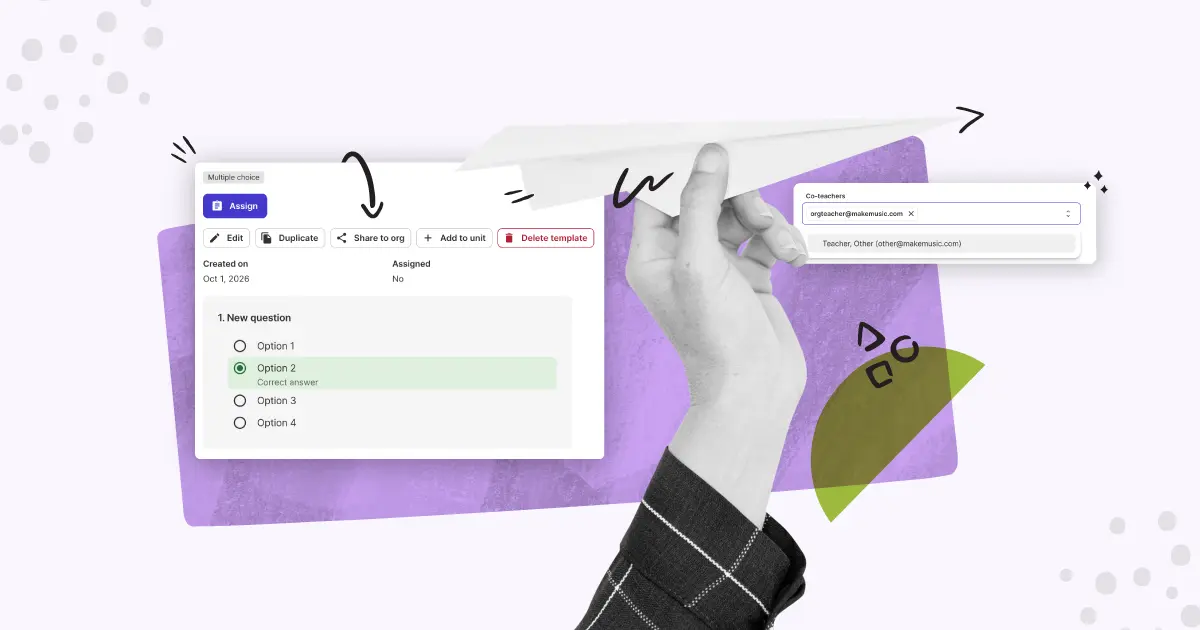
Within the platform, adding a co-teaching partner is engineered to be friction-free:
- Seamless Invitation: A primary instructor navigates to their Class Settings within the platform.
- Email Verification: By entering a colleague’s professional email address, an invitation is immediately dispatched.
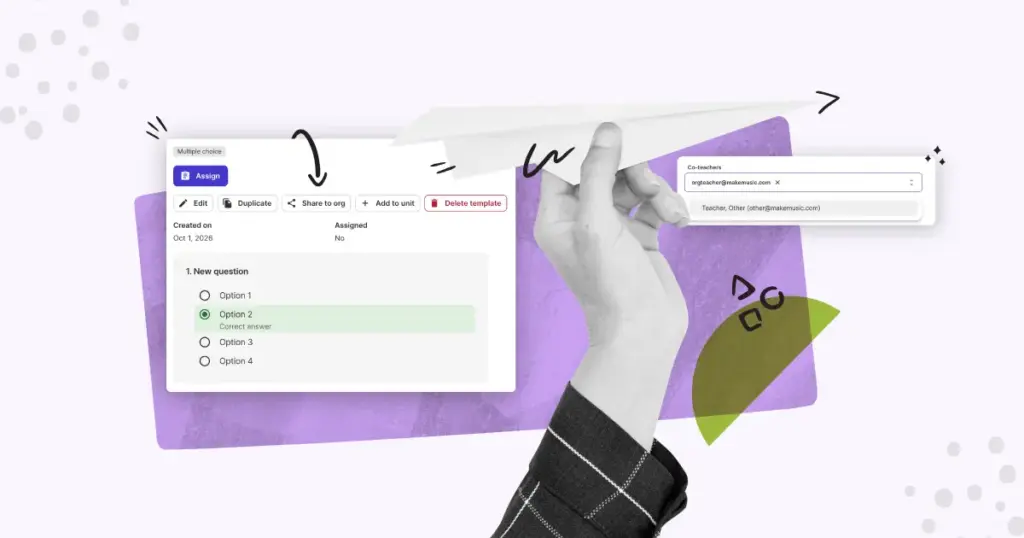
- Instant Synchronization: Once accepted, the co-teacher gains real-time access to student assignments, grading ledgers, and roster management tools, operating with the same institutional clarity as the primary director.
This architecture is particularly transformative across three distinct educational paradigms:
- Large Ensemble Co-Directors: Marching bands and symphonic orchestras often feature split staff. Co-teaching tools ensure that both the woodwind specialist and the brass specialist—or the head director and the assistant—are viewing identical student metrics without needing to manually reconcile disparate grade books.
- Student Teacher Mentorship: Veteran educators often struggle to give student teachers meaningful, hands-on administrative experience without risking the integrity of their official grading records. By bringing student teachers directly into the platform as co-teachers, they gain authentic experience in assignment creation, grading rubrics, and student feedback loops under safe supervision.
- Special Education Integration: Inclusive classrooms frequently rely on specialized support staff. When a special education co-teacher or paraprofessional has direct access to the music platform, they can view specific student accommodations, past performance data, and assignment parameters with the exact same context as the primary music educator.
Eliminating Redundancy: Intra-Organizational Assignment Sharing
Beyond live co-teaching, the introduction of robust assignment-sharing networks addresses the solitary nature of curriculum design. Following the rollout of flexible assessment tools—such as multiple-choice evaluations for music theory, aural dictation, and listening analysis—the demand for shareable digital content surged.
Previously, if an educator spent hours crafting a nuanced quiz on rhythm notation or key signatures, that intellectual labor remained trapped inside their personal library. Today, organizational sharing protocols allow educators within the same school district or institutional network to circulate these assets effortlessly.
The workflow is intentionally streamlined:
- An educator finalizes a high-yield written assignment or quiz within their personal digital library.
- Using the platform’s sharing interface, they designate the asset as shareable with their broader organization.
- Colleagues teaching parallel sections or subsequent grade levels can instantly locate the asset within the shared repository and save a fully functional copy directly to their own accounts.
The pedagogical ripple effect of this capability is profound. High school band directors can standardize foundational theory benchmarks across incoming cohorts; choir directors can effortlessly pool solfège identification exercises; and incoming or substitute teachers can step into a classroom with an established, high-quality digital library waiting for them on day one.
Future Outlook: The Next Frontier of Connected Music Pedagogy
As educational technology continues to mature, the horizon of music instruction points toward even deeper integration, automated efficiency, and global community building. The success of current collaboration features signals that the future of music education lies not in isolated digital workstations, but in interconnected, supportive ecosystems.
The Rise of Regional and District-Wide Curricular Alignment
Looking ahead, school districts are increasingly recognizing the value of macro-level curriculum coordination. By leveraging platforms that permit secure organizational sharing, fine arts coordinators can begin to build cohesive, vertical-alignment pathways for music literacy from elementary general music all the way to advanced high school wind ensembles and concert choirs. Students moving from one school within a district to another will encounter familiar digital assessment frameworks and consistent curricular standards, minimizing transition shock and maximizing musical growth.
AI-Assisted Collaboration and Peer Review
As artificial intelligence and machine learning models weave deeper into educational software, the next generation of music edtech will likely introduce intelligent curation to collaborative spaces. Imagine a feature where an educator drafting an advanced conducting or theory assignment receives automated recommendations for complementary modules created by trusted colleagues within their district or national user groups. Furthermore, automated peer-review suggestions could help co-teachers calibrate their grading rubrics, ensuring absolute fairness and consistency across large multi-section ensembles.
Sustaining the Passion for Teaching
Ultimately, the evolution of these tools serves a singular, vital purpose: protecting the well-being of the educator. Music is an art form rooted in human connection, ensemble harmony, and shared expression. It is a profound irony that those who teach it have so often been forced to work in isolation.
By dismantling administrative barriers, fostering vibrant peer communities through dedicated online spaces, and introducing intuitive co-teaching and sharing frameworks, modern platforms are helping to restore balance to the profession. The message to music educators is clear and reassuring: you no longer have to navigate the complexities of the podium alone. As technology continues to bridge the physical and logistical gaps between classrooms, the future of music education sounds more harmonious than ever.