
Executive Overview
What the contemporary art world needs most urgently is not another pared-down, minimalist chamber opera, but rather a fearless return to the adventurous, hyper-expensive, and emotionally overwhelming spectacle of grand opera. While the corridors of traditional European and American houses often shy away from the staggering logistical and financial hurdles of the subgenre, the Boston Lyric Opera (BLO) has boldly bucked the trend. To mark its landmark 50th-anniversary season, the company opened its doors with an ambitious, high-stakes new staging of Gioachino Rossini, Victor-Joseph Étienne de Jouy, and L. F. Bis’s monumental masterpiece, Guillaume Tell.
Grand opera—with its mandatory ballets, formidable ensembles of solo powerhouse vocalists, and earth-shaking choruses—has long been threatened by structural crises in arts funding. Yet, few artistic mediums resonate quite as profoundly with our modern sociopolitical climate. These works grapple with systemic oppression, political struggle, and human suffering, delivering them through a sonic grandeur that only a massive chorus and a roaring orchestra can achieve.
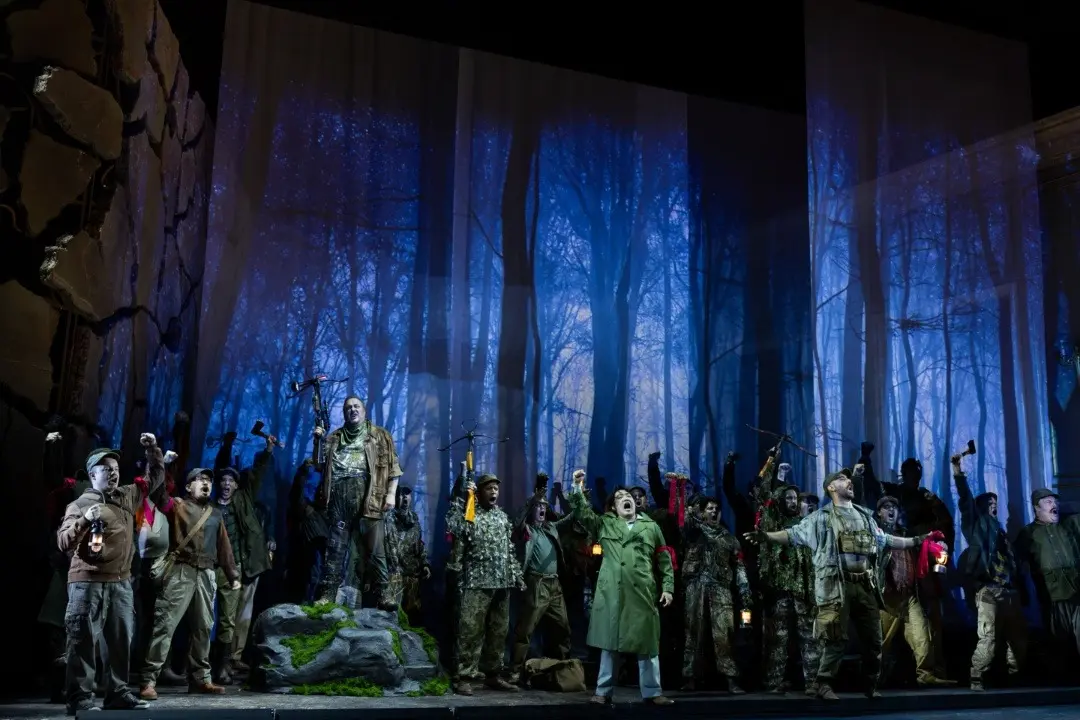
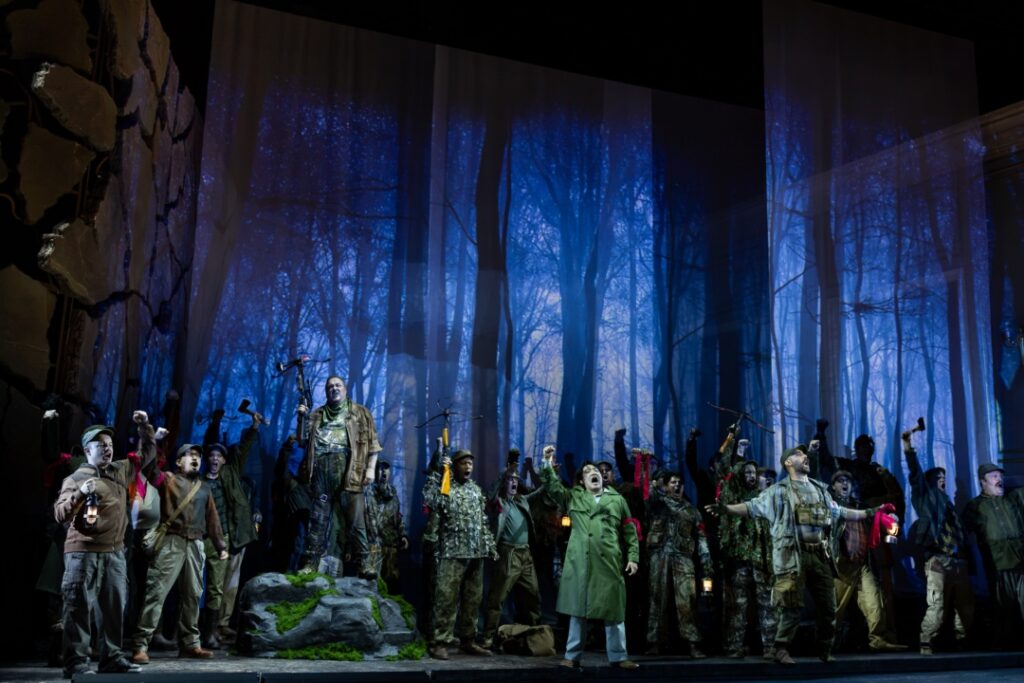
In mounting Guillaume Tell, the BLO managed to sidestep its historical missteps in updating classic works. Eschewing overly complex domestic allegories, directors Vita Tzykun and David Adam Moore approached the opera with the straightforward, unapologetic political subtlety of 1990s Hollywood action blockbusters like Total Recall or Die Hard. The production was not without its flaws—ranging from aggressive textual cuts to uneven scenic execution—yet it succeeded brilliantly in its primary mission: offering an insightful, entertaining, and intellectually coherent theatrical experience that hits its mark as cleanly as Guillaume’s arrow through the apple.
Detailed Chronology: A Near-Future Revolution on Stage
Reimagining Mythical Switzerland for the Digital Age
The foundational premise of Rossini’s original nineteenth-century opera, rooted in the mythical past of Swiss liberation from Austrian tyranny, was radically re-engineered by Tzykun and Moore. Drawing inspiration from speculative dystopian cinema—reminiscent of Paul Verhoeven’s gritty political thrillers and The Hunger Games—the production transports the narrative into a not-so-distant, tech-dominated future.
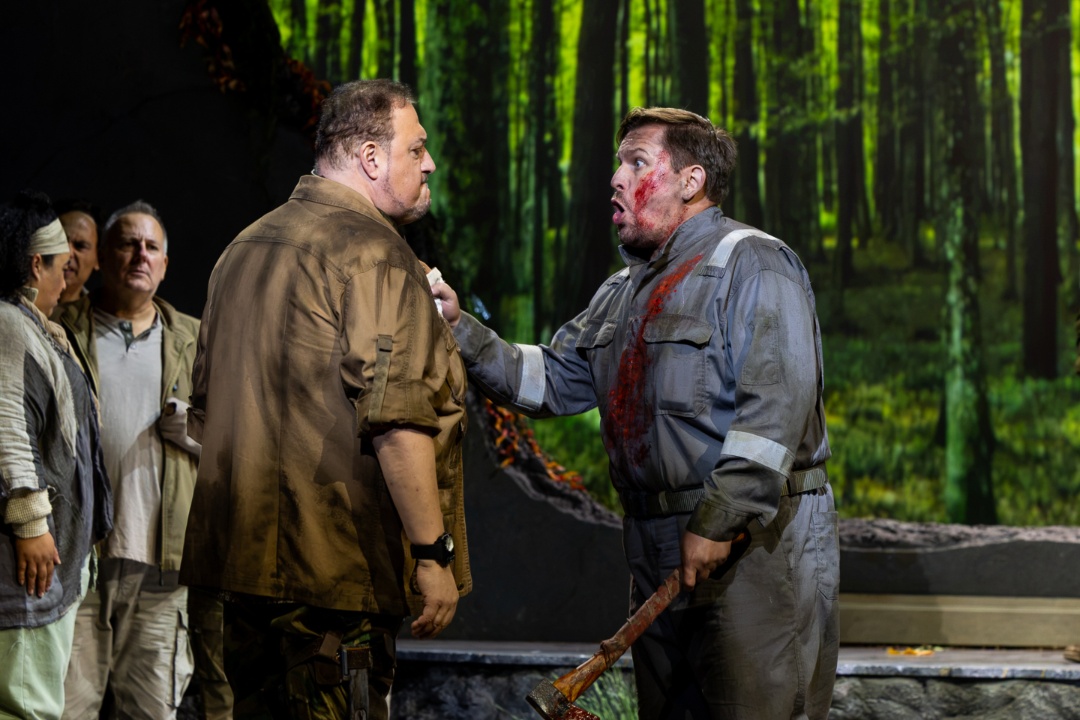
In this dystopian iteration, the Swiss population is subjugated by an omnipotent, high-tech corporate elite. The narrative stakes are modernized accordingly: in Act 3, Guillaume Tell’s fatal "offense" is no longer merely refusing to bow before Gessler’s cap, but a defiant refusal to allow the colonizing regime to harvest his biometric data.
While purists may bristle at such liberties, the conceptual pivot gave the evening a gripping, cinematic momentum. However, this textual and dramaturgically cohesive vision came at a heavy musical cost.
The Cuts and Musical Discontinuities
Most notably, the production redacted more than an hour and a half of Rossini’s original score. While trimming the fat allowed modern audiences to exit the theater before midnight, it frequently disrupted the grammatical rules of musical discourse.
The pastoral opening of the opera, for instance, was transformed into an unsettling performance staged by the oppressed for their overseers, holding the citizenry (including the poor boatman, Ruodi) at gunpoint during his serene aria, "Accours dans ma nacelle." While contemporary subversions of operatic librettos are standard practice, they require immense erudition and panache to avoid feeling tacked-on. Tzykun and Moore’s interventions occasionally read less like an organic reinterpretation and more like an entirely new script forced onto an existing template.
Furthermore, the production fell victim to several recurring theatrical sins that have occasionally haunted the BLO over the decades: a monolithic, impractical set design; cheap-looking AI-generated video projections; and a projector cooling fan loud enough to drown out the orchestra during dynamic mezzo-forte passages. Despite these physical limitations, the directors maintained a piercing ideological focus on a central question: How does one combat authoritarian violence?
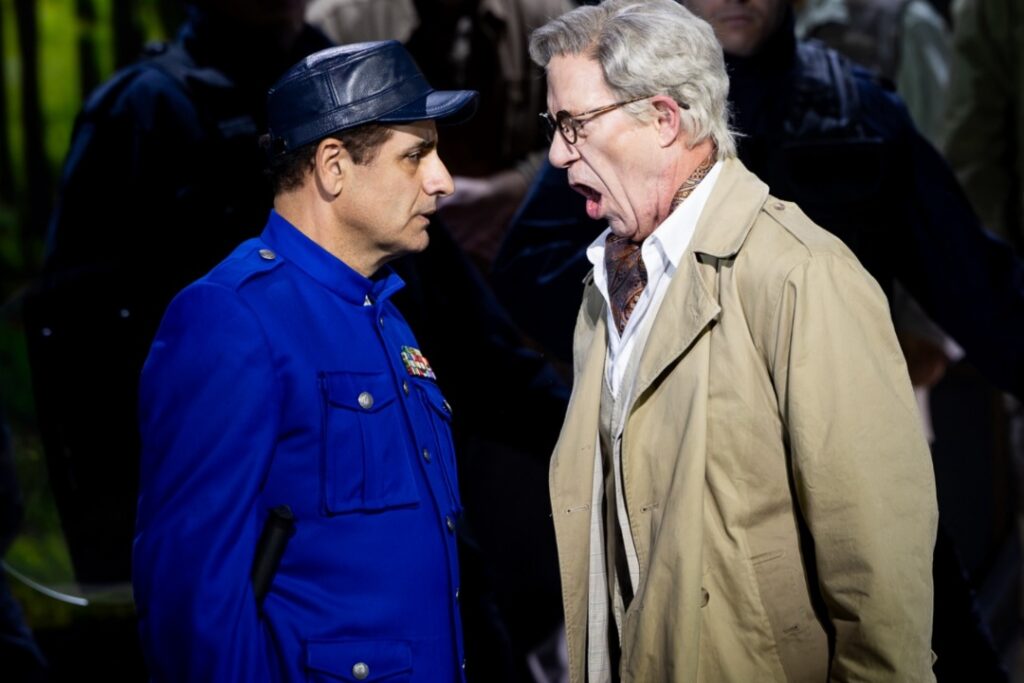
Abandoning any lingering hints of pacifism, the production explicitly declared at the end of Act 3 that "only violence can fight violence." Yet, in a stroke of brilliant emotional framing during the opera’s sublime finale ("Quoi! dans nos maux acceptant un partage"), the directors placed a single woman center stage holding a photograph of a lost loved one—echoing Sophia Loren in Vittorio De Sica’s Sunflower. Though undeniably manipulative, it underscored the raw emotional truth of the music and proved that within the hallowed halls of an opera house, emotional resonance is never a crime.
Supporting Context & Metrics: Vocal Triumphs and Orchestral Realities
The Chorus as the Emotional Anchor
The undisputed star of the evening was the Boston Lyric Opera Chorus. Grand operas demand exceptional choral work, and in Tell, the chorus occupies the stage for roughly three-quarters of the performance.
Modern professional choruses often lean toward a highly refined, pristine aesthetic—singing Verdi with the hushed, ecclesiastical clarity of monks performing a Bruckner motet. The BLO Chorus refreshingly rejected this sanitized approach, delivering a gloriously unvarnished, booming sound that echoed off the Colonial Theatre walls with authentic mid-nineteenth-century bravura. Though they maintained strict dynamic control—making clear distinctions between mezzo forte and mezzo piano—their primary achievement was sounding overwhelmingly massive, imposing, and vital.
Vocal Performances: A Mixed Cast of Tenorial Thrills and Scenic Struggles
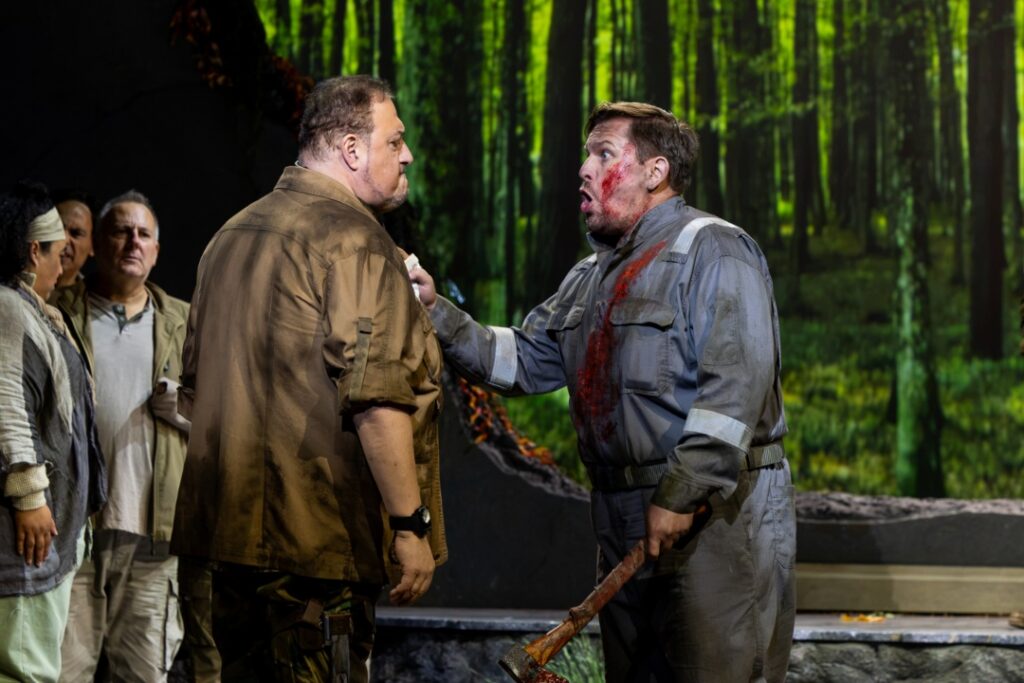
The vocal cast presented a fascinating study in contrasts, complicated by a universal struggle with proper French diction—a minor grievance easily forgiven by an enthusiastic Boston audience.
- George Gagnidze (Guillaume Tell): As the titular hero, Gagnidze delivered a vocally solid performance, though his voice lacked overwhelming acoustic volume from the orchestra level (likely projecting better into the balconies). His physical acting was occasionally stiff, and during Tell’s towering dramatic test, the aria "Sois immobile," he struggled to lock into synchronization with an already beleaguered cello soloist.
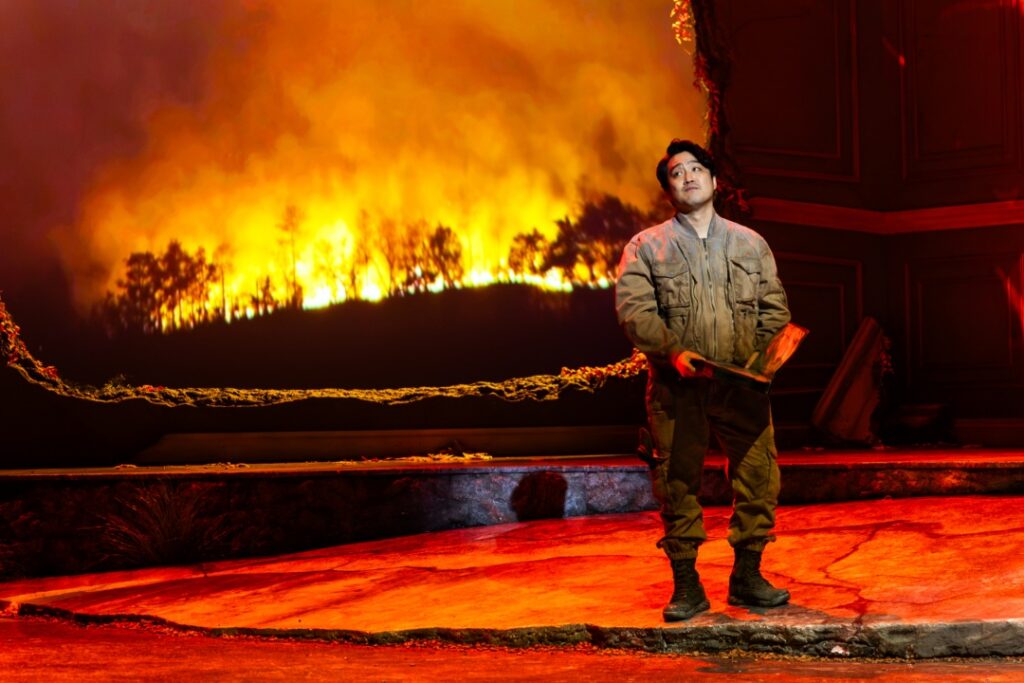
- Konu Kim (Arnold): If Guillaume Tell is to be judged by its tenor demands, the work rightfully belongs to Arnold. Konu Kim embraced the legendary vocal acrobatics popularized by historic tenors like Adolphe Nourrit and Gilbert Duprez. Though his tone occasionally lacked precision in softer passages, his upper register was nothing short of explosive. Defying decades of sanitized performance traditions, Kim held his concluding high C on "aux armes" for roughly ten additional measures past the score’s prescribed cut-off. Even with a trace of fatigue at the very end of the note, the auditorium erupted into rapturous, thunderous applause.
- Brianna J. Robinson (Jemmy): Casting a soprano of Robinson’s rich, dark caliber in the role of Tell’s child initially felt unconventional, but her gorgeous instrument elevated the character far beyond a standard juvenile trouser role. Her contributions to the Act 3 ensemble work were unforgettable.
- Anya Matanovič (Mathilde): Matanovič struggled to cut through the heavy orchestration during her Act 2 aria, "Sombre forêt," and her lighter vocal profile was occasionally overshadowed by her castmates. Furthermore, her dramatic chemistry with Kim remained largely unconvincing.
- Hunter Enoch (Gessler) & Nina Yoshida Nelsen (Hedwige): Enoch brought a consistent, sharply articulated baritonal menace to the villainous Gessler, while Nelsen anchored the supporting maternal lines of Hedwige with a comforting, grounded resonance.
- Morgan Mastrangelo (Ruodi): Mastrangelo leaned into the "light tenor" metallic vibrato typical of 1990s stagings, bringing high camp and infectious charisma to his opening solo.
Conductor David Angus and the BLO Orchestra
In the pit, conductor David Angus delivered a steady, if occasionally uneven, reading of Rossini’s score. The famous cello solos in the overture and the "Sois immobile" aria lacked pristine intonation and fluid phrasing. However, Angus excelled in managing the monolithic choral explosions, drawing a remarkably warm, round sound from the brass section while keeping the percussion cleanly balanced.
Official Statements and Institutional Reflection
Reflecting on the milestone 50th-anniversary season, BLO leadership has emphasized that survival in the modern performing arts landscape requires taking calculated, high-risk artistic bets. While the company has experimented with hyper-localized contemporary stagings in past years with varying degrees of success, Guillaume Tell serves as a conceptual blueprint for the future.
By pairing a nineteenth-century grand opera score with mid-budget, sci-fi action sensibilities, the BLO has signaled a maturation in its directorial philosophy. Company representatives noted that stabilizing rehearsal environments and embracing the sheer sonic weight of grand-scale repertoire allow regional American houses to punch well above their weight class, engaging modern audiences in pressing conversations about political agency, technological overreach, and state violence.
Future Outlook: A Blueprint for Regional Grand Opera
The triumph of the Boston Lyric Opera’s Guillaume Tell proves a fundamental truth about lyrical arts: grand opera possesses an inherent, bulletproof resilience. Even when burdened by heavy cuts, occasionally clunky video projections, and imperfect vocal synchronicity, the sheer majesty of Rossini’s wall of sound commands attention.
Like a migrating herd of elephants or a pod of marine mammals, grand opera’s ultimate power relies on its sheer, undeniable scale and presence. By leaning into this grandiosity rather than apologizing for it, the BLO has established a viable, exciting path forward. If other mid-sized opera houses follow Boston’s lead, the coming decades may witness a triumphant renaissance for the most ambitious and breathtaking genre in Western classical music.