
Executive Overview
The contemporary jazz landscape is currently defined by a fascinating friction between deeply rooted acoustic traditions and modern, technology-driven production sensibilities. This quarter’s release slate offers a striking cross-section of this aesthetic push-and-pull. From the understated, organic interplay of seasoned British veterans to the telepathic, cross-genre dialogues of an Italian duo, and finally to the polished, studio-engineered aspirations of a rising American academic and trumpeter, the modern idiom continues to expand in multiple directions simultaneously.
This review dossier examines three distinct recent releases: guitarist Deirdre Cartwright’s trio effort Organik, vocalist Marilena Paradisi and accordionist Natalino Marchetti’s intimate collaboration Blue Prelude, and trumpeter Evan Taylor’s high-gloss debut Exactly This. Together, these albums chart the breadth of contemporary jazz expression—demonstrating how artists navigate the precarious balance between technical execution, emotional resonance, and commercial accessibility.
Detailed Chronology & Album Evaluations
Deirdre Cartwright: Organik (Blow The Fuse Records)
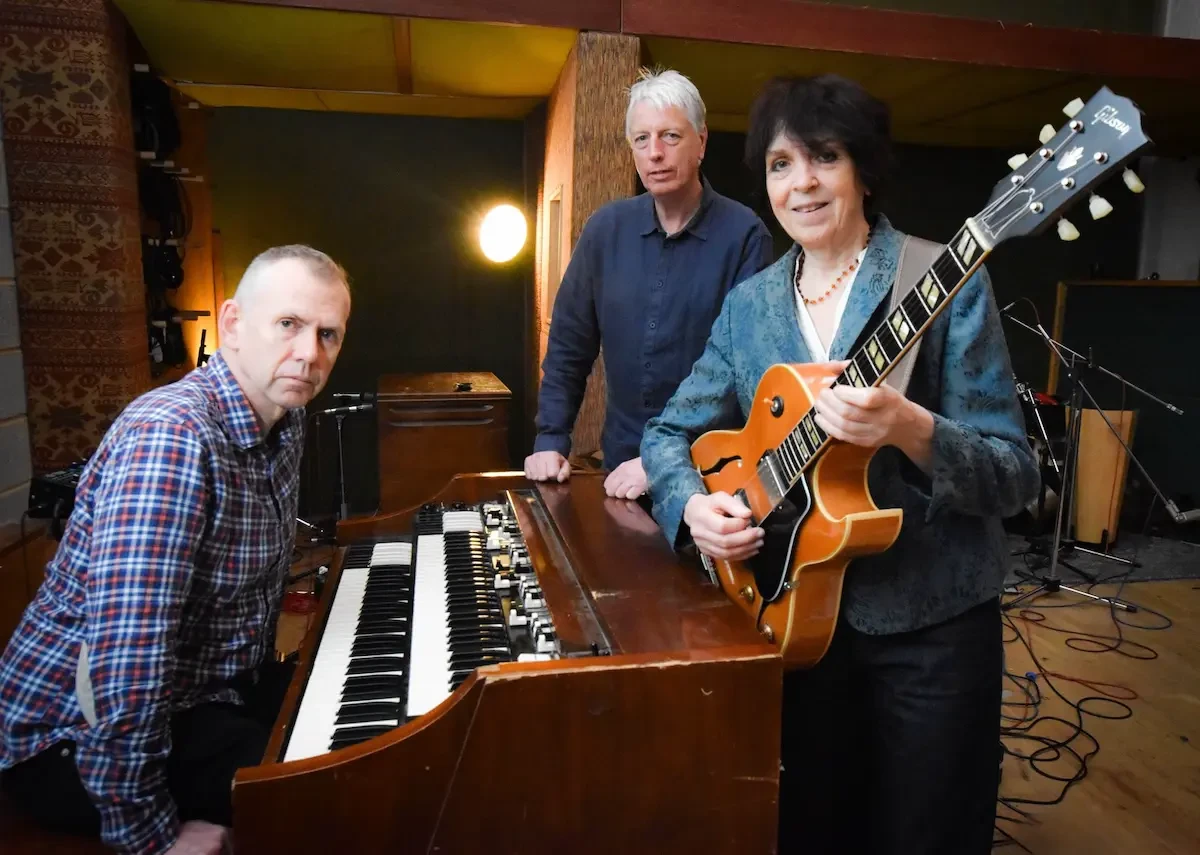
Recorded over two days in London (February 17–18, 2026), Organik finds veteran guitarist Deirdre Cartwright operating in an organ-trio format alongside organist Pete Whittaker and percussionist Gary Hammond. Historically, the guitar-organ-drums configuration carries inherent risks of dynamic imbalance. The sheer sonic weight of a Hammond organ, paired with an aggressive percussionist, can easily overwhelm a guitarist’s subtle phrasing.
However, Cartwright’s trio sidesteps these pitfalls entirely. Whittaker and Hammond act as sensitive custodians of this heavy instrumentation, matching Cartwright’s mellow, unforced tones across all tempos. Across nine tracks—blending originals, jazz standards, and pop appropriations—the rhythm section burns with the sustained sparkle of a fountain rather than the disruptive, explosive bursts of a Roman candle or skyrocket.
While this consistent equilibrium is commendable, it occasionally leaves the listener yearning for a dramatic sonic jolt or a sudden dynamic surge. This expectation is heightened by the presence of a Hammond organ and a well-stocked percussion battery, and it is validated when the trio swings—lightly, but effectively—on tracks like On Green Dolphin Street. On this standard, Cartwright plays the head against mysterious, shadowy organ chords, while Softly, As In A Morning Sunrise benefits from a wholly appropriate and tasteful deployment of harmonics.
The program also showcases geographic and stylistic versatility. A distinct Cuban flavor permeates Cartwright’s original Mango Bango and the album’s opening cover of the Beatles’ Eleanor Rigby. In the latter, the song’s familiar strophic structure is cleverly subverted without sacrificing its underlying pathos. Meanwhile, a nod to Mark Knopfler’s Sultans Of Swing perfectly encapsulates the trio’s understated, unfussy philosophy.
Organik Tracklisting & Personnel
- Tracks: Eleanor Rigby; One For Polly; Mango Bango; Softly, As In A Morning Sunrise; Espresso Martino; You Don’t Know Me; Sultans Of Swing; On Green Dolphin Street; The Gentle Rain (Total Duration: 47:55)
- Personnel: Deirdre Cartwright (g); Pete Whittaker (org); Gary Hammond (pc).
- Location & Date: London, UK | February 17–18, 2026.
- Label: Blow The Fuse Records (BTF2616CD)
Marilena Paradisi & Natalino Marchetti: Blue Prelude (Losen Records)
Moving from the smoky jazz clubs of London to the artistic hubs of Rome, the collaboration between vocalist Marilena Paradisi and accordionist Natalino Marchetti on Blue Prelude represents a masterclass in intimate chamber jazz. Recorded in the Italian capital on January 17–18, 2026, this partnership effectively redefines the conventional boundaries of voice and accordion within an improvised music framework.
Paradisi possesses an elfin, agile voice that frequently reaches for—and remains remarkably secure within—unforgiving upper registers. Marchetti, meanwhile, approaches the accordion not merely as a folk instrument or harmonic filler, but with the sophisticated, dynamic mindset of a jazz pianist, exploiting the keyboard’s orchestral capacity for color and resonance.
The duo exhibits a telepathic rapport, reading each other’s musical thoughts in real time. This is vividly demonstrated in their treatment of Stephen Sondheim’s I Remember—a composition that bridges the gap between Broadway musical theater and operatic depth. Notice how Marchetti tactfully pulls back his accompaniment, carving out vital acoustic space for Paradisi’s introspective, nostalgic vocal delivery.
Elsewhere, the pair navigates complex harmonies and knotty melodic structures, such as those found in Wayne Shorter’s Ana Maria. While these passages yield performances of disarming candour, they also test the limits of the medium; on this track, Paradisi’s high-altitude excursions occasionally threaten intonation. Another highlight, On A Clear Day, dispenses with a conventional 4/4 time signature from the outset, settling instead into a fast waltz before crystallizing in the sheer exuberance of Paradisi’s concluding scat improvisation.
Blue Prelude Tracklisting & Personnel
- Tracks: Here’s That Rainy Day; On A Clear Day; I Waited For You; Ana Maria; Always And Forever; Blue Prelude; I Remember; Luiza; The St. Vitus Dance (Total Duration: 37:13)
- Personnel: Marilena Paradisi (v); Natalino Marchetti (acc).
- Location & Date: Rome, Italy | January 17–18, 2026.
- Label: Losen Records (LOS 330-2)
Evan Taylor: Exactly This (MBF Entertainment)
Representing a stark stylistic departure from acoustic subtlety and European chamber intimacy, trumpeter Evan Taylor’s debut album, Exactly This, enters the contemporary arena backed by impressive academic credentials. Having secured a position as professor of jazz trumpet at Broward College in Florida at the tender age of 28—following a 2020 Jazz in Europe prize for under-25 musicians and a finalist spot in the International Trumpet Guild’s improvisation contest—Taylor’s trajectory has been meteoric.
Yet, Exactly This bears all the hallmarks of a pristine, studio-crafted debut. Its liner notes overflow with acknowledgements and personnel credits—famously declaring, "I foremost want to give the glory to God Almighty, the one true creator, who allows me to see the world through the wonderful gift of music"—while curiously omitting basic recording dates and locations.
For the traditional jazz critic, a lingering question remains regarding context: Has Taylor honed his craft extensively on the road, performing before unpredictable or demanding live audiences in gritty club environments? The album’s aesthetic suggests a different developmental path. Exactly This is heavily reliant on the technical manipulation of sound. It is a product of the studio environment, where trumpet lines are sanitized, polished, and meticulously embedded within synthetic, groove-based soundscapes.
Collaborating with a revolving cast of over a dozen musicians, Taylor crafts a brand of instrumental music that sits comfortably under the "smooth jazz" umbrella. Driven by slick keyboard vamps and punchy horn arrangements, the project ultimately functions less as exploratory jazz improvisation and more as high-end, sophisticated contemporary disco.
Exactly This Tracklisting & Personnel
- Tracks: Exactly This; Shift; Laid Back; Blue Dreams; Swerve; Love’s Intention; Scarlet Flow; Skate On; Turn It Up; Shining (Total Duration: 41:45)
- Personnel: Evan Taylor (t); Adam Hawley (kyb, g, b); Richard Elliott, Dave Koz, Fabian Chavez (s); Oli Smith (p); Kasey Square, Caleb Middleton, Carnell Harrell, Mel Brown (b); Aaron Smith, Eric Valentine (d); Ramon Yslas (pc). (Note: Phil Denny is featured on the track "Swerve" but goes uncredited in the liner notes).
- Location & Date: Unspecified.
- Label: MBF Entertainment (MBF00050)
Supporting Context & Metrics
To properly contextualize these three releases, one must examine the shifting economics and production methodologies dominating the global jazz market in 2026.
| Album Title | Primary Genre / Subgenre | Production Approach | Geographic Origin | Core Instrumentation |
|---|---|---|---|---|
| Organik | Contemporary Mainstream Jazz | Live-in-studio acoustic | United Kingdom | Guitar, Organ, Percussion |
| Blue Prelude | Chamber Jazz / European Improv | Acoustic dialogue & space | Italy | Voice, Accordion |
| Exactly This | Smooth Jazz / Crossover Disco | DAW-synthesized, multi-track | United States | Trumpet, Keyboards, Rhythm Section |
While European labels (such as Blow The Fuse and Losen Records) continue to champion organic, live-room dynamics where spatial acoustics and human timing take precedence, American independent releases like Exactly This frequently lean toward polished, radio-friendly production values designed for streaming algorithms and adult-contemporary playlists.
Official Statements & Industry Perspectives
The aesthetic divergence highlighted by these releases underscores a broader debate within the global jazz community regarding authenticity versus commercial viability.
- On Acoustic Interplay: Speaking on the release of Organik, guitarist Deirdre Cartwright emphasized the importance of restraint in ensemble playing: "When you work with powerful instruments like the Hammond organ, the goal isn’t to fight for sonic dominance. It’s about finding the spaces in between, letting the air circulate, and trusting the groove at any tempo."
- On Chamber Intimacy: Discussing the collaborative process behind Blue Prelude, vocalist Marilena Paradisi noted the unique telepathy required of a voice-and-accordion duo: "There is nowhere to hide in this configuration. Every breath, every micro-tone, and every harmonic shift is laid bare. Natalino and I don’t just accompany one another; we share a single lung."
- On Studio Craft & Crossover Appeal: While Evan Taylor has not issued a formal manifesto regarding the smooth jazz classification of Exactly This, industry promoters have positioned the album as a vital bridge for younger generations accustomed to multi-layered, beat-driven production—proving that virtuosic brass performance can successfully merge with contemporary pop-fusion aesthetics.
Future Outlook
As the music industry progresses through 2026, the trajectory of jazz will likely continue to fracture along these distinct stylistic fault lines. On one hand, projects like Deirdre Cartwright’s Organik and Marilena Paradisi and Natalino Marchetti’s Blue Prelude ensure that the rich traditions of acoustic interplay, listening-room intimacy, and spontaneous improvisation remain vibrant, respected, and deeply emotional.
Conversely, the commercial appetite for highly polished, studio-engineered crossover projects—exemplified by Evan Taylor’s Exactly This—demonstrates that jazz pedagogy and popular music production will continue to intersect. For listeners, this dichotomy is cause for celebration rather than division; it proves that regardless of whether one seeks the gentle swing of a London guitar trio, the operatic whisper of a Roman vocal-accordion pairing, or the synthetic sheen of Florida smooth jazz, the modern jazz ecosystem remains robust, diverse, and endlessly inventive.