The landscape of voice science, medicine, and pedagogy has undergone a profound transformation over the past several decades, evolving from a fragmented collection of artistic traditions into a rigorous, interdisciplinary science. At the epicentre of this global shift stands The Voice Foundation, an organisation that has consistently bridged the gap between clinical laryngology, artistic expression, and advanced vocal research.
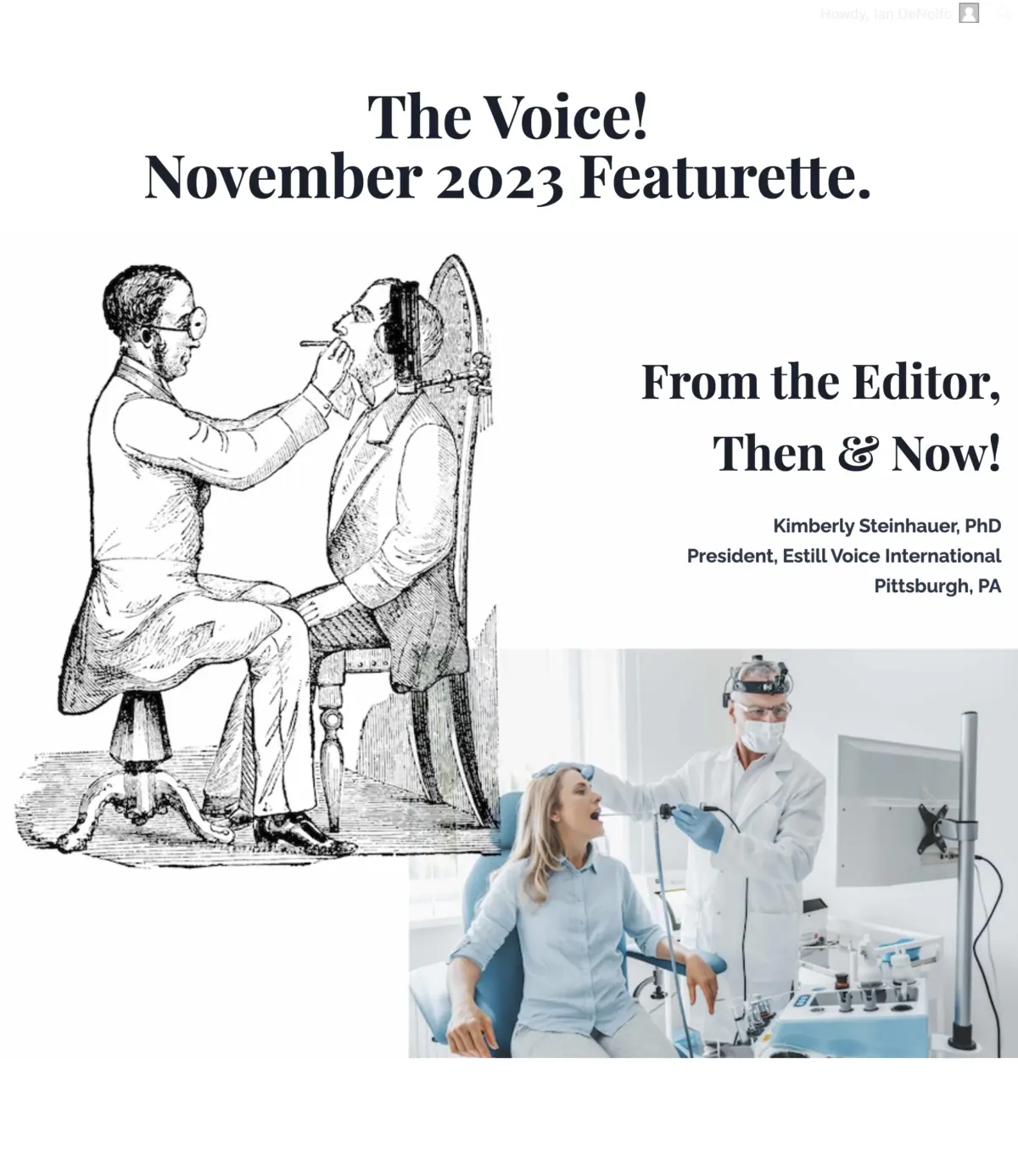
In a special investigative issue of The Voice, guest-edited by Dr. Kimberly Steinhauer—President of Estill Voice International and a prominent fixture in Pittsburgh’s vocal research community—the spotlight is turned inward. The publication explores a compelling conceptual framework inspired by contemporary cultural phenomena: the popular social media "Then & Now" meme. However, rather than operating as a superficial look back at personal aesthetics, this exercise serves as an institutional retrospective, probing the underlying motivations, unwavering devotions, and intellectual drives of the leaders who steer The Voice Foundation.
Dr. Steinhauer’s editorial journey—stemming from a personal synthesis of music, science, and pedagogy—mirrors the broader institutional mission of the Foundation itself: to integrate diverse disciplines for the betterment of the human voice. Sparked by the 2023 Symposium’s G. Paul Moore Lecture, delivered by the distinguished Margaret Baroody, M.M., this special issue investigates the institutional memory, current operations, and future trajectories of the Foundation. Through an exclusive survey titled "Ten Questions for our Leaders," readers are granted unprecedented access into the minds of Executive Director Ian DeNolfo, Advisory Board Chairman Dr. Michael Johns III, and Chairman of the Board Dr. Robert T. Sataloff.
This comprehensive report examines the milestones, leadership philosophies, and structural evolution of The Voice Foundation, detailing how its past informs its present and lays the groundwork for the future of vocal health worldwide.
Detailed Chronology: From Grassroots Vision to Global Authority
The Genesis of Voice Science
To understand the significance of The Voice Foundation’s current leadership, one must examine the historical vacuum that preceded its establishment. Decades ago, vocal training was largely segregated into two distinct worlds: the subjective, empirical domain of the singing teacher and the strictly clinical, pathology-focused realm of the otolaryngologist. Performers suffering from vocal injuries often had to navigate a landscape where medical professionals lacked an appreciation for the fine motor demands of professional singers, and pedagogues lacked the diagnostic tools to understand underlying physiological pathologies.
The inception of The Voice Foundation sought to demolish these silos. By bringing together laryngologists, speech-language pathologists, voice scientists, singing teachers, and performing artists, the Foundation created a multidisciplinary forum that revolutionized vocal care. Over the years, this grassroots initiative expanded into an internationally recognized authority, hosting the world’s premier symposium on care of the professional voice.
The Turning Point: The 2023 Symposium and the G. Paul Moore Lecture
The catalyst for Dr. Steinhauer’s recent investigative initiative was the 2023 Annual Symposium, a landmark event that highlighted the vital importance of institutional knowledge. Central to this retrospective mood was the prestigious G. Paul Moore Lecture, delivered by Margaret Baroody, M.M.
Named in honor of Dr. G. Paul Moore—a pioneer in speech science and voice disorders—the lecture traditionally addresses cutting-edge developments or historical milestones in voice research. Baroody’s presentation served as a masterclass in institutional reflection, emphasizing that an organization’s future viability is inextricably linked to its historical awareness.
Inspired by Baroody’s exploration of institutional continuity, Dr. Steinhauer devised the "Ten Questions for our Leaders" survey. This initiative sought to bypass the standard administrative summaries and extract deeply personal reflections from the Foundation’s key executives. By asking leaders to juxtapose their early aspirations against their current responsibilities, the survey uncovered the human engine driving the global voice science community.
Supporting Context & Metrics: The Intersection of Art, Science, and Education
Bridging Disciplines: The Personal and the Professional
Dr. Steinhauer’s editorial framing establishes a relatable yet profound parallel between individual career trajectories and organizational growth. Reflecting on her own journey, she notes:
"Back then, I hoped to combine my love of music with my interest in science and my joy of teaching… and now, I am still devoted to voice as a singer, researcher, and educator."
This triad—music, science, and teaching—forms the foundational DNA of The Voice Foundation’s membership. Modern voice pedagogy can no longer rely purely on imagery and metaphor. Contemporary voice teachers must possess a working knowledge of laryngeal anatomy, respiratory mechanics, acoustic phonetics, and neurological control. Conversely, voice scientists and laryngologists must understand the aesthetic and psychological demands placed upon performers.
Quantifying the Impact of The Voice Foundation
While qualitative narratives capture the spirit of the organization, the quantitative metrics of The Voice Foundation’s influence are equally staggering:
Global Reach: The Foundation’s annual symposia attract hundreds of multidisciplinary professionals from dozens of countries across North America, Europe, Asia, and South America.
Interdisciplinary Collaboration: Membership and conference attendees consistently span at least four core pillars: Otolaryngology/Laryngology, Speech-Language Pathology, Vocal Pedagogy/Singing Teaching, and Basic Voice Science.
Educational Output: Through peer-reviewed publications, newsletters such as The Voice, and specialized workshops, the Foundation disseminates critical research to thousands of clinical and artistic practitioners annually.
These metrics illustrate an organization that is not merely surviving, but scaling its impact in an era where voice use—from telehealth communication to professional streaming and elite performance—is at an all-time high.
Official Statements: Insights from the Core Leadership Team
The heart of the Then & Now investigative issue lies in the candid responses provided by the executive leadership. Their reflections shed light on the challenges of steering a global non-profit organization while remaining true to its scientific and artistic roots.
1. Ian DeNolfo, Executive Director
As the operational linchpin of The Voice Foundation, Ian DeNolfo manages the day-to-day complexities of coordinating global symposia, publications, and member services. In his survey responses, DeNolfo emphasizes the collaborative ethos that defines the organization. While his role requires a modern, administrative focus on logistics, financial stewardship, and digital expansion, his responses hark back to the core mission: serving the people who dedicate their lives to the human voice. DeNolfo consistently credits the army of volunteers, researchers, and clinicians who work tirelessly behind the scenes to keep the Foundation at the cutting edge of voice care.
2. Dr. Michael Johns III, Advisory Board Chairman
Dr. Michael Johns III, a renowned voice surgeon and specialist in laryngology, brings a critical clinical perspective to the leadership team. As Advisory Board Chairman, Dr. Johns bridges the medical community with the broader educational mission of the Foundation. His reflections in the Then & Now feature underscore the dramatic technological advancements witnessed during his career—ranging from high-speed digital imaging and stroboscopy to advanced laser surgery and regenerative medicine. Despite these technological leaps, Dr. Johns maintains that the human element—the empathetic listening required to treat a vocally disabled artist or speaker—remains irreplaceable.
3. Dr. Robert T. Sataloff, Chairman of the Board
A towering figure in the fields of otolaryngology, performing arts medicine, and voice science, Dr. Robert T. Sataloff has guided The Voice Foundation through decades of unprecedented growth. In his contributions to the survey, Dr. Sataloff reflects on the early days of the Foundation, when multidisciplinary voice care was viewed with skepticism by traditional medical and academic establishments. Through relentless advocacy, education, and peer-reviewed research, Dr. Sataloff and his colleagues transformed the Foundation into the gold standard for voice care worldwide. His "Then & Now" perspective serves as a testament to visionary leadership, illustrating how steadfast dedication to a unified mission can reshape entire medical and artistic disciplines.
Future Outlook: The Next Generation of Voice Science and Pedagogy
As The Voice Foundation looks beyond its historical milestones, the landscape of human communication is undergoing its most radical transformation since the invention of the telephone and recording technology.
Emerging Frontiers in Voice Research
Artificial Intelligence and Machine Learning in Voice Analysis: AI-driven diagnostic tools are beginning to assist clinicians in detecting early pathological changes in vocal fold mucosa long before they become symptomatic to the naked eye or ear. The Foundation is uniquely positioned to serve as an ethical and scientific hub for vetting these technologies.
Telehealth and Remote Vocal Rehabilitation: The post-pandemic era has cemented telehealth as a permanent fixture in voice therapy and pedagogy. Researchers within the Foundation are actively studying the efficacy of remote acoustic analysis and latency management in real-time vocal instruction.
Regenerative Medicine and Stem Cell Research: Perhaps the most thrilling frontier for laryngology is the potential for tissue engineering to restore scarred or damaged vocal fold tissue. Leaders like Dr. Sataloff and Dr. Johns continue to champion research that moves beyond symptom management toward true anatomical and functional restoration.
The Enduring Mission
Despite rapid technological advancements, the core philosophy championed by Dr. Kimberly Steinhauer, Ian DeNolfo, Dr. Michael Johns III, and Dr. Robert T. Sataloff remains clear: the human voice is an intricate instrument of profound personal, cultural, and clinical significance.
By honouring its past through reflective exercises like the Then & Now issue, The Voice Foundation ensures that it does not lose sight of the passionate individuals who built the field. At the same time, by embracing cutting-edge science and interdisciplinary collaboration, the organization stands fully prepared to guide the next generation of singers, speakers, teachers, scientists, and physicians into a bright and innovative future.