

Executive Overview
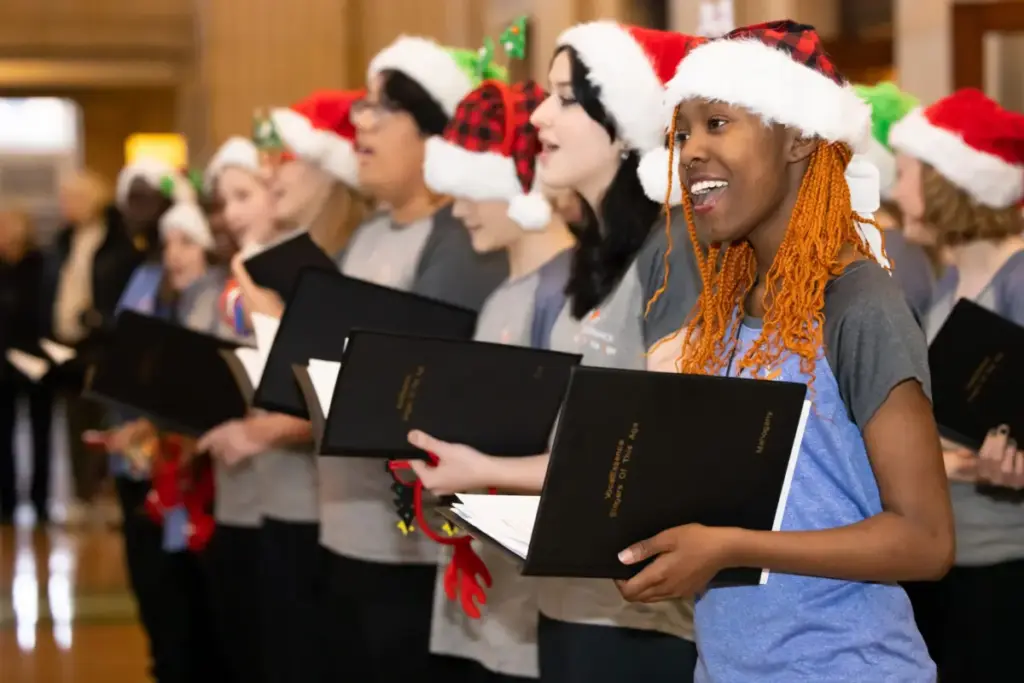
On Friday, April 14, 2023, the historic Church of the Holy Trinity at 1904 Walnut Street in Philadelphia transformed into a sanctuary of symphonic grandeur and vocal brilliance. The occasion was the 53rd Annual Spring Concert hosted by the Thomas Jefferson University Choir and Orchestra, a momentous musical gathering held in celebration of World Voice Day 2023. Presented in collaboration with the prestigious Voice Foundation, the evening delivered a breathtaking juxtaposition of classical sacred masterworks and iconic American folk opera.
Under the visionary artistic leadership of conductor Robert Thayer Sataloff, M.D., D.M.A.—an internationally renowned otolaryngologist and musician—the ensemble performed Franz Joseph Haydn’s monumental Lord Nelson Mass (Missa in angustiis), alongside stirring excerpts from George and Ira Gershwin’s theatrical triumph, Porgy and Bess. Supported by associate conductors Philip Doucette, M.A., M.M., and Margaret M. Baroody, M.M. (Associate Conductor Emerita), as well as accompanist Yoni Levyatov, the 2023 staging united medical science, academic rigor, and transcendent artistry.
Featuring an impressive roster of eleven vocal soloists, the concert served as both a cultural cornerstone for the Philadelphia arts community and a profound global tribute to the human voice. This retrospective examines the historical weight of the repertoire, the physiological and cultural significance of World Voice Day, the logistical and artistic triumphs of the evening, and the enduring legacy of an academic institution that views music as an essential pillar of human health and expression.
Detailed Chronology
The Prelude to the Performance: Setting the Stage at Holy Trinity
As twilight descended on Rittenhouse Square on April 14, 2023, the majestic Gothic Revival architecture of the Church of the Holy Trinity buzzed with anticipation. Patrons, faculty, medical professionals, students, and local classical music enthusiasts filled the pews, eager to witness an ensemble known for bridging the gap between rigorous academic inquiry and expressive musical performance.
The stage arrangement was meticulously orchestrated to balance a full symphonic orchestra with a robust choir, ensuring optimal acoustics within the historic church. Behind the scenes, months of intensive rehearsals culminated in this singular evening, directed by Dr. Robert Thayer Sataloff—a figure whose dual expertise in vocal health and orchestral conduction uniquely positions him to lead an ensemble tethered to a major health science university.
Act I: The Majesty of Haydn’s Lord Nelson Mass
The first half of the concert opened with Franz Joseph Haydn’s Missa in angustiis (Mass for Troubled Times), universally known as the Lord Nelson Mass. Composed in 1798 during a period of acute geopolitical anxiety—as Napoleon Bonaparte’s military campaigns threatened Europe and Nelson achieved his historic naval victory at the Battle of the Nile—the work is widely considered a masterpiece of spiritual urgency and symphonic invention.
Under Dr. Sataloff’s baton, the Thomas Jefferson University Choir and Orchestra delivered a gripping rendition of the mass’s striking, unusual instrumentation: scored for strings, timpani, three trumpets, and organ, conspicuously omitting woodwinds to create a brilliant, piercing, and martial sonic palette.
- Kyrie: The opening movement began with a dramatic, tension-filled invocation. Soprano soloists soared above the orchestral swells, establishing the anxious yet hopeful tone of the in angustiis subtitle.
- Gloria: The tempo accelerated into a radiant celebration. The choir executed rapid contrapuntal passages with precision, showcasing clean diction and dynamic restraint that highlighted the acoustic clarity of the church.
- Credo: A masterclass in thematic unity, this movement featured robust dialogue between the orchestra and the chorus, underscored by virtuosic interventions from the featured vocal soloists.
- Sanctus and Benedictus: The transition into the Sanctus offered a solemn, majestic hush before erupting into praise. The Benedictus provided a poignant, lyrical respite, featuring lush harmonies and exquisite phrasing.
- Agnus Dei and Dona Nobis Pacem: The mass concluded with a powerful plea for peace. The timpani rolls and sweeping string motifs framed a transcendent vocal quartet, leaving the audience in contemplative silence before the applause broke the sacred stillness.
Act II: The Soulful Americana of Gershwin’s Porgy and Bess
Shifting from the imperial courts of 18th-century Europe to the vibrant, folkloric landscapes of Catfish Row, the second half of the program explored the timeless idioms of George and Ira Gershwin. Porgy and Bess, premiered in 1935, blends European operatic structures, African American spirituals, jazz, and blues into a uniquely American theatrical tapestry.
The ensemble navigated the rhythmic syncopations, lush harmonic language, and deep emotional currents of the score with remarkable fluidity. The selected excerpts demonstrated the extraordinary range of the Thomas Jefferson University soloists, who brought theatrical depth and vocal agility to immortal numbers such as "Summertime," "It Ain’t Necessarily So," and "Bess, You Is My Woman Now."
The vocal soloists—featuring sopranos Melanie Culhane, Susannah Foos, and Luciana Piovan; altos Alyson Harvey, Kristina Lewis, and Jennifer Yeatts; tenors Kurt Hoffman, Maximilliano Marques, and Jimson Mathew; and basses Curtis Cummings and Richard Kovach—navigated the stylistic pivot from Haydn’s classical discipline to Gershwin’s idiom with professional polish. Each soloist brought distinct characterizations to the stage, transforming symphonic excerpts into dramatic vignettes that resonated deeply within the sanctuary walls.
Supporting Context & Metrics
The Significance of World Voice Day
World Voice Day (observed annually on April 16) is a worldwide annual event dedicated to celebrating the phenomenon of the voice. The mission of World Voice Day is to demonstrate the enormous importance of the voice in the daily lives of all people. Originally proclaimed in Brazil in 1999 as "National Voice Day," the initiative expanded globally, gaining official recognition in the United States, Europe, and Asia.
The choice of April 14 for the Thomas Jefferson University concert served as a localized anchor for these global festivities. By partnering with The Voice Foundation—the world’s premier organization dedicated to voice education, research, and care—the concert underscored the physiological marvel of phonation.
Institutional Synergy: Thomas Jefferson University and The Voice Foundation
Thomas Jefferson University has long been a trailblazer in merging medical science with the humanities. Through its curriculum, research centers, and cultural programming, the university recognizes that artistic expression is fundamentally tied to human anatomy and wellness.
Dr. Robert Sataloff’s leadership bridges these worlds seamlessly. As a world-renowned otolaryngologist, author, and conductor, Dr. Sataloff has dedicated his career to studying the mechanics of the vocal cords while simultaneously cultivating artistic excellence through performance. The 53rd Annual Spring Concert stood as a living laboratory of this philosophy: healthy vocal technique enabling profound artistic expression.
Statistical Overview of the 53rd Annual Spring Concert
- Date & Time: Friday, April 14, 2023, at 8:00 PM
- Venue: The Church of the Holy Trinity, 1904 Walnut Street, Philadelphia, PA
- Ensemble: Thomas Jefferson University Choir and Orchestra
- Leadership:
- Conductor: Robert Thayer Sataloff, M.D., D.M.A.
- Associate Conductor: Philip Doucette, M.A., M.M.
- Associate Conductor Emerita: Margaret M. Baroody, M.M.
- Accompanist: Yoni Levyatov
- Featured Repertoire:
- Franz Joseph Haydn: Lord Nelson Mass (Missa in angustiis)
- George & Ira Gershwin: Excerpts from Porgy and Bess
- Vocal Soloists: 11 featured artists spanning soprano, alto, tenor, and bass registers.
- Collaborating Organization: The Voice Foundation
Official Statements & Artistic Insights
While the music spoke volumes, the philosophical underpinnings of the evening were articulated through the institutional missions of the participating organizations and the pedagogical framework established by the conductors.
"The human voice is our most intimate instrument. It is the bridge between our internal thoughts and the external world. Through events like our annual World Voice Day concert, we celebrate not only the beauty of music, but the remarkable anatomical and physiological systems that make human communication and artistic expression possible."
— Dr. Robert Thayer Sataloff, Conductor and Otolaryngologist
Dr. Sataloff’s dual perspective highlights why the Thomas Jefferson University Choir and Orchestra occupies a unique niche in the American musical landscape. Unlike standard community or conservatory orchestras, this ensemble embodies an academic institution where future healthcare professionals, scientists, and musicians study side by side. Music is approached not merely as recreation, but as a vital component of human health, cognitive development, and emotional well-being.
The collaboration with The Voice Foundation further amplified this message. Founded to promote the prevention, diagnosis, and treatment of voice disorders, the Foundation views artistic vocal performance as the pinnacle of vocal capability. By showcasing singers who maintain pristine vocal health through rigorous technical training, the concert served as an educational showcase for proper vocal hygiene and pedagogy.
Future Outlook
As the echoes of Haydn’s timpani and Gershwin’s melodies faded from the rafters of the Church of the Holy Trinity, the 53rd Annual Spring Concert cemented itself as a high-water mark for the Thomas Jefferson University music program. Looking forward, the success of this event illuminates several promising trajectories for the institution’s cultural and academic initiatives:
1. Expanding the Interdisciplinary Model of Arts and Medicine
The intersection of performing arts and medical science is gaining unprecedented recognition globally. Thomas Jefferson University is uniquely positioned to expand its research into how choral singing impacts neurological health, stress reduction, and community longevity. Future concerts are expected to incorporate symposiums and public health outreach centered on vocal longevity and music therapy.
2. Deepening Community Engagement in Philadelphia
By staging major concerts in historic civic spaces like the Church of the Holy Trinity, the university continues to strengthen its cultural footprint within Philadelphia. Plans for subsequent concert seasons aim to bring diverse repertoires to broader audiences, ensuring that classical and symphonic music remains accessible, engaging, and culturally relevant.
3. Sustaining the Legacy of World Voice Day
The annual collaboration with The Voice Foundation has created a blueprint for future April celebrations. As public awareness of voice health grows—spanning professional speakers, teachers, singers, and individuals with communication disorders—these annual concerts will continue to serve as the premier cultural touchstone for World Voice Day celebrations in the United States.
Conclusion
The Thomas Jefferson University Choir and Orchestra’s presentation of Haydn’s Lord Nelson Mass and excerpts from Porgy and Bess on April 14, 2023, was far more than a routine spring concert. It was a triumphant synthesis of art and science, history and modernity, individual discipline and collective harmony.
Through the inspired leadership of Dr. Robert Thayer Sataloff, the dedication of the associate conductors, the virtuosity of the instrumentalists, and the soaring execution of the eleven vocal soloists, the evening offered a profound reminder of what the human spirit can achieve through song. As the university looks toward its future seasons, the 53rd Annual Spring Concert will be remembered as a shining testament to the power, beauty, and resilience of the human voice.