
Executive Overview
Few figures in the annals of recorded jazz occupy as versatile, commercially magnetic, and artistically uncompromising a space as tenor saxophonist Stan Getz. Renowned globally for his silken tone—which famously prompted French critic André Hodeir to compare it to a warm breeze—Getz was perpetually navigating the delicate fault lines between accessible popular appeal and rigorous modernist exploration.
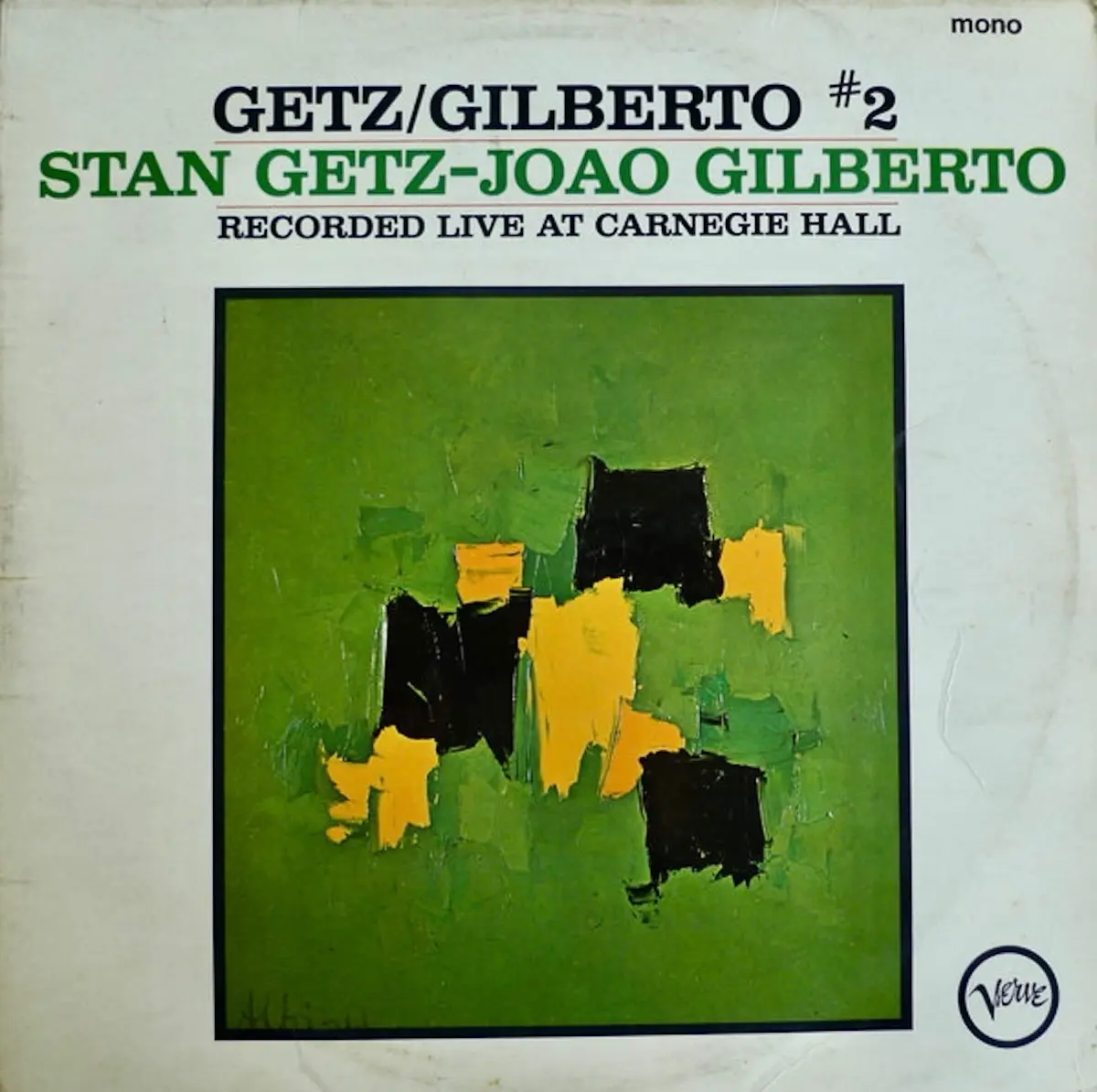
Recent archival releases bring this dichotomy into sharp focus, offering jazz historians, audiophiles, and contemporary critics an opportunity to re-examine critical junctures in Getz’s sprawling discography. At the forefront of these releases is Getz/Gilberto Volume Two, a Verve Records document capturing the legendary saxophonist alongside Brazilian guitar innovator João Gilberto live in concert at Carnegie Hall on the crisp autumn evening of October 9, 1964. While its predecessor, Getz/Gilberto Volume 1, captured a seamless, symbiotic fusion of American cool jazz and Brazilian bossa nova, this follow-up presents a bifurcated narrative. Side one spotlights Getz’s stellar American quartet—featuring the luminous vibraphone of Gary Burton, bassist Gene Cherico, and drummer Joe Hunt—while side two retreats into a solo-heavy showcase of Gilberto’s trio.
Simultaneously, budget-conscious imprints are unearthing historical artifacts from the genesis of Getz’s professional trajectory. A notable Bravo EP pulls together scarce sides from 1946 and 1947. These recordings capture a young Getz operating under the profound stylistic gravity of his contemporary, Dexter Gordon, alongside a swinging Hollywood big band date with the Mills Blue Rhythm Band. Together, these releases trace a compelling developmental arc: from a 19-year-old stylistic chameleon absorbing the bebop blueprint to an established master subverting and expanding the boundaries of the very bossa nova craze he helped ignite.
This retrospective analysis examines these archival documents through an investigative and authoritative journalistic lens, evaluating their historical placement, musical merit, production choices, and enduring resonance within the jazz ecosystem.
Detailed Chronology
October 9, 1964: The Carnegie Hall Bifurcation
The atmosphere inside Carnegie Hall on October 9, 1964, crackled with anticipation. The bossa nova wave, largely midwifed in the American consciousness by Getz’s preceding recordings, was at its cultural zenith. Yet, behind the scenes, Getz was increasingly eager to shed the commercial straightjacket of the genre and return to straight-ahead, modern acoustic jazz, pining for the exploratory freedom of his groups featuring rhythm sections like Steve Swallow and Roy Haynes.
The Verve recording of that night reflects this artistic tension. Side one belongs entirely to Getz and his working quartet. Despite the regrettably brief program—consisting of a sophisticated waltz, two lush ballads, and a swinging 12-bar blues—Getz performs at the absolute height of his powers. The ensemble opens with "Grandfather’s Waltz," moves through "Tonight I Shall Sleep," tears into the buoyant "Stan’s Blues," and culminates in a definitive reading of "Here’s That Rainy Day."
Getz was a notorious perfectionist who held his collaborators to the highest standards of intonation, swing, and harmonic awareness. In vibraphonist Gary Burton, he found a kindred spirit whose crystalline articulation and forward-thinking harmonic concepts mirrored Getz’s own aerodynamic phrasing. The interplay between tenor and vibes on these Carnegie Hall tracks is telepathic. Given the sheer volume of material taped during the concert, the decision to truncate Getz’s portion of the program feels like a missed opportunity; a complete, double-sided presentation of the quartet would have provided a vital historical benchmark for this specific configuration.
Instead, Verve dedicated the reverse side of the LP to six bossa nova selections performed by the João Gilberto trio, featuring bassist Keeter Betts and drummer Helcio Milito. While Gilberto’s rhythmically hypnotic guitar work and minimalist vocal delivery retain undeniable charm, this half of the record suffers from a sense of artistic déjà vu. Audiences had heard these iterations before, and Gilberto’s flat vocal style occasionally borders on monotonous over an extended suite. The solitary exception is "Um Abraço No Bonfá," a brilliant, rhythmically intricate trio instrumental that serves as a welcome dynamic break. Ultimately, the sequencing makes for a fractured listening experience: side one represents a vital, forward-looking jazz masterclass, while side two reads like a contractual postscript to a craze that was already mutating into pop-culture wallpaper.
Chronological Overview of Archival Milestones:
┌──────────────┬──────────────────────────────────────────┬─────────────────────────────────────────┐
│ Year         │ Event / Recording Session                │ Key Personnel                           │
├──────────────┼──────────────────────────────────────────┼─────────────────────────────────────────┤
│ July 31, 1946│ Savoy/Pickwick Session (NYC)             │ Stan Getz, Hank Jones, Max Roach        │
│ May 20, 1947 │ Mills Blue Rhythm Band (Hollywood)       │ Charlie Shavers, Lucky Thompson, Getz   │
│ Oct 9, 1964  │ Carnegie Hall Concert (NYC)              │ Getz Quartet & João Gilberto Trio       │
└──────────────┴──────────────────────────────────────────┴─────────────────────────────────────────┘
July 31, 1946: The Genesis of a Voice
Diving backward into Getz’s chronology reveals a fascinating chapter of stylistic mimicry and rapid evolution. A budget-priced Bravo EP rescues recordings from July 31, 1946—the very first session Getz recorded under his own name at the tender age of 19. Originally cut for Savoy Records, tracks like "And The Angels Swing" (often titled "Angels") and "Don’t Worry About Me" capture a formative Getz operating under the spell of towering tenor titan Dexter Gordon.
The sonic similarities are striking. Not only is Getz’s tone during this period uncharacteristically dark and heavy—closely approximating Gordon’s robust timbre—but his phrasing, rhythmic placement, and melodic concepts bear an astonishing resemblance to Gordon’s blueprint. The influence was so pronounced that jazz purists have occasionally forwarded the apocryphal theory that the saxophonist on these sides is, in fact, Gordon himself.
Contextualizing these tracks requires acknowledging the peerless rhythm section supporting the teenage prodigy: pianist Hank Jones and a young, ferociously inventive Max Roach on drums. Roach’s dynamic, polyrhythmic foundation pushes Getz past mere imitation, forcing the young saxophonist to rise to the occasion. These recordings are not merely historical curiosities; they are essential study materials for anyone seeking to understand how one of the 20th century’s most distinct instrumental voices was forged in the crucible of 1940s bebop.
May 20, 1947: Big Band Dynamism in Hollywood
The temporal journey continues into the following year. On May 20, 1947, Getz participated in a high-octane big band recording session in Hollywood with the Mills Blue Rhythm Band, directed and arranged by Van Alexander.
Featuring an all-star roster that included trumpeter Charlie Shavers, tenor saxophonist Lucky Thompson, and drummer Don Lamond, the session showcases a big band far ahead of its chronological moment. Alexander’s arrangements eschew the tired cliches of late-swing orchestration in favor of crisp, modern harmonies, intricate section work, and rhythmic punch.
Getz features prominently on these sides, notably contributing a striking, Charlie Parker-esque alto saxophone solo on the blues charts. Lamond’s relentless, unambiguous swing propels the ensemble with a modern drive that anticipates the hard bop era. Tracks like Blue Rhythm Jam and Blue Rhythm Blues demonstrate that Getz was equally comfortable commanding a sprawling brass section as he was weaving through intimate bebop combo arrangements or floating over Brazilian syncopations.
Supporting Context & Metrics
Evaluating the commercial and critical reception of these archival drops requires looking at the broader economic and cultural machinery of jazz distribution in the mid-1960s and beyond.
During the 1960s, major labels like Verve sought to capitalize on the crossover success of bossa nova by maintaining high output volumes, occasionally sacrificing curatorial cohesion for market saturation. Getz/Gilberto Volume 2 entered a crowded marketplace where jazz fans were increasingly divided between the avant-garde eruptions of the New York scene (exemplified by the burgeoning Free Jazz movement) and the smooth, palatable stylings of commercial jazz-pop crossovers.
| Release Title / Context | Primary Label / Imprint | Format | Core Aesthetic / Genre |
|---|---|---|---|
| Getz/Gilberto Volume Two | Verve Records | LP (VLP/SVLP 9132) | Modern Jazz Quartet / Bossa Nova |
| Stan Getz Early Sides (Bravo EP) | Bravo / Pickwick | EP (BR-358) | 1940s Bebop / Big Band Swing |
| Savoy/Pickwick Sessions (1946) | Savoy / Pickwick | 78rpm / EP Archive | Small Group Bebop |
The economic disparity between these releases highlights the dual-track nature of jazz collecting. On one end, premium gatefold and live-recorded Verve sets catered to audiophiles and devoted collectors willing to pay top dollar for pristine Carnegie Hall fidelity. On the other, budget reissues found on supermarket shelves via labels like Bravo and Pickwick democratized jazz history, placing foundational 1940s bebop sessions into the shopping carts of everyday consumers for mere shillings.
Furthermore, the stylistic pivot between Getz’s 1946 apprenticeship and his 1964 mastery maps a broader transformation in American jazz pedagogy:
- The Mimetic Phase (1946): Direct absorption of established elder statesmen (Dexter Gordon, Lester Young).
- The Orchestral Integration Phase (1947): Adapting individual modernism to large-ensemble arrangements (Mills Blue Rhythm Band).
- The Global Fusion Phase (1962–1964): Bridging American cool jazz with international folk forms (Bossa Nova).
- The Post-Crossover Purist Reaction (Late 1964 onward): Reclaiming straight-ahead acoustic jazz via working small groups with forward-thinking modernists like Gary Burton.
Official Statements & Critical Reception
Contemporary critics writing for jazz periodicals upon the release of these sessions were often sharply divided, reflecting the anxieties of a genre in transition.
In initial reviews of Getz/Gilberto Volume Two, critics praised the immaculate execution of the Getz-Burton quartet while issuing cautious warnings regarding the redundancy of the Gilberto trio tracks. One prominent contemporary reviewer noted:
"Stan was in excellent form, particularly on the blues and ‘Rainy Day,’ a delightful tune that is happily enjoying a lot of currency just now… In vibist Gary Burton he has found a kindred spirit. Certainly more Getz was taped at this concert than appears here and personally I would have wished for a complete record by the quartet. Instead, the reverse side is devoted to half a dozen pleasant bossa novas by Gilberto. The music has its charms but we have heard it all before…"
This critique underscores a structural flaw in Verve’s curation: by splitting the LP evenly between two distinct artistic visions, the label inadvertently diluted the punch of Getz’s triumphant return to straight-ahead jazz. Critics argued that Verve would have been better served issuing the four quartet tracks as a dedicated Extended Play (EP), allowing consumers to experience the Carnegie Hall jazz masterclass without the ambient fatigue of repeated bossa nova tropes.
Regarding the historical 1946 Savoy sessions, critical consensus has historically marveled at the speed of Getz’s stylistic metamorphosis. Reviewers studying the Bravo EP noted the uncanny shadow of Dexter Gordon:
"This is the much-discussed session on which Getz exhibits a surprisingly marked Dexter Gordon influence… Not only is Getz’s tone close to Gordon’s at the time, but his phrasing and concept are astonishingly like Dexter’s. I have even heard the theory put forward that the saxophonist is Gordon and not Getz at all…"
Such discourse highlights the porous boundaries of identity and influence within the 1940s bebop community, where young lions rapidly synthesized the innovations of their heroes before establishing independent, unmistakable signatures.
Future Outlook
As the recorded jazz catalog continues to undergo systematic digital remastering and physical vinyl resurgence, the appetite for comprehensive archival box sets remains insatiable. The historical bifurcation evidenced in Getz/Gilberto Volume Two points the way toward future curatorial best practices.
Modern archival curators—whether operating under major conglomerates like Universal Music Group (parent of Verve) or boutique historical labels—face mounting pressure to abandon truncated, mixed-genre playlists in favor of complete, chronological concert recordings. Fans and scholars no longer want the curated highlights of a single night; they demand the unedited arc of a performance, complete with false starts, stage banter, and extended modal explorations.
In the case of Stan Getz, future archival excavation should prioritize the systematic release of his mid-1960s working bands. The elusive studio and live tapes featuring rhythm sections like Steve Swallow and Roy Haynes represent an underexplored bridge between Getz’s cool jazz heritage and his subsequent explorations into modal and contemporary jazz spaces.
Similarly, the muddy provenance of early 78rpm sides—such as the Savoy masters that migrated to Pickwick and Bravo—underscores the ongoing need for forensic audio restoration. As digital databases expand, untangling the contractual webs and master-tape lineages of 1940s bebop sessions ensures that foundational artists like Getz, Hank Jones, and Max Roach are accurately represented for twenty-first-century listeners.
Ultimately, these archival releases do more than simply fill gaps in a discography; they map the lifelong evolution of an artist who refused to remain static. Whether a teenager grappling with the weighty tone of Dexter Gordon in a smoke-filled Manhattan studio, a mature virtuoso trading licks with Gary Burton on the prestigious stage of Carnegie Hall, or a reluctant pop icon navigating the global bossa nova wave, Stan Getz remains a towering monument of twentieth-century music. These recordings invite us to listen closer, study deeper, and appreciate the restless, uncompromising intellect driving that legendary sound.