
By David Salazar
Published by OperaWire
Executive Overview
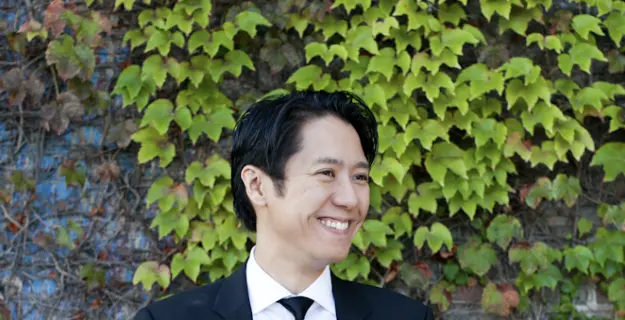
In a monumental announcement that signals both a deep reverence for history and a bold leap into the future, the International Contemporary Ensemble has officially named composer, performer, writer, and educator Patrick Castillo as its new Artistic Director Designate.
Castillo’s appointment marks a critical juncture in the storied trajectory of one of the world’s most celebrated and pioneering contemporary music organizations. He will immediately step into the leadership pipeline, working closely with the ensemble before officially assuming the full mantle of Artistic Director on January 1, 2027.
He succeeds renowned composer, scholar, and trombonist George Lewis, a towering figure in modern American music. Lewis, who has helmed the ensemble with visionary dedication, will step down from the role on December 31, 2026, smoothly transitioning into the newly created role of Artistic Director Emeritus. In a testament to his ongoing commitment to the organization, Lewis will also rejoin the International Contemporary Ensemble’s Board of Directors, ensuring that his invaluable institutional memory, artistic wisdom, and strategic insight remain tightly woven into the fabric of the ensemble’s leadership.
This leadership transition is far more than a routine administrative handoff; it represents a deliberate passing of the torch across generations of musical luminaries. Castillo joins a prestigious lineage of artistic leadership that includes the ensemble’s founder, flutist and visionary Claire Chase, and George Lewis himself.
As Castillo prepares to steer the ensemble through its third decade, the appointment underscores the organization’s ongoing dedication to pushing the boundaries of avant-garde composition, championing diverse and underrepresented voices, and forging radical pathways for new music in the 21st century.
Detailed Chronology of Leadership and Transition
To fully understand the weight of Patrick Castillo’s appointment, one must trace the institutional lineage and structural evolution of the International Contemporary Ensemble. Founded in 2001 by Claire Chase and a collective of enterprising young musicians, the ensemble was built on a radical premise: to foster a dynamic, non-hierarchical community where performers, composers, and artists could collaborate as equals to incubate the art of our time.
For over two decades, the organization has premiered hundreds of works, defied traditional concert-hall paradigms, and established itself as an indispensable pillar of the global contemporary music ecosystem.
The Claire Chase Era (2001–2017)
As the founding director, Claire Chase steered the ensemble through its formative years, transforming it from a scrappy, ambitious pick-up band into a globally touring powerhouse. Under Chase, the ensemble established major residencies at institutions like the Museum of Contemporary Art Chicago and Lincoln Center, championed immersive theatrical productions, and pioneered commissioning models that put composer-performer partnerships at the forefront. Chase stepped down from her full-time executive and artistic duties in 2017 (though she remains intimately connected as an artist and board member) to focus on her solo career and her tenure as a professor at Harvard University, paving the way for a new generation of structural leadership.
The George Lewis Era (2017–2026)
Following Chase, the ensemble turned to George Lewis—a member of the American Academy of Arts and Letters, a MacArthur "Genius" Fellow, and a legendary pioneer of computer music, interactive composition, and improvised music. Lewis expanded the ensemble’s intellectual and global footprint, deepening its commitment to radical inclusion, racial equity, and stylistic pluralism. Under Lewis’s watch, the ensemble interrogated the traditional canon, championed Black, Indigenous, and POC creators, and navigated the unprecedented disruptions of the COVID-19 pandemic with resilience and digital innovation.
Lewis’s announcement that he will step down on December 31, 2026, closes a defining chapter in the ensemble’s history. However, his transition to Artistic Director Emeritus and his return to the Board of Directors ensures that his institutional guidance will not be lost. It guarantees a bridge of continuity as Castillo takes the helm.
The Rise of Patrick Castillo (2027 and Beyond)
Patrick Castillo’s formal integration into this lineage begins immediately. As Artistic Director Designate, Castillo will spend the next several transitionary years collaborating with Lewis, the ensemble’s musicians, executive staff, and board members to map out future seasons, deep-dive commissioning projects, and long-term institutional strategies.
When Castillo assumes full duties on January 1, 2027, he will inherit an ensemble that is structurally robust, culturally relevant, and poised to address the evolving realities of the contemporary arts landscape.
Supporting Context & Metrics: The Architect of Modern Sound
Patrick Castillo arrives at the International Contemporary Ensemble equipped with a uniquely multifaceted career that spans nearly every facet of the classical and contemporary music ecosystems. As a composer, performer, writer, and educator, Castillo understands the art form from the inside out—not merely as an administrator, but as an active creator whose work has been performed and recorded across international stages.
A Storied Artistic and Administrative Pedigree
Castillo’s professional background is defined by leadership roles at some of the most prestigious arts institutions in the United States:
- Third Sound: Castillo serves as a founding composer and managing director of this vital contemporary music collective, which is dedicated to expanding the contemporary classical canon through innovative programming and diverse collaborations.
- New York Philharmonic: He previously held the high-profile position of Vice President of Artistic Planning, where he helped shape orchestral programming, major festival curation, and contemporary composer initiatives for one of the world’s oldest and most prominent orchestras.
- Saint Paul Chamber Orchestra (SPCO): As Senior Director of Artistic Planning, Castillo played a critical role in designing the artistic vision of one of the nation’s premier chamber orchestras, known for its collaborative, conductorless ethos—an ethos that shares deep DNA with the International Contemporary Ensemble.
- Hotel Elefant: He served as Executive Director of this acclaimed New York-based contemporary music ensemble, guiding its operational growth, artistic output, and community engagement initiatives.
A Distinguished Composer and Recording Artist
As a creator, Castillo’s music has resonated in some of the most rigorous and celebrated cultural spaces in the world. His works have been presented at:
- Lincoln Center for the Performing Arts (New York)
- Miller Theatre at Columbia University (New York)
- Chamber Music Northwest (Oregon)
- The Havana Contemporary Music Festival (Cuba)
Furthermore, his compositions have been preserved and disseminated through critically acclaimed recordings on prominent contemporary music labels, including innova, Cedille, Avie, and Sono Luminus.

This deep compositional pedigree ensures that Castillo speaks the precise artistic language of the musicians he will lead. He approaches leadership not from a distant bureaucratic standpoint, but as a peer who has sat in the writer’s chair, faced the blank manuscript, and navigated the complex logistics of bringing new work to life.
Official Statements and Perspectives
The announcement of Castillo’s appointment has elicited widespread enthusiasm from institutional leaders, outgoing directors, and Castillo himself, painting a vivid picture of an organization united in its vision for the future.
In his official statement, Patrick Castillo reflected on the profound responsibility and emotional weight of his new appointment:
"It’s a breathtaking honor to join the International Contemporary Ensemble as its next Artistic Director, and to become part of its lineage of artistic leadership from Claire Chase to George Lewis, luminaries whom I so deeply revere.
I’ve admired the Ensemble’s work for the past quarter century and have tremendous appreciation for the impact it has had on the landscape of contemporary music. I’m excited to work with the musicians, staff, board, and broader community to build on that legacy, advancing the values that make the Ensemble’s work so vital: collaboration, curiosity, the exchange of ideas, advocacy for underrepresented voices, and a commitment to building community around new music. I’m excited to continue growing that community and imagining what we can make possible together."
George Lewis, whose tenure as Artistic Director has profoundly shaped the ensemble’s ideological framework, expressed complete confidence in Castillo’s capacity to lead the organization into its next era. Lewis noted that Castillo’s rare blend of administrative acumen, deep musicological curiosity, and uncompromising artistic integrity makes him the ideal steward for the ensemble’s ongoing mission.
By retaining Lewis as Artistic Director Emeritus and welcoming him back to the Board of Directors, the International Contemporary Ensemble ensures that the institutional wisdom accumulated over the past two decades will directly inform Castillo’s strategic roadmap.
Future Outlook: The Horizon of the International Contemporary Ensemble
As the classical music world continues to reckon with shifting audience demographics, economic pressures, digital transformation, and an urgent imperative for social justice and equity, the leadership of organizations like the International Contemporary Ensemble matters more than ever.
Under Patrick Castillo, the ensemble is uniquely positioned to address these modern challenges head-on. The future outlook for the organization under his watch is characterized by several core strategic pillars:
1. Deepening Community and Collaborative Models
Castillo has repeatedly emphasized that community-building is at the heart of new music. Unlike traditional symphony orchestras built on rigid, top-down hierarchies, the International Contemporary Ensemble operates as a collective of musical entrepreneurs and virtuosos. Castillo’s background with collaborative outfits like Third Sound and the SPCO aligns perfectly with this DNA. Expect to see expanded artist residencies, deeper educational initiatives, and innovative audience-engagement models that break down the artificial barrier between stage and spectator.
2. Amplifying Underrepresented Voices
Carrying forward the foundational work championed by George Lewis and Claire Chase, Castillo is expected to maintain and accelerate the ensemble’s aggressive advocacy for historically marginalized creators. By bringing diverse cultural perspectives, non-Western aesthetic frameworks, and cutting-edge multimedia works to the forefront, the ensemble will continue to redefine what American contemporary music sounds like.
3. Sustaining Institutional Innovation
The administrative experience Castillo brings—having managed multi-million-dollar artistic budgets, negotiated union and institutional partnerships at the New York Philharmonic, and scaled nimble artist collectives—provides the International Contemporary Ensemble with financial and operational resilience. As arts funding landscapes fluctuate, having a leader who understands both the micro-level logistics of score preparation and the macro-level economics of institutional planning is an invaluable asset.
4. A Seamless Transition
With a two-year runway before officially stepping into the role on January 1, 2027, Castillo and George Lewis have the luxury of time—a rare commodity in the arts. This transition period allows for collaborative season planning, mentorship, and transparent dialogue with the ensemble’s core constituents.
Conclusion
The appointment of Patrick Castillo as Artistic Director Designate of the International Contemporary Ensemble is much more than a routine leadership change. It is a bold affirmation of the ensemble’s past and an ambitious blueprint for its future.
By honoring the visionary foundations laid by Claire Chase and the profound intellectual and equity-driven frameworks established by George Lewis, Castillo steps into his new role not as an outsider, but as an inheritor and champion of a living tradition.
As the music world looks toward 2027 and beyond, the International Contemporary Ensemble remains a beacon of artistic fearlessness, curiosity, and community. With Patrick Castillo at the artistic helm—backed by the enduring wisdom of George Lewis—the ensemble is more than ready to compose the next definitive chapter of 21st-century music.