
Executive Overview
The evolution of laryngeal surgery and voice restoration has reached a pivotal juncture, driven by technological innovations, minimally invasive methodologies, and a global push toward collaborative medical education. In late October 2023, the medical community turned its attention to Hyderabad, India, for the 17th Phonosurgery Course and International Hybrid Workshop.
Organized under the visionary leadership of Prof. V. Phaniendrakumar, Emeritus Professor of ENT, Organizing Chairman, and Course Director, this landmark event brought together world-renowned otolaryngologists, speech-language pathologists (SLPs), researchers, and voice care specialists. Held on October 28 and 29, 2023, the symposium introduced a groundbreaking hybrid framework designed to maximize global accessibility while delivering rigorous, hands-on clinical training.
The conference was convened in association with several prestigious organizations, including the Association of Phonosurgeons of India (APSI), the India Chapter of The Voice Foundation (USA), AOI Telangana, the Hyderabad Telangana SLP Association, the Sri Sathya Sai Institute of ENT, and the Melody Voice Clinic of Guntur, Andhra Pradesh.
This extensive report explores the operational structure, academic rigor, clinical significance, and broader industry implications of the 17th Phonosurgery Course. By examining its dual-format layout—combining virtual live-streamed surgical demonstrations with intensive, in-person anatomical dissections—this article highlights how such initiatives are shaping the future of otolaryngology and vocal rehabilitation on a global scale.
Detailed Chronology: The Two-Day Hybrid Symposium
The 2023 workshop was specifically engineered to address a common dilemma faced by practicing surgeons and medical trainees: balancing the need for cutting-edge continuing medical education (CME) with clinical responsibilities and travel constraints. Prof. Phaniendrakumar and his organizing committee devised a dual-format agenda that effectively optimized time, reduced logistical costs, and broadened international participation.
Day 1: October 28, 2023 – Virtual Live Surgical Demonstrations and Global Lectures
The opening day of the symposium leveraged advanced tele-surgical broadcasting and virtual conferencing infrastructure via Zoom. This digital approach allowed delegates from across India and around the world to participate without the immediate barrier of international or interstate travel.
- Live Surgical Demonstrations: The cornerstone of Day 1 was a series of real-time, broadcasted surgical procedures. These operations focused on two rapidly evolving sub-specialties within otolaryngology:
- Office-Based Laryngeal Surgeries: Procedures performed under local anesthesia in outpatient settings, minimizing patient downtime, reducing healthcare costs, and avoiding general anesthesia risks.
- Phonomicrosurgeries: High-precision interventions utilizing specialized microscopes and micro-instruments to treat benign vocal fold lesions, such as nodules, polyps, cysts, and early-stage malignancies, while strictly preserving mucosal wave mechanics.
- Expert Lectures by National and International Faculty: Running parallel to and interspersed with the live surgeries, a comprehensive lecture series featured authorities in voice science and laryngology. Speakers unpacked complex topics ranging from acoustic diagnostics and stroboscopy interpretation to post-operative vocal therapy protocols.
- Interactive Virtual Engagement: The Zoom-based platform facilitated active Q&A sessions. Delegates could interact directly with operating surgeons and lecturing faculty in real-time, posing clinical queries, discussing surgical decision-making trees, and analyzing intraoperative video feeds.
Day 2: October 29, 2023 – In-Person Hands-On Training at Century Hospital
While Day 1 prioritized observation, cognitive mastery, and global dialogue, Day 2 transitioned to the tactile realities of surgical execution. Hosted physically at Century Hospital, located on Road No. 12, Banjara Hills, Hyderabad, this intensive practical session gave participants the opportunity to refine their manual dexterity under the direct mentorship of senior phonosurgeons.
- Wet-Lab Dissections (Goat Larynx Model): To simulate human laryngeal anatomy ethically and effectively, the workshop utilized goat larynx models. These biological models closely mimic human tissue consistency, cartilage pliability, and spatial dimensions, making them ideal training grounds for intricate structural interventions.
- Core Practical Modules: Delegates rotated through specialized training stations focusing on advanced surgical techniques:
- Thyroplasty with Arytenoid Adduction Technique: A complex medialization procedure designed to correct glottal incompetence (such as unilateral vocal fold paralysis). Participants practiced implant placement and suture-based arytenoid manipulation to achieve optimal vocal fold closure.
- Injection Laryngoplasty: Training on precise transoral and percutaneous injection techniques using temporary and permanent filling materials to augment paralyzed or atrophic vocal folds.
- Office-Based Laryngeal Procedures: Practical walkthroughs of executing minor interventions within simulated clinical office environments, emphasizing patient comfort, local anesthesia management, and endoscopic handling.
Supporting Context & Metrics: The Evolution of Phonosurgery in India
Phonosurgery—surgery designed to improve or restore voice production—has undergone a radical transformation over the past three decades. Historically, voice disorders were managed primarily through vocal hygiene and conservative speech therapy, or through invasive laryngeal surgeries that occasionally risked long-term vocal degradation.
The advent of operating microscopes, laryngeal endoscopes, lasers, and stroboscopy in the late 20th century revolutionized the field, shifting the primary clinical goal from mere survival or disease eradication to the meticulous preservation and optimization of mucosal function.

The Significance of the Hybrid Model
The 17th installment of this course marks a milestone in Indian medical education. Historically, specialized surgical workshops required attendees to travel to specific academic hubs, limiting attendance due to financial and scheduling constraints. By adopting a hybrid structure—pairing virtual didactic and live-surgical observation with targeted, high-impact hands-on wet labs—the organizers solved several enduring challenges:
- Democratization of Knowledge: Trainees and practicing ENTs from tier-2 and tier-3 cities gained unhindered access to international-grade surgical demonstrations without incurring heavy travel expenses.
- Optimized Learning Curves: Cognitive absorption of surgical theory and observation of live techniques on Day 1 prepared delegates mentally for the physical execution required on Day 2.
- Cross-Disciplinary Collaboration: The active involvement of speech-language pathologists (SLPs) alongside ENT surgeons underscored a fundamental truth of modern voice care: successful phonosurgery is inextricably linked to pre- and post-operative voice therapy.
Institutional Synergy and Leadership
The success of the 17th Phonosurgery Course was underpinned by the robust collaboration of premier medical bodies. The Association of Phonosurgeons of India (APSI) has long served as the national vanguard for voice conservation education, while the India Chapter of The Voice Foundation (USA) bridges international scientific dialogue with domestic clinical practice.
Furthermore, institutions such as the Sri Sathya Sai Institute of ENT and the Melody Voice Clinic (operating across Guntur, Andhra Pradesh, and Hyderabad, Telangana) have consistently driven clinical excellence, research, and community outreach in voice pathology.
Official Statements and Leadership Vision
At the heart of the symposium’s educational ethos is its founder and driving force, Prof. V. Phaniendrakumar. Serving as the Emeritus Professor of ENT, Organizing Chairman, Course Director, and President of the India Chapter of The Voice Foundation, Prof. Phaniendrakumar has dedicated decades to advancing laryngeal surgery across South Asia.
Reflecting on the vision behind the 17th edition, Prof. Phaniendrakumar shared an official invitation highlighting the collaborative spirit of the event:
"We cordially invite you for our 17th Phonosurgery course and International workshop on Hybrid basis on 28th and 29th of October 2023… Probably this is the first dual or hybrid concept based Phonosurgery workshop from India designed for the convenience of the delegates saving their time and money.
With all our sincere efforts and your co-operation we hope we can make this Course a memorable scientific event. Looking forward to your gracious participation."
This statement encapsulates the patient-centric and pragmatic philosophy that has sustained the course for nearly two decades: medical education must adapt to the practical realities of practicing physicians while never compromising on scientific rigor or technical precision.
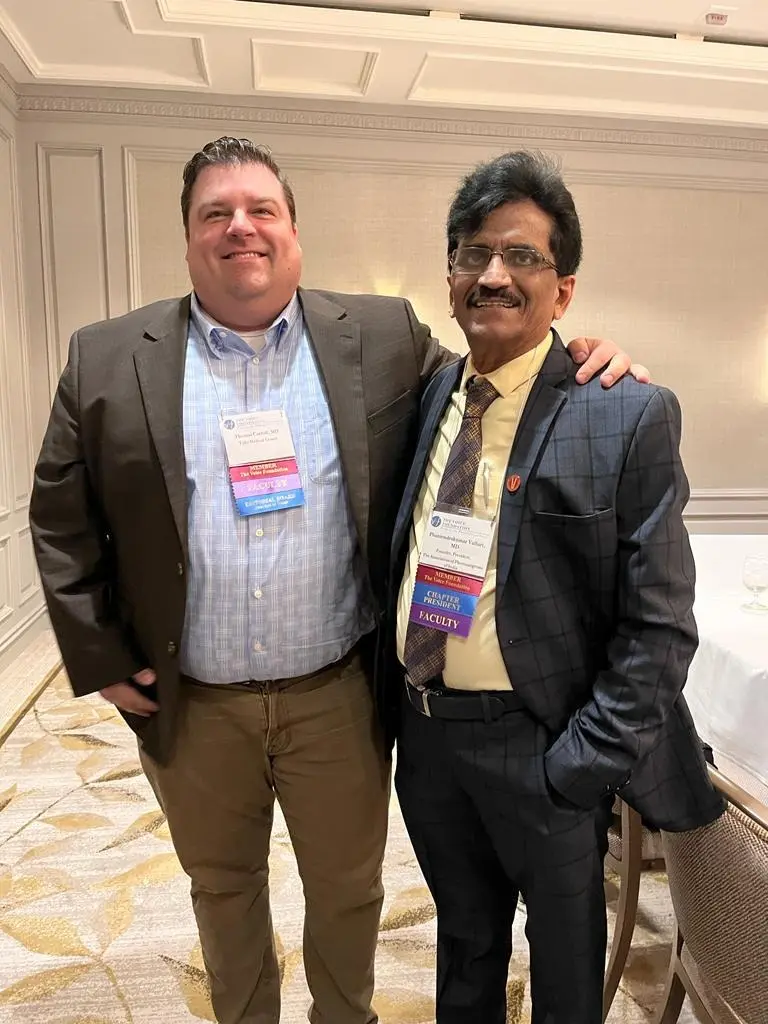
The participation of international luminaries—such as Dr. Thomas Carroll, who was prominently featured alongside Prof. Phaniendrakumar during the 52nd Annual Symposium of The Voice Foundation—exemplifies the cross-continental exchange of knowledge that defines these workshops. These academic bridges ensure that Indian surgeons remain at the forefront of global advancements, while international experts gain insight into the high-volume, high-complexity caseload managed within Indian medical centers.

Future Outlook: The Horizon of Voice Care and Laryngeal Surgery
As the medical community moves further into the post-pandemic era of hybrid medical education, the success of the 17th Phonosurgery Course sets a compelling precedent for future clinical symposia. Several key trends are poised to shape the trajectory of phonosurgery and vocal rehabilitation in the coming years:
1. Technological Integration and Artificial Intelligence
The integration of artificial intelligence (AI) into laryngeal imaging and acoustic analysis is rapidly transitioning from experimental research to clinical reality. Future phonosurgery workshops will likely feature modules on AI-assisted stroboscopy interpretation, automated voice disorder screening, and predictive modeling for surgical outcomes. These tools will enable surgeons to tailor interventions with unprecedented precision.
2. Expansion of Office-Based Procedures
Driven by advancements in flexible fiberoptic lasers, micro-instrumentation, and improved local anesthetic formulations, office-based laryngeal surgery is expected to capture a larger share of minor phonosurgical interventions. By eliminating general anesthesia and reducing operating room overhead, these techniques offer superior cost-effectiveness and patient convenience. Training programs like Prof. Phaniendrakumar’s hybrid workshop will be crucial in equipping the next generation of otolaryngologists with the specialized skills required for awake laryngeal interventions.
3. Regenerative Medicine and Stem Cell Therapies
One of the most exciting frontiers in voice science is regenerative medicine. Researchers are currently investigating the use of stem cells, growth factors, and bio-engineered scaffolds to restore scarred or fibrotic vocal fold lamina propria—a condition that has historically challenged phonosurgeons. As clinical trials advance, future international workshops will undoubtedly incorporate translational regenerative medicine into their core curricula.
4. Strengthening Multidisciplinary Teams (MDTs)
The synergy between otolaryngologists, speech-language pathologists, singing voice specialists, and neurologists will continue to deepen. Voice restoration is no longer viewed merely as a mechanical realignment of laryngeal structures, but as a holistic restoration of human expression, identity, and communication. Events that foster collaboration across these disciplines—much like the Hyderabad workshop did by uniting ENT associations and SLP societies—will remain essential.
Conclusion
The 17th Phonosurgery Course and International Hybrid Workshop stands as a landmark achievement in the annals of Indian otolaryngology and global voice care. By masterfully blending the accessibility of virtual broadcasting with the indispensable rigor of hands-on anatomical dissection, Prof. V. Phaniendrakumar and his co-organizers have established a new benchmark for medical training.
As voice disorders become increasingly recognized not just as physical ailments, but as profound disruptions to personal and professional identity, the demand for highly skilled phonosurgeons will only intensify. Through continuous education, international collaboration, and an unwavering commitment to surgical excellence, initiatives like the Hyderabad hybrid workshop ensure that the medical community remains well-equipped to restore voice, confidence, and quality of life to patients around the world.