
Executive Overview
When Lisbon’s historic Teatro São Carlos shuttered its doors in 2024, the cultural sector braced for a period of artistic quietude. Originally slated for a relatively contained intervention focused on the preservation of its neo-classical architecture, historical character, and a much-needed modernization of its archaic backstage facilities, the scope of the project quickly expanded. Today, institutional realities dictate that the national opera house will remain dark at least until 2028.
For an institution of such national prestige, a four-year displacement could easily have translated into institutional irrelevance or a terminal decline in artistic output. Instead, under the stewardship of recently appointed Artistic Director Pedro Amaral, the organization has catalyzed a sweeping decentralization of classical music in Portugal. Rather than retreating into silence, the national company has taken to the road, mounting focused seasons in alternative venues across Lisbon and touring earlier productions to regional centers throughout the country.
Crucially, this forced migration of Portugal’s premier opera company has created a massive, pent-up demand among a passionate opera-going public. Deprived of their traditional capital hub, audiences have eagerly ventured beyond the urban core, discovering a thriving network of independent opera companies and boutique classical music festivals.
From the sprawling open-air majesty of Lisbon Operafest and the intimate chamber concerts of the medieval Festival de Marvão to the dramatic architectural backdrops of the Festival de Ópera de Óbidos, Portugal’s cultural ecosystem is undergoing a renaissance. Far from merely surviving an infrastructural crisis, the nation’s performing arts sector is turning institutional disruption into a golden age of site-specific, decentralized opera.
Detailed Chronology: From Brief Intermission to Extended Diaspora
The 2024 Closure and Initial Miscalculations
The journey began in early 2024, when the Ministry of Culture and the management of the Teatro São Carlos jointly announced the immediate closure of the capital’s crown jewel. Built in the late 18th century following the devastating 1755 Lisbon earthquake, the theater stands as a monument to European lyric art. However, decades of deferred maintenance had taken their toll. The stage machinery was obsolete, safety protocols required wholesale overhauls, and the historic acoustic properties demanded careful environmental stabilization.
Initially, projections from project engineers estimated a swift turnaround. The public was assured that the closure would span, at most, a couple of artistic seasons. Stakeholders anticipated a grand reopening by late 2025 or early 2026. However, as conservationists stripped back the layers of the 18th-century structure, deeper structural deficiencies emerged. Modernizing a heritage site while safeguarding its delicate acoustic woodwork and ornamental plaster requires painstaking precision. By late 2025, it became clear that the timeline was entirely unrealistic, pushing the anticipated reopening into 2028.
The Pivot: Amaral’s Strategy of Mobility
Faced with an extended exile from their permanent home, the leadership of the Teatro São Carlos had to make a choice: mothball the company or innovate. Under Pedro Amaral, the institution chose innovation.
- Alternative Venues in Lisbon: The company began scouting unconventional spaces within the capital capable of accommodating orchestral forces and staged productions, proving that opera does not require proscenium arches to retain its emotional resonance.
- National Touring Initiatives: Productions originally designed for the São Carlos stage were scaled, adapted, and packed onto trucks to tour regional theaters from Porto to the Algarve, ensuring that audiences outside the capital were not left disenfranchised.
- Talent Incubation: To prevent a generation of young artists from falling victim to the stoppage, the institution launched a dedicated young artists’ program, forging international and regional co-productions that kept singers, musicians, and technical staff actively employed.
Supporting Context & Metrics: The Boom of Independent Festivals
The displacement of the national opera company acted as a catalyst for the broader classical music ecosystem. Independent festivals, long accustomed to operating on the cultural periphery, suddenly found themselves center stage.
| Festival / Event | Primary Venue / Setting | Core Artistic Focus | 2026 Highlights |
|---|---|---|---|
| Lisbon Operafest | Cartuxa Convent (Oeiras) & Open-Air Spaces | Grand opera in monumental historical and outdoor settings | Puccini’s Turandot, Mozart’s Le nozze di Figaro |
| Festival de Marvão | Medieval Walled Village & Moorish Castle | Intimate orchestral, chamber, lieder, and renaissance polyphony | Curated by Christoph Poppen and Juliane Banse |
| Festival de Ópera de Óbidos | Convento de São Miguel das Gaeiras & Historic Churches | Baroque masterpieces, bel canto, and theatrical risk-taking | Gluck’s Orfeo ed Euridice, A. Scarlatti’s Cain, Rossini’s Cenerentola |
Lisbon Operafest: Scale and Spectacle
Nowhere was this phenomenon more visible than at Lisbon Operafest. Staged against the sweeping historical backdrop of the Cartuxa Convent in Oeiras, the festival drew near-capacity crowds that rivaled—and in some instances surpassed—the attendance figures of the closed Teatro São Carlos.
By presenting large-scale works like Puccini’s Turandot and Mozart’s Le nozze di Figaro in expansive outdoor environments, Operafest demonstrated that modern audiences crave the visceral, communal energy of live performance, provided it is matched with imaginative staging and acoustic clarity.
Festival de Marvão: The Intimacy of History
While Lisbon Operafest embraced scale, the Festival de Marvão, nestled near the Spanish border in the Alentejo region, leveraged intimacy. Under the joint artistic direction of violin maestro Christoph Poppen and acclaimed soprano Juliane Banse, the festival transforms a thousand-year-old walled medieval village into a living concert hall.
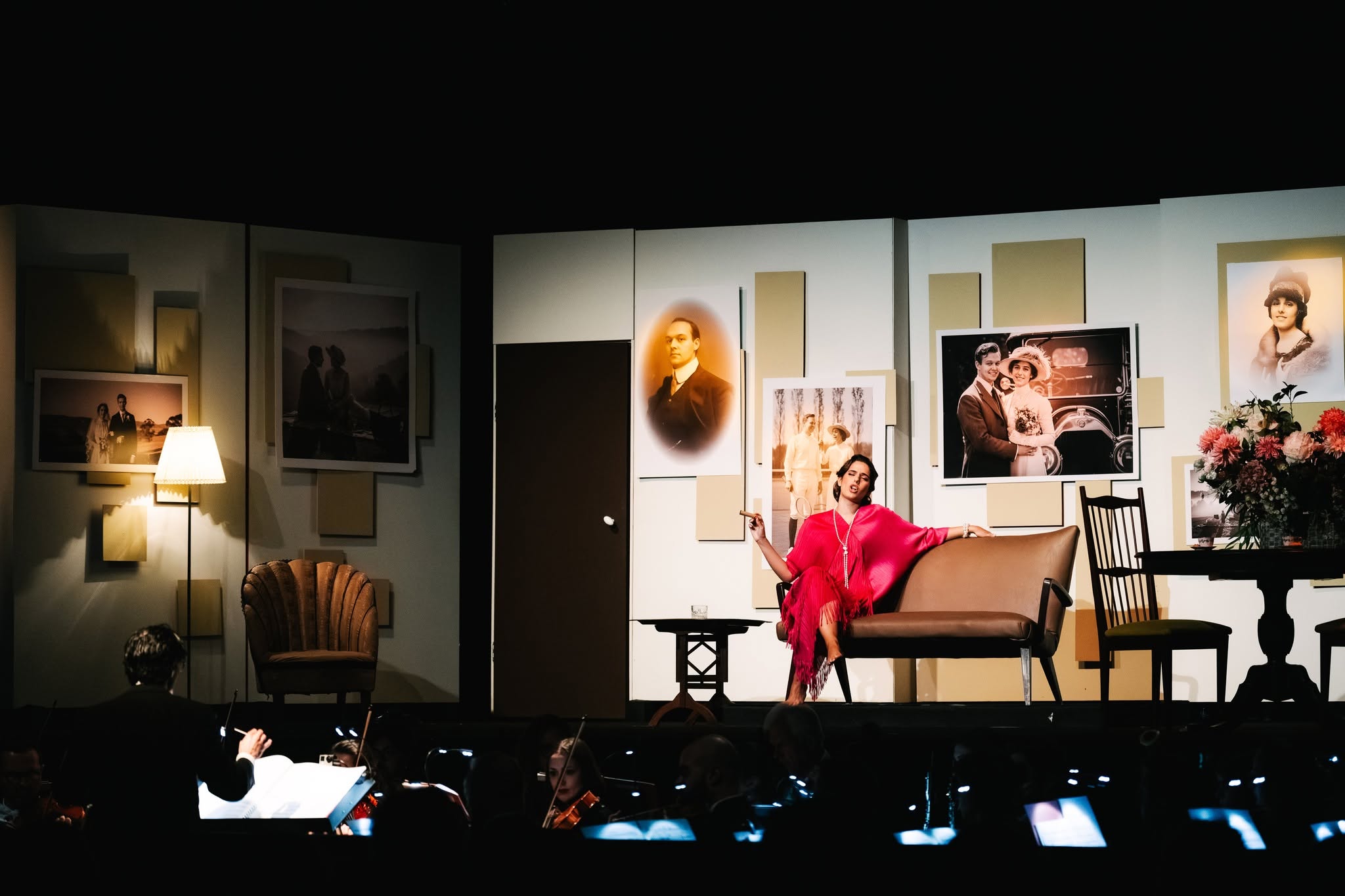
Performances range from choral works echoing through ancient stone chapels to intimate lieder recitals sheltered within Moorish fortresses. The physical setting does not merely house the music; it alters the listener’s perception, anchoring complex Renaissance polyphony and modern chamber works in a profound sense of historical continuity.
Official Statements and Institutional Perspectives
The structural shift in Portugal’s cultural landscape has prompted reflection from leaders across the performing arts sector.
Pedro Amaral, reflecting on the challenges facing the Teatro São Carlos, emphasized the moral imperative of keeping the art form mobile:
"An opera house is not merely a building of stone, velvet, and gold leaf; it is an aggregation of living human talent—singers, instrumentalists, luthiers, stagehands, and directors. If we allow the closure of our physical home to silence our mission, we fail our public and our history. Our presence across Portugal proves that the pulse of lyric art beats wherever there are artists willing to perform and audiences eager to listen."
Meanwhile, Carla Caramujo, artistic director of the Festival de Ópera de Óbidos, has championed decentralization as a long-overdue correction in national cultural policy. Entering her second year at the helm, Caramujo has curated a 2026 season under the thematic banner “Luz e Trevas” (“Light and Darkness”), designed to elevate regional programming to international standards.
"For too long, the cultural life of Portugal was overly concentrated in Lisbon and Porto," Caramujo noted in a recent curatorial address. "The temporary absence of the São Carlos has forced a collective realization: our country is rich with dormant historical architecture that possesses acoustic and atmospheric qualities no modern concrete hall can replicate. By bringing world-class casts to spaces like the Convento de São Miguel das Gaeiras, we are not settling for a substitute; we are pioneering a superior, more immersive paradigm for European opera."
Future Outlook: The Road to 2028 and Beyond
As the Festival de Ópera de Óbidos prepares for its fourth edition—running from September 5 to September 20, 2026—the contours of Portugal’s operatic future are coming into sharper focus.
The centerpiece of the Óbidos festival illustrates this rising ambition: a production of Gluck’s Orfeo ed Euridice staged at the 16th-century Convento de São Miguel das Gaeiras. The production features a masterclass in casting, pairing Ana Quintans—widely regarded as one of Portugal’s finest baroque sopranos—as Euridice, alongside acclaimed Brazilian mezzo-soprano Luisa Francesconi as the grief-stricken Orfeo. Accompanied by the Orquestra de Câmara Portuguesa under the baton of Pedro Carneiro, the performance sits alongside a rare staging of Alessandro Scarlatti’s dramatic six-voice oratorio Cain, overo Il primo omicidio at the Igreja da Misericórdia, and Rossini’s sparkling bel canto masterpiece Cenerentola.
When the Teatro São Carlos finally reopens its doors in 2028, it will not reclaim the same landscape it left behind in 2024. The monopoly of the capital has been permanently broken. Regional festivals have built dedicated followings, independent producers have sharpened their artistic profiles, and audiences have grown accustomed to experiencing world-class opera within medieval castles, Moorish fortresses, and atmospheric monasteries.
The crisis of the São Carlos closure, born of structural necessity, has ultimately delivered an unexpected triumph. Portugal’s opera world has expanded beyond its traditional walls, proving that when forced into the light, art will find a way to flourish in every corner of the realm.