
Executive Overview
In the modern landscape of music education, orchestral directors face a formidable, paradoxical challenge. While educators possess deep insight into their students’ unique needs, precise pedagogical roadmaps, and ambitious artistic visions for their ensembles, they are perpetually constrained by a single, immovable resource: time. Hunting down, organizing, and distributing high-quality pedagogical materials to match a specific scope and sequence has historically consumed countless hours of an educator’s personal life—weekends spent photocopying, cross-referencing methodologies, and manually drafting supplementary exercises.
Enter the digital transformation spearheaded by platforms like MakeMusic. By centralizing hundreds of time-tested string methods, trusted instructional resources, and dynamic sight-reading generators into a single, interactive ecosystem, the platform is redefining how educators approach curriculum design. Rather than forcing teachers to compromise or adhere strictly to the rigid confines of a single textbook, digital integration allows for an unprecedented level of pedagogical fluidity.
This comprehensive review explores how contemporary string educators are leveraging MakeMusic’s expansive library—ranging from foundational method books to cinematic practice tools and advanced sight-reading generators—to streamline workflow, boost student engagement, and drive measurable improvements in ensemble performance.
Detailed Chronology: The Evolution of String Instruction in the Digital Age
To understand the significance of current digital resource integration, it is necessary to examine the trajectory of string pedagogy over the past several decades.
The Era of Static Print (Late 20th Century)
For generations, string education relied almost exclusively on physical, printed method books. Classics such as Essential Elements and early editions of Sound Innovations served as the holy grail for orchestra directors across the globe. While these books established robust, systematic approaches to teaching foundational techniques—such as proper bow hold, basic shifting, and intonation—they suffered from inherent limitations. If a particular section, such as the violas, struggled with a specific bowing pattern, the director was limited to the exact exercises printed on those few pages. Supplementing required manual labor: writing out exercises on manuscript paper, making photocopies, and manually distributing them to students.
The Dawn of Digital Notation and Practice Software (Early 2000s)
As computer technology entered the classroom, software solutions began to emerge. Initially, these programs focused primarily on notation or basic pitch-and-rhythm assessment. While helpful for individual practice, they operated independently of the comprehensive curricula used in group settings. Teachers still faced a fractured workflow, managing physical books in the classroom while directing students to digital tools at home—a disconnect that frequently led to confusion regarding assignment tracking and exercise alignment.
The Integrated Ecosystem (Present Day)
The modern era, as exemplified by MakeMusic’s current platform offerings, represents a paradigm shift toward total ecosystem integration. Today’s educators are no longer forced to choose between the tactile familiarity of established method books and the interactive benefits of software. Instead, classic curricula have been fully digitized, interactive, and interconnected.
A critical milestone in this evolution is the bridging of generational editions. For instance, when publishers release updated iterations—such as the transition from the first to the second edition of Sound Innovations—digital platforms now provide immediate solutions. Teachers utilizing older print editions can access free digital inserts for both band and orchestra, ensuring that what students see on the physical page precisely matches what is displayed on screen. This synchronization eliminates the friction of classroom management, banishing the dreaded "Wait, which exercise are we on?" moments that disrupt rehearsal momentum.
Supporting Context & Metrics: Engagement, Methodology, and Efficiency
The efficacy of modern music education technology is no longer measured solely by convenience; it is validated by hard data regarding student engagement, skill retention, and practice habits.
Combating Practice Fatigue Through Cinematic Accompaniment
One of the most persistent hurdles in string education is student attrition resulting from tedious, repetitive practice routines. Traditional scale studies and fundamental exercises, while essential for technical development, often fail to capture the imagination of developing musicians.
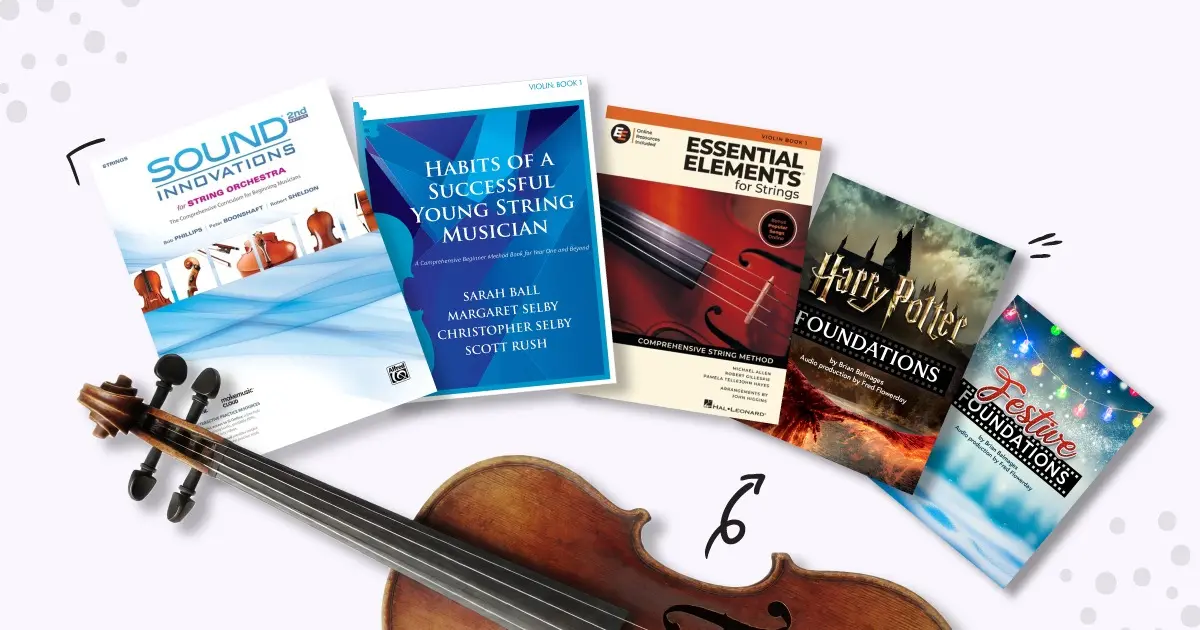
To combat this, contemporary curriculum design has turned toward contextualized practice. A prime example is The Foundations Series by renowned composer and pedagogue Brian Balmages. By pairing pedagogically sound, rigorous technical exercises with epic, cinematic accompaniments produced by Fred Flowerday, these materials reframe fundamental practice as an immersive artistic experience. Students are no longer merely playing scales in an empty room; they feel as though they have been dropped into a blockbuster film score.
Internal usage data and classroom case studies reveal striking metrics regarding this approach:
- Doubled Practice Time: Students utilizing The Foundations Series demonstrate, on average, twice the practice time compared to those relying solely on traditional, unaccompanied technical studies.
- Enhanced Rehearsal Efficiency: Directors report that incorporating these engaging resources into Friday rehearsals or as reward-based activities significantly boosts morale and focus, transforming routine technical checks into collaborative celebrations.
The Power of Method Cross-Pollination
Experienced pedagogues have long understood that when a student struggles with a specific concept, the barrier is rarely a lack of ability; rather, it is often a matter of presentation. A concept explained one way in a single method book may remain abstract, while a slightly different angle in another text will prompt an immediate breakthrough.
MakeMusic’s multi-method architecture operationalizes this pedagogical strategy through cross-pollination. By allowing educators to pull exercises from multiple classical sources—such as Sound Innovations, String Basics, Habits of a Successful Young String Musician, and Orchestra Expressions—into a single unified workflow, teachers can provide students with diversified exposures to core skills.
If a cohort of second-year cellos struggles with developing fluid shifting mechanics, the educator is not locked into a single brief paragraph of instruction. Instead, the teacher can curate a custom sequence drawing the best shifting exercises from three different methodologies, supplementing them with an engaging cinematic track from The Foundations Series.
Official Statements and Pedagogical Insights
Leading voices in music education continually emphasize the necessity of adaptable, student-centered curriculum design. The overarching consensus among modern method authors and software developers is that technology should serve to amplify, rather than dictate, the teacher’s artistic vision.
"You know your students best," notes the curatorial team behind MakeMusic’s string division. "You have your scope and sequence mapped out, you know which skills need more time, and you have a vision for where your orchestra is headed. What you may not have time for is hunting down enough quality material to bring that vision to life."
This philosophy underscores the core value proposition of digital instructional ecosystems. Technology is positioned not as a replacement for the master teacher, but as a force multiplier. By lifting the administrative and logistical burden of material sourcing, the platform returns ownership of the instructional design process directly to the educator.
Furthermore, pedagogical experts advocate for concept-based organization over strict book-by-book progression. By leveraging digital playlists and custom folders, educators can:
- Differentiate Instruction: Build separate, tailored playlists for violins, violas, cellos, and basses when their technical needs diverge.
- Layer Difficulty: Construct scaffolded learning modules that begin with elementary foundational drills and seamlessly progress to advanced variations.
- Ensure Longitudinal Continuity: Save playlists and favorites directly to the educator account, allowing instructional units to be refined, reused, and improved year after year.
Future Outlook: The Next Frontier in Digital Orchestra Management
As we look toward the future of string education, several key trends are poised to shape the intersection of pedagogy and technology:
- AI-Driven Personalization: Future iterations of digital music platforms are expected to incorporate adaptive learning algorithms that automatically suggest supplementary method book exercises based on real-time pitch and rhythm assessment data gathered during student practice sessions.
- Dynamic Sight-Reading Generation: With tools like the Habits of a Successful Young String Musician Sight Reading Generator and the Sound Innovations Book 1 Sight Reading Generator already setting a high standard, the future will likely see infinitely generated, skill-specific sight-reading exercises tied directly to micro-benchmarks in individual curricula. This ensures that students will never exhaust fresh material while mastering a targeted bowing or rhythm pattern.
- Collaborative Curricular Sharing: As more educators build custom, multi-method playlists within platforms like MakeMusic, community-driven repositories of peer-reviewed instructional units will emerge, allowing teachers worldwide to share best practices and localized adaptations instantly.
Conclusion
The evolution of string education is moving decisively away from the isolated silos of static print media toward dynamic, interconnected digital ecosystems. By bridging classic methodologies—such as Sound Innovations, Essential Elements, and String Basics—with innovative foundational series and advanced sight-reading generators, platforms like MakeMusic empower educators to reclaim their time and focus on what matters most: inspiring the next generation of musicians.
For the modern orchestra director, the message is clear: the tools required to bring an ambitious pedagogical vision to life are no longer scattered across dozens of physical texts or lost in weekend administrative tasks. They are unified, accessible, and ready to be shaped.
Educators ready to redefine their curriculum planning process can explore these resources today by logging into their accounts or exploring trial opportunities via the MakeMusic Home Portal.