
Executive Overview
In the misty heart of Larmer Tree Gardens, amidst the sprawling, bohemian utopia of the End of the Road Festival’s landmark 20th-anniversary edition, a quiet revolution in modern British alternative music materialized. The catalysts were a burgeoning London-based trio operating under the genre-fluid banner of "cold pop"—a meticulously engineered sonic aesthetic bridging the glacial detachment of Scandinavian electronica with the visceral, organic grit of UK underground club culture. Performing to a bursting-at-the-seams, capacity crowd at The Boat stage, the band delivered a masterclass in atmosphere, culminating in a tantalizing on-stage tease that sent ripples of anticipation across the entire festival site: an explicit directive to "look closely at your schedule" for an unannounced, clandestine set slated for Saturday.
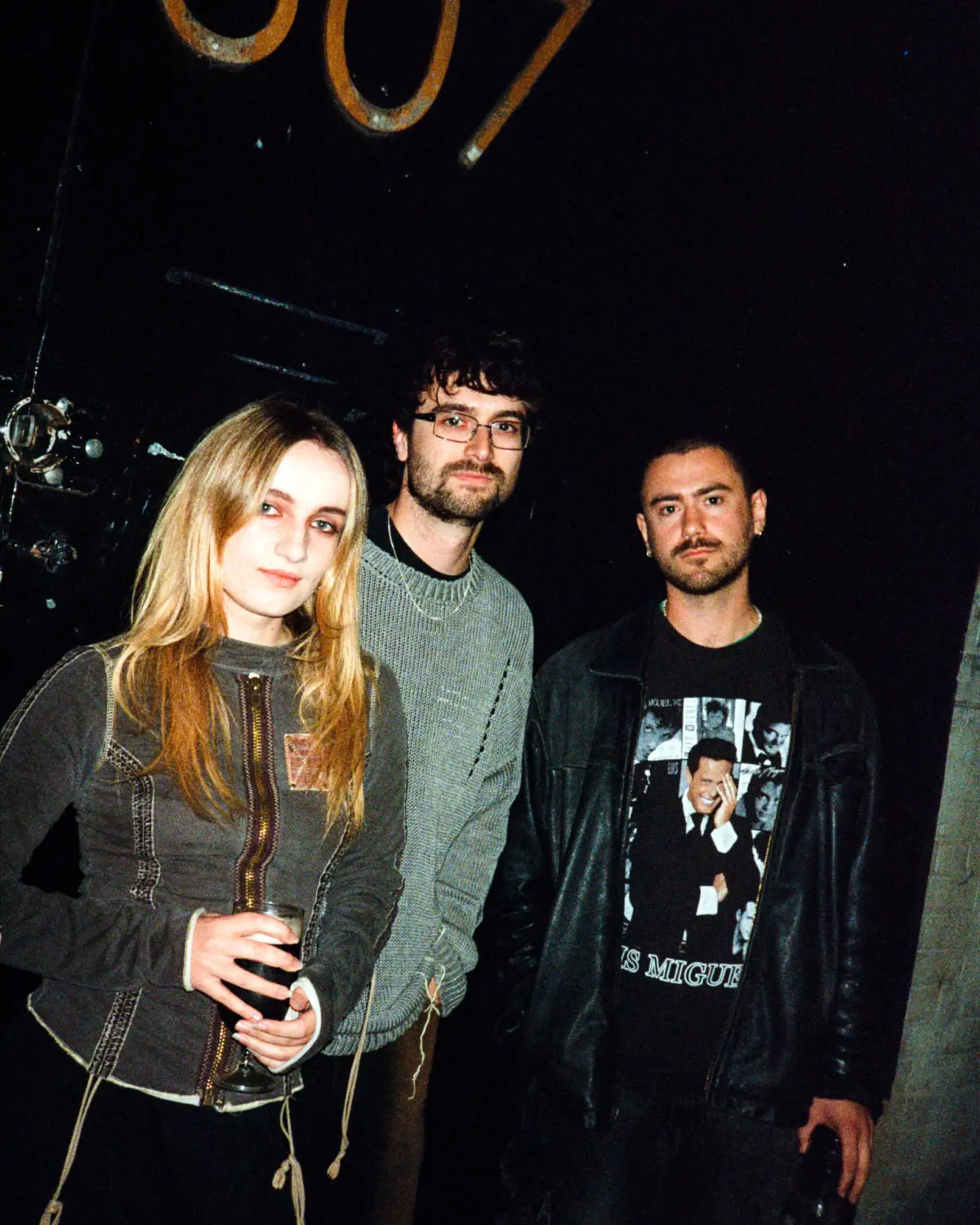
This high-stakes festival moment arrives on the heels of a meteoric trajectory that has defied conventional industry timelines. Formed merely three years ago in 2023 by a coalition of forward-thinking producers and multi-instrumentalists—Will Lister, Max Winter, and Imogen Williams (widely recognized for her visceral artistic footprint as Imogen and the Knife)—the ensemble has swiftly transitioned from subterranean studio project to one of the most vital live propositions in the UK independent circuit. Their debut full-length record, It’s Lovely, Come On In, released last summer via independent tastemaker imprint Scenic Route, served as the critical lightning rod that validated their arrival.
Now, anchoring themselves within the lore of End of the Road’s notoriously unpredictable secret set culture—a legacy historically anchored by legendary late-night interventions at The Folly and the tightly curated Piano Stage sessions hosted by The Line of Best Fit—the trio stands at the vanguard of a new wave of British music. This investigative feature explores the mechanics of their rise, the anatomy of their genre-defying sound, the rigorous logistical framework of festival secret performances, and what this watershed weekend means for the future of independent music discovery.
Detailed Chronology: From Underground Studios to The Boat at End of the Road
Genesis and the Formation of a Triad (2023)
The narrative of the trio begins away from the festival stages, deep within the insulated acoustics of London’s independent production studios in the spring of 2023. Will Lister and Max Winter, both established figures in electronic music production with distinct backgrounds spanning ambient techno, deep house, and experimental sound design, found themselves drawn toward a shared sonic vacuum. They sought a medium that could marry the hypnotic, repetitive architectures of club music with the structural integrity and emotional resonance of traditional songwriting.
The missing structural component arrived with the integration of Imogen Williams. Operating fluidly between her solo endeavors as Imogen and the Knife and her collaborative studio output, Williams brought a theatrical, vocal-driven intensity that completely upended Lister and Winter’s instrumental foundations. The chemistry was instantaneous. Working in snatched hours between various side projects and session commitments, the trio established a working method defined by radical reduction: stripping away extraneous production layers until only the raw nerve of the melody and the skeletal rhythm remained. It was during these late-night writing sessions that the foundational ethos of "cold pop" was codified—music that feels distant yet intimate, mechanized yet intensely human.
The Scenic Route Breakthrough and It’s Lovely, Come On In (Summer 2025)
While the band’s early digital dispatches generated significant underground buzz among digital curators and community radio mainstays, the definitive turning point arrived in the summer of 2025 with the release of their debut long-player, It’s Lovely, Come On In, via boutique label Scenic Route.
The album’s rollout was uncharacteristically organic for the digital age. Eschewing heavy-handed marketing algorithms, Scenic Route and the band relied on word-of-mouth validation from key tastemakers across BBC Radio 6 Music, NTS, and independent record store ecosystems. Critics were quick to isolate the record’s paradoxical appeal. Tracks like the hypnotic lead single and deep-cut album statements bypassed conventional verse-chorus structures in favor of atmospheric world-building. The record synthesized intuitive, winding harmonies with unmistakable trip-hop rhythmic cadences, all underpinned by a drum-heavy production style that prioritized physical weight over pristine, over-compressed digital sheen.
By the time the calendar turned to 2026, It’s Lovely, Come On In had evolved from a critical darling into a cult phenomenon among musicians and producers, setting the stage for their baptism of fire on the live circuit.
The 20th-Anniversary Watershed at The Boat (September 2026)
Fast-forward to the sun-dappled, chalk-streamed valleys of Larmer Tree Gardens for the sold-out 2026 edition of End of the Road. Marking its historic 20th anniversary, the festival curated one of its most ambitious lineups to date, blending heritage alternative acts with the bleeding edge of contemporary underground culture.
Positioned on The Boat—a stage renowned for intimate, high-intensity interactions between artists and audiences—the trio faced a logistical stress test of their own making. Word of their recorded output and whispered live capabilities had preceded them; long before the designated set time, queues stretched deep into the festival pathways, culminating in a maxed-out, one-in, one-out crowd threshold that left late-arriving festival-goers spilling out into the surrounding foliage.
From the opening transient of kick drum to the final vocal reverberation, the performance served as a clinical demonstration of their aesthetic. Williams commanded the stage with a magnetic, understated poise, while Lister and Winter orchestrated a live wall of sound that seamlessly bridged hardware sequencing with tactile instrumentation. Yet, it was the final moments of the performance that seized the collective consciousness of the festival. Breaking the fourth wall, the band explicitly instructed the capacity audience to "look closely at your schedule" for a subsequent, unannounced appearance on Saturday, instantly transforming casual attendees into amateur investigators and setting off a weekend-long treasure hunt across the festival grounds.
Supporting Context & Metrics: The Anatomy of "Cold Pop" and Festival Lore
To truly comprehend the weight of the trio’s festival takeover, one must contextualize the micro-genre they inhabit and the hallowed institutional history of End of the Road’s secret programming.
Decoding "Cold Pop"
The term "cold pop" is frequently utilized by contemporary musicologists and digital curators to describe a specific stylistic pivot in post-millennial alternative music. Unlike the warm, analog-saturated nostalgia of the 1970s revivalism that dominated the indie landscape of the 2010s, cold pop embraces the aesthetic signatures of digital isolation:
- Harmonic Ambiguity: Melodies that resolve in unexpected, melancholic minor keys, evoking a sense of nostalgic detachment.
- Rhythmic Architecture: A heavy reliance on trip-hop syncopation, broken beats, and meticulously processed acoustic drum hits that sit forward in the mix, giving the music an undeniable physical anchor despite its ambient texture.
- Vocal Delivery: Vocals that are double-tracked, subtly pitch-shifted, or mixed with high-register clarity, cutting through dense layers of reverb without relying on emotional over-singing.
This sonic blueprint positions the trio in a direct lineage with pioneering acts such as Portishead, The xx, and early James Blake, while retaining a distinctly contemporary, internet-native malleability that appeals to streaming-era demographics.
+-------------------------------------------------------------------------+
                    THE ANATOMY OF "COLD POP"
+-------------------------------------------------------------------------+
  [Vocal Delivery]        --->  Double-tracked, crisp, emotionally detached
  [Rhythmic Foundation]   --->  Trip-hop syncopation & heavy drum production
  [Harmonic Structure]    --->  Unresolved minor-key tensions & ambient pads
  [Aesthetic Goal]        --->  Digital isolation paired with physical weight
+-------------------------------------------------------------------------+
The Institutional Architecture of End of the Road Secret Sets
Secret sets are a time-honored currency within the ecosystem of boutique British music festivals, but few events treat the practice with the theatrical reverence of End of the Road. For two decades, the festival has cultivated a culture of surprise performances that reward the hyper-attentive listener.
Historically, these interventions fall into two primary categories:
- Late-Night Enigmas at The Folly: Tucked away in the wooded reaches of the site, The Folly has borne witness to legendary, unbilled midnight slots from stadium-tier headliners and underground darlings alike, operating on strict word-of-mouth communication and chalkboard announcements.
- Curated Piano Stage Sessions: Collaborating annually with prominent digital curators—most notably The Line of Best Fit—the festival stages intimate, stripped-down performances where artists test unreleased material or deconstruct their catalog in front of audiences capped at double-digit capacities.
By inserting themselves into this clandestine tradition via their on-stage drop at The Boat, the trio did not merely announce a gig; they participated in a sacred End of the Road ritual, leveraging festival lore to cement their status as modern insiders.
Official Statements and Industry Perspectives
The underground momentum generated by the trio has not gone unnoticed by industry veterans, festival organizers, and critical stakeholders. While formal press releases from Scenic Route have maintained an air of calculated mystery regarding the logistics of the Saturday secret set, insiders have been remarkably vocal about the band’s rapid ascent.
Management and Label Perspectives (Scenic Route)
Speaking off the record due to the confidential nature of festival scheduling constraints, a representative for Scenic Route outlined the deliberate strategy behind the band’s live rollout:
"When you release a record as texturally complex and emotionally nuanced as ‘It’s Lovely, Come On In,’ the natural temptation is to sequester the band in darkened club spaces to protect the sound design. But Will, Max, and Imogen understood that these songs possess a strange, gravitational pull in open-air environments. What happened at The Boat wasn’t an accident of scheduling; it was the realization of a two-year plan to test how far cold pop could penetrate a traditional indie festival audience."
Critical Reception and Media Analysis
Prominent music journalists embedded at the festival have pointed to the trio’s performance as a demographic bellwether for the future of the festival circuit.
"For years, End of the Road has wrestled with the generational transition of its audience," noted one veteran festival reviewer for a leading London cultural weekly. "You have a core demographic that has attended since 2006 alongside a hyper-literate, Gen-Z contingent whose musical vocabulary is formed entirely by algorithmic cross-pollination. This trio—combining trip-hop’s historic heft with contemporary ambient pop—bridges that generational divide effortlessly. When they sold out The Boat, it felt less like a mid-afternoon slot and more like a coronation."
Future Outlook: The Horizon for Lister, Winter, and Williams
As the dust settles on the 20th-anniversary celebrations at Larmer Tree Gardens and festival attendees frantically cross-reference their pocket schedules for Saturday’s cryptic clues, the broader trajectory of the trio points toward an expansive future.
Immediate Horizons: Post-Festival Touring and Sophomore Planning
With the success of It’s Lovely, Come On In serving as a secure foundation, preliminary reports from the band’s London management team indicate that studio sessions for a sophomore release are already underway. Sources close to the production process suggest that while the core elements of "cold pop" will remain intact, the band is exploring expanded orchestral arrangements and live instrumentation, aiming to bring an even greater physical dynamism to their subsequent touring cycle.
Furthermore, international interest has begun to crystallize. European booking agencies, drawn by the cinematic scope of the band’s recorded output, are reportedly drafting routing plans for continental showcase festivals in the spring, positioning the trio for a significant export push.
The Broader Cultural Implication
Beyond the commercial metrics and festival lore, the emergence of Will Lister, Max Winter, and Imogen Williams signals a vital correction in contemporary alternative music. In an industry increasingly dominated by hyper-fast trend cycles and algorithmic homogenization, the trio has demonstrated that there remains an insatiable appetite for deliberate, patient, and uncompromisingly atmospheric artistry.
As they navigate the labyrinthine scheduling of secret sets, late-night takeovers, and media scrutiny, one reality remains indisputable: the cold pop revolution is no longer a localized experiment confined to a London studio. It has claimed its stake at the very heart of British independent music culture, and the rest of the world is scrambling to keep pace with the schedule.