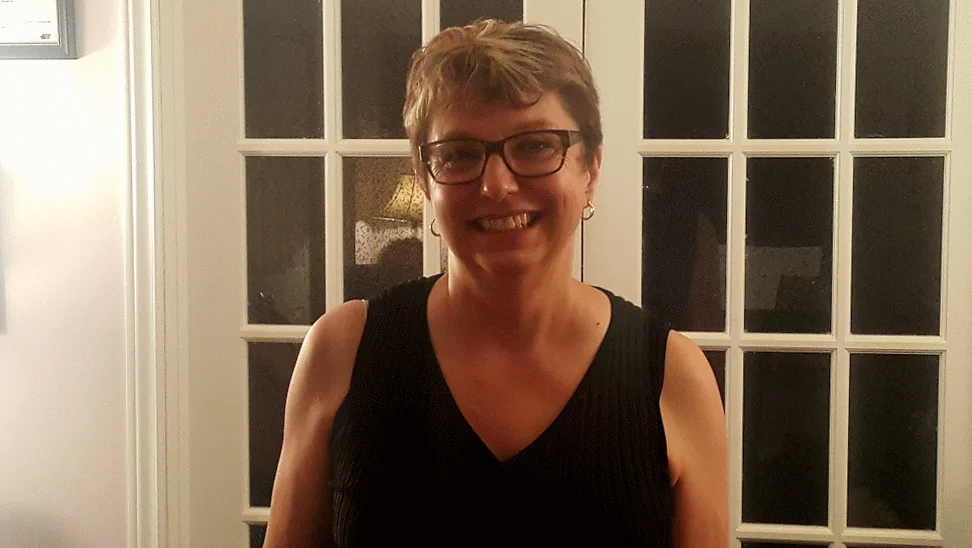

OTTAWA/KINGSTON, ONTARIO — For more than thirty years, Mary Ellen Stoll lived in the shadow of a medical procedure that forever altered the trajectory of her relationship with music. Following a surgical intervention to remove vocal cord nodules—a common yet debilitating affliction for professional and amateur vocalists alike—Stoll’s instrument was fundamentally compromised.
Life, as it often does, intervened. Demanding career obligations in the biological sciences and the immense responsibilities of raising a family took precedence. Singing, once a vibrant outlet of self-expression, was relegated to the periphery. Yet, the physical fallout of her surgery remained an uninvited constant. Her voice fatigued easily, lacked reliability, and capitulated into total laryngitis multiple times a year.
It was only upon entering retirement that Stoll decided to confront the dormant dream of returning to choral performance. However, the path back to the stage was fraught with physical pain and institutional hesitation. Her journey eventually led her to the doorstep of renowned vocal coach Diana and the specialized methodologies of the Vocal Science™ technique—a pivotal intervention that would fundamentally reshape her vocal anatomy, capability, and confidence.
Executive Overview
The intersection of vocal pathology, alternative therapeutic interventions, and specialized vocal coaching represents a deeply nuanced frontier in human performance. For individuals like Mary Ellen Stoll, traditional speech-language pathology often hits a ceiling, leaving performers with functional limitations that prevent them from executing dynamic artistic work without pain.
This case study examines Stoll’s intensive 20-hour immersion program under the guidance of Diana, creator of the holistic Vocal Science and Repair Your Voice modalities. The narrative provides an intimate look at the mechanics of chronic vocal injury recovery, the psychological hurdles of returning to an art form after decades of dormancy, and the physiological realities of retraining the human voice.
Key takeaways from Stoll’s documented testimonial include:
- Long-Term Sequelae: The enduring impact of vocal cord nodule surgery decades after the initial procedure.
- The Retraining Process: How targeted neuromuscular and mechanical adjustments shift vocal strain from fragile vocal cords to surrounding facial musculature.
- Holistic Integration: The incorporation of natural, herbal treatments to support vocal tissue recovery, even for those with a staunch background in the empirical biological sciences.
- Artistic Restoration: The psychological and physiological breakthrough of producing powerful, stable, and resonant vocal tones without pitch degradation or pain.
Detailed Chronology: From Surgical Intervention to Choral Redemption
Phase 1: The Three-Decade Hiatus and Chronic Fatigue
The origin of Stoll’s vocal struggles dates back more than thirty years to a diagnosis of vocal cord nodules—benign growths typically caused by phonotrauma, or continuous misuse and strain of the vocal folds. While the surgical removal of these nodules was medically necessary, the aftermath left her voice permanently altered.
Without targeted vocal rehabilitation following the surgery, Stoll developed compensatory habits. Her voice grew unreliable; it fatigued rapidly during routine conversation and completely abandoned her several times annually, culminating in acute laryngitis. Faced with the demands of a rigorous career in the biological sciences and a busy family life, Stoll suppressed her passion for singing, operating under the assumption that her vocal apparatus was permanently damaged goods.
Phase 2: The Retirement Catalyst and the Barbershop Roadblock
Upon reaching retirement age, Stoll sought to re-engage with her lifelong passion for music by auditioning for a local ladies’ barbershop chorus. Barbershop music, characterized by tight four-part harmonies, acapella textures, and robust vocal projection, places immense demands on a singer’s breath support, pitch accuracy, and endurance.
Upon entering the rehearsal space, immediate roadblocks emerged. The chorus director expressed deep apprehension regarding Stoll’s medical history, acutely aware of the risk of re-injuring her delicate vocal cords. These fears were immediately validated during rehearsals:
- Practice sessions lasting two hours left Stoll’s vocal cords actively sore.
- The physical sensation of strain signaled that her old, maladaptive vocal habits were still deeply entrenched.
- The realization set in that sheer enthusiasm and desire were not enough to overcome decades of mechanical vocal dysfunction.
Recognizing that standard local choirs could not offer the specialized remediation she required, Stoll began scouring alternative avenues for vocal rehabilitation. Her search ultimately led her to Diana and the proprietary methodologies practiced at Vocal Science.
Phase 3: The 20-Hour Immersion and Mechanical Realignment
Committing to an intensive 20-hour program spanning several weeks, Stoll stepped into a rigorous environment designed to dismantle decades of poor vocal mechanics. The Vocal Science technique breaks away from traditional classical or contemporary voice training by focusing heavily on structural physics, body mechanics, and the precise placement of sound.
During these intensive sessions, Stoll experienced a profound paradigm shift in how sound is produced. Rather than pushing air directly through the fragile vocal folds—the primary source of her historical pain and fatigue—she was trained to redirect muscular engagement.
"I can tell you after several hours with her my vocal cords do not hurt or aren’t tired — just my cheek muscles! You can feel the difference in how you produce sound and volume."
This shift—moving the point of fatigue from the internal larynx to external facial structures like the cheek muscles—indicates a successful redistribution of kinetic energy. By maximizing facial resonance and engaging ancillary resonators, the vocal cords are relieved of the crushing pressure required to generate acoustic volume.
However, Stoll is quick to note that the process is far from effortless:
- It demands uncompromising focus, mental discipline, and physical dedication from the client.
- It requires a vigilant instructor capable of identifying micro-adjustments in posture, breath, and sound production in real-time.
- Diana’s coaching style is described as uncompromising and rigorous—a "taskmaster" approach deemed entirely necessary to break 30-year muscle memory patterns.
Phase 4: Bridging Empirical Science and Holistic Therapeutics
As a professional rooted deeply in the biological sciences, Stoll entered the program with a healthy degree of skepticism, particularly concerning non-traditional remedies. However, Diana’s protocol included targeted herbal treatments designed to soothe, lubricate, and protect the vocal tract tissues.
To Stoll’s surprise, the empirical results superseded her initial reservations. The botanical interventions demonstrably reduced tissue inflammation and dryness, acting as a crucial biochemical complement to the mechanical voice training. This integration of targeted pharmacology/herbalism with physical voice mechanics underscores the comprehensive nature of the Repair Your Voice framework.
Phase 5: The Breakthrough and Artistic Rebirth
The emotional apex of Stoll’s intensive training arrived at the conclusion of her initial session block, when she was finally invited to sing. The result was nothing short of transformative.
For the first time in over three decades, Stoll produced a sound that defied her expectations:
- Volume and Clarity: She achieved robust auditory projection without the breathy fragmentation or vocal fry that had plagued her post-surgery.
- Sustained Resonance: She successfully held notes for extended durations without the traditional pitch drift or wavering associated with laryngeal fatigue.
- Total Absence of Pain: Following the performance, her vocal cords remained entirely free of soreness.
Reflecting on her journey, Stoll expressed a poignant sentiment shared by many who finally find effective rehabilitation late in life: "I wish I had looked for and found her about 20 years ago. It would have saved me years of frustration with my voice."
Supporting Context & Metrics: The Anatomy of Vocal Recovery
To fully understand the significance of Mary Ellen Stoll’s case, it is essential to examine the physiological landscape of vocal cord surgery, post-operative scar tissue, and the mechanics of modern vocal stress management.
The Problem of Vocal Cord Nodules
Vocal cord nodules are benign, callus-like growths that develop on the middle portion of the vocal folds as a result of chronic mechanical trauma. When individuals speak or sing with excessive laryngeal tension, the vocal folds collide too forcefully with every oscillation. Over time, this friction causes localized swelling that eventually hardens into fibrous nodules.
While surgical excision removes the physical growths, it does not correct the underlying behavioral and mechanical habits that caused them in the first place. Consequently, many patients who undergo nodule removal experience persistent dysphonia (voice disorders), chronic fatigue, and a high rate of recurrence if their vocal production habits remain unaddressed.
The Vocal Science Methodology vs. Traditional Training
Traditional voice lessons typically focus on repertoire, artistic interpretation, and generalized breath support. While effective for healthy voices, these methods frequently fail individuals with chronic vocal pathologies or post-surgical structural changes.
In contrast, specialized modalities like Vocal Science operate at the intersection of voice science, kinesiology, and somatic re-education. Key differentiators include:
- Decoupling Respiration from Laryngeal Strain: Teaching clients how to use core abdominal and thoracic support systems to drive airflow, preventing the larynx from squeezing shut to control pitch or volume.
- Resonance Placement: Utilizing facial, cranial, and nasal cavities to amplify sound waves acoustically, reducing the raw physical workload placed directly on the vocal folds.
- Real-Time Diagnostics: Employing hyper-vigilant auditory and visual monitoring to catch aberrant muscular tension before it manifests as vocal fatigue or tissue damage.
Financial and Personal Investment Metrics
Stoll’s testimony addresses the elephant in the room for many prospective clients: financial cost. She notes candidly that the investment required for a 20-hour intensive program is "not insignificant."
However, when measured against the metrics of human capital—decades of chronic physical frustration, social isolation from musical communities, recurrent medical visits for acute laryngitis, and the psychological toll of a silenced voice—the return on investment becomes glaringly apparent. Stoll’s assertion that she "would do it all again with Diana" speaks volumes about the value proposition of specialized, results-oriented vocal rehabilitation.
Official Statements & Testimonial Analysis
Mary Ellen Stoll’s reference letter serves as an organic, unfiltered peer review of the Vocal Science program. Below is a thematic breakdown of her official commentary:
| Thematic Area | Stoll’s Observation | Analytical Implication |
|---|---|---|
| Instructional Rigor | "She has an amazing eye and ear and is observing you the whole time, and quick to tell you when something is wrong…" | Highlights the necessity of bespoke, highly individualized supervision over generalized group vocal instruction for injured clients. |
| Physical Sensations | "My vocal cords do not hurt or aren’t tired — just my cheek muscles!" | Demonstrates successful kinematic load-shifting away from delicate laryngeal mucosa toward robust facial structures. |
| Holistic Acceptance | "Diana also suggested several herbal treatments… and I can really see how they are helping me (as a biological sciences skeptic)." | Validates the efficacy of complementary botanical interventions even within scientifically rigorous worldviews. |
| Long-Term Value | "You WILL get results and I would do it all again with Diana. I wish I had looked for and found her about 20 years ago." | Confirms the high therapeutic value and cost-effectiveness of the program relative to decades of unmitigated vocal struggle. |
Future Outlook: Implications for Aging Performers and Vocal Health
Mary Ellen Stoll’s successful rehabilitation opens a broader conversation regarding vocal health management for aging populations, retirees, and individuals recovering from historical laryngeal trauma.
1. The Renaissance of Senior Artistic Participation
As global demographics shift and life expectancies rise, an increasing number of retirees are looking to re-engage with creative arts, community choirs, and theatrical groups. However, aging vocal folds naturally undergo presbyphonia—a physiological condition characterized by muscle atrophy, decreased mucosal lubrication, and reduced vocal projection.
When age-related vocal decline compounds historical trauma, such as post-surgical scarring from nodule removal, the barrier to entry for community music programs becomes formidable. Protocols like those offered by Vocal Science provide a viable bridge, proving that biological aging and surgical history do not inherently spell the end of an individual’s vocal journey.
2. Bridging Clinical Medicine and Applied Vocal Pedagogy
There remains a persistent disconnect between medical professionals (ENTs, otolaryngologists, and speech-language pathologists) and applied vocal coaches. While medical practitioners excel at diagnosing pathology and executing surgical repairs, they rarely possess the time or pedagogical frameworks required to retrain a singer’s performance mechanics over dozens of hours.
Conversely, traditional voice coaches often lack the clinical awareness required to safely handle post-surgical clients without risking re-injury. The success of Stoll’s intervention highlights the urgent need for collaborative referral pipelines between medical voice clinics and specialized vocal mechanics practitioners who understand both anatomy and performance art.
3. Conclusion: A Blueprint for Resilience
Mary Ellen Stoll’s journey from chronic laryngitis and post-surgical despair to confident, pain-free barbershop chorus singing stands as a testament to the resilience of the human voice when paired with expert, unyielding guidance.
For future clients navigating similar trials—whether stemming from Ottawa, Kingston, or beyond—Stoll’s testimonial offers both a cautionary tale about untreated vocal strain and an inspiring roadmap toward recovery. It proves that with dedication, scientific precision, and the courage to unlearn decades of bad habits, a lost voice can be successfully reclaimed.