Nearly half a century after its triumphant premiere, Scottish-born composer Thea Musgrave’s seminal 1977 masterpiece, Mary, Queen of Scots, is staging a historic return to the United States. In a major international collaboration, the San Francisco Opera and the English National Opera (ENO) have joined forces to mount an entirely new co-production of this powerful operatic portrait. Scheduled to run from September 20 through October 4, 2026, at the War Memorial Opera House, the production promises to reintroduce contemporary audiences to a gripping historical tragedy fueled by political machination, gender dynamics, and personal resilience.
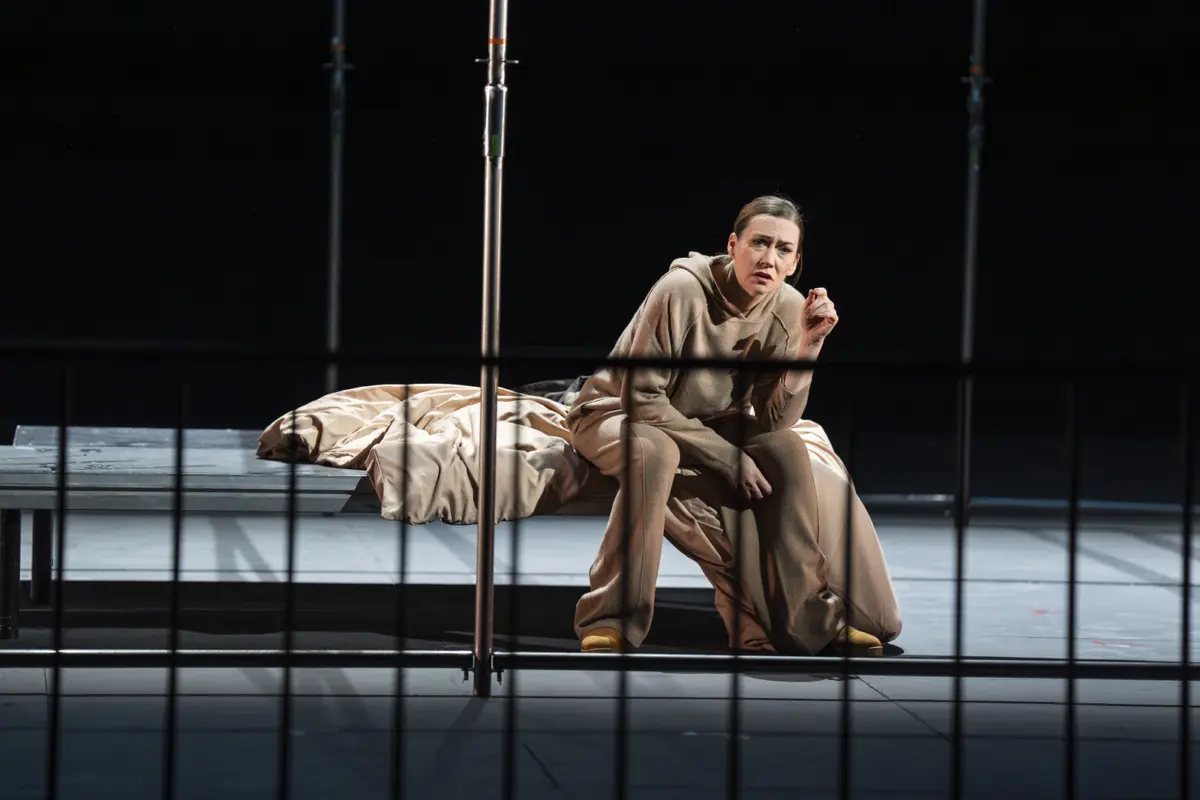
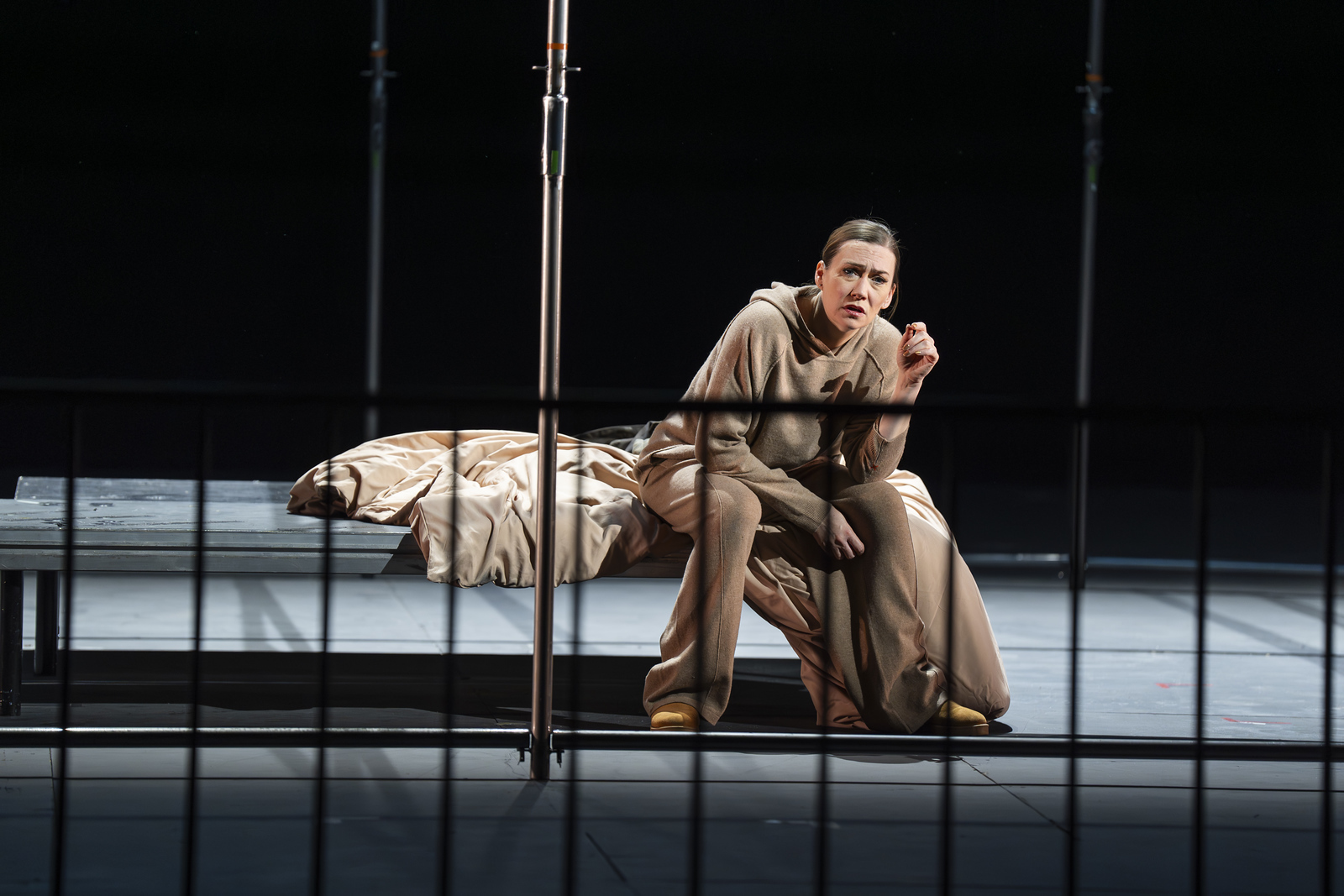
This ambitious revival is underpinned by an exceptional creative and performing roster. The production will be helmed by director and designer Stewart Laing, whose visual and theatrical concept is expected to reframe the turbulent 16th-century Scottish court for modern sensibilities. In the pit, Italian conductor Clelia Cafiero will make her eagerly anticipated San Francisco Opera debut, leading the renowned San Francisco Opera Orchestra. Anchoring the vocal ensemble is celebrated soprano Heidi Stober, who takes on the monumental and emotionally complex title role of Mary Stuart.
The announcement has sent ripples of excitement through the classical music world, not least because of the deep personal resonance the work holds for its nonagenarian creator. Musgrave, now residing as a towering figure in contemporary classical composition, has long championed the work as the cornerstone of her extensive operatic catalogue. By bridging past and present, this multi-city partnership between American and British cultural institutions aims to cement Mary, Queen of Scots in the standard international repertory, offering a timely meditation on female leadership, systemic power struggles, and historical legacy.
Detailed Chronology and Production Roadmap
The Genesis of a Masterpiece (1977)
Commissioned by the Edinburgh Festival and premiered on September 6, 1977, by the Scottish Opera, Thea Musgrave’s Mary, Queen of Scots was an immediate critical triumph. Unlike many historical operas that relegate female monarchs to flat tropes of romance or vanity, Musgrave—who also wrote her own libretto, adapted from Eona Pritchard’s play fora Queen’s Death: Mary Stuart—focused intensely on the psychological interiority of a young woman navigating an intensely hostile, patriarchal political landscape.
The opera spans the years from Mary’s return to Scotland in 1561 as an 18-year-old widow up to her ultimate downfall. Musgrave employed an advanced yet deeply communicative musical language, utilizing recurring instrumental motifs and a sophisticated harmonic palette to delineate the shifting allegiances and psychological states of characters like Lord Darnley, the Earl of Bothwell, and the charismatic reformer John Knox.
The Road to San Francisco: 2026 Season Architecture
The upcoming revival represents a meticulous multi-year planning effort between the San Francisco Opera and the English National Opera. The production schedule has been carefully crafted to maximize accessibility while preserving the artistic integrity of Musgrave’s grand-scale vision:
Opening Night: September 20, 2026 — Marking the official premiere of Stewart Laing’s new production at San Francisco’s War Memorial Opera House.
Run Dates: Performances will continue through October 4, 2026, offering multiple opportunities for local and international opera enthusiasts to experience the staging.
Global Digital Broadcast: In an effort to democratize access to world-class opera, the performance on Saturday, September 26, 2026, will be livestreamed globally at 7:30 p.m. PT. This digital presentation will remain available for on-demand viewing for 48 hours, allowing audiences worldwide to engage with the production.
Language and Presentation: Staying true to modern performance practice while ensuring complete clarity for the audience, the opera will be performed in English, augmented by English supertitles displayed above the stage.
Cast, Creative Team, and Musical Leadership
Bringing a sprawling historical drama to life requires a formidable alignment of vocal prowess, dramatic interpretation, and baton mastery. The 2026 San Francisco Opera mounting boasts a meticulously curated cast combining established international luminaries with rising vocal talent.
Artistic Visionaries
Stewart Laing (Director and Designer): Known for his visually striking and intellectually rigorous work across British and international theatre and opera, Laing is expected to strip away archaic, dusty period-piece conventions. His unified concept for direction and design will likely highlight the claustrophobia of the Scottish court and the razor-thin margins within which Mary was forced to operate.
Clelia Cafiero (Conductor): Making her landmark company debut, the dynamic Italian maestro Clelia Cafiero steps onto the San Francisco podium. Cafiero’s burgeoning international reputation for precision, expressive depth, and command of complex scores makes her an ideal choice to unpack the intricate orchestration of Musgrave’s writing, guiding the San Francisco Opera Orchestra through its atmospheric textures.
The Vocal Ensemble
At the heart of the drama is acclaimed American soprano Heidi Stober, who takes on the grueling and emotionally shattering title role. Stober, celebrated for her luminous tone, impeccable stylistic versatility, and compelling dramatic presence, is uniquely positioned to trace Mary’s evolution from an idealistic, French-educated teenager to a battle-hardened queen outmaneuvered by her political rivals.
Stober will be supported by a deep bench of vocal talent comprising both company veterans and notable debuts:
Thomas Mole
Thomas Kinch
Christopher Sokolowski
Hadleigh Adams
David Soar
Olivier Zerouali
Chance Jonas-O’Toole
Philip Skinner
Sadie Cheslak
Sofia Gotch
Mary Hoskins
Alexa Frankian
This expansive ensemble covers the pivotal factions within the Scottish court—ranging from scheming noblemen and religious zealots to loyal retainers—creating the dense social fabric against which Mary’s personal tragedy plays out.
Supporting Context and Historical Metrics
To fully appreciate the significance of this 2026 revival, one must examine the intersection of Thea Musgrave’s biography, the historical realities of the Tudor-Stuart era, and the evolving economics of modern international opera co-productions.
The Composer’s Lens: Identity and Empathy
Few artists are as intellectually and emotionally equipped to tell Mary Stuart’s story as Thea Musgrave. Born in Edinburgh, Scotland, in 1928, Musgrave’s early life and professional trajectory mirror aspects of transnational mobility and independence. Having lived and studied in Paris during formative years, Musgrave has frequently noted how easily she could project her own worldview onto the young queen.
"I have always felt it to be the cornerstone of my operatic repertoire," Musgrave reflected on the work. "It is also very close to me personally as I am a woman, a Scot and lived for several years in Paris. It was therefore easier for me than others to get inside of Mary’s feelings as the 18-year-old widowed Queen of France returning to Scotland as the Scottish Queen."
Musgrave’s compositional voice throughout the 1970s was characterized by a distinct theatricality. She frequently experimented with spatial placement of musicians and psychological leitmotifs, ensuring that the orchestra functioned not merely as accompaniment, but as an active participant in the psychological drama on stage.
The Historical Irony of Power
The narrative core of Mary, Queen of Scots explores a fascinating paradox of power dynamics in the 16th century. As Musgrave points out, Mary quickly learned how to hold her ground against a cadre of ambitious, bellicose men who sought to exploit or depose her. Yet, in a bitter historical irony, her ultimate undoing was orchestrated not by her male adversaries in Scotland, but by her cousin and rival across the border: Queen Elizabeth I of England.
Despite losing her crown and ultimately her life to Elizabeth’s executioner, history afforded Mary a profound, albeit posthumous, victory. Upon Elizabeth’s death without an heir, it was Mary’s son—James VI of Scotland—who ascended the English throne as James I, successfully uniting the crowns of England and Scotland. It is this complex interplay of immediate defeat and long-term historical vindication that Musgrave’s score seeks to illuminate.
The Economics of Co-Production
In an era where major opera houses face mounting financial pressures, inflationary costs, and shifting donor demographics, the co-production model between the San Francisco Opera and the English National Opera serves as a vital economic engine. By pooling financial resources, sharing technical designs, and dividing construction costs between two global cultural capitals, both institutions are able to mount lavish, large-scale contemporary works that might otherwise be economically prohibitive for a single house to sustain independently.
Official Statements and Industry Reception
The announcement of the San Francisco-ENO collaboration has generated widespread commentary across the classical music community, signaling a broader industry trend toward re-evaluating 20th-century operatic masterworks.
The Creator’s Vision for Today’s Audiences
In her official statement regarding the upcoming San Francisco run, Musgrave emphasized her desire to connect past historical struggles with contemporary human experiences:
"Mary grew quickly to hold her own in a land menaced by the conflicting ambitions of the men that surrounded her—only in the end—ironically to be defeated and brought down by a woman, Queen Elizabeth I. Happily, Mary won the long game when her son, James VI of Scotland, became James I of England and Scotland on Elizabeth’s death. I am hoping my opera will likewise continue to bring her valor, her strength and particularly her emotional journey to life in a meaningful way for today’s audiences at San Francisco Opera."
Critical and Institutional Anticipation
Industry analysts view the partnership between San Francisco Opera and the English National Opera as a masterclass in transatlantic cultural exchange. ENO, renowned for its commitment to performing opera in English and championing theatrical innovation, provides a natural curatorial home for Musgrave’s aesthetic. Meanwhile, San Francisco Opera continues its longstanding tradition of presenting bold, musically rigorous American premieres and major modern revivals.
Music critics have noted that reviving Mary, Queen of Scots fills a glaring gap in contemporary programming. While standard 19th-century bel canto treatments of the subject—such as Gaetano Donizetti’s Maria Stuarda—focus heavily on vocal pyrotechnics and a fictionalized confrontation between the two queens, Musgrave’s 20th-century idiom offers a gritty, dramatically cohesive, and historically grounded psychological portrait. The inclusion of conductor Clelia Cafiero and soprano Heidi Stober ensures that this revival will possess the requisite vocal fireworks and orchestral transparency to do justice to Musgrave’s intricate score.
Future Outlook: A New Standard for 20th-Century Opera
As preparations for the September 2026 opening night accelerate, the implications of this production stretch far beyond the walls of the War Memorial Opera House.
Expanding the Canon
For decades, operatic institutions have relied heavily on a narrow canon dominated by 19th-century Italian, German, and French masterworks. While audience favorites like La Traviata, Carmen, and La Bohème remain essential economic pillars for opera companies, the long-term health of the art form relies on the successful integration of 20th- and 21st-century repertoire. By investing in a high-profile, brand-new co-production of a 1977 masterwork, San Francisco Opera and the English National Opera are actively expanding the boundaries of what mainstream audiences consider essential operatic viewing.
Accessibility and Global Reach
The decision to livestream the September 26 performance—coupled with a 48-hour on-demand window—highlights an industry-wide recognition that digital infrastructure is no longer a temporary pandemic-era stopgap, but a permanent pillar of audience development. Opera lovers across Europe, Asia, and the Americas who cannot travel to California will have front-row access to a milestone theatrical event, effectively multiplying the cultural impact of the production.
A Fitting Tribute to a Living Legend
Ultimately, the 2026 revival of Mary, Queen of Scots stands as a living celebration of Thea Musgrave’s monumental contribution to Western classical music. By breathing new theatrical and musical life into her score, Stewart Laing, Clelia Cafiero, Heidi Stober, and the combined forces of two world-class opera companies are ensuring that Musgrave’s fierce, independent queen continues to captivate, challenge, and inspire audiences well into the 21st century.