
Executive Overview
The contemporary jazz ecosystem is undergoing a profound structural and stylistic renaissance. No longer bound by the rigid stylistic delineations of the mid-20th century, today’s vanguard of composers, instrumentalists, and improvisers operate in a hyper-porous musical environment. The latest release cycle—spanning boundary-pushing avant-garde experiments, culturally restorative conceptual projects, and deeply personal debut statements—demonstrates an art form aggressively claiming new territory while honoring its foundational lineages.
This curated review examines a pivotal cross-section of recent releases from international artists who are redefining the parameters of improvised music. From the prodigious vocal debut of Ekep Nkwelle to the historical reclamation project spearheaded by the PRISM Quartet, these works highlight a global community grappling with identity, historical memory, and technical innovation.
Across these releases, several macro-trends emerge:
- The Rise of Conceptual Debuts: Young artists are bypassing traditional sideman trajectories to launch fully conceptualized, thematic albums early in their careers.
- Cross-Diasporic Dialogue: Collaborations that bridge disparate cultural histories—most notably between Black and Jewish American traditions, and French-Mauritanian post-colonial perspectives—are forging new sonic vocabularies.
- Acoustic-Electronic Hybridization: The seamless integration of free improvisation, electroacoustic soundscapes, and groove-based soul and hip-hop underlines a generationally fluid approach to rhythm and timbre.
Detailed Chronology: A Track-by-Track Examination of Current Releases
Vocal Mastery and Conceptual Tributes
Ekep Nkwelle – Caged Bird (Mack Avenue, CDMAC1245)
Before reaching the age of 27, Ekep Nkwelle had already cemented her status as one of the most compelling voices in modern jazz, gracing the stages of the Newport Jazz Festival, Carnegie Hall, and the North Sea Jazz Festival while collaborating with luminaries such as Wynton Marsalis and Dee Dee Bridgewater. Yet, remarkably, she achieved these milestones without a single recorded album to her name—until now.
Her debut full-length, Caged Bird, is directly inspired by Maya Angelou’s seminal autobiography, I Know Why the Caged Bird Sings. Across nine meticulously crafted songs, Nkwelle traces an emotional and historical trajectory moving from profound sorrow to transcendent inspiration. Her vocal delivery marries classical poise with urgent, contemporary storytelling, establishing her not merely as a revivalist singer of standards, but as a vital conceptual auteur.
Zacchae’us Paul – Jazz Money Vol. 2: Swingin’ R&B (Candid Records, CDCND3401)
Following the critical success of its predecessor—which earned a coveted spot on NPR Music’s “Essential Jazz Discoveries of 2024”—Zacchae’s Paul returns with Jazz Money Vol. 2: Swingin’ R&B. Paul’s work operates at the dynamic intersection of hip-hop, hard-swinging modern jazz, neo-soul, and contemporary pop.
Driven by his soulful, R&B-inflected vocals and sharp lyrical sensibilities, the album deploys intricate rhythmic beats, complex jazz improvisations, effortless rap flows, and cinematic songcraft. It stands as a vibrant celebration of Black music traditions, refusing to choose between populist groove and sophisticated harmonic exploration.
Rhythmic Innovation and Ensemble Dynamics
Ronny Desinor / Nnordy – Nnordy (Lovely Lovely Sounds, LLS003)
Montreal-based drummer and composer Ronny Desinor steps forward with his self-titled debut project, Nnordy. Built upon a foundation of complex, shifting polyrhythms cushioned beneath deceptively simple and catchy melodies, the ten-track album showcases the kinetic energy of a full band playing live in the studio.
Desinor is joined by an impressive roster of guest artists, including Anomalie, Joanna Majoko, Rémi Cormier, SassyJanne, and Darkus Millon. The resulting sound bridges the worlds of contemporary jazz, fusion, and neo-soul with a rhythmic sophistication that commands both physical movement and deep analytical listening.
Miles Pillinger – Belonging (Miles Pillinger Music, MP001D/CD/LP)
British drummer and composer Miles Pillinger explores the architecture of identity on his debut album, Belonging. Performing with a tight-knit ensemble featuring Olivia Cuttill, Tom Harris, Benjy Sandler, and Josh Vadiveloo—alongside guest appearances by Thandanani Gumede, Emma Marsh, and Helen Pillinger—the record serves as a sonic map of the people, places, and traditions that have shaped Pillinger’s life.
Drawing heavily on Brazilian and South African musical vocabularies, the album uses intricate percussion and expansive horn arrangements to meditate on family, community, and the geographical roots of personal identity.
Avant-Garde Exploration and Free Improvisation
Ohlmeier, Lothar / Fischerlehner, Rudi / Khroustaliov, Isambard – Landscapes (Not Applicable, NOT086)
The trio of Lothar Ohlmeier, Rudi Fischerlehner, and Isambard Khroustaliov present their third collaborative release, Landscapes. A restless yet deeply contemplative exploration of free improvisation, electroacoustic music, musique concrète, and avant-jazz, the album is driven by an ethos of deep listening and restless curiosity.
Listeners will find fleeting echoes of Lucian Ferrari, Sun Ra, Edgard Varèse, electric-era Miles Davis, and Eric Dolphy floating amid abstract industrial textures and darting velocities. Landscapes exemplifies a borderless music that continuously mutates through an unyielding pursuit of absolute artistic freedom.
Tamar Osborn – Varier: Berlin (Dark Circle Recordings, DCR002)
Renowned saxophonist, woodwind specialist, bandleader, and composer Tamar Osborn delivers her most ambitious statement to date with Varier: Berlin. Recorded in the German capital alongside an exceptional ensemble of international jazz musicians, the project investigates improvisation and collaboration as tangible tools for psychological and communal healing.
The album unfolds through richly layered woodwind textures, spacious harmonic fields, and fluid rhythmic interplay. Intimate in its quietest moments yet expansive in its collective climaxes, Varier: Berlin celebrates the power of deep listening and radical trust.
John Petrucelli – The Endurance of Optimism (Petrucelli Records, PR-004)
Tenor saxophonist John Petrucelli makes a welcome return with The Endurance of Optimism, his first recorded dispatch since 2018. Captured live in front of an intimate audience at the Drift Lounge in Salt Lake City alongside guitarist Christopher Kaukali and drummer Jacob Porter, the trio navigates original compositions, standard repertoire, and wide-open free improvisation.
Mastered by Michael Cumming, the album holds additional historical significance for the instrumentalist: it marks Petrucelli’s premier recording utilizing a Petrucelli Mark One tenor saxophone, imparting a distinct, resonant timbre to his exploratory lines.
Cultural Memory, Heritage, and Geopolitics
Leïla Olivesi – African Rhapsody (Autre Distribution, AF1012LP)
French-Mauritanian pianist, conductor, and composer Leïla Olivesi—winner of the prestigious Django Reinhardt Prize from the Académie du Jazz and named Artist of the Year—offers a sweeping geopolitical and artistic statement with African Rhapsody.
Performed by an elite octet comprising some of the finest instrumentalists of her generation, the album pays homage to an imagined, poetic Africa. Olivesi draws deep inspiration from the Négritude literary and political movement of the 1930s, 40s, and 50s, which was forged by French-speaking African and Caribbean intellectuals navigating the oppressive realities of French colonial rule.
PRISM Quartet – Generate Music (XAS Records, 127)
Originally premiered during the PRISM Quartet’s landmark 40th anniversary season, Generate Music stands as a monumental examination of the historic, cultural, and creative intersections between Black and Jewish American communities. The project was initially sparked by the discovery of a Nazi "degenerate music" (Entartete Musik) propaganda poster; in response, the ensemble boldly reclaimed the slur, generating entirely new artistic works to explore the shared traumas, triumphs, and parallel histories of two diasporic peoples.
The album features a supergroup of improvisational heavyweights, including Tyshawn Sorey, Ursula Rucker, David Krakauer, Diane Monroe, Susan Watts, David Gilmore, and Reuben Rogers, with additional compositional contributions from Fred Wesley, Yotam Haber, and Myra Melford. It is a masterclass in answering historical hatred with profound empathy and virtuosic collaboration.
Chamber Jazz, Folk Crossings, and Classical Fusion
Isabelle Olivier & Raphaël Oli – Open (Autre Distribution, REW250080 / REW250080LP)
Forming a rare and intimate mother-and-son duo, harpist Isabelle Olivier and guitarist Raphaël Olivier have spent the past 13 years intertwining their distinct musical worlds. Born from years of international travel, chance encounters, and shared familial moments, their album Open is precisely what its title suggests: an acoustic ode to openness.
The interplay between the shimmering plucks of the harp and the grounded resonance of the guitar serves as an invitation for the listener to pause, breathe, and reconnect with fundamental human experiences.
Østerlide – Villfar og Sylverklar (TARE05CD)
Rooted in the rugged traditions of Norwegian folk music, Østerlide applies a sophisticated jazz sensibility to centuries-old regional song forms. Featuring Liv Ulvik on vocals, Andreas Haddeland on guitar and langeleik (a traditional Norwegian zither), and Ulrik Ibsen Thorsrud on drums, percussion, and musical saw, the trio bridges the gap between ancient Nordic vocal traditions and modern harmonic sensibilities.
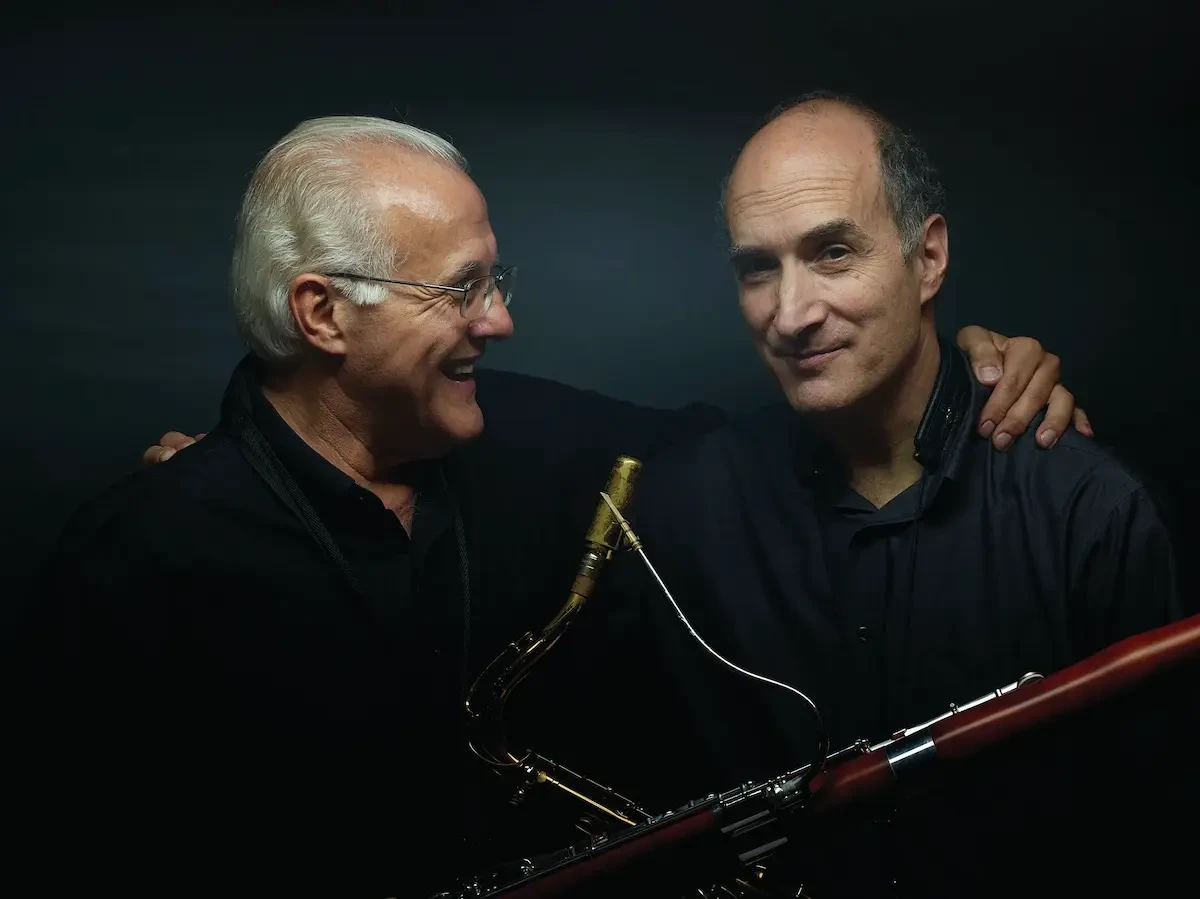
Keith Oxman & Frank Morelli – Classicool (Capri Records)
Tenor saxophonist Keith Oxman and renowned classical bassoonist Frank Morelli reunite for their second major collaboration on Classicool. Serving as the enchanting follow-up to their critically acclaimed 2021 release, The Ox-Mo Incident, the album revitalizes their singular, genre-blurring fusion of jazz improvisation and classical rigor.
Joined by pianist Jeff Jenkins, bassist Gonzalo Teppa, and drummer Todd Reid across a dozen brilliantly reinvented tunes, Oxman and Morelli prove that the boundary between the concert hall and the jazz club is entirely permeable.
Supporting Context & Metrics
To contextualize these releases within the broader commercial and critical landscape, industry metrics indicate a healthy diversification of distribution channels. Independent labels continue to anchor the avant-garde and exploratory sectors, while boutique imprints (such as Mack Avenue, Candid, and Capri) provide crucial infrastructure for rising vocalists and established instrumentalists alike.
| Artist / Project | Primary Genre Focus | Label / Catalog Number | Core Instrumentation |
|---|---|---|---|
| Ekep Nkwelle – Caged Bird | Vocal Jazz / Conceptual | Mack Avenue (CDMAC1245) | Vocals, Ensemble |
| Ronny Desinor – Nnordy | Fusion / Soul-Jazz | Lovely Lovely Sounds (LLS003) | Drums, Full Band, Guests |
| Ohlmeier / Fischerlehner / Khroustaliov | Avant-Garde / Electroacoustic | Not Applicable (NOT086) | Woodwinds, Drums, Electronics |
| Leïla Olivesi – African Rhapsody | Post-Colonial Jazz | Autre Distribution (AF1012LP) | Piano, Octet |
| Isabelle & Raphaël Olivier – Open | Chamber Jazz / Acoustic | Autre Distribution (REW250080) | Harp, Guitar |
| Tamar Osborn – Varier: Berlin | Improvised Jazz / Healing | Dark Circle Recordings (DCR002) | Woodwinds, Ensemble |
| Østerlide – Villfar og Sylverklar | Nordic Folk-Jazz | TARE05CD | Vocals, Guitar, Langeleik, Percussion |
| Oxman & Morelli – Classicool | Classical-Jazz Crossover | Capri Records | Tenor Saxophone, Bassoon, Rhythm Section |
| Zacchae’us Paul – Jazz Money Vol. 2 | R&B / Modern Jazz / Hip-Hop | Candid Records (CDCND3401) | Vocals, Rhythm Section, Electronics |
| John Petrucelli – Endurance of Optimism | Post-Bop / Free Improv | Petrucelli Records (PR-004) | Tenor Saxophone, Guitar, Drums |
| Miles Pillinger – Belonging | World-Jazz / Identity | Miles Pillinger Music (MP001D) | Drums, Ensemble, Guests |
| PRISM Quartet – Generate Music | Cross-Diasporic Avant-Garde | XAS Records (127) | Saxophone Quartet, Supergroup Guests |
Official Statements and Curatorial Perspectives
A unifying thread across these disparate releases is the emphasis on intentionality and community. Speaking on her conceptual approach to Caged Bird, Ekep Nkwelle notes that the project was born from a desire to give voice to historical resilience:
"Maya Angelou taught us that song is not merely an expression of joy, but an act of survival. In tracing this journey from sorrow to inspiration, I wanted the music to mirror the unyielding human spirit that persists against systemic walls."
Similarly, regarding the geopolitical underpinnings of African Rhapsody, Leïla Olivesi emphasizes the dialogue between historical pan-African philosophy and modern instrumentation:
"The Négritude movement gave a voice to those rendered silent by colonial erasure. By channeling that era through the dynamic interplay of an octet, we are not looking backward with nostalgia; we are actively constructing the poetic Africa of tomorrow."
On the improvisational front, the collective behind Landscapes (Ohlmeier, Fischerlehner, and Khroustaliov) frames their work as an ongoing exercise in sonic democracy:
"True free improvisation requires us to abandon the ego. We listen not to dictate where the music goes, but to discover where the collective conversation is already leading us—across borders, genres, and industrial textures."
Future Outlook
As the global jazz community looks toward the remainder of the decade, several key trajectories are crystallizing. The erosion of traditional genre barriers—exemplified by Zacchae’us Paul’s integration of hip-hop and R&B, and Tamar Osborn’s exploration of music as a healing modality—suggests that jazz will continue to serve as the ultimate sonic clearinghouse for socio-cultural commentary.
Furthermore, the willingness of younger artists like Ekep Nkwelle and Miles Pillinger to anchor their debut works in deep historical research and familial genealogy signals a generational shift away from purely technical bravado toward substantive narrative architecture.
Audiences can anticipate an acceleration of cross-diasporic collaborations, electroacoustic experimentation, and chamber-scale intimacy. As long as artists continue to interrogate their roots while embracing absolute freedom of expression, the future of improvised music remains profoundly secure, relentlessly innovative, and endlessly vital.