

Executive Overview
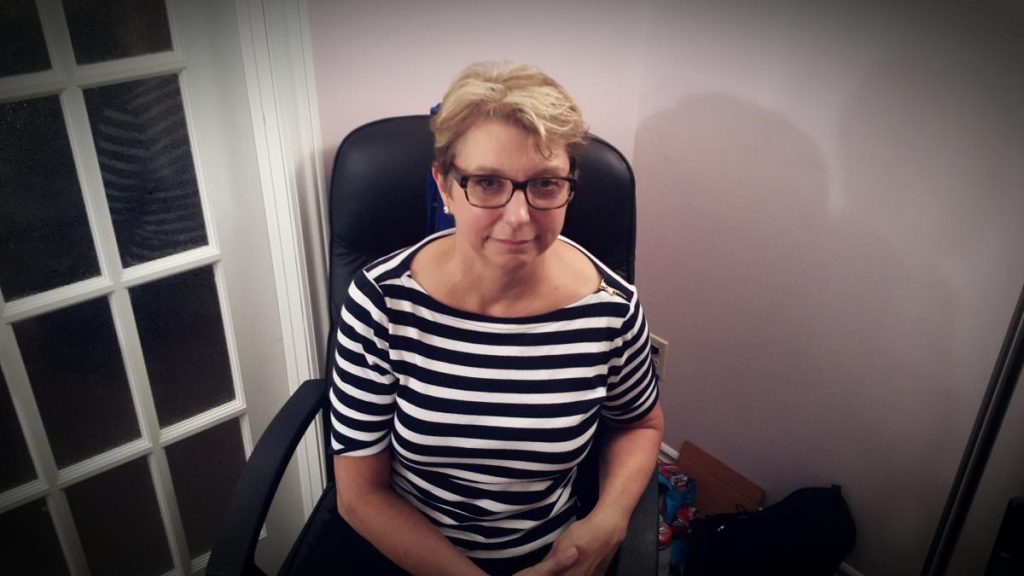
In the realm of vocal health and rehabilitation, the narrative of Mary Ellen Stoll stands as a testament to human resilience, the efficacy of specialized voice mechanics, and the profound psychological release that comes with artistic expression. Diagnosed with a debilitating vocal cord nodule at the tender age of 22, Mary Ellen endured decades of compromised vocal function following a traditional surgical intervention that failed to restore her natural speaking voice. Fast-forward four decades: having retired from a demanding, high-stress career as a manager for the Government of Ontario, Mary Ellen faced a crossroads. Rather than accepting a lifetime of muted self-expression, she embarked on an arduous, multi-year journey of vocal restoration.
Traveling over four hours each way from her home in Brockville, Ontario, to a specialized vocal studio, Mary Ellen committed herself to a rigorous regimen of speech therapy, structural body mechanics, and holistic voice repair. Under the guidance of her vocal coach, she moved from a damaged, strained speaking voice to crystal-clear projection, ultimately earning a coveted spot in a local barbershop-style choir. This article explores the comprehensive chronicle of Mary Ellen’s transformation, examining the medical background of her injury, the mechanics of the Vocal Science™ method utilized in her recovery, the milestones of her training, and the broader implications of voice design for aging adults seeking to reclaim their passions.
Detailed Chronology: A Multi-Decade Vocal Odyssey
The Early Setback: Diagnosis and Surgery at Age 22
The origins of Mary Ellen’s vocal journey trace back to her early twenties. At age 22, she received a life-altering medical diagnosis: a nodule had developed on her vocal cord. In an era when surgical interventions for vocal nodules were often aggressive and less nuanced than modern phonosurgery, medical professionals recommended an immediate operation.
While the surgery successfully removed the physical mass, it failed to restore the organic quality and resonance of her natural speaking voice. Instead of healing into a state of vibrant health, Mary Ellen’s vocal apparatus settled into a chronic state of strain. For decades, she navigated professional and personal spheres with a compromised voice, unaware that the structural integrity of her vocal anatomy had been permanently altered by compensatory habits developed in the wake of the surgery.
The Catalyst of Retirement: Confronting a Secret Dream
Decades passed as Mary Ellen built a successful, albeit high-stress, career managing operations for the Government of Ontario. Throughout the daily pressures of public administration, a quiet, persistent aspiration remained locked away: a secret desire to learn how to sing and, perhaps one day, join a chorus.
Upon reaching the age of 62, Mary Ellen made the pivotal decision to retire. Armed with newfound freedom from professional obligations, she determined that retirement would not mean slowing down, but rather stepping into long-held personal ambitions. Seeking an entry point into the local arts community, she approached the director of a prominent barbershop-style choir in Brockville.
The audition—or rather, the initial consultation—was both sobering and illuminating. Upon hearing her speak, the choir director immediately identified underlying damage and strain. He delivered a blunt, yet crucial piece of advice: before Mary Ellen could even dream of blending her voice with a chorus, she had to fundamentally rehabilitate her speaking voice.
The Discovery of Specialized Voice Repair
Undeterred by the director’s assessment, Mary Ellen took to the internet to research advanced vocal rehabilitation specialists. Her search led her to a renowned vocal studio known for handling complex, seemingly impossible voice repair cases. Following an initial phone consultation, Mary Ellen made a decisive commitment: she packed her bags and began driving over four hours from Brockville to the studio for her inaugural session, igniting a transformative mentoring relationship.
Methodologies and Mechanics: The Science of Voice Repair
Rebuilding the Speaking Voice
The rehabilitation process did not begin with scales, arpeggios, or vocal warm-ups meant for singers. As is standard practice in advanced voice repair methodology, the foundational work focused exclusively on the speaking voice. When a patient has lived with a compromised vocal cord for decades, the entire muscular framework of the upper body—including the neck, jaw, shoulders, and diaphragm—operates on faulty compensatory mechanisms.
To reverse decades of vocal wear, the training incorporated specialized speech exercises coupled with deliberate, targeted body movements. These physical adjustments were engineered to achieve several critical physiological outcomes:
- Proper Structural Support: Engaging the core and lower respiratory muscles to lift the burden off the delicate tissues of the larynx.
- Optimal Vocal Placement: Shifting the resonance of the voice away from the throat and into the facial masks, thereby maximizing acoustic output with minimal physical effort.
- Enhanced Articulation and Projection: Ensuring that every word is crisply enunciated and naturally propelled to its intended acoustic destination.
The Physiology of Strain-Free Vocalization
The human voice functions as a holistic pneumatic and acoustic instrument. When operating at peak capacity without pain or strain, the vocal anatomy experiences zero friction or localized fatigue. However, recovering this state requires dismantling deeply ingrained neuromuscular habits.
As noted in historical media coverage—such as a 1999 feature by the Toronto Star titled "Not As Easy As It Sounds"—true vocal transformation is a demanding endeavor. It requires relentless dedication, hyper-awareness, and immense energy from both the practitioner and the client. The reward, however, is a voice that sounds exceptionally crisp, clear, and resonant, where words are announced and pronounced with effortless precision.
Supporting Context & Metrics: Overcoming the Elements
The Test of Endurance: Winter Drives and Seasonal Persistence
Mary Ellen’s commitment to her transformation cannot be overstated. True to her determination, the journey spanned all four seasons, persisting through harsh Canadian winters. Driving over five hours round-trip through snow, ice, and freezing temperatures to reach the studio demonstrated a level of grit rarely seen in recreational vocal students.
This rigorous schedule required meticulous planning and unwavering mental toughness. Yet, week after week, Mary Ellen returned, translating complex biomechanical corrections into muscle memory. Her hard work was matched by her coach’s dedication, creating a synergistic partnership that steadily dismantled the vocal barriers of her past.
Metrics of Success: From Speech to Song
The trajectory of Mary Ellen’s recovery can be broken down into measurable, qualitative phases:
| Phase | Duration / Timeline | Key Focus Area | Primary Milestone Achieved |
|---|---|---|---|
| Phase I | Ages 22 – 62 | Living with post-surgical damage | Navigated a high-stress career with a strained, compromised speaking voice. |
| Phase II | Spring 2016 (Initial Months) | Speaking voice rehabilitation | Eliminated vocal strain through targeted breath support and structural body mechanics. |
| Phase III | Late 2016 – 2017 | Advanced vocal development | Returned to the Brockville choir director, receiving formal clearance to join the chorus. |
| Phase IV | 2018 – Present | Choral integration & performance | Active participation in regional competitions, performances, and public showcases. |
Official Statements and Reflections
The milestone of returning to the choir director marked a turning point in Mary Ellen’s validation. Upon hearing her rehabilitated speaking voice—utterly transformed from the damaged tone he had evaluated months prior—the director gave her the green light she had spent a lifetime waiting for: "Continue your vocal development and you will be able to join the chorus."
Reflecting on the completion of Part 2 of her journey—transitioning from corrected speech to choral singing—the realization of what she once deemed an "impossible dream" brought profound emotional and physical rewards. In statements shared by her vocal mentor, the transformation was celebrated not merely as an artistic triumph, but as a holistic health milestone:
"Once the ‘impossible dream’ came true, it gave my dear client and friend health of voice—not to mention health in general. It also gave her the knowledge of a completely new application of the speaking and singing voice while using the voice by design, concurrently complying with all of the components of the Vocal Science™ method and technique!"
This philosophy centers on the concept of "voice by design"—moving away from accidental, damaging vocal habits and stepping into an intentional, mechanically sound utilization of one’s anatomical gifts.
Future Outlook: A New Chapter in Health and Harmony
As Mary Ellen Stoll approaches her 64th birthday—just years after retiring from her demanding provincial government post—her life looks vastly different than it did at age 22, or even at age 60. She is no longer defined by the historical legacy of a botched vocal cord surgery or the silent limitations imposed by a damaged speaking voice.
Today, Mary Ellen stands as an active, thriving member of her community choir, participating in regional competitions, vocal performances, and social harmonies. Her journey serves as an authoritative case study for adults who believe that age, past medical trauma, or decades of vocal neglect permanently bar them from pursuing their creative passions.
Key Takeaways for Vocal Rehabilitation:
- Speech Precedes Song: Any comprehensive vocal repair program must first address the foundational mechanics of the speaking voice before attempting artistic vocalization.
- Holistic Alignment: True vocal recovery requires addressing the entire body’s posture, breathing apparatus, and muscular tension points, rather than focusing solely on the larynx.
- Resilience Yields Results: Complex vocal damage requires long-term commitment, professional guidance, and unwavering personal discipline.
As Mary Ellen rings in the New Year and looks toward a future filled with melody, her story remains a powerful beacon of hope. Way to go, Mary Ellen! Keep on singing, girl! Best of voice and best of health now, in the New Year… and ALWAYS!