
Executive Overview
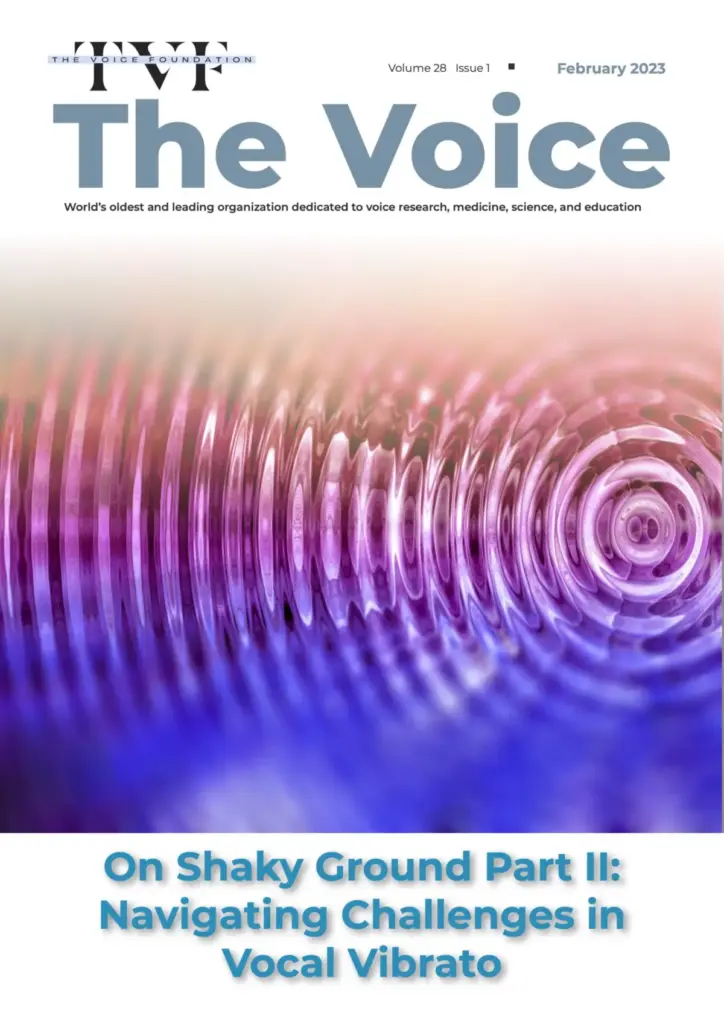
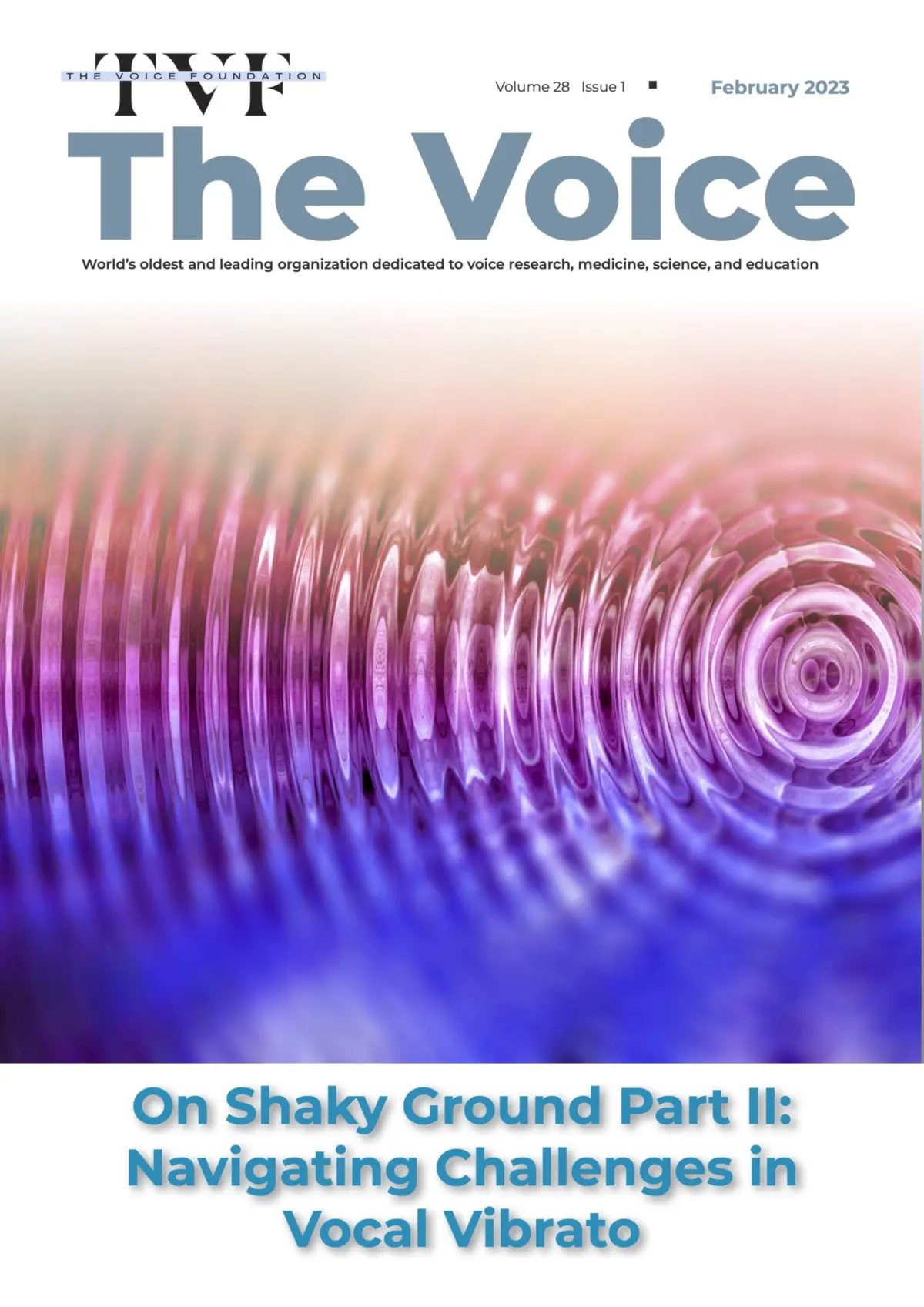
In the intricate world of vocal pedagogy, scientific research, and clinical otolaryngology, few phenomena are as captivating, debated, and structurally complex as vocal vibrato. On February 24, 2023, The Voice Foundation published its highly anticipated February 2023 Newsletter, authored by Ian DeNolfo, marking a significant milestone in ongoing vocal research. At the center of this edition is the release of "On Shaky Ground Part II," a multidisciplinary deep-dive that explores the physiological, pedagogical, and therapeutic dimensions of vibrato.
Far from being a mere stylistic embellishment used by classical and contemporary singers alike, vibrato is a complex oscillation of pitch, intensity, and timbre. It serves as a primary indicator of laryngeal health, vocal balance, and neuromuscular coordination. By bridging the gap between rigorous scientific inquiry and practical vocal training, this installment of The Voice Foundation’s newsletter addresses longstanding mysteries surrounding how vibrato is produced, how it should be taught, and how it can be medically restored or rehabilitated when pathology or instability occurs.
This comprehensive report examines the core themes of the February 2023 release, contextualizing the findings within the broader landscape of voice science, clinical practice, and pedagogical evolution. Through an investigative lens, we analyze how researchers, voice teachers, and medical professionals are redefining our understanding of "shaky ground" in vocal performance.
Detailed Chronology: The Evolution of "On Shaky Ground"
The journey toward understanding vocal instability—and the nuanced mechanics of vibrato—did not begin with the February 2023 publication. To fully appreciate the significance of Part II, one must trace the trajectory of how voice scientists and clinicians have historically approached the physiology of vocal oscillation.
The Foundation of Vocal Research
For decades, the standard pedagogical approach to vibrato treated it largely as an artistic choice. Singers were either told it would "come naturally" with proper breath support or were given subjective imagery to replicate a desired sound. However, as laryngoscopy, high-speed digital imaging, and electromyography (EMG) advanced, researchers began to view vibrato through a mechanical and neurological framework. It became clear that healthy vibrato is not a manufactured wobble, but rather the acoustic byproduct of a dynamically balanced laryngeal mechanism working in tandem with respiratory support.
The Genesis of Part I
Prior to the February 2023 release, the initial installment of On Shaky Ground laid the groundwork by examining the vulnerabilities inherent in the human vocal apparatus. Voice scientists cataloged how subtle shifts in subglottic pressure, cricothyroid muscle tension, and thyroarytenoid coordination could disrupt the delicate equilibrium required for a steady, resonant tone. Part I established that what many performers perceive as a stable voice is actually a state of dynamic micro-oscillation—a controlled instability that gives the human voice its warmth, emotional resonance, and carrying power.
The February 24, 2023 Release
Published on February 24, 2023, On Shaky Ground Part II shifted the dialogue from pure physiological description to an integrated, tripartite perspective: research, teaching, and treatment.
- The Research Perspective: Utilizing advanced acoustic analysis and aerodynamic testing, contributors to the newsletter analyzed the exact frequency and amplitude modulations that define a healthy vibrato versus pathological tremors or forced stabilities (such as a "straight tone" or a pressured "wobble").
- The Teaching Perspective: Vocal pedagogues evaluated how to identify nascent vibrato issues in students before they develop into chronic tension patterns. The publication provided frameworks for training young or transitioning voices to find natural oscillation without inducing vocal fold trauma.
- The Treatment Perspective: Voice therapists and otolaryngologists examined clinical interventions for performers suffering from vibrato loss or instability caused by neurological conditions, aging (presbyphonia), or phonotrauma.
Supporting Context & Metrics: The Science of Vibrato
To understand the weight of the findings presented in the February 2023 newsletter, one must examine the empirical metrics and anatomical structures governing vocal oscillation.
The Anatomy of Oscillation
Vocal vibrato is generally characterized by a periodic pulsation of pitch (frequency modulation), usually at a rate of 5.5 to 7 oscillations per second (Hz), accompanied by secondary modulations in intensity (amplitude modulation) and timbre.
- Neuromuscular Drivers: Electromyographic studies highlight the role of the intrinsic laryngeal muscles—specifically the cricothyroid and thyroarytenoid muscles—in modulating tension.
- Respiratory Integration: The diaphragm and intercostal muscles also play a stabilizing role. When respiratory support fluctuates erratically, the oscillation rate can drop below 5 Hz (resulting in a heavy, undesirable "wobble") or exceed 8 Hz (resulting in a tight, nervous "tremolo").
Demographic and Clinical Metrics in Voice Science
Recent epidemiological data within voice clinics underscore the relevance of the Voice Foundation’s ongoing publications:
- Prevalence of Voice Disorders: Studies indicate that up to 30% of the population will experience a voice disorder at some point in their lifetime, with occupational voice users (teachers, singers, actors) facing a risk rate as high as 50%.
- Pedagogical Correction Timelines: Clinical observations cited in voice science literature suggest that functional vibrato irregularities, when caught early by trained pedagogues utilizing cross-disciplinary diagnostic tools, can be corrected within 3 to 6 months of targeted neuromuscular retraining.
- Interdisciplinary Demand: Over 65% of modern voice clinics now operate on a multidisciplinary model, pairing speech-language pathologists (SLPs) and laryngologists directly with vocal coaches to address complex performance-related instabilities like those discussed in On Shaky Ground Part II.
Official Perspectives and Expert Insights
The insights published in the February 2023 newsletter reflect a growing consensus among top-tier voice scientists, clinicians, and educators. While Ian DeNolfo’s editorial curation frames the discussion, the underlying principles draw from decades of collaborative research championed by The Voice Foundation.
The Pedagogical Dilemma: Freedom vs. Control
Traditional voice teachers have long wrestled with how to address a student’s lack of vibrato or, conversely, an excessive, uncontrollable tremor. Pushing for a "manufactured" vibrato through artificial jaw or larynx shaking often leads to hyperfunction and vocal fatigue.
The consensus highlighted in On Shaky Ground Part II emphasizes that true vibrato cannot be forced directly; rather, it is allowed to happen. When the vocal tract is properly aligned, breath pressure is consistent, and laryngeal constriction is minimized, natural oscillation emerges organically. Voice pedagogues contributing to the discourse stress that educators must act as diagnosticians, looking past the symptom (a shaky or rigid voice) to identify the root cause—whether it be postural misalignment, breath management failure, or psychological performance anxiety.
The Clinical Frontier: Treating the Unstable Voice
From a medical standpoint, an unstable vibrato is often the canary in the coal mine for laryngeal pathology. Otolaryngologists utilize stroboscopy to visualize mucosal wave patterns; disruptions in these waves frequently manifest as vibrato irregularities before structural lesions, nodules, or paresis become fully pronounced.
The treatment perspective featured in the February 2023 edition underscores the necessity of vocal hygiene, targeted Vocal Function Exercises (VFEs), and, in some cases, Lee Silverman Voice Treatment (LSVT) or specialized laryngeal manual therapy to release extrinsic muscle tension. By treating the larynx as a finely tuned biological instrument, medical professionals can restore structural integrity and, consequently, the natural vibrato profile of the patient.
Future Outlook: Where Voice Science is Headed
As we look beyond the findings of the February 2023 newsletter, the field of voice science continues to expand into uncharted territory, driven by technological innovation and interdisciplinary collaboration.
Technological Integration in Vocal Training and Rehabilitation
The future of voice pedagogy and therapy lies in real-time biofeedback. Emerging software and hardware tools allow singers and patients to visualize their pitch and amplitude modulation curves instantaneously on a screen. By seeing their vibrato rate in real-time, performers can train their neuromuscular systems to self-correct micro-instabilities with unprecedented precision.
Artificial Intelligence and Predictive Diagnostics
Researchers are increasingly exploring the application of machine learning algorithms to acoustic recordings. By analyzing subtle deviations in vibrato regularity, jitter, shimmer, and harmonic-to-noise ratios, AI models may soon be able to predict vocal fatigue and pathologies weeks before clinical symptoms manifest audibly. This predictive capability could revolutionize preventive healthcare for professional voice users.
The Ongoing Mission of The Voice Foundation
Publications like the February 2023 Newsletter (On Shaky Ground Part II) demonstrate the vital role that dedicated scientific dissemination plays in bridging the gap between laboratory discoveries and real-world application. As The Voice Foundation continues to host its annual symposia and publish cutting-edge research, the global community of otolaryngologists, speech-language pathologists, singing teachers, and performers moves closer to a unified, scientifically grounded understanding of the human voice.
In an art form where beauty and fragility exist in a delicate balance, exploring what lies beneath "shaky ground" ensures that the human voice remains resilient, expressive, and structurally sound for generations to come.
For further reading, access to archived newsletters, and to download the full PDF edition of the February 2023 publication, visit the official The Voice Foundation website.