
Executive Overview
Few figures in the sprawling, often contentious history of modern jazz occupy a position as revered—and perhaps as uncritically insulated from rigorous critique—as arranger, composer, and bandleader Gil Evans. Known inextricably for his luminous, impressionistic collaborations with trumpet icon Miles Davis (such as Miles Ahead, Porgy and Bess, and Sketches of Spain), Evans carved out a reputation as a sonic architect who could transform the jazz orchestra into a delicate, breathing chamber ensemble. Yet, when Evans stepped out from behind the shadow of Davis to helm projects under his own name for the burgeoning Impulse! Records imprint, the resulting artistic statements invited a more complex, divisive reception than the hagiography of jazz history often suggests.
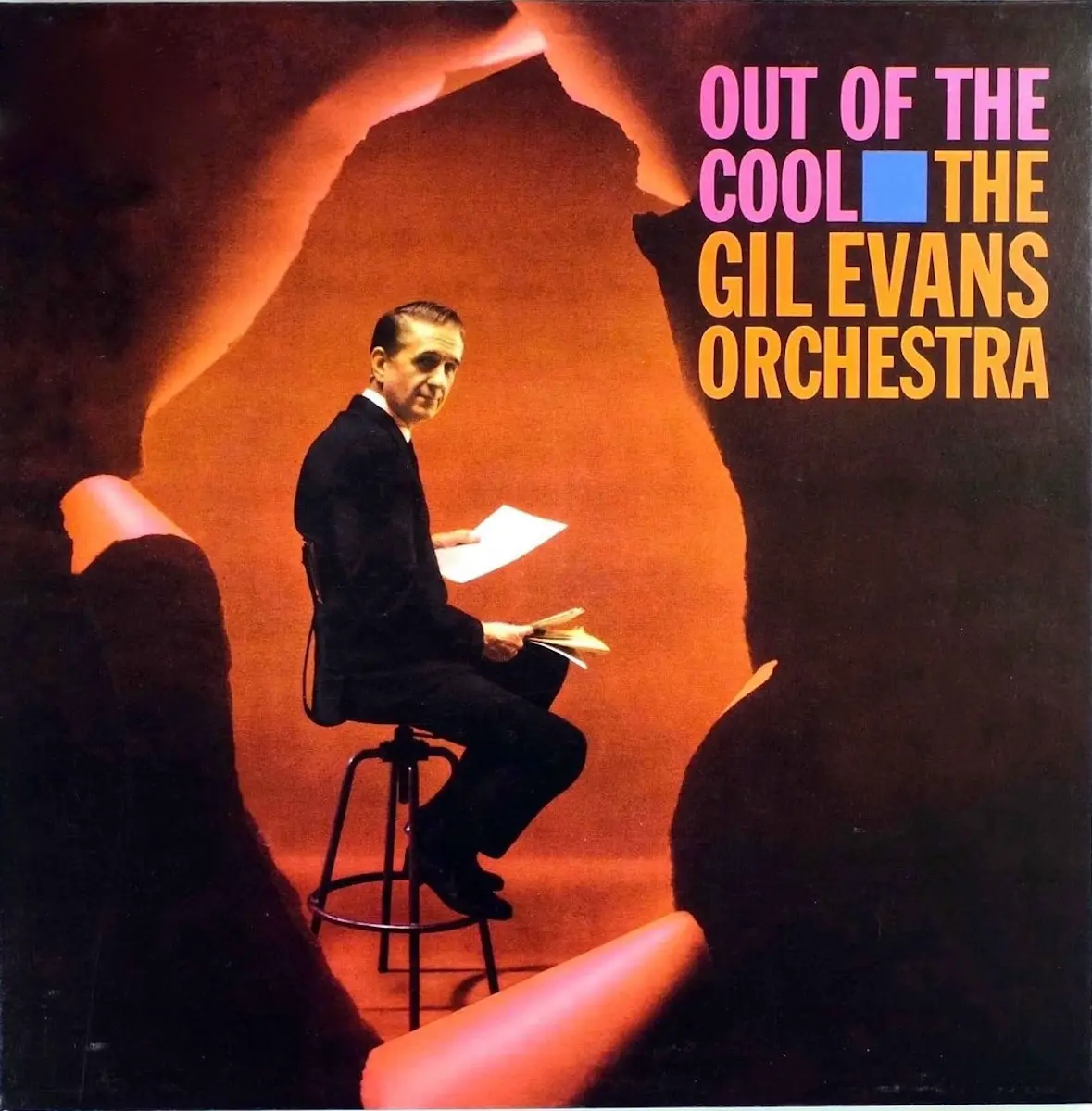
At the center of this retrospective debate is Out of the Cool, recorded across sessions in late 1960 and released to considerable fanfare. Viewed through the lens of the twenty-first century, the album’s reputation exists in a curious state of suspension. While a modern, retrospective fascination with retro aesthetics and mid-century modernism has granted tracks like the modal groove "La Nevada" a fresh lease on life—making them sound surprisingly contemporary against certain strains of modern indie-jazz—this revival risks masking the underlying antiquity of the work. Indeed, a rigorous appraisal reveals that Out of the Cool may well have sounded somewhat dated even at the moment of its initial commercial distribution.
While Evans unquestionably devised novel instrumental combinations for the era, a closer examination of the constituent elements—traditional blues riffs, standard classical orchestration tropes, and a rather blunt application of atonality—suggests that none of these techniques were genuinely revolutionary by 1960. They were already part of the broader contemporary musical lexicon, albeit fractured across different stylistic enclaves.
Compounding this stylistic borrowing is a deeper structural critique: Evans’ application of these ingredients often felt governed more by a rigid, programmatic academic agenda than by organic musical intuition. Where other jazz visionaries of the period sought to adapt classical vocabularies to serve the expressive, swinging ends of jazz, Evans frequently inverted the equation, applying classical formal procedures directly onto jazz frameworks. The resultant sound is often stiff, formalized, and mannered—qualities that tend to emasculate the vital vernacular roots of the music, save for a few isolated moments of improvisational brilliance.
This deep-dive retrospective interrogates the legacy of Out of the Cool, examining its creation, its personnel, its stylistic shortcomings, and its contested place in the pantheon of recorded jazz.
Detailed Chronology: The Winter Sessions of 1960
To understand the architecture of Out of the Cool, one must step back into the late autumn of 1960. The sessions took place across four distinct dates—November 18, November 30, December 10, and December 15—at recording facilities in New Jersey. At this juncture, the American jazz landscape was experiencing a tectonic shift. Hard bop was reigning supreme in the clubs, free jazz was beginning to rear its head via pioneers like Ornette Coleman, and modal jazz was establishing a new paradigm following the release of Miles Davis’s Kind of Blue.
Gil Evans, working under the newly minted Impulse! banner (a label that would soon define the avant-garde edge of mainstream jazz under producer Bob Thiele), assembled an extraordinary collective of players. The roster was a formidable cross-section of New York’s elite session musicians and avant-garde pathbreakers:
- Pianist, Arranger, and Conductor: Gil Evans
- Trumpets: John Coles, Phil Sunkel
- Trombones: Keg Johnson, Jimmy Knepper
- Bass Trombone: Tony Studd
- Tuba: Bill Barber (a vital anchor from the Miles Davis Capitol orchestra days)
- Reeds (Alto Saxophone, Flute, Piccolo): Ray Beckenstein, Eddie Caine
- Reeds (Tenor Saxophone, Soprano Saxophone): Budd Johnson
- Woodwinds (Bassoon, Flute, Piccolo): Bob Tricario
- Electric Guitar: Ray Crawford
- Bass: Ron Carter
- Drums: Charlie Persip, Elvin Jones
This sprawling ensemble was engineered not to blow the doors off a club, but to weave intricate, shimmering textures. Yet, the friction between the immense technical capability of the personnel and the structural demands of Evans’ charts became immediately apparent during the tracking process.
On La Nevada, the album’s centerpiece, the blueprint relied on a steady, repetitive modal groove designed to build momentum through incremental variations. In theory, this anticipated the modal expansiveness of the decade to come. In practice, however, the lack of robust, internal composerly structure meant that the performance often degenerated into poorly contrasted jamming. The soloists—though technically proficient—found themselves navigating a landscape that prioritized mood-painting and atmospheric gestures over genuine harmonic and thematic development.
Over the course of those four winter dates in New Jersey, Evans captured six distinct pieces: La Nevada, Where Flamingos Fly, Bilbao Song, Stratus-phunk, Sunken Treasure, and Sister Sadie. Clocking in at a brisk 44 minutes and 19 seconds, the album presented a dense, highly orchestrated vision that left listeners searching for the very fire that its title, Out of the Cool, paradoxically seemed to promise.
Supporting Context & Metrics: Deconstructing the Score
To properly evaluate Out of the Cool, one must unpack the stylistic mechanics that governed Gil Evans’ writing during this period. Musicological analysis of the album reveals a tension between Evans’ celebrated reputation as a master colorist and his limitations as a structural composer.
The Illusion of Innovation
When Out of the Cool was released, critics lauded Evans for expanding the sonic palette of the jazz orchestra. By incorporating instruments traditionally foreign to big band jazz—such as the tuba, bassoon, and various pitched flutes—Evans created a lush, pastel-hued environment. However, historians of orchestration have long noted that the mere presence of unusual instrumentation does not automatically equate to structural innovation.
By 1960, the integration of classical instrumentation into jazz settings had already been explored by figures like Gunther Schuller (the champion of "Third Stream" music), Stan Kenton, and various West Coast arrangers. Evans’ vocabulary relied heavily on:
- Old Blues Riffs: Grounding modal frameworks in familiar, cyclical blues patterns.
- Classical Chromaticism and Atonality: Utilizing unresolved tensions not to drive improvisation forward, but to create localized, static "moods."
- Pace and Contrast: Relying on sudden shifts in dynamics rather than organic harmonic progression to create dramatic tension.
The Programmatic Trap
Perhaps the most persistent critique leveled against Evans’ independent work is its overly programmatic nature. Where a Duke Ellington or a Thelonious Monk allowed musical intuition, rhythmic swing, and spontaneous interaction to dictate the form of a piece, Evans often approached his scores like an architect drafting a blueprint for a building that no one would ever inhabit.
The result is a collection of tracks that can feel stiff, formalized, and mannered. Vernacular elements—such as blues inflections or Latin-derived percussion motifs—are frequently introduced only to be immediately neutralized by dense, academic counterpoint. They become stylistic ornaments rather than living, breathing components of the music.
Furthermore, despite Evans’ undisputed mastery of harmony, Out of the Cool suffers from a surprising deficiency in the sheer volume of harmonic movement. There simply is not very much harmony happening beneath the shimmering surface. Original sleeve-note annotator Tom Stewart famously observed that Gil Evans actively avoided overwriting. In hindsight, this observation reads as a massive understatement. The actual absence of rigorous composerly structure in long-form pieces like La Nevada is precisely what causes the extended improvisational sections to stall, resulting in repetitive, poorly contrasted jamming that wears out its welcome before the track concludes.
Official Statements and Critical Reception
The legacy of Out of the Cool has always been a battleground between popular jazz journalism and rigorous critical re-evaluation. Upon its release, Impulse! promoted the record as a watershed moment for modern orchestral jazz, capitalizing on Evans’ rising cachet following his work with Miles Davis.
In contemporaneous reviews, critics frequently praised the album’s "subtlety" and "cinematic scope," often reading into the music a profound psychological depth that the actual notes on the page struggled to support. Liner notes and promotional materials from the era emphasized Evans’ status as a misunderstood modernist—a composer operating on a plane far above the commercial constraints of conventional big bands.
However, subsequent generations of jazz scholars and musicians have offered a more sober, measured verdict. As the initial shock-value of Evans’ instrumental pairings wore off, listeners began to notice the thinness of the underlying melodic motifs.
Renowned jazz critics and historians have increasingly pointed out the dichotomy between Evans’ work with Miles Davis and his work without him. When paired with Davis, Evans’ impressionistic arrangements served as a magnificent, tailored canvas designed to showcase the devastating, singular voice of a master soloist. Stripped of that singular focal point on albums like Out of the Cool, Evans’ overarching compositional strategies were laid bare. Without a dominant improvisational titan to pierce through the atmospheric fog, the music frequently collapses under the weight of its own solemnity.
As one retrospective critic bluntly observed, looking past the impressive pedigree of the personnel and the sleek modernist album art leaves the listener with the distinct impression of "music which takes itself rather seriously but lacks the substance to support the posture it adopts."
Future Outlook: The Enduring Paradox of Gil Evans
As we look toward the future of jazz scholarship, curation, and listening habits, where does Out of the Cool ultimately stand?
The cyclical nature of musical taste ensures that albums like this will continue to enjoy periodic renaissances. The contemporary obsession with mid-century design, analog production, and retro-futuristic lounge aesthetics provides a welcoming cultural ecosystem for Evans’ plush, autumnal sonic landscapes. To ears conditioned by ambient music, chill-out electronica, and cinematic post-rock, the static modal grooves and shimmering woodwind clusters of Out of the Cool sound remarkably prescient. In this specific context, the album functions brilliantly as atmospheric mood-music.
Yet, from a purely jazz-centric perspective—one that values spontaneous invention, rhythmic drive, harmonic depth, and structural integrity—the album remains a fascinating failure of ambition. It stands as a monument to what happens when an arranger of immense talent attempts to bridge the gap between classical composition and jazz vernacular without fully trusting the inherent momentum of the jazz idiom itself.
Ultimately, Out of the Cool demands neither total dismissal nor uncritical adoration. It requires a nuanced understanding of its historical context. It is an artifact of a transitional era—a brave, flawed, and undeniably stylish experiment by a man who sought to push the boundaries of the jazz orchestra, even if his maps of the sonic territory frequently led him into cul-de-sacs of his own meticulous design.
Tracklisting & Personnel Reference Sheet
- Album Out of the Cool
- Artist: Gil Evans Orchestra
- Label: Impulse! (IMP 11862)
- Recording Dates: November 18 & 30, December 10 & 15, 1960 (New Jersey)
- Total Duration: 44:19
Track Listing:
- La Nevada
- Where Flamingos Fly
- Bilbao Song
- Stratus-phunk
- Sunken Treasure
- Sister Sadie
Collective Personnel:
- Gil Evans: Piano, Arranger, Conductor
- John Coles, Phil Sunkel: Trumpets
- Keg Johnson, Jimmy Knepper: Trombones
- Tony Studd: Bass Trombone
- Bill Barber: Tuba
- Ray Beckenstein, Eddie Caine: Alto Saxophones, Flutes, Piccolos
- Budd Johnson: Tenor Saxophone, Soprano Saxophone
- Bob Tricario: Bassoon, Flute, Piccolo
- Ray Crawford: Electric Guitar
- Ron Carter: Bass
- Charlie Persip, Elvin Jones: Drums