
Executive Overview
Pop music history is littered with narratives of sudden artistic reincarnation, yet few transformations match the meteoric, gravity-defying pivot executed by Nelly Furtado in 2006. Five years prior, the Canadian singer-songwriter had burst onto the global stage as a critical and commercial darling with her genre-blending debut album, Whoa, Nelly!, netting a Grammy Award and a pair of Billboard Hot 100 top-ten singles. However, the fickle winds of the industry proved unforgiving. Her ambitious 2003 acoustic-leaning follow-up, Folklore, failed to make a dent in the mainstream consciousness. By the mid-2000s, Furtado’s days as a chart-topping fixture appeared firmly in the rearview mirror.
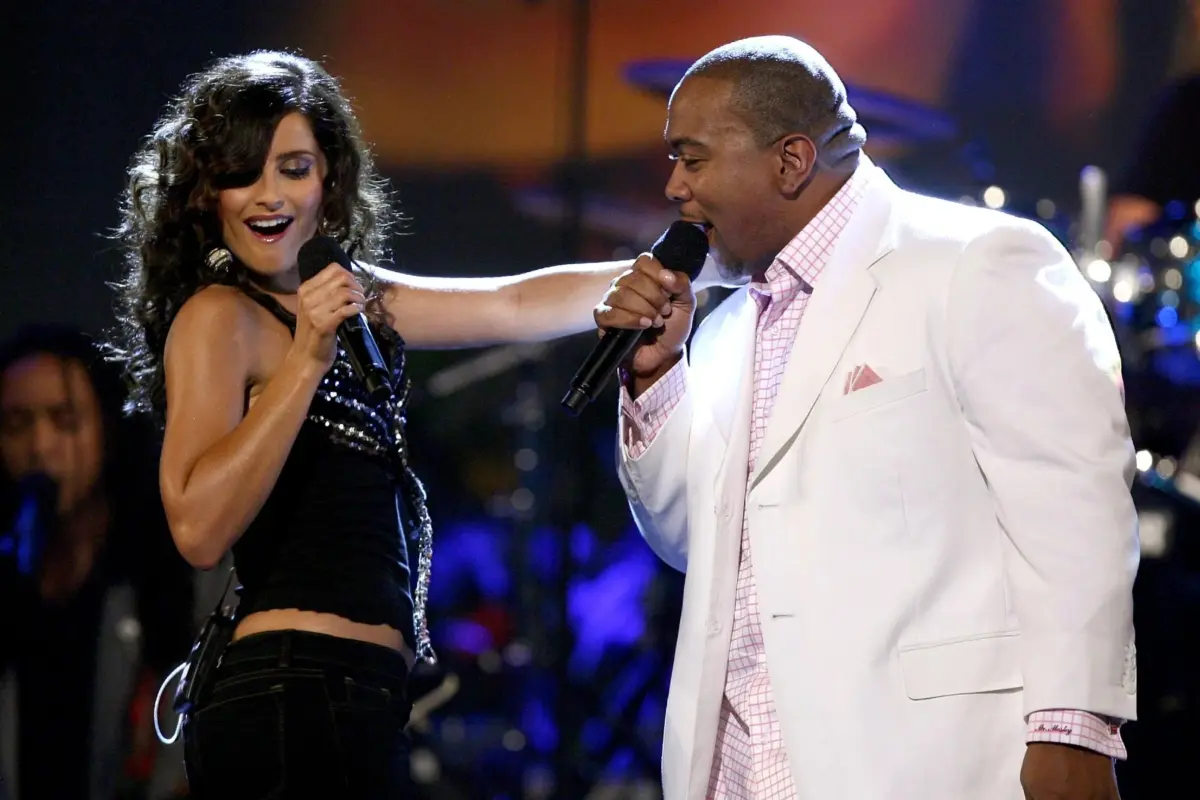
Enter Timbaland. The hip-hop superproducer was navigating a cold streak of his own, seeking a fresh canvas to redefine his sonic blueprint away from the fading embers of early-2000s urban radio. Their resulting collaboration on Furtado’s third studio album, Loose, functioned as an unprecedented 2000s nostalgia bomb—a seismic convergence that catapulted both artists back to the center of the pop zeitgeist.
This watershed moment is the focal point of an extended Vintage Pop Stardom episode of Billboard’s Greatest Pop Stars podcast. Hosted by Andrew Unterberger alongside YouTube essayist Todd in the Shadows, the episode dissects how an unlikely pairing yielded a run of dominance featuring three Billboard Hot 100 No. 1 singles within eight months—a peak of commercial saturation that neither artist would ever replicate again. Beyond the musical mechanics, the discussion explores the professional motivations, cultural subtext, and swift evaporation of this lightning-in-a-bottle momentum.
Detailed Chronology: The Road to Loose and the 2006 Takeover
From Folk-Pop Outsider to Mainstream Exile (2000–2005)
To understand the magnitude of Nelly Furtado’s 2006 renaissance, one must examine the precarious state of her career at the close of 2005. Emerging from Victoria, British Columbia, Furtado was initially embraced as an eclectic, bohemian alternative to the manufactured teen pop boom of the late ’90s. Whoa, Nelly! (2000) capitalized on world-beat rhythms, alternative folk sensibilities, and quirky vocal delivery, yielding enduring hits like "I’m Like a Bird" and "Turn Off the Light."
Yet, the music industry of the early 2000s demanded rigid categorization. When Furtado retreated inward for Folklore (2003)—an organic, reflective record driven by acoustic instrumentation and personal introspection—the mainstream apparatus essentially checked out. The lead single "Powerless (Say What You Want)" stalled out, and radio programmers dismissed her as a flash-in-the-pan alternative act whose commercial viability had expired. Behind the scenes, Furtado was experiencing personal shifts, including motherhood and a growing internal restlessness. She was desperate to shed the earnest, guitar-strumming singer-songwriter archetype and experiment with the high-gloss, bass-heavy sounds dominating urban and rhythmic radio.
The Timbaland Alliance: A Mutual Resurrection
Simultaneously, Timothy "Timbaland" Mosley was at a transitional crossroads. Having spent the late ’90s and early ‘2000s pioneering avant-garde beat-making for Aaliyah, Missy Elliott, and Jay-Z, his signature syncopated rhythms and eccentric vocal samples were beginning to feel less novel as other producers caught up to his innovations.
When Furtado and Timbaland crossed paths, it was a collision of two creative forces with everything to prove. Timbaland provided a sleeker, club-oriented production style that merged dance-pop, hip-hop, and European club aesthetics. Furtado, shedding her bohemian wardrobe for high-fashion, vampy leather and heavy eye makeup, stepped into the booth with a newfound swagger and lyrical audacity.

The partnership birthed Loose, an album that utterly redefined pop radio in 2006. The rollout was swift, ruthless, and historically dominant:
- "Maneater" (May 2006): Serving as the international lead single and a U.S. rhythmic staple, the track married a pulsating synth-rock bassline with an aggressive, self-aware lyrical persona. Urban legend posits that the song’s low-end frequencies were so heavy they literally ruptured the first speaker systems they were tested on.
- "Promiscuous" featuring Timbaland (June 2006): Furtado’s first Billboard Hot 100 No. 1 single. Built on playful call-and-response banter, the track cemented their chemistry. Notably, the lyrical nod to NBA star Steve Nash—a fellow Canadian—became an indelible pop-culture stamp, prompting historians to wonder whether Dirk Nowitzki would have carried the same effortless cultural weight.
- "Say It Right" (December 2006): A masterclass in atmospheric, hypnotic pop. The track’s free-associative lyrics and haunting vocal melodies propelled it to the top of the charts, showcasing a softer, yet intensely magnetic side of the Loose era.
Supporting Context & Metrics: The Anatomy of a Commercial Peak
The statistical footprint of Nelly Furtado’s 2006 campaign remains an anomaly in modern pop metrics. Loose debuted at No. 1 on the Billboard 200, eventually selling over 12 million copies worldwide. More importantly, Furtado managed to capture the elusive trifecta of critical acclaim, urban radio dominance, and ubiquitous mainstream radio rotation.
| Metric / Milestone | Detail / Value | Cultural Impact |
|---|---|---|
| Hot 100 No. 1s | 3 ("Promiscuous," "Say It Right," and her feature on Timbaland’s "Give It to Me") | Achieved within a hyper-compressed eight-month window. |
| Album Sales (Loose) | 12+ Million Worldwide | Remains Furtado’s most commercially successful project by a wide margin. |
| Radio Crossover | Simultaneous top-tier rotation on Pop, R&B, and Dance charts | Broke down stylistic barriers between European club music and American urban radio. |
Despite this unprecedented run, the Vintage Pop Stardom podcast episode raises the ultimate lingering question: How did an artist who secured three No. 1s in eight months barely ever scrape the Hot 100 again?
The answer lies in the very nature of lightning-in-a-bottle moments. Furtado’s pivot was so hyper-specific to the mid-2000s club landscape—characterized by Timbaland’s specific sonic architecture and Furtado’s sudden transformation into a sultry pop siren—that it could not be neatly replicated. Subsequent releases, such as 2009’s Spanish-language album Mi Plan, pursued entirely different creative avenues, signaling that Furtado’s 2006 dominance was less of a permanent career baseline and more of an explosive, singular artistic supernova.
Official Statements and Podcast Insights
During the extended Vintage Pop Stardom episode, host Andrew Unterberger and guest Todd in the Shadows unpacked the nuances of this era, analyzing everything from tabloid fodder to technical songwriting choices.
"We are looking at a moment where pop music felt completely unbounded by genre rules," Unterberger noted during the discussion. "Nelly Furtado taking that left turn from her acoustic roots wasn’t just a reinvention; it was a total demolition of her previous identity, executed with terrifyingly effective precision."
Todd in the Shadows highlighted the sheer audacity of the lyrics across Loose, pointing out how tracks like "Promiscuous" and "Maneater" balanced self-parody with absolute earnestness.
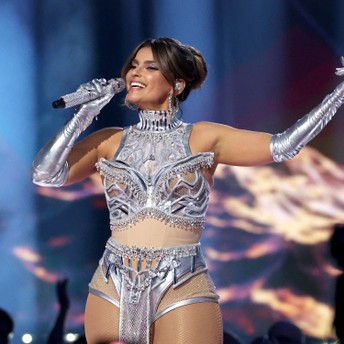
"The lyrics are goofy, they are direct, and yet they are completely undeniable," Todd explained. "When Nelly sings, ‘You’re a rough boy, I can tell,’ paired with Timbaland’s ad-libs, it shouldn’t work on paper. But the sheer confidence of the delivery turned what could have been a novelty record into the definitive soundtrack of 2006."
Furthermore, the conversation touched upon the intense tabloid culture of the era, including rumored friction between Furtado and fellow chart-topper Fergie—a rivalry that fueled music journalism long before social media algorithms dictated pop culture discourse.
Future Outlook and Legacy
Two decades removed from her peak chart domination, Nelly Furtado’s 2006 run occupies a revered space in pop music anthropology. Loose is now recognized as a blueprint for the modern pop-urban crossover, paving the way for artists who refuse to be bound by a single genre or aesthetic expectation.
While Furtado may never have returned to the dizzying heights of the Billboard Hot 100 top tier on a consistent basis, her legacy is secure. As subsequent generations unearth the infectious hooks of "Say It Right" and "Promiscuous" via TikTok trends and Y2K nostalgia waves, the impact of her collaboration with Timbaland remains undiminished. It stands as a masterclass in artistic reinvention—proof that sometimes, an artist’s greatest era is the one nobody saw coming.
Community Action & Support
In alignment with the ongoing mission of the Greatest Pop Stars platform, readers are encouraged to support organizations advocating for transgender rights and healthcare access: