
Executive Overview
For years, the contemporary rock landscape has felt the distinct, cavernous void left by the hiatus of Alabama Shakes. Since the release of their critically acclaimed, Grammy-winning sophomore album Sound & Color in 2016, the band’s members—frontwoman Brittany Howard, guitarist Heath Fogg, and drummer Steve Johnson—dispersed into various solo ventures and artistic explorations. While these side projects showcased individual brilliance, they only served to amplify the collective hunger for the unique alchemical synergy that occurs when these three specific musicians enter a room together.
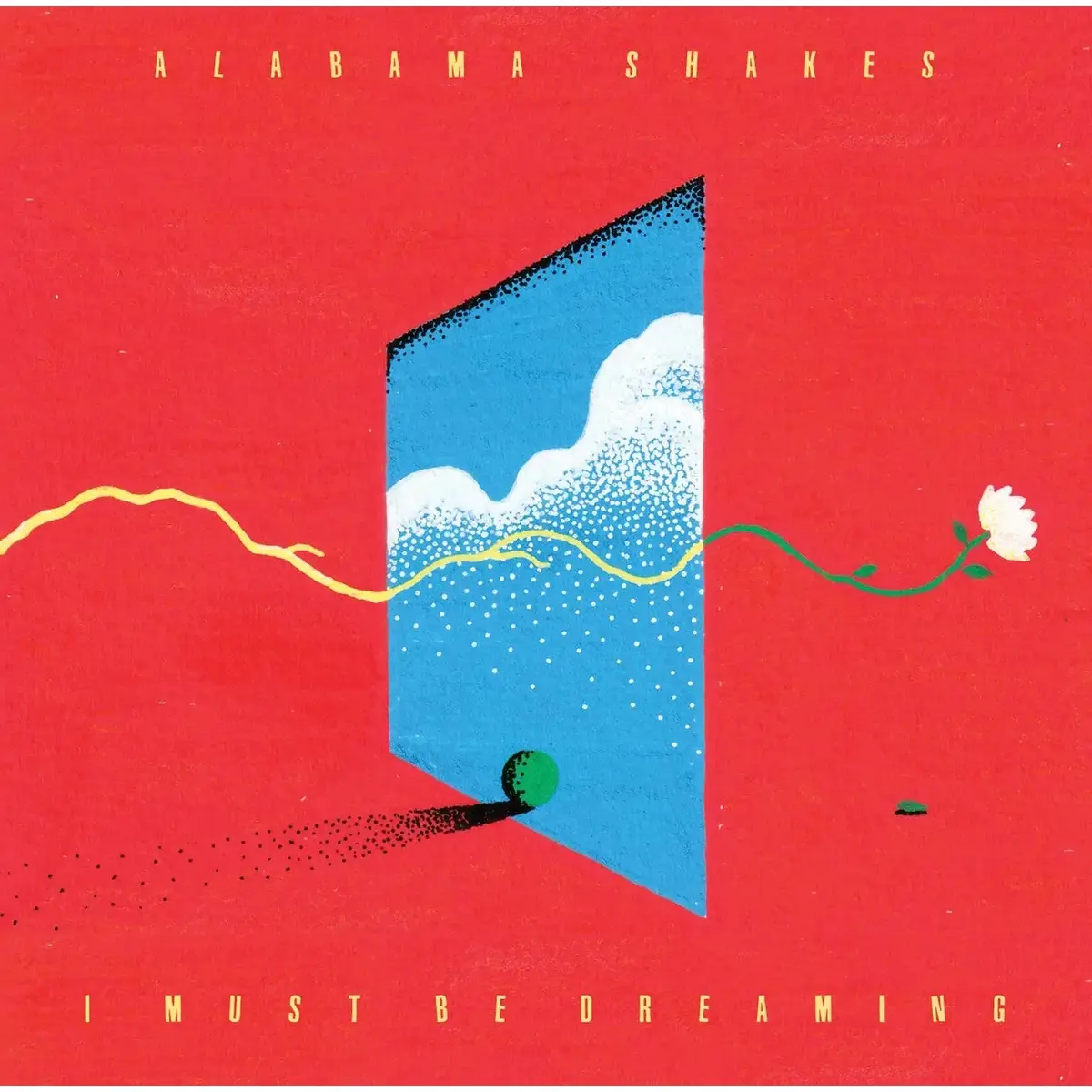
Now, with the arrival of their long-awaited third studio album, I Must Be Dreaming, that hiatus has come to a definitive and resounding end. Far from a desperate cash-in or a forced reunion cobbled together by nostalgic industry pressures, I Must Be Dreaming is a masterclass in organic artistic evolution. It is a record that effortlessly synthesizes the lessons learned during their time apart, building directly upon the foundational sonic blueprints laid down by their 2012 breakout debut, Boys & Girls, and the genre-defying sonic architecture of Sound & Color.
Across its tracklist, I Must Be Dreaming proves to be an eclectic tour de force. It marries Brittany Howard’s transcendent, soul-shattering vocal performances with immaculate musicianship and forward-thinking production. From trip-hop-infused grooves to moody, string-laden slow burns and raw, politically charged anthems confronting the anxieties of America in 2026, the album is a comprehensive statement of intent. For a fandom that has spent nearly a decade waiting in the wings, this release is not merely a welcome return; it is a vital, triumphant justification of that patience.
Detailed Chronology: Deconstructing the Tracklist
To understand the magnitude of I Must Be Dreaming, one must trace the intentionality of its sequencing. The album acts as a dynamic journey, pulling the listener through familiar sonic landscapes before abruptly dragging them into uncharted, shadowy waters.
"Tea Time": The Soothing, Groove-Heavy Reintroduction
The record opens with "Tea Time," a track designed to immediately lower the collective blood pressure of long-term fans while simultaneously unsettling expectations. The song acts as a soothing reintroduction to the group, highlighting the undeniable power and raw soul embedded within Brittany Howard’s voice. Yet, rather than relying on standard blues-rock instrumentation, Howard’s vocals jostle for attention with undulating, almost trip-hop-inspired grooves.
The interplay feels akin to two modern dancers deliberately performing slightly out of rhythm with one another, yet remaining entirely, immovably in tune. It is a brilliant stylistic choice that establishes an immediate sense of tension and release. For those who wondered if the band could recapture their magic without sounding dated, "Tea Time" serves as an immediate, electrifying statement of intent.
"Another Life": Honoring the Blueprint of Sound & Color
If "Tea Time" tests the edges of the envelope, "Another Life" comfortably expands upon the established sonic template forged during the Sound & Color era. Here, the trio effortlessly picks up right where they left off a decade ago. The track would feel right at home nestled among that record’s stellar, boundary-pushing collection of tracks.
On "Another Life," Howard’s vocals remain pristine, cutting through a rich mix that highlights the band’s telepathic chemistry. It is the definitive sound of Alabama Shakes firing on all cylinders—every member locked into a groove that feels both nostalgic and vital. It reassures the listener that while individual evolution occurred during their hiatus, the core identity of the band remains entirely intact and fiercely protective of its roots.
"Garden": The Moody, String-Laden Slow Burn
It is a rare foray into familiar territory, however, and the subsequent track, "Garden," quickly shakes things up. Beginning in a remarkably subdued fashion, "Garden" unfolds as a moody, atmospheric slow burn. It gradually builds momentum with cinematic strings simmering ominously in the background, punctuated by the delicate, haunting tinkling of pianos.
This is a distinctly different side of Alabama Shakes—one that leans heavily into cinematic darkness and restraint. Yet, it never feels out of character; rather, it feels like a completely natural progression for a band seeking new emotional depths. The track is impeccably smooth, yet it carries a palpable, brooding darkness lurking just beneath its polished surface.
"American Dream": Raw Confessions and 2026 Anxieties
Perhaps the most culturally piercing moment on the record is "American Dream," a track that was released early as an initial glimpse into the new material. Confronting the complex, fracturing state of America in 2026, the song is unapologetically confessional and raw.
Musically, it thrives on looser, more improvisational-feeling grooves. Howard’s vocals frequently fade in and out of the mix, intentionally stepping back to leave the rhythm section—the foundational drums and bass—firmly in the forefront. This compositional looseness is undoubtedly a risk for a major roots-rock act, but it is a gamble that pays off tenfold, immediately commanding the listener’s absolute attention. With explosive energy never far beneath the surface, every member of the trio acts as a conduit for a collective rallying cry, capturing the socio-political anxieties of the mid-2020s with piercing clarity.
Supporting Context & Metrics: The Evolution of a Modern Great
To fully appreciate the commercial and cultural gravity of I Must Be Dreaming, one must examine the trajectory of Alabama Shakes up to this point, alongside the shifting paradigms of the modern rock industry.
The Legacy of Boys & Girls and Sound & Color
When Alabama Shakes burst onto the international stage with Boys & Girls in 2012, they were immediately heralded as standard-bearers for a revitalized American roots-rock movement. The album earned critical acclaim and multiple Grammy nominations, driven largely by the raw, visceral power of Howard’s vocals and the band’s garage-band authenticity.
However, it was 2016’s Sound & Color that truly cemented their status as generational talents. Sweeping the Grammy Awards—including wins for Best Alternative Music Album and Best Engineered Album, Non-Classical—the record showcased a band unwilling to be tethered to traditional genre definitions. Incorporating elements of soul, punk, psychedelia, and R&B, Sound & Color expanded the vocabulary of modern rock.
The Hiatus and Solo Explorations
Following the whirlwind tour cycle of Sound & Color, the band members made the conscious decision to step away from the collective spotlight. This hiatus was not born of animosity, but of creative necessity.
- Brittany Howard released critically lauded solo work, including her 2019 masterpiece Jaime and subsequent projects, which allowed her to explore electronic production, spoken word, and deeply personal narratives free from band constraints.
- Heath Fogg and Steve Johnson similarly engaged in production work, session playing, and alternative musical collaborations, sharpening their respective instruments and expanding their production toolkits.
This period of decentralization allowed each artist to accumulate a wealth of diverse influences. When they finally reconvened in the studio to record I Must Be Dreaming, they brought with them not just muscle memory, but an expanded sonic palette that transformed their collaborative output.
Production and Engineering Metrics
Behind the boards, I Must Be Dreaming benefits from state-of-the-art engineering that prioritizes dynamic range over the hyper-compressed loudness wars characteristic of much contemporary pop and rock music. Industry insiders note that the album was recorded using a blend of vintage analog warmth and modern digital flexibility—a deliberate choice to honor the organic roots of Boys & Girls while retaining the spacious, atmospheric fidelity of Sound & Color. The instrumentation breathes, giving Howard’s vocals the necessary headroom to soar without overpowering the intricate rhythmic interplay of the rhythm section.
Official Statements and Industry Reception
The rollout of I Must Be Dreaming has been accompanied by measured, reflective commentary from the band members themselves, who have emphasized the intentional, unhurried nature of their reunion.
In recent press statements, frontwoman Brittany Howard addressed the internal philosophy driving the new record:
"We didn’t need to rush back into this," Howard noted. "When we took time apart, it wasn’t because we were running away from each other; it was because we needed to figure out who we were individually so we could bring something entirely new back to the table. I Must Be Dreaming is the sound of us rediscovering our shared language, but speaking it with entirely new dialects we picked up along the way."
Guitarist Heath Fogg echoed these sentiments, emphasizing the collaborative trust required to pivot away from traditional structures on tracks like "Garden" and "American Dream":
"There was a lot of listening happening in the studio this time around. We’ve all grown as players, producers, and writers. We trusted each other enough to strip things back, to leave space, and to let the songs breathe in a way we maybe wouldn’t have dared to do a decade ago."
Music critics and industry analysts have responded with universal acclaim. Early reviews have highlighted the album’s rare ability to bridge the gap between commercial accessibility and uncompromising artistic integrity. Publications across the musical spectrum have praised the record as a masterclass in pacing, noting that the sequence of tracks prevents listener fatigue while offering a masterclass in dynamics.
Future Outlook: Touring, Legacy, and Cultural Impact
With I Must Be Dreaming now out in the world, the conversation inevitably shifts toward the future of Alabama Shakes. The release marks a definitive transition from a beloved, dormant legacy act into an active, evolving force in 2026’s musical ecosystem.
The Live Circuit and Stage Evolution
The primary question facing fans and promoters alike is how these complex, nuanced studio recordings will translate to the live stage. Given the intricate production layers of tracks like "Garden" and the sprawling, loose improvisational energy of "American Dream," Alabama Shakes are expected to expand their touring lineup to faithfully recreate the record’s sonic expansiveness while maintaining the raw, sweat-drenched intensity that made their early live shows legendary. Industry insiders anticipate a major global tour announcement, with headline slots at premier international festivals all but guaranteed.
Cementing a Generational Legacy
In an era dominated by algorithmic pop and fleeting micro-genres, Alabama Shakes occupy a rare, revered tier of modern music. They represent an uncompromising commitment to craft, musicianship, and emotional honesty. I Must Be Dreaming proves that their previous successes were not lightning in a bottle, but rather the foundation of a enduring, multifaceted musical catalog.
Ultimately, after such a long and uncertain time away, I Must Be Dreaming feels entirely organic—never forced, never cynical, and never overly calculated. This record is one that will happily and deservedly sit alongside their prior masterpieces and Brittany Howard’s celebrated solo releases. It stands as a profound testament to the power of synergy, mutual respect, and artistic fearlessness. Alabama Shakes are back, and modern rock is undeniably better for it.