
Executive Overview
The contemporary indie-rock landscape thrives on communal ecosystems, regional pride, and the DIY ethos that has long defined underground guitar music. Enter Pinksqueeze, a rising force within the vibrant, Midwestern-focused indie and emo circuit. With the announcement of their upcoming sophomore full-length album, We Can Have It, the band is cementing their place on a notable roster that already includes esteemed underground stalwarts such as Jack M. Senff, gay meat, and Yasmin Nur.
We Can Have It arrives as the highly anticipated follow-up to Pinksqueeze’s 2003 (noting their 2023) breakout debut, Be Gay Have Fun—a record that proudly wore its influences on its sleeve, drawing favorable comparisons to beloved contemporary acts like Beach Bunny, The Beths, and Illuminati Hotties. However, where their first release established their energetic, hook-laden framework, their new project expands their sonic palette dramatically. Moving fluidly across abrasive noise rock, cathartic midwestern emo, and expansive ambient textures, the record is underpinned by a singular, defiant philosophy: the unwavering belief that a better world is not only imaginable, but entirely possible.
Beneath the artistic triumph of We Can Have It, however, lies a deeply emotional core. Pinksqueeze is releasing the record in solemn memory of Simon Small—widely recognized in the underground community as Tunnel of Reverb—whose pivotal work as a sound engineer and producer fundamentally shaped the sonic architecture of the album before his passing.
As the band prepares to take these new songs on the road—kicking off their tour with a landmark release show at Chicago’s historic Lincoln Hall on December 12—critics and fans alike are turning their attention toward a band that refuses to compromise its collaborative vision, its political identity, or its emotional depth. This article provides a comprehensive exploration of Pinksqueeze’s trajectory, the creation and thematic weight of We Can Have It, the mechanics of their collaborative songwriting, and what the future holds for one of the Midwest’s most compelling independent acts.
Detailed Chronology: From DIY Duo to Collaborative Quartet
The story of Pinksqueeze is one of organic growth, rooted firmly in the collaborative spirit of the independent music community. The project originated in 2018 as a modest, two-piece endeavor spearheaded by founding members April Hickey and Ava Marvin. Operating in the rich soil of the Midwestern DIY scene, the pair spent their formative years developing a musical language characterized by sharp lyricism, driving rhythms, and an infectious melodic sensibility.
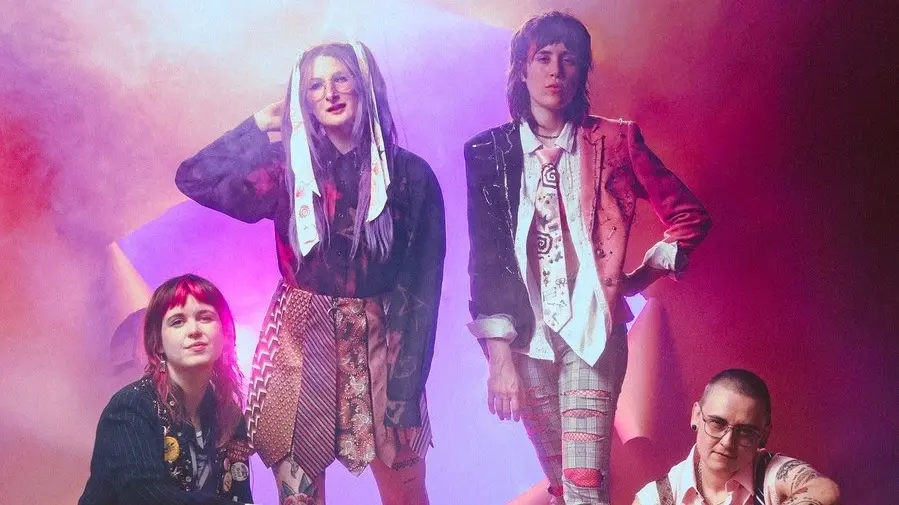
As the scope of their songwriting began to expand, so too did their lineup. Recognizing the need for a fuller, more dynamic live and studio sound, Hickey and Marvin welcomed bassist Anna White and drummer Logan Greenfield into the fold. This expansion transformed Pinksqueeze from a localized bedroom project into a fully realized, four-piece powerhouse.
Rather than adopting the traditional dynamic where a single principal songwriter brings fully formed demos to the band, Pinksqueeze embraced a radically egalitarian approach to creation. All four members—Hickey, Marvin, White, and Greenfield—actively share responsibilities in both songwriting and lead vocal duties. This democratic structure is laid bare on We Can Have It. The tracklist features material written independently by individual members, seamlessly interwoven with compositions crafted collaboratively by all four musicians in the room. This multiplicity of voices gives the album a kaleidoscopic quality, ensuring that while the record possesses a unified thematic vision, it never remains stagnant for long.
The trajectory from their 2018 inception to their current status as labelmates to artists like Jack M. Senff and Yasmin Nur marks a steady, deliberate ascent. Their debut release, Be Gay Have Fun, served as a clarion call for fans of modern indie-pop and power-pop sensibilities. Yet, even as that album earned critical nods for its bright, punchy aesthetic, the seeds for We Can Have It were already being sown. The band was eager to push past conventional genre boundaries, leading directly to the stylistic leaps heard on their forthcoming sophomore LP.
Supporting Context & Metrics: The Sound, The Label, and The Legacy of Simon Small
The Sonic Architecture of We Can Have It
Musically, We Can Have It is an ambitious departure from the straightforward indie-pop sheen of their debut. The record is deliberately built around an ideological core: the radical proposition that a better, more equitable world is achievable. To translate this lofty conceptual framework into sound, Pinksqueeze dismantled traditional genre constraints. The album moves with restless kinetic energy, bridging the gap between abrasive noise-rock dissonance, the emotional catharsis of classic midwestern emo, and the hypnotic, spacious qualities of ambient music.
This dynamic range is immediately apparent from the album’s opening moments. The record is spearheaded by the track “Springtime,” a song written by April Hickey that features a haunting, intricately woven viola string arrangement. According to the band, “Springtime” was deliberately chosen to open the record because it is fundamentally “grounded in hope and new beginnings.” It serves as a gentle yet arresting threshold, pulling the listener into a sonic journey that is as intellectually stimulating as it is emotionally resonant.
The Tracklist
The 10-track sequencing of We Can Have It promises a roller-coaster of emotional and sonic textures:

- “Springtime”
- “The Rock Show”
- “Stoner Butch Blues”
- “Night Sweats”
- “Sweet Tooth”
- “Green”
- “The Gay Agenda”
- “Rebirth”
- “Songs About Love (Interlude)”
- “Die Happy”
From tongue-in-cheek cultural nods like “The Gay Agenda” and “Stoner Butch Blues” to introspective meditations like “Rebirth” and the closing catharsis of “Die Happy,” the tracklist reflects a band deeply engaged with their identities, their community, and their art.
Honoring Simon Small (Tunnel of Reverb)
No discussion of We Can Have It can be complete without acknowledging the profound human element behind its production. The album is dedicated to the memory of Simon Small, widely known within the audio engineering community as Tunnel of Reverb. Small’s expertise, creative ear, and tireless dedication as a sound engineer and producer were instrumental in shaping the sonic identity of the record. His sudden absence casts a bittersweet shadow over the release, transforming the album into both a forward-looking artistic statement and a lasting monument to a beloved collaborator and friend. The band’s decision to release the record in his memory ensures that his indelible impact on the Midwestern music scene will continue to reverberate through every speaker that plays these tracks.
Label Home and Community
By signing with their current Midwest-focused indie and emo label home, Pinksqueeze has aligned themselves with an ecosystem that champions authenticity, emotional vulnerability, and regional solidarity. Sharing a roster with artists who challenge industry norms makes Pinksqueeze a natural fit for a label dedicated to nurturing progressive, community-driven music.
Official Statements and Artistic Intentions
In various statements surrounding the rollout of We Can Have It, Pinksqueeze has been remarkably transparent about the emotional weight and ideological motivations driving the project.
Reflecting on the album’s conceptual backbone, the band emphasized that the record functions as an antidote to cynicism. In an era often dominated by cultural fatigue and systemic disillusionment, We Can Have It offers a deliberate counter-narrative. "The record is built around the idea that a better world is possible," the band noted, framing their music not merely as entertainment, but as a vehicle for collective healing and revolutionary optimism.
Speaking specifically on the album’s introductory track, April Hickey elaborated on the intentionality behind placing "Springtime" at the forefront of the listening experience. Designed to disarm the listener and set a tone of resilient optimism, the track is "grounded in hope and new beginnings." By incorporating traditional instrumentation—such as the evocative viola string arrangement—alongside the band’s standard arsenal of guitars, bass, and drums, Pinksqueeze signals that their musical vocabulary has matured significantly since their 2023 debut.
Furthermore, the band has consistently underscored the collaborative nature of the writing process as essential to their survival and growth as a unit. With Hickey, Marvin, White, and Greenfield all contributing individual compositions as well as collective jams, the album captures four distinct creative voices operating in absolute synergy.
Future Outlook: Touring, Live Debuts, and the Road Ahead
As the release date for We Can Have It approaches, momentum surrounding Pinksqueeze is reaching a fever pitch. The band has announced a comprehensive US tour designed to bring the complex sonic textures of the new record to stages across the country.
The centerpiece of this upcoming tour cycle will be their high-profile album release show, scheduled for December 12 at Lincoln Hall in Chicago. As a city with a legendary history of nurturing independent, emo, and alternative rock music, Chicago serves as an ideal backdrop for Pinksqueeze to showcase their evolution. Fans attending the Lincoln Hall performance can expect to hear the new material brought to life with the same fiery intensity and communal spirit that defines their recorded output.
While domestic fans have plenty to celebrate with the forthcoming US dates, international supporters are currently looking on with bated breath. As of press time, no UK or international tour dates have been announced, leaving global fans eager for word of an overseas expansion. Given the rising international appetite for contemporary American indie and emo acts, it is likely that European and UK promoters are keeping a close eye on the band’s trajectory.
For now, all eyes are on December 12 and the widespread release of We Can Have It. Pinksqueeze has crafted an album that honors the memory of those who helped build it, expands the sonic boundaries of its creators, and offers a much-needed injection of hope into the modern musical landscape. As they step boldly into this new era, Pinksqueeze proves that when a band shares its collective heart, vision, and grief, the resulting art can truly move mountains—and perhaps, help build that better world.