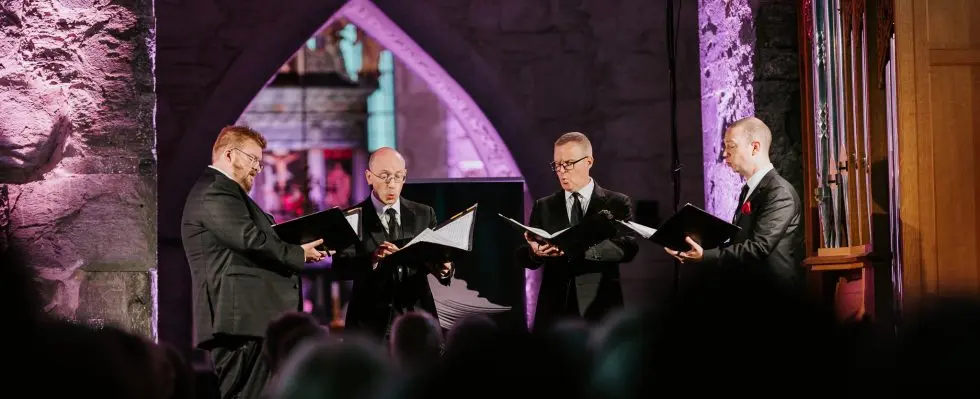
In an increasingly interconnected yet fragmented global landscape, sacred choral music is undergoing a profound paradigm shift. Rather than operating purely within singular dogmatic boundaries or treating external traditions as passive aesthetic artifacts, modern composers are creating works that invite performers and listeners to actively inhabit diverse theological frameworks. This movement toward cross-tradition empathy uses the human voice as a primary vehicle for interfaith dialogue, spiritual exploration, and shared human encounter.
Leading figures in modern sacred composition, such as Elizabeth Alexander and Saunder Choi, have highlighted a curated body of works published by Graphite Publishing that demonstrate this transformative approach. These compositions span a rich tapestry of world traditions—including Judaism, the Bahá’í Faith, the syncretic mysticism of Kabir (spanning Hinduism, Islam, and Sikhism), progressive Christianity, and ancient Vedic Hinduism. By translating traditional texts, adopting inclusive divine language, and pairing traditional sacred melodies with innovative vocal textures, these pieces provide a blueprint for liberal worship communities, academic ensembles, and secular concert halls seeking to cultivate profound pluralism.
This report examines the artistic design, structural mechanics, theological implications, and pedagogical innovations of six landmark choral works, analyzing how contemporary sacred publishing fosters empathy, nuance, and inclusion across global spiritual paths.
Detailed Chronology of Selected Works and Musical Architecture
                                  WORLD SACRED TRADITIONS IN CONTEMPORARY CHORAL MUSIC

   JUDAISM                  BAHÁ'Í FAITH             SYNCRETIC (KABIR)        CHRISTIANITY             CHRISTIAN / TOLSTOY      HINDUISM (VEDIC)
   Gerald Cohen             Saunder Choi             Elizabeth Alexander      Dominic DiOrio           Dale Trumbore            Paul John Rudoi
   "Adonai S'fatai..."      "Blessed is the spot..."  "Song of Kabir"          "He Walks the Road"      "As It Is in Heaven"     "Gamaya"
   ──────────────────       ──────────────────────   ───────────────────      ───────────────────      ────────────────────     ─────────────────
  • Niggun preface         • Litany of sacred        • Adapted Tagore         • Road to Emmaus         • Homophonic Lord's      • Brhadaranyaka
  • Universal divine          geography               translation              narrative                Prayer vs. solo          Upanishad text
    language ("Breath      • Harmonic color          • Intuitive speech meter • Anti-imperial political  contrapuntal doubt     • Aleatoric layering
    of Life")                shifts                  • "Namaste" divine         subtext                • Organ and vocal        • Percussive heartbeat
                           • Whisper ending            light motif            • Sudden textural         dialogue
                                                                                dissolution
Reclaiming the Breath of Life: Gerald Cohen’s "Adonai S’fatai Tiftach"
Gerald Cohen’s setting of "Adonai S’fatai Tiftach" addresses the foundational Hebrew prayer derived from Psalm 51:15 ("O Lord, open my lips, that my mouth may declare Your praise"), traditionally recited as the silent opening invocation to the Amidah (the central standing prayer of Jewish liturgy).
[ A Cappella Niggun ]  -->  [ Hebrew Liturgical Text ]  -->  [ English Translation: "Breath of Life" ]
  Wordless vocal melody        Piano & Voice entrance           Universalized divine address
Vocal Architecture and Niggun: The composition begins not with textual articulation, but with an a cappella niggun—a traditional wordless Jewish melody. The voices gradually weave intricate textures before introducing the piano accompaniment and the formal Hebrew text. This structure grounds the work in contemplative inwardness before speech occurs.
Theological & Textual Translation: In the middle section, Cohen presents the prayer in English. Rather than using conventional masculine titles such as "Lord," he translates Adonai as "Holy One" and "Breath of Life."
Interfaith Utility: By reframing the divine as an elemental, animating force—breath—rather than a localized, gendered deity, the work becomes accessible to interfaith spaces. Congregants of diverse backgrounds can participate in a universal invocation of the sacred without encountering theological barriers.
Sacred Topography in the Bahá’í Tradition: Saunder Choi’s "Blessed is the spot, and the house"
Saunder Choi’s composition offers a rare choral gateway into the Bahá’í Faith, setting sacred scriptural text written by its founder, Bahá’u’lláh. The work functions as a meditative litany that consecrates physical and spiritual spaces.
"Blessed is the spot... the house... the city... the mountain... the cave... the valley... the island... the meadow"
                                ↓
                 [ Subtly Shifting Harmonies ]
                                ↓
                 [ Final Whisper: "...glorified" ]
Harmonic Expansion: Constructed around the core framework of a traditional chorale, the piece steadily broadens its expressive boundaries. As the text enumerates a sequence of hallowed locations—ranging from the house, city, and mountain to the cave, valley, island, and meadow—Choi alters the underlying harmonic colors to mirror each geographic landscape.
Dynamic Subversion: The text concludes with the phrase "…and their praise glorified." Where conventional liturgical scoring might employ a grandiose fortissimo climax, Choi subverts expectations by paring the musical texture down to a quiet harmonic shift—a hushed whisper. This quiet resolution emphasizes sacred mystery and reverence over triumphant assertion.
The Syncretic Mysticism of Kabir: Elizabeth Alexander’s "Song of Kabir"
The 15th-century Indian mystic poet Kabir occupied an iconoclastic position at the intersection of Hinduism, Sufi Islam, and Sikhism. Elizabeth Alexander’s setting of "Song of Kabir" draws upon Rabindranath Tagore’s classic translation, adapted via the Harvard Square Library to heighten personal engagement.
Pronominal Shift: The composition changes the traditional third-person reference ("He," referring to Brahma or the Supreme Being) to the direct second-person pronoun ("You"). This syntactic shift transforms a distant theological assertion into an intimate dialogue between the singer and the divine.
Prosodic Fluidity: To honor the speech rhythms of the translated poetry, Alexander employs frequent, irregular meter changes. Rather than creating rhythmic instability, the shifting meters reflect natural human speech prosody.
Thematic Core: The work reflects the theological spirit of the Eastern greeting Namaste ("the divine within me honors the divine within you"), offering ensembles a versatile piece that honors the shared spiritual light across distinct faith traditions.
Confronting Imperial Trauma: Dominic DiOrio’s "He Walks the Road"
Dominic DiOrio’s "He Walks the Road" reexamines the New Testament narrative of the Road to Emmaus (Luke 24), shifting the focus from post-resurrection discovery to the immediate psychological reality of trauma, political oppression, and grief.
[ Heavy Footsteps ]  -->  [ Orchestral Outrage ]  -->  [ Complete Textural Collapse ]  -->  [ Awakened Hope ]
 Grieving disciples        Organ, brass, timpani        Accompaniment drops out;          Internalized relief
 flee imperial power       build in frustration         "We thought he was the one..."    over dramatic spectacle
Socio-Political Framing: The work places the two disciples within their historic context: individuals grieving not only the death of their teacher, but also the apparent defeat of a nonviolent movement standing against Roman imperial power.
Dynamic Collapse and Catharsis: The musical narrative opens with slow, measured steps. As the disciples vocalize their despair, the organ, brass, and timpani escalate in volume to express rising fear and frustration. At the emotional peak, the instrumental accompaniment suddenly vanishes. The choir is left isolated to sing: "We thought he was the one foretold."
Internal Resolution: Rather than using a sudden, triumphant revelation, DiOrio crafts an internal, gradual awakening. Hope reemerges directly from shared sorrow, producing an authentic catharsis for both performers and audiences.
Negotiating Faith and Doubt: Dale Trumbore’s "As It Is in Heaven"
Dale Trumbore’s work for SATB choir and organ sets text from Leo Tolstoy’s essay "On Reason, Faith and Prayer," interspersing Tolstoy’s philosophical reflections with fragments of traditional liturgy.
       TEXURAL DUALITY IN "AS IT IS IN HEAVEN"

  [ Homophonic / Hymn-like Texture ]  <--->  [ Contrapuntal / Solo Lines ]
  Traditional Lord's Prayer Liturgy         Tolstoy's Solitary Musings
  (Collective Affirmation)                  (Intellectual & Personal Doubt)
Textural Duality: Trumbore uses opposing musical textures to illustrate the tension between dogma and personal uncertainty. The familiar petitions of the Lord’s Prayer are set in homophonic, hymn-like blocks of sound representing collective affirmation. In contrast, Tolstoy’s questioning musings are assigned to solo voices and contrapuntal, independent lines.
Harmonic Language: Utilizing modal harmonies that move between traditional resolutions and modern dissonance, the piece reflects the internal dialogue of an individual testing their beliefs. It serves as a fitting selection for services and concerts focused on the intersection of faith, intellect, and honest doubt.
Fluid Canon and Vedic Wisdom: Paul John Rudoi’s "Gamaya"
Paul John Rudoi’s "Gamaya" draws its text from the Pavamana Mantra, an ancient Sanskrit prayer found in the Brhadaranyaka Upanishad ("Asato ma sad gamaya…" / "Lead me from the unreal to the real…").
Indeterminate and Canonic Design: Adapted from an economical two-page score, the work relies on short, flexible canons layered over an ongoing hand-drum rhythm. Performers are given wide latitude regarding tempo, dynamic range, vocal entry points, and vocalization choices. This structure ensures that no two performances are identical.
Pedagogical Accessibility: To assist ensembles unfamiliar with Vedic chant and Sanskrit pronunciation, the publication includes clear phonetic guides alongside an instructional video guide ("Freeing Gamaya – A Practical Guide"). The design allows choirs of varying experience levels to engage thoughtfully with Eastern sacred texts.
Supporting Context & Musicological Metrics
The growing demand for inclusive sacred music reflects ongoing shifts within contemporary choral literature, academic publishing, and community worship practices. Liberal religious organizations—such as the Unitarian Universalist Association (UUA) and groups like DRUUMM (Diverse and Revolutionary Unitarian Universalist Multicultural Ministries)—increasingly prioritize repertoire that reflects global pluralism.
========================================================================================
                       REPERTOIRE COMPARATIVE MATRIX
========================================================================================
Work Title                Composer            Source Tradition     Key Pedagogical Focus
----------------------------------------------------------------------------------------
Adonai S’fatai Tiftach    Gerald Cohen        Judaism              Niggun performance;
                                                                   inclusive Hebrew/English
----------------------------------------------------------------------------------------
Blessed is the spot...    Saunder Choi        Bahá'í Faith         Dynamic control;
                                                                   extended chorale color
----------------------------------------------------------------------------------------
Song of Kabir             Elizabeth Alexander Syncretic/Mystic     Speech-like prosody;
                                                                   asymmetrical meter
----------------------------------------------------------------------------------------
He Walks the Road         Dominic DiOrio      Christianity         Textural contrast;
                                                                   dramatic pacing
----------------------------------------------------------------------------------------
As It Is in Heaven        Dale Trumbore       Christian/Tolstoy    Contrapuntal independence;
                                                                   organ-vocal balance
----------------------------------------------------------------------------------------
Gamaya                    Paul John Rudoi     Hinduism (Vedic)     Aleatoric layering;
                                                                   Sanskrit diction & drum
================================================================================--------
Key Trends Driving Repertoire Adoption:
Theological Inclusivity: A move away from exclusively gendered, monarchical divine descriptors toward universal imagery (e.g., "Breath of Life," "Holy One").
Textual Authenticity & Ethnomusicological Respect: Direct engagement with primary source texts in their original languages (Sanskrit, Hebrew) paired with guidance on performance context.
Flexible Performance Models: Adaptable scoring mechanisms—such as the aleatoric canons in Rudoi’s Gamaya—allow ensembles of varying sizes and voice distributions to successfully program complex global works.
Official Statements and Perspectives from the Curators
The curators of this repertoire collection emphasize that sacred music should serve as an immersive experience rather than a mere surface-level display of cultural styles.
Elizabeth Alexander on Cultural and Theological Engagement:
"Some choral music does more than offer us a glimpse of another faith tradition; it asks us to inhabit its stories, prayers, practices, and understanding of the sacred… When describing an emotional journey, it’s easy to lightly toss around the word ‘catharsis,’ but works that confront genuine grief and spiritual questioning earn that description by leading us through pain toward an awakened, internal hope."
Saunder Choi on Universal Sacred Language:
"Translating traditional divine names into terms like ‘Holy One’ and ‘Breath of Life’ shifts the prayer away from a petition addressed to a traditionally masculine, named deity and toward something more universal. Breath becomes a shared, animating force rather than a culturally specific God-image. This makes such repertoire exceptionally well suited to interfaith spaces, where individuals maintain diverse relationships to traditional liturgy but can readily connect to an address as elemental as breath."
Future Outlook: The Evolution of Sacred Choral Publishing
As independent choral publishers like Graphite Publishing reach milestone anniversaries, the field of contemporary sacred music continues to redefine how global traditions are represented in performance spaces.
                           FUTURE TRAJECTORY OF SACRED CHORAL PUBLISHING

    Digital & Pedagogical Access           Ethical Cross-Cultural Engagement         Pluralistic Worship Integration
    • Video guides & audio models          • Collaborative composition               • De-siloing sacred traditions
    • Flexible online scores               • Direct engagement with source texts     • Focus on shared human experiences
Emerging Trajectories:
Expanded Digital and Pedagogical Resources: The inclusion of open-access instructional materials—such as video guides detailing diction, cultural context, and aleatoric performance options—is becoming a standard expectation for publishers introducing non-Western texts.
Ethical Cross-Cultural Composition: Composers are increasingly moving past superficial stylistic borrowing. Instead, modern works prioritize deep engagement with source traditions, often working in consultation with practitioner communities to ensure respectful, authentic representation.
Broader Adoption in Secular and Inter-Religious Settings: As traditional institutional religious affiliations shift, public academic choirs, community ensembles, and interfaith organizations are seeking works that address universal human themes—grief, awe, doubt, and hope—without requiring adherence to a single dogma.
Through nuanced text settings, thoughtful translations, and inventive vocal scoring, contemporary choral literature continues to offer ensembles meaningful avenues for cross-cultural connection. By centering shared human experiences alongside diverse sacred traditions, these works illustrate the power of the singing voice to foster empathy and deep listening across cultural boundaries.