
By David Salazar
Published by OperaWire
Executive Overview
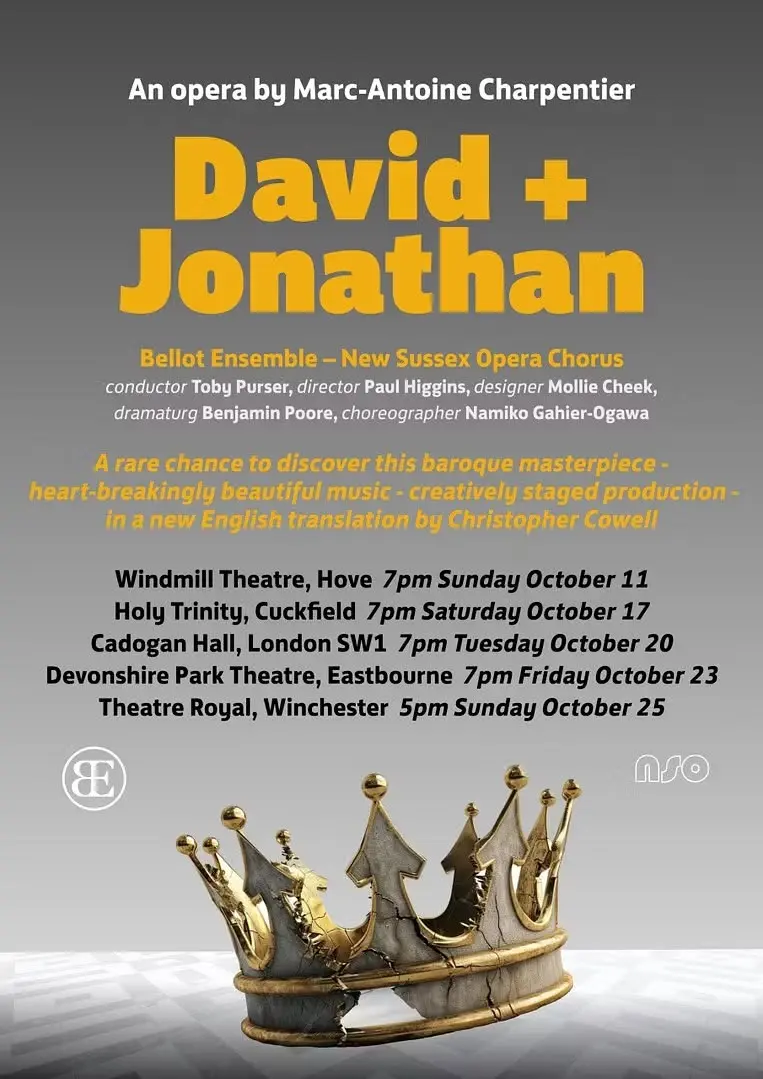
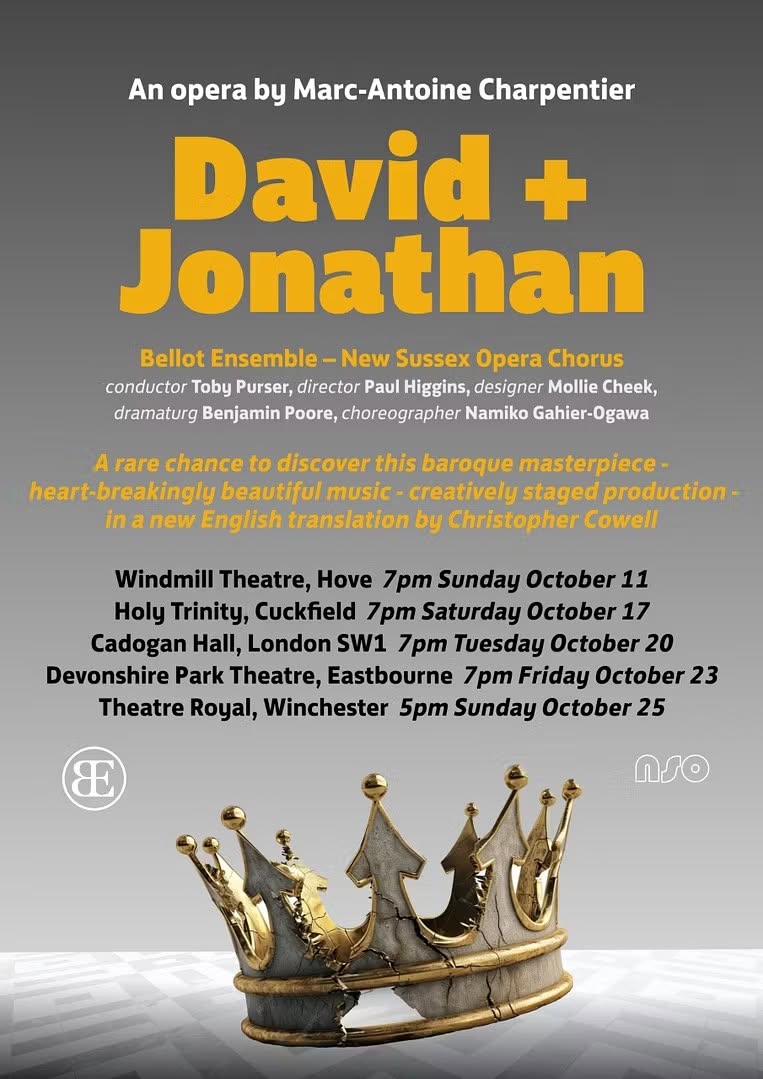
This October, the classical music landscape of London and the South East of England will witness a historic theatrical event. New Sussex Opera (NSO), renowned for its adventurous programming and commitment to operatic rediscovery, is set to stage Marc-Antoine Charpentier’s rare and emotionally charged masterpiece, David et Jonathas (David and Jonathan). Opening on October 11 at the Windmill Theatre in Hove before transferring to London’s prestigious Cadogan Hall on October 20, this production marks a monumental milestone: the very first time the opera has been fully staged in London and the South East.
To bring this French Baroque gem to contemporary audiences, NSO has commissioned a brand-new English translation by librettist and translator Christopher Cowell. This adaptation aims to strip away the linguistic barriers that often distance modern theatergoers from 17th-century French repertoire, highlighting the timeless human drama embedded within the biblical narrative.
Beyond its artistic ambitions, this production serves as a vehicle for cultural enrichment and educational enterprise. The staging introduces a wave of stellar vocal talent, including tenor Harun Ellis Tekin and countertenor Tom Lilburn in the titular roles, supported by an internationally diverse principal cast and the robust textures of the New Sussex Opera Chorus. Musically, NSO has forged an exciting collaboration with the period-instrument Bellot Ensemble, alongside the newly minted New Generation Baroque Ensemble for 2025–27—a partnership initiative helmed by BBC Radio 3, the Royal College of Music, and the National Centre for Early Music.
Crucially, the tour marks the public inauguration of the Chalk Cliff Trust NSO Emerging Artists program, generously supported by the Laidlaw Opera Trust. This initiative provides a vital professional bridge for early-career singers, offering them named roles and bespoke, one-to-one mentorship from the production’s music and stage directors. Blending historical performance practice, community outreach, and elite artistic standards, the upcoming run of David and Jonathan promises to be one of the most significant operatic events of the autumn season.
Detailed Chronology & Production Itinerary
The journey of bringing Charpentier’s work to the modern stage is a meticulous orchestration of historical research, linguistic adaptation, and rigorous rehearsal schedules. The timeline for this landmark production reflects months of artistic preparation across multiple cultural hubs in the United Kingdom.
Pre-Production and Translation Phase
Months prior to the curtain rising, translator Christopher Cowell labored over Charpentier’s original 1688 French score, originally set to a libretto by Father François Bretonneau. The challenge lay in translating the poetic, allegorical verse into idiomatic English that retains the rhythmic cadence and emotional urgency of the Baroque style without sounding archaic or stilted.
Simultaneously, the artistic leadership team—comprising NSO’s music director, stage director, and designers—finalized the aesthetic framework of the production. Given the intimate yet dynamic nature of the venues, the staging seeks to balance the grandeur of court tragedy with the raw, psychological intimacy of the central relationship between David and Jonathan, set against the political machinations of King Saul.
The Opening Leg: Hove
The production’s World Premiere will take place on October 11 at the Windmill Theatre in Hove. This venue provides an ideal crucible for the production, allowing the creative team to test the acoustic balance between the voices and the period instruments of the Bellot Ensemble in an intimate theatrical setting. Hove audiences will be the first to experience Cowell’s English translation, setting the tone for the regional tour.
The London Transfer: Cadogan Hall
Following its Sussex run, the production will travel to the capital for a high-profile performance at Cadogan Hall on October 20. This marks the crown jewel of the tour, bringing a rarely heard French Baroque score to a major London concert and performance space.
To enrich the experience for London audiences, the performance at Cadogan Hall will be preceded by an exclusive pre-concert talk. Renowned BBC broadcaster Donald Macleod will be joined members of the creative team to discuss the music of Marc-Antoine Charpentier, the historical context of French Jesuit drama, and the process of mounting such a rare work in the 21st century.
Supporting Context & Metrics: Cast, Collaboration, and Educational Impact
To fully appreciate the magnitude of this production, one must examine the intricate network of artists, historical ensembles, and institutional partnerships that make it possible.
Vocal Casting and Artistic Personnel
The success of any Baroque opera hinges upon the stylistic agility and emotional authenticity of its singers. New Sussex Opera has assembled a formidable cast well-versed in early music idioms:
- David: Tenor Harun Ellis Tekin takes on the role of the future king. Known for his lyrical dexterity and dramatic sensitivity, Tekin navigates the complex emotional trajectory of a hero torn between loyalty to his king, love for his friend, and divine destiny.
- Jonathan: Countertenor Tom Lilburn steps into the role of Saul’s noble son. Lilburn’s ethereal yet resonant vocal timbre provides the emotional anchor for the opera, particularly in the tragic duets and laments that punctuate the score.
- Saul: Baritone Massimo Modoni portrays the tormented King Saul. Modoni brings theatrical gravitas and vocal authority to a character consumed by jealousy, paranoia, and impending doom.
- Achis and Samuel: Bass Daniel Chomiak undertakes the dual roles of the Philistine king Achis and the prophetic spirit of Samuel, showcasing the vocal flexibility required to span contrasting dramatic archetypes.
- The Witch: Ukrainian mezzo-sorpano Nadiia Chaichenko takes on the haunting role of the Witch of Endor, bringing depth and dark coloration to the famous necromancy scene.
These principal artists are bolstered by the New Sussex Opera Chorus, whose contributions in choral tragedy evoke the monumental weight of Greek drama that heavily influenced French Baroque theater.
Period Instruments and Collaborative Ensembles
Musically, the production relies heavily on historical authenticity. NSO has partnered with the Bellot Ensemble, a specialized period-instrument group dedicated to 17th- and 18th-century repertoire. By utilizing historically informed performance practices—such as period-appropriate string tension, unequal temperaments, and stylistic ornamentation—the ensemble recreates the luminous, textured soundworld that Charpentier envisioned for the court of Louis XIV.
Adding another layer of prestige to the orchestral forces is the collaboration with the New Generation Baroque Ensemble (2025–27). This prestigious talent-development scheme is run jointly by BBC Radio 3, the Royal College of Music, and the National Centre for Early Music. The inclusion of these young instrumentalists aligns with NSO’s broader mission of fostering the next generation of classical music professionals.
The Chalk Cliff Trust NSO Emerging Artists Program
Perhaps one of the most enduring legacies of this production is the launch of the Chalk Cliff Trust NSO Emerging Artists program, supported by the Laidlaw Opera Trust.
In an industry where professional entry barriers are notoriously high, this initiative offers tangible career advancement. Emerging singers cast in the production are given the opportunity to perform smaller named roles on a professional stage. More importantly, they receive intensive, one-to-one mentorship and coaching directly from the production’s music director and stage director. This initiative ensures that the production not only preserves cultural heritage from the past but actively invests in the future of the operatic art form.
Official Statements & Industry Perspectives
The announcement of David and Jonathan has generated significant buzz within the British classical music community, drawing praise for its ambition and educational foresight.
Industry commentators and cultural analysts have noted that staging Charpentier outside of major national institutions like the Royal Opera House or English National Opera demonstrates a healthy, decentralized appetite for rare repertoire in the UK. By bringing Baroque masterworks directly to regional audiences in Sussex before mounting a West London showcase, New Sussex Opera is effectively democratizing access to high-art musical discoveries.
Furthermore, representatives from the educational and collaborative partner institutions have lauded the integration of the New Generation Baroque Ensemble. Academics from the Royal College of Music emphasize that practical performance experience alongside professional vocalists and period instrumentalists is an irreplaceable component of modern conservatory training.
Similarly, representatives from the Chalk Cliff Trust and the Laidlaw Opera Trust have expressed enthusiasm for the emerging artist initiative, noting that philanthropic investment in young vocal talent is vital for the sustainability of regional opera companies in a post-pandemic economic climate.
Future Outlook: The Legacy of NSO’s Baroque Exploration
As New Sussex Opera prepares for the curtain to rise on October 11, the company is looking ahead to how this production might redefine its institutional footprint.
Staging David and Jonathan is not merely a one-off historical curio; it is a statement of intent. It proves that regional opera companies can successfully punch above their weight, tackling complex scores that larger, more risk-averse institutions often overlook due to commercial pressures. By championing a lesser-known masterpiece by Charpentier—a composer often overshadowed by his contemporary Jean-Baptiste Lully—NSO is expanding the canon available to British audiences.
The success of the Chalk Cliff Trust NSO Emerging Artists program during this production will also serve as a blueprint for future NSO seasons. If the initiative proves as successful in practice as it is on paper, it could become a permanent fixture of the company’s operational model, cementing NSO’s reputation not only as a presenter of fine opera, but as a crucial incubator for artistic talent in the United Kingdom.
Ultimately, whether audiences take their seats in the intimate confines of the Windmill Theatre in Hove or within the grand architectural elegance of Cadogan Hall in London, they will bear witness to a rare convergence of historical rediscovery, linguistic innovation, and forward-thinking arts philanthropy. Marc-Antoine Charpentier’s seventeenth-century tragedy of friendship, politics, and divine betrayal has found a vibrant, modern home.