
Executive Overview
In the realm of modern satire, few figures possess the culturally disruptive gravity of Sacha Baron Cohen. More than two decades after his satirical creations first upended public discourse across television and film, the British comedian is summoning one of his most infamous alter egos back to the big screen. Ali G: Who Iz I?, slated for an official theatrical release on October 23 via Amazon MGM Studios, marks the long-awaited resurrection of the tracksuit-wearing, West Staines Massive-representing interviewer.
However, it was not merely the revival of the character that sent shockwaves through digital media platforms, but rather the audacious promotional rollout accompanying the film. In the newly dropped official trailer, Ali G narrates a retrospective assessment of the world’s tumultuous state over the past twenty years. In a bizarre rhetorical juxtaposition that quickly ignited viral commentary, the character explicitly lists global catastrophes—such as the COVID-19 pandemic and international warfare—alongside global superstar Ed Sheeran as the primary reasons the planet went awry.
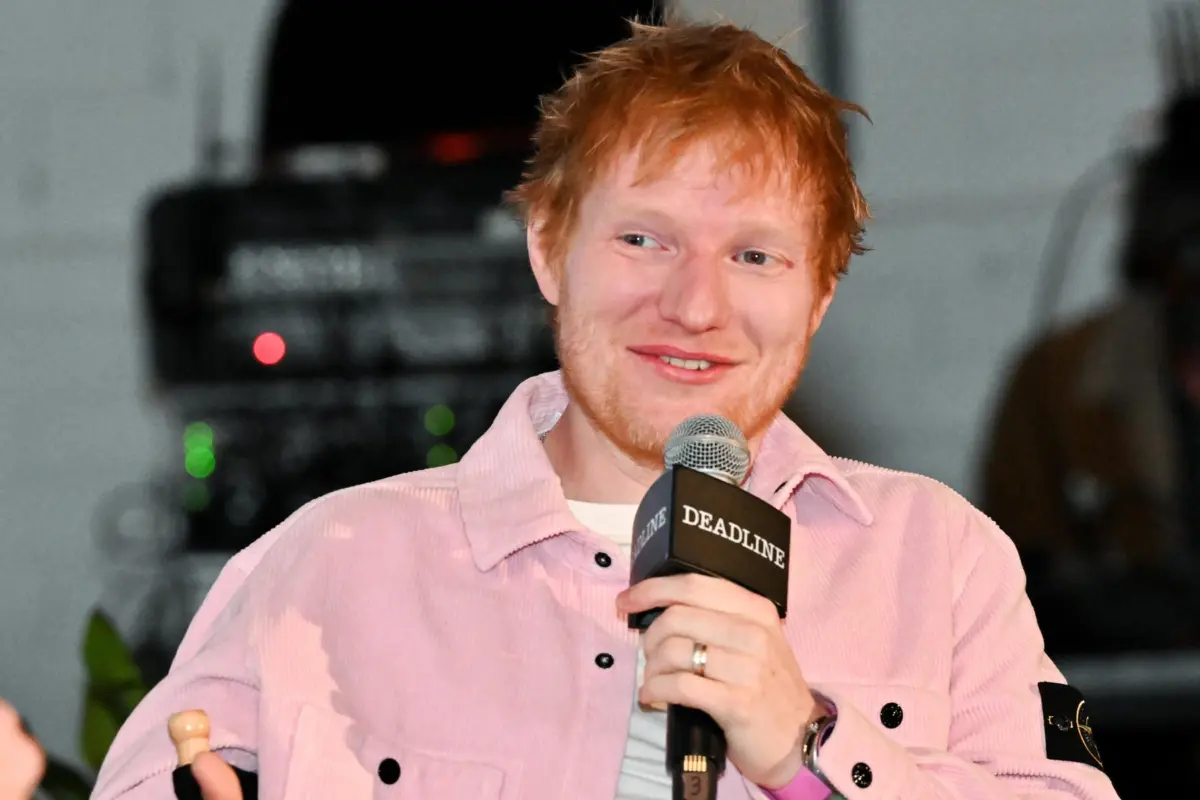
Rather than sparking a public relations crisis or inciting an adversarial exchange between two British cultural heavyweights, the tongue-in-cheek jab catalyzed a masterclass in modern digital publicity. Sheeran, renowned for his self-deprecating humor and massive global footprint, immediately embraced the insult as a badge of ultimate cultural validation. Taking to Instagram, the Grammy-winning singer-songwriter shared his disbelief and delight, demonstrating how contemporary celebrities can leverage satirical cross-fires to amplify major entertainment milestones.
Yet, beneath the viral levity lies a complex landscape of cultural scrutiny. While Sheeran’s lighthearted reaction dominated early news cycles, the trailer has simultaneously reignited intense debates concerning the aging optics of Ali G’s stylistic choices, casting a spotlight on the fine line between satirical provocation and outdated caricature. This comprehensive report examines the structural anatomy of Cohen’s cinematic comeback, the strategic calculus behind the viral marketing campaign, Sheeran’s measured response, and the broader socio-cultural implications surrounding the return of one of the 21st century’s most polarizing comedic creations.
Detailed Chronology: The Evolution, Dormancy, and Resurrection of Ali G
To understand the weight of Ali G: Who Iz I?, one must retrace the meteoric trajectory of Sacha Baron Cohen’s early career. Emerging in the late 1990s through Channel 4’s The 11 O’Clock Show, the character of Ali G—a suburban white youth deeply submerged in a self-styled, hyper-exaggerated hip-hop subculture—became an instant cultural phenomenon. Characterized by his iconic yellow tracksuit, wrap-around sunglasses, goatee, and a bewildering lexicon that hybridized British slang with appropriated Caribbean patois, Ali G was designed to expose the latent condescension, ignorance, and performative tolerance of the British political establishment and global elite.
[Late 1990s] Debut on UK Television ("The 11 O'Clock Show")
      │
      ▼
[2000 - 2004] Critical Peak ("Da Ali G Show" & "Ali G Indahouse")
      │
      ▼
[2005 - 2025] Dormancy & Pivot to High-Concept Satire (Borat, Bruno, The Dictator, Dramatic Roles)
      │
      ▼
[October 2026] The Theatrical Resurrection (*Ali G: Who Iz I?* via Amazon MGM)
By 2000, Da Ali G Show had secured a dedicated international following, culminating in the 2002 feature film Ali G Indahouse, which grossed significantly at the box office and cemented the character’s status as a pop-culture touchstone. Following this cinematic outing, Cohen systematically retired the character from active service, pivoting toward even more audacious, high-concept feature-length mockumentaries, including Borat (2006), Brünno (2009), and The Dictator (2012), before successfully transitioning into acclaimed dramatic acting roles in projects such as Les Misérables, The Trial of the Chicago 7, and Marvel Studios’ Ironheart.
For over two decades, the prospect of an Ali G revival remained dormant. Speculation periodically surfaced, but Cohen guarded his IP fiercely. Production on Ali G: Who Iz I? was executed under maximum secrecy. In a testament to his commitment to guerrilla marketing and ambush comedy, Cohen reportedly made public appearances in full character—most notably at Wimbledon earlier this year—without tipping off media outlets or industry insiders to the existence of an active feature film in production.
The secrecy culminated with the release of the official trailer. In it, Ali G directly addresses his prolonged absence from the public eye. Setting a comedic yet absurdly grandiose tone, the character reviews the state of global affairs over the past twenty-four years, anchoring his cinematic return to a perceived mandate to fix a broken world. The trailer seamlessly shifts from macro-level geopolitical anxieties to hyper-specific pop-cultural grievances, culminating in the now-infamous punchline that pairs global pandemics and armed conflicts directly alongside Ed Sheeran’s multi-decade chart dominance.
Supporting Context & Metrics: The Economics of Viral Satire
The strategic deployment of Ed Sheeran’s name within the trailer’s opening monologue was not an arbitrary comedic choice; it was a calculated bridge connecting classic late-90s British satire with contemporary pop-culture omnipresence. From an analytical perspective, aligning Ali G with Ed Sheeran maximizes cross-demographic engagement, pulling an older demographic nostalgic for early-2000s comedy into the orbit of younger streaming generations who view Sheeran as a musical institution.
The Scale of Ed Sheeran’s Global Footprint
To appreciate why Ali G framing him as a "global catastrophe" is inherently absurd—and therefore brilliant comedy—one must look at the quantitative scale of Sheeran’s career metrics:
- Chart Dominance: Sheeran is one of the best-selling music artists of all time, with over 150 million records sold worldwide.
- Streaming Milestones: His Spotify profile consistently ranks among the most-streamed globally, with multiple tracks surpassing the historic two-billion-stream threshold.
- Live Touring: The Mathematics Tour stands as one of the highest-grossing concert tours in music history, consistently selling out stadiums across continents.
- Cultural Ubiquity: Sheeran’s transition from an acoustic singer-songwriter busking on London streets to a ubiquitous pop titan makes him an unmistakable symbol of modern mainstream success—making him the ultimate straight man for satirical subversion.
When the trailer debuted, digital engagement metrics surged exponentially within the first 48 hours. Social listening tools indicated a massive spike in keyword associations between "Sacha Baron Cohen," "Ali G," and "Ed Sheeran." By utilizing Sheeran as a satirical punching bag, Amazon MGM Studios bypassed traditional, costly marketing pipelines, allowing organic social media sharing driven by Sheeran’s own massive follower base to propel the trailer across international timelines.

Official Statements and Public Reactions
The aftermath of the trailer’s release triggered a fascinating dichotomy of public sentiment, bifurcated cleanly between lighthearted celebrity endorsement and serious socio-cultural critique.
Ed Sheeran’s Endorsement
Ed Sheeran wasted zero time addressing his inclusion in the trailer. Exhibiting an acute understanding of how contemporary internet culture operates, the singer bypassed any sense of genuine offense. Instead, he leaned entirely into the joke, highlighting the surreal nature of being immortalized by a childhood comedic idol.
On his official Instagram account, Sheeran posted a clip of the trailer alongside the caption:
"Tell 10-year-old me that Ali G would put him in his movie. Restecpa."
The deliberate use of "Restecpa"—Ali G’s iconic phonetic butchering of the word "respect," originally popularized in Ali G Indahouse—served as an immediate signal to fans that the singer was not only in on the joke, but deeply appreciative of it. The post rapidly accumulated millions of impressions, transforming what could have been a contentious name-drop into a powerful cross-promotional partnership driven entirely by organic goodwill.
Critical Backlash and Cultural Scrutiny
Not all reactions, however, matched the jovial tenor of Sheeran’s response. The trailer’s release also sparked substantive debate and criticism, particularly within the United Kingdom. Cultural commentators, film critics, and various advocacy groups raised serious questions regarding whether the character of Ali G has retained its satirical edge or whether it has simply aged poorly.
Central to the critique is the character’s physical styling—specifically the dreadlocked wig and Rasta-style hat worn by Ali G throughout his career. Critics have argued that the styling leans heavily into racial caricature and cultural appropriation, utilizing Black British and Caribbean youth subcultures as the punchline for comedic effect. In an era where media representation and cultural sensitivity undergo rigorous public evaluation, a segment of the British public has questioned the appropriateness of resuscitating a persona rooted in tropes that many feel belong firmly in the early 2000s.
These criticisms have even manifested in discussions surrounding potential cinema boycotts, highlighting the delicate tightrope Cohen must walk. While his historical brand of comedy relies on pushing boundaries and courting controversy to expose institutional hypocrisy, the contemporary sociopolitical climate demands a higher degree of accountability regarding how racial and cultural identities are parodied for mainstream entertainment.
Future Outlook: What to Expect from Ali G: Who Iz I?
As the industry counts down to the October 23 theatrical premiere, Ali G: Who Iz I? stands as one of the most unpredictable cinematic releases on the horizon. The film introduces several distinct structural departures from Cohen’s previous work:
- Directorial Debut: Unlike Borat or Ali G Indahouse, which utilized external directors (such as Jason Woliner or Mark Mylod), this project marks the first time Sacha Baron Cohen has stepped directly behind the camera to direct a feature film himself. This suggests an unprecedented level of creative autonomy and a potentially sharper, uncompromised artistic vision.
- Narrative Integration: Unlike pure mockumentaries, the plot features a structured narrative backbone. Early loglines confirm that upon resurfacing in the public eye, Ali G discovers that his longtime girlfriend—played by actress Morgana Robinson—is pregnant, forcing the chaotic interviewer to navigate domestic responsibility alongside his characteristic public absurdity.
- The Intersect of Old-School Ambush and Modern Media: The central question facing the film is whether Cohen’s ambush interview style can still catch unsuspecting public figures off guard in an age where viral pranks are ubiquitous and media literacy is exceptionally high.
Conclusion
Sacha Baron Cohen’s return as Ali G is shaping up to be a defining cultural flashpoint of the cinematic calendar. By positioning Ed Sheeran alongside global crises in the opening moments of the trailer, Cohen successfully engineered an instant viral conversation that bridged generational divides. While Sheeran’s gracious, humorous acceptance of the jab demonstrated the power of self-deprecation in modern stardom, the concurrent backlash regarding the character’s racial styling underscores the challenges of reviving turn-of-the-millennium satire in today’s cultural landscape.
Whether Ali G: Who Iz I? will successfully recapture the lightning-in-a-bottle brilliance of Cohen’s early work or face headwinds from modern cultural critics remains to be seen. What is certain, however, is that Ali G has successfully injected himself back into the global consciousness—and whether the world is ready for him or not, "restecpa" is once again dominating the global conversation.