
Executive Overview
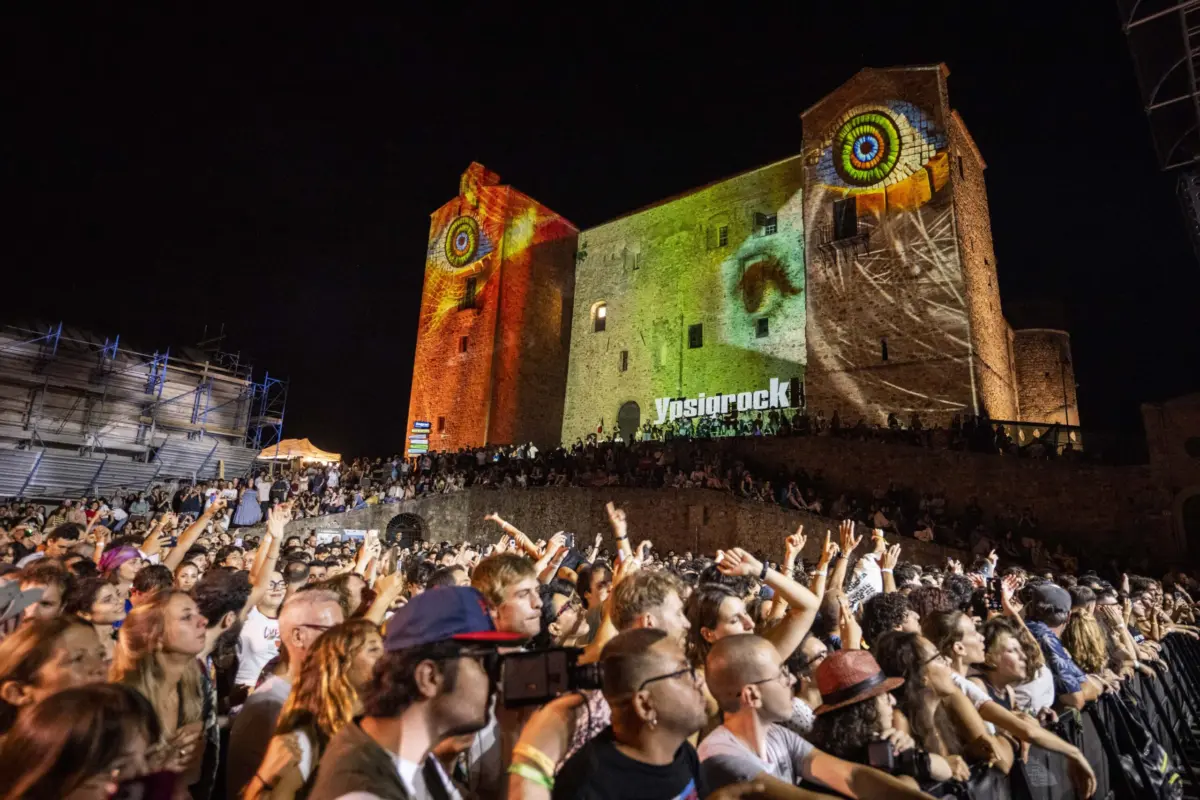
How does a remote, inland Sicilian mountain town with no historical record store evolve into an internationally revered music mecca? For nearly 30 years, the answer has echoed through the medieval alleyways and sun-bleached piazzas of Castelbuono. Here, nestled among the rocky peaks and olive-draped valleys of the Madonie Regional Natural Park, Ypsigrock Festival has quietly redefined the modern European music festival.
Founded in 1997 by local grunge enthusiasts Vincenzo Barreca and Gianfranco Raimondo, Ypsigrock was born not from a corporate mandate, but from geographic frustration and a relentless passion for independent music. Today, approaching its milestone 30th edition in August 2027, the festival stands as a masterclass in community integration, anti-algorithmic curation, and sustainable boutique event management. Capped strictly at 3,000 attendees per day, Ypsigrock rejects the hyper-commercialized, infinite-growth models of major continental festivals. Instead, it offers a rare, highly curated sanctuary where music is consumed live, unmediated, and entirely in the moment.
Detailed Chronology & Live Performances
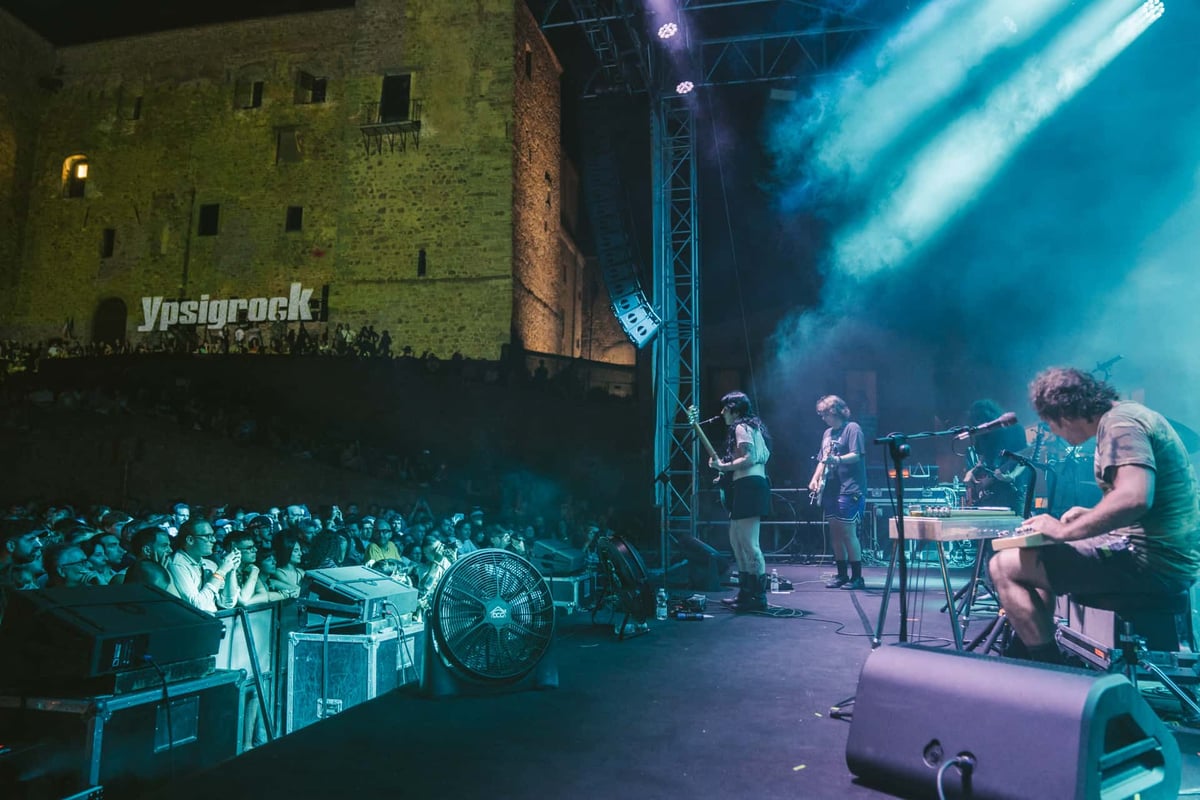
The musical landscape of Ypsigrock’s recent edition offered a vibrant cross-section of global independent talent, unfolding across uniquely atmospheric venues—from the shadow of a 700-year-old Ventimiglia castle to the reverent acoustics of the Cloister of St. Francis and the intimate intensity of the campsite stages.
Opening Salvos and Late-Night Pulse
The festival’s initial momentum was established early by Brazilian/Italian duo Hate Moss. Performing a visceral, late-night set at the campsite stage, their hard-edged, multilingual post-punk collided with electroclash, injecting a sharp, menacing energy into the Sicilian night.
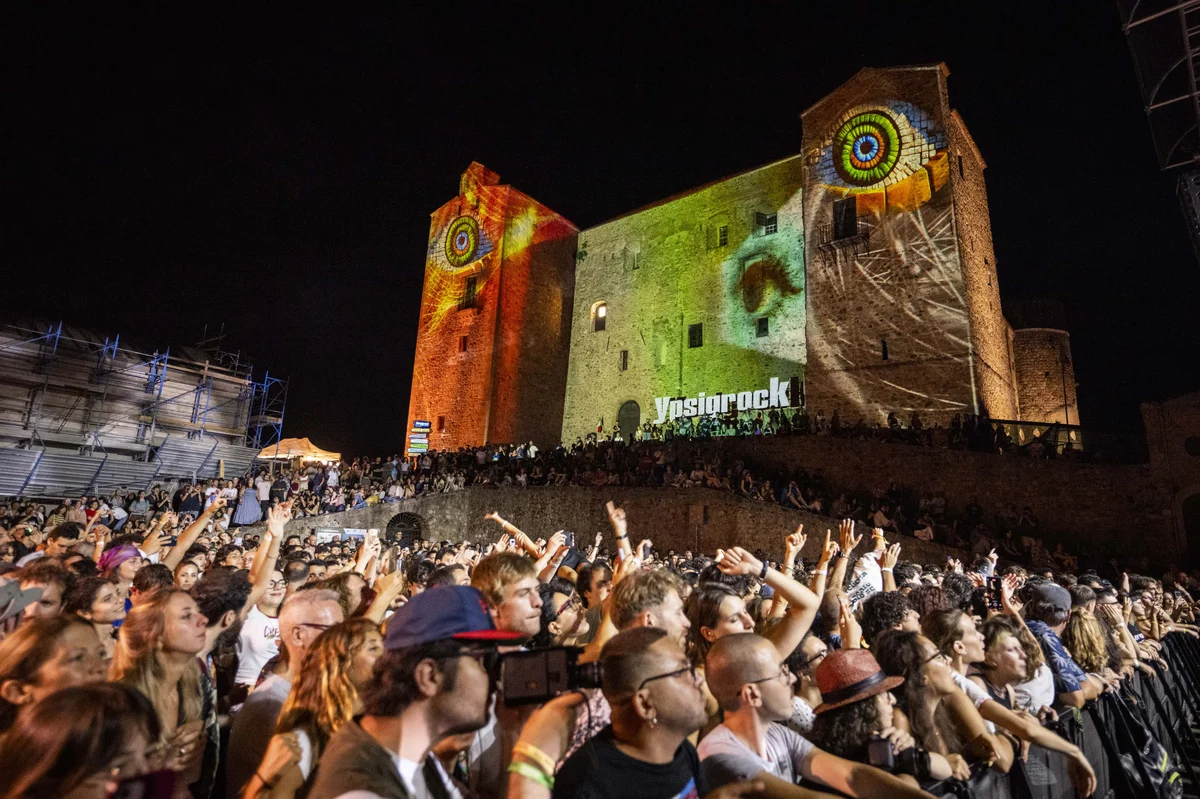
On the main stage, the historical weight of Italian indie music was finally acknowledged as Niccolò Contessa’s I Cani (The Dogs) claimed a long-overdue headline moment after 15 years of cultural relevance. Meanwhile, Tasmin Nicole Stephens (TTSSFU) enveloped early audiences in a murky, reverb-drenched distortion loop before North Carolina’s Wednesday seized the main stage. Frontwoman Karly Hartzman delivered a masterclass in modern Americana, tearing through their signature "creek rock" before pivoting to vulnerable, stripped-down balladry that highlighted her formidable vocal range.
Triumphs and Missteps on the Main Stage
Not every main stage performance achieved ignition. Dry Cleaning’s set felt uncharacteristically aloof and detached, struggling to scale their trademark deadpan delivery against the starlit open-air acoustics rather than an enclosed tent. Similarly, Sunday’s closing set by Black Country, New Road proved divisive; while technically proficient, the performance occasionally leaned toward academic exercise rather than visceral communal joy.
However, masterclasses in live performance abounded. Cate Le Bon and her seven-piece ensemble delivered a breathtakingly effortless display of psychedelic elegance, performing nearly all of their latest LP with breezy precision. French electro-pop-punk trio DITTER injected chaotic high-energy pop into the proceedings, spearheaded by frontwoman Rosa Rocca-Serra, who commanded the stage with the authority of a seasoned provocateur.
The Cloister Sessions: Intimacy and Conflagration
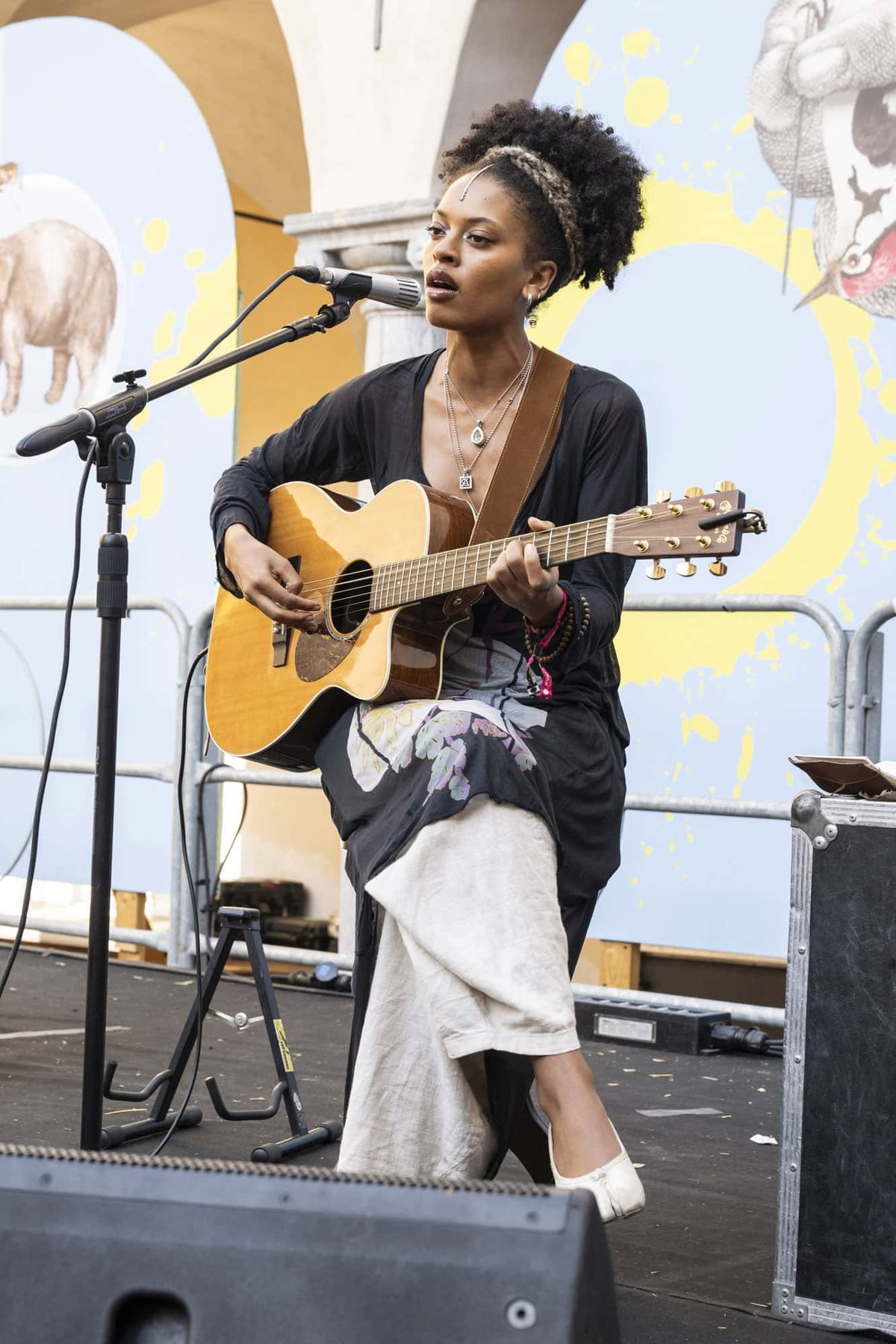
The true spiritual heart of Ypsigrock often beats within the Cloister of St. Francis, where acoustic intimacy breeds unforgettable encounters. Annahstasia delivered a transfixing, career-defining performance accompanied by cellist Abi Asisa and double bassist Genevieve Namazzi. Radiating absolute self-possession, Annahstasia famously paused mid-set to absorb a room-wide silence before launching into an unamplified, acoustic rendition of Bob Marley’s "Redemption Song," cutting clean through minor technical glitches to leave the audience spellbound.
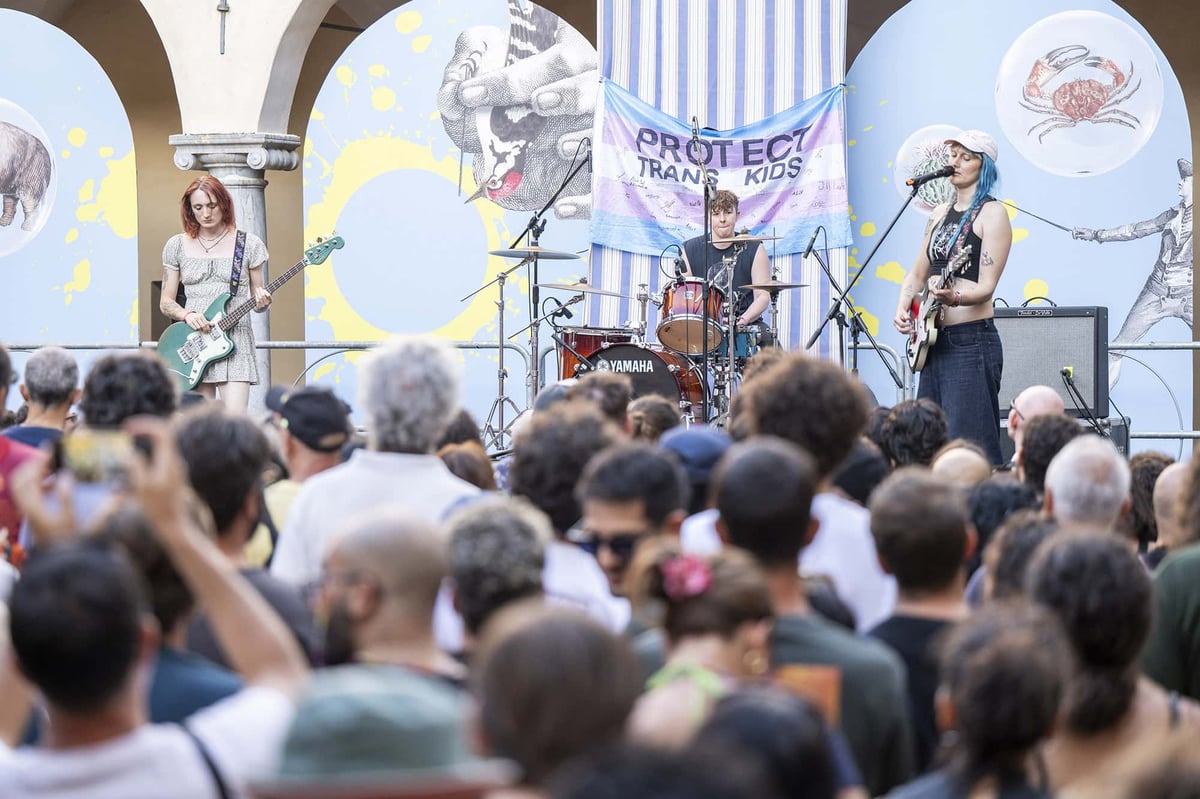
The cloister reached its explosive zenith, however, with GANS. Propelled by the dual-engine rhythm section and shared vocals of drummer Euan Woodman and bassist Tom Rhodes, and driven wild by saxophonist/flutist Tommy Lawther, the band sparked absolute mayhem. A swirling circle pit swiftly escalated into a full-scale stage rush, uniting artists and audience in a frantic, unscripted celebration of communal catharsis.
Supporting Context & Metrics: The Philosophy of ‘Ypsi Once’
At the core of Ypsigrock’s cultural currency is a singular, uncompromising curation rule known as "Ypsi Once." Established to combat the repetitive lineups plaguing modern festival circuits, the rule dictates that no artist—regardless of status, from campsite showcase hopeful to main stage headliner—is ever invited to perform at the festival a second time.
+--------------------------------------------------------------------------+
                 THE YPSIGROCK STRUCTURAL PHILOSOPHY
+--------------------------------------------------------------------------+
  [Slow Growth Model]   ->  Community-first development over tech-bro scaling
  [Capped Capacity]     ->  Strictly 3,000 attendees daily to preserve ecology
  [Ypsi Once Rule]      ->  Zero repeat acts; anti-algorithmic music discovery
  [Venues]              ->  Castle-side, medieval cloisters, organic campsites
+--------------------------------------------------------------------------+
While founders Barreca and Raimondo admit the rule introduces logistical nightmares as decades accumulate, its cultural dividends are immeasurable. For the audience—exemplified by loyal attendees like Palermo native Claudio Gambino, who has attended every edition since 2008—the rule cultivates absolute curatorial trust. Festival-goers relinquish personal algorithmic biases, submitting instead to the refined tastes of founders who prioritize discovery over commercial safety.
Furthermore, the "Ypsi Once" mandate fundamentally alters the artist-audience contract. Knowing they have only one shot at a defining Ypsi moment, performers bring heightened intensity to their sets, while audiences—freed from the glow of smartphone screens—reclaim their physical presence in the crowd. As rising artist jasmine.4.t noted following her cloister performance, the atmosphere uniquely prioritizes genuine, unmediated engagement with new material and live performance.
Official Statements and Institutional Vision
Reflecting on nearly three decades of cultural transformation, the festival’s architects remain grounded in their community-first ethos.
"In the early days, every year was going to be the last edition, and we wanted to give it up," Barreca and Raimondo reflect. "But when we started to get all these wonderful, happy feelings from the community, it became so important to us to maintain it."
Operating within strict ecological and spatial parameters—capped at 3,000 daily attendees—Ypsigrock functions less as a corporate enterprise and more as a cultural institution. Neither founder draws a full-time living from the festival; Raimondo practices law in Palermo, while Barreca works as an agronomist in Castelbuono. Their commitment is sustained by the broader cultural association they built, which continuously reinvests in the Madonie region.
As the festival approaches its landmark 30th anniversary, the founders face a new horizon: planning for generational transition. "Approaching 30 years, it’s important to give testimony to the next generation so that they can keep the model of Ypsigrock going," they note.
Future Outlook
Ypsigrock stands as a vital counterweight to the homogenized, corporate festival landscapes of North America and mainland Europe. By resisting the temptation to scale infinitely, founders Vincenzo Barreca and Gianfranco Raimondo have preserved the intimate, place-based magic that transforms a mountain village into a global music capital for four days every August.
As preparations ramp up for the milestone 30th edition in August 2027, the festival’s enduring appeal lies not in nostalgia, but in its fierce protection of transience. The rule of Ypsi Once serves as a poignant structural reminder: these moments are fleeting, unrepeatable, and all the more valuable because they will never happen again. In an era dominated by endless digital replays, Ypsigrock remains stubbornly, gloriously real.