
Executive Overview
In a monumental development for theatre enthusiasts and performing arts historians alike, the critically acclaimed, Tony- and Emmy-winning solo autobiographical production Elaine Stritch at Liberty is now available to stream in its entirety on YouTube. Courtesy of wocomoMusic, the complete performance—filmed live during its celebrated engagement at London’s historic Old Vic Theatre—offers global audiences unprecedented access to one of the most blistering, emotionally raw, and sharply funny theatrical testaments of the 21st century.
Originally written by the legendary, gravel-voiced Broadway icon Elaine Stritch alongside acclaimed theatre critic and biographer John Lahr, At Liberty is far more than a standard theatrical retrospective or conventional cabaret act. It is a laceratingly honest, deeply vulnerable, and fiercely triumphant unpacking of a legendary career spanning more than half a century. From her early days as a wide-eyed understudy to her crowning achievements as a salty, indomitable veteran of stage, screen, and cabaret, Stritch used the production to bare her soul, laying out her professional triumphs, crippling insecurities, battles with alcoholism, and legendary encounters with theatrical royalty.
The release of the Old Vic filming on digital platforms marks a significant cultural touchstone. For generations of theatregoers who missed out on her limited Broadway engagements, or for younger audiences discovering the titan who famously commanded stages well into her late eighties, this digital archive preserves the uncompromising electricity of a singular talent. Directed for the stage by George C. Wolfe and subsequently immortalized through multiple award ceremonies, At Liberty remains the ultimate masterclass in theatrical storytelling—a dazzling synthesis of music, monologue, and pure, unfiltered humanity.
Detailed Chronology: From Concept to Immortalization
To fully appreciate the cultural impact of Elaine Stritch at Liberty becoming widely accessible via digital streaming, one must trace the arduous, deeply personal evolutionary timeline that brought the production from conception to international acclaim.
+-------------------------------------------------------------------------------+
|                        THE CHRONOLOGY OF "AT LIBERTY"                         |
+-------------------------------------------------------------------------------+
|  1990s - 2001 : Genesis & Development                                         |
|                 Stritch collaborates with John Lahr to curate her life story. |
|  Late 2001    : The Public Theater                                            |
|                 A sold-out, critically rapturous Off-Broadway run.            |
|  Early 2002   : Broadway Transfer                                             |
|                 Runs at the Neil Simon Theatre (Feb 6 – May 26, 2002).        |
|  2002 - 2004  : International Tours & Old Vic Filming                         |
|                 Takes London by storm, capturing the definitive live video.   |
|  August 2026  : Digital Preservation                                          |
|                 Full-length Old Vic performance uploaded by wocomoMusic.      |
+-------------------------------------------------------------------------------+
The Genesis and Collaboration (Late 1990s–2001)
By the turn of the millennium, Elaine Stritch was already a revered figure within the Broadway ecosystem, yet her career had experienced as many valleys as it had peaks. Approaching her mid-seventies, she sought a vehicle that could synthesize her tumultuous professional trajectory and her famously tumultuous personal life. Partnering with John Lahr—the eminent drama critic for The New Yorker and son of legendary actor Bert Lahr—Stritch spent countless hours unearthing old journals, interviewing colleagues, and examining the psychological toll of a life spent in the limelight.
The writing process was notoriously rigorous. Stritch, known for her ferocious perfectionism and unfiltered candor, demanded a script that refused to sanitize her flaws. Lahr helped shape these raw confessions into a cohesive, fast-paced narrative arc that moved chronologically through Stritch’s theatrical upbringing, her mentorship under luminaries like Harold Prince and Stephen Sondheim, her romances, and her struggles with sobriety.
The Off-Broadway Triumph at The Public Theater (Late 2001)
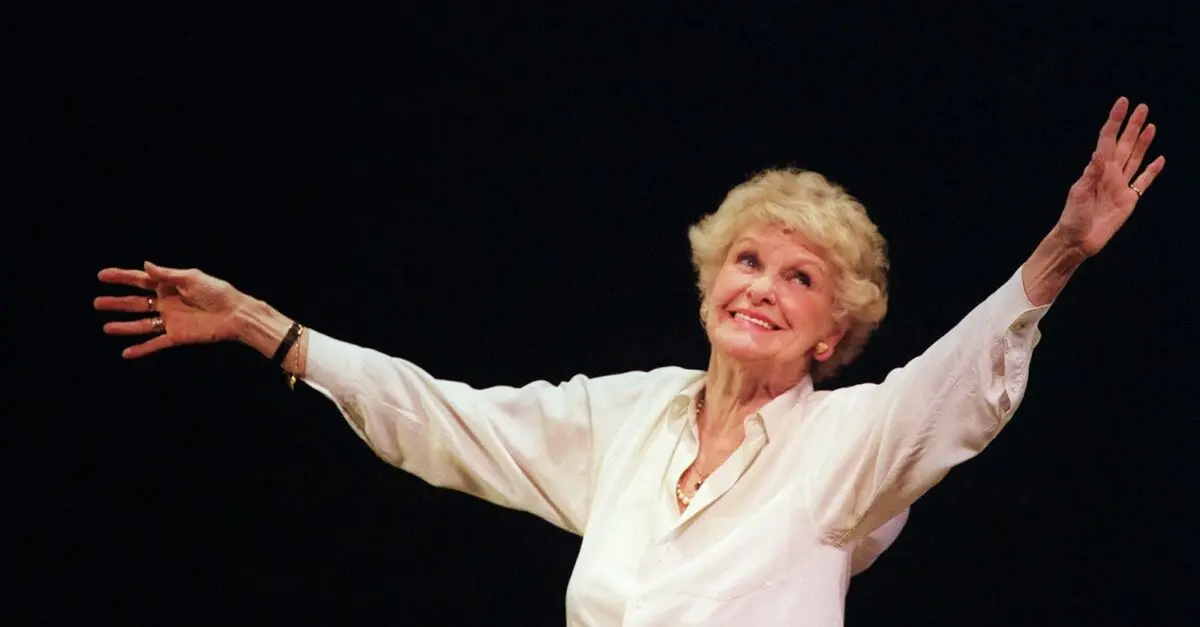
Before stepping foot on a commercial Broadway stage, At Liberty premiered at Joseph Papp’s Public Theater in late 2001. The engagement was an instantaneous, white-hot ticket. Critics immediately recognized that they were witnessing something extraordinary. Dressed in her trademark minimalist attire—a simple white button-down shirt and black tights—Stritch paced the stage with the urgency of a prizefighter, holding audiences in the palm of her hand with nothing more than a microphone, a stool, and her towering presence. The Public Theater run demonstrated that audiences were starved for unvarnished theatrical truth, setting the stage for a transfer to the Great White Way.
The Broadway Engagement at the Neil Simon Theatre (2002)
Following its sold-out downtown run, At Liberty officially transferred to Broadway’s Neil Simon Theatre, playing a strictly limited engagement from February 6 through May 26, 2002. Directed with razor-sharp precision by George C. Wolfe, the production took on a grander yet equally intimate scale.
Night after night, Stritch delivered a masterclass in comic timing and emotional devastation. She recounted working with Noël Coward in Sail Away, enduring the demanding rehearsal processes of Stephen Sondheim’s Company (where she originated the iconic, booze-soaked anthem "The Ladies Who Lunch"), and navigating the cutthroat waters of mid-century American theatre. The Broadway run was an unmitigated triumph, solidifying Stritch’s status not merely as a working actress, but as a living institution of American theatre history.
The London Run and Old Vic Filming (2002–2004)
Following its Broadway victory lap, At Liberty embarked on international tours, touching down in London at the historic Old Vic Theatre. It was during this West End engagement that the production was professionally filmed, capturing the kinetic energy of Stritch’s interactions with a British audience that adored her razor-sharp wit and uncompromising theatricality. This recorded version serves as the definitive visual archive of the show—preserving her subtle facial expressions, her vocal rasps, and the exact cadence of her peerless storytelling.
Supporting Context & Metrics: Repertoire, Awards, and Legacy
Elaine Stritch at Liberty stands as a monumental achievement not just in terms of critical praise, but also through the sheer volume of accolades and cultural milestones it accumulated.
The Musical Repertoire
The show weaves classic American standards and signature showtunes throughout the narrative, using each number as a dramatic punctuation mark for the surrounding biographical confessions. Among the standout musical moments preserved in the recording are:
- "The Ladies Who Lunch" from Company (music and lyrics by Stephen Sondheim) – A defining moment of theatrical venom and self-awareness.
- "Broadway Baby" from Follies – A poignant nod to the tenacity required to survive in the entertainment industry.
- "There’s No Business Like Show Business" – Delivered with layers of irony, affection, and hard-won resilience.
- "Zip" from Pal Joey – Showcasing her peerless deadpan comic timing.
- "Why Do the Wrong People Travel?" – A delightful Noël Coward chestnut highlighting her early-career pedigree.
- "I’m Still Here" from Follies – Serving as the ultimate thematic anchor for a woman who had seen it all, survived it all, and lived to tell the tale.
Critical Acclaim and Award Metrics
The production dominated the 2002 awards season, sweeping major theatrical and television honors:
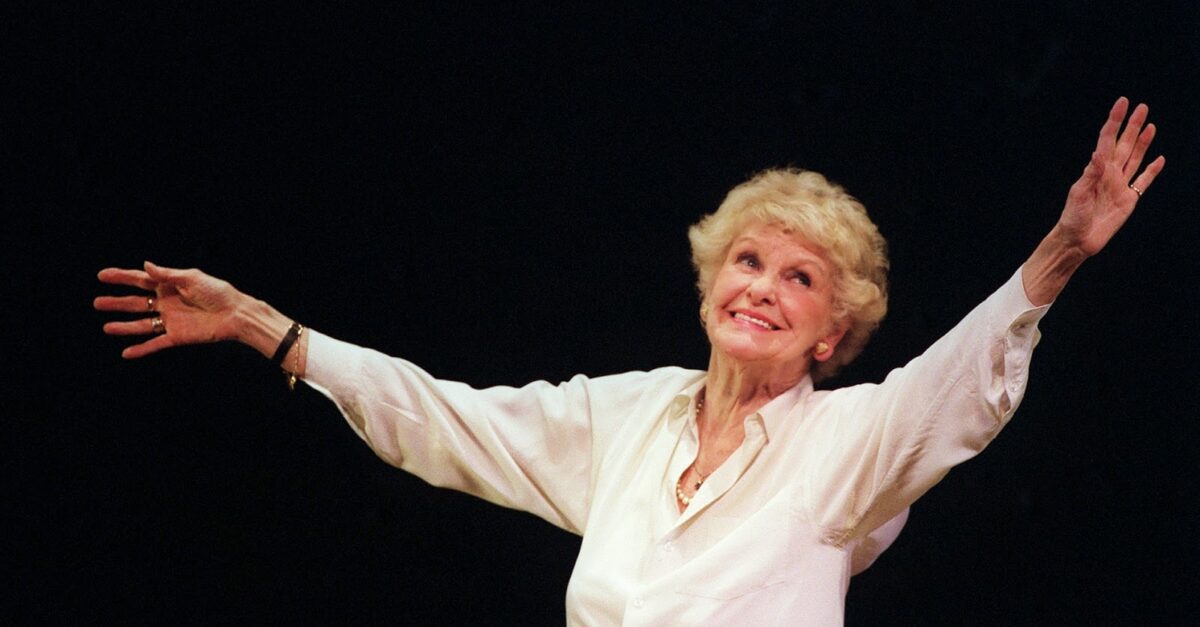
- Tony Award (2002): Winner for Best Special Theatrical Event, recognizing the unique, hybrid nature of the solo autobiographical performance.
- Drama Desk Awards (2002): Swept dual honors, taking home Outstanding Solo Performance for Stritch and Outstanding Book of a Musical for Elaine Stritch and John Lahr.
- Emmy Awards: The television broadcast of At Liberty subsequently earned Stritch a Primetime Emmy Award, marking another milestone in an illustrious career that ultimately yielded three Emmy statuettes.
A Career Defined by Excellence
To understand the weight of At Liberty, one must examine the staggering breadth of Stritch’s stage credits discussed within the show. Her resume reads like a golden-age master list of American drama and musical theatre:
+-------------------------------------------------------------------------------+
|                      NOTABLE STITCH STAGE CREDITS                             |
+-------------------------------------------------------------------------------+
| • Company (Alvin Theatre)                  • Sail Away (Broadhurst Theatre)   |
| • A Delicate Balance (Martin Beck Theatre) • The Little Foxes                   |
| • Bus Stop                                 • Who's Afraid of Virginia Woolf?  |
+-------------------------------------------------------------------------------+
Whether commanding the stage in Edward Albee, William Inge, or Lillian Hellman, Stritch brought a fierce intellectual rigor and emotional depth to every character she inhabited. Yet, as At Liberty brilliantly revealed, no character she ever played on stage was quite as fascinating, complex, or formidable as Elaine Stritch herself.
Official Statements & Archival Reflections
The release of the Old Vic filming on YouTube has sparked renewed commentary from theatre historians, fans, and archival preservationists who recognize the importance of keeping Stritch’s legacy accessible to contemporary creators.
Theatre historians note that solo shows have proliferated in the decades since At Liberty galvanized Broadway, yet few have matched its fearless interrogation of self. In contemporary interviews and retrospectives following her passing in July 2014 at the age of 89, collaborators frequently pointed to Stritch’s uncompromising artistic integrity as her defining trait.
Director George C. Wolfe famously remarked during the Broadway run:
"Working with Elaine is like stepping into a ring with a heavyweight champion who also happens to be a poetic genius. She doesn’t want your pity, she doesn’t want your applause unless she’s earned every single decibel of it, and she demands that you look the truth dead in the eye. That’s what makes her dangerous, and that’s what makes her magnificent."
John Lahr, reflecting on their collaborative writing process, emphasized Stritch’s acute self-awareness:
"Elaine possessed a rare psychological courage. Most performers spend their entire lives constructing an armor to protect themselves from public scrutiny. Elaine took her armor off piece by piece on stage, handed it to the audience, and dared them to laugh at the dents. Writing ‘At Liberty’ was an exercise in radical honesty, and she never once flinched from the dark corners of her own story."
Future Outlook: Preserving Theatrical History in the Digital Age
The accessibility of Elaine Stritch at Liberty on platforms like YouTube represents a vital shift in how theatrical art is preserved, studied, and disseminated. For decades, the performing arts suffered from the ephemeral nature of live theatre—once the curtain fell on a closing night, the magic existed only in fading playbills, bootleg audio cassettes, and the collective memory of those in the room.
The wide availability of the Old Vic recording changes the paradigm for modern theatrical education. Aspiring actors, playwrights, and directors now have 24/7 access to a masterclass in pacing, audience engagement, vulnerability, and comic delivery. It allows students sitting in classrooms thousands of miles away from Broadway or the West End to witness firsthand how a seasoned master commands space, wields silence as a dramatic instrument, and connects with an audience on a cellular level.
Furthermore, as streaming services and cultural archives increasingly digitize landmark theatrical productions, the release of At Liberty serves as a powerful reminder of the enduring commercial and artistic value of preserving live performance. It ensures that future generations will not merely read about the myth of Elaine Stritch—the sharp tongue, the white shirt, the Manhattan martini, the indomitable spirit—but will witness her in her absolute prime, demanding our attention, our laughter, and our eternal respect.
As Stritch herself famously proclaimed in her unforgettable rendition of Stephen Sondheim’s "I’m Still Here": “Good times and bum times, I’ve seen them all and, my dear, I’m still here.” Thanks to this digital release, she will remain here—vibrant, defiant, and peerless—for generations to come.