
Executive Overview
For over a decade, Coke Studio Pakistan has reigned supreme as the gold standard for musical collaboration, cross-genre experimentation, and cultural preservation in South Asia and beyond. Millions of global listeners have eagerly awaited its annual flagship releases, treating each season as a major cultural event. However, devoted fans who noticed the absence of the franchise’s sixteenth traditional season earlier this year can now rest easy. The delay was not a sign of stagnation, but rather the precursor to a radical reinvention.
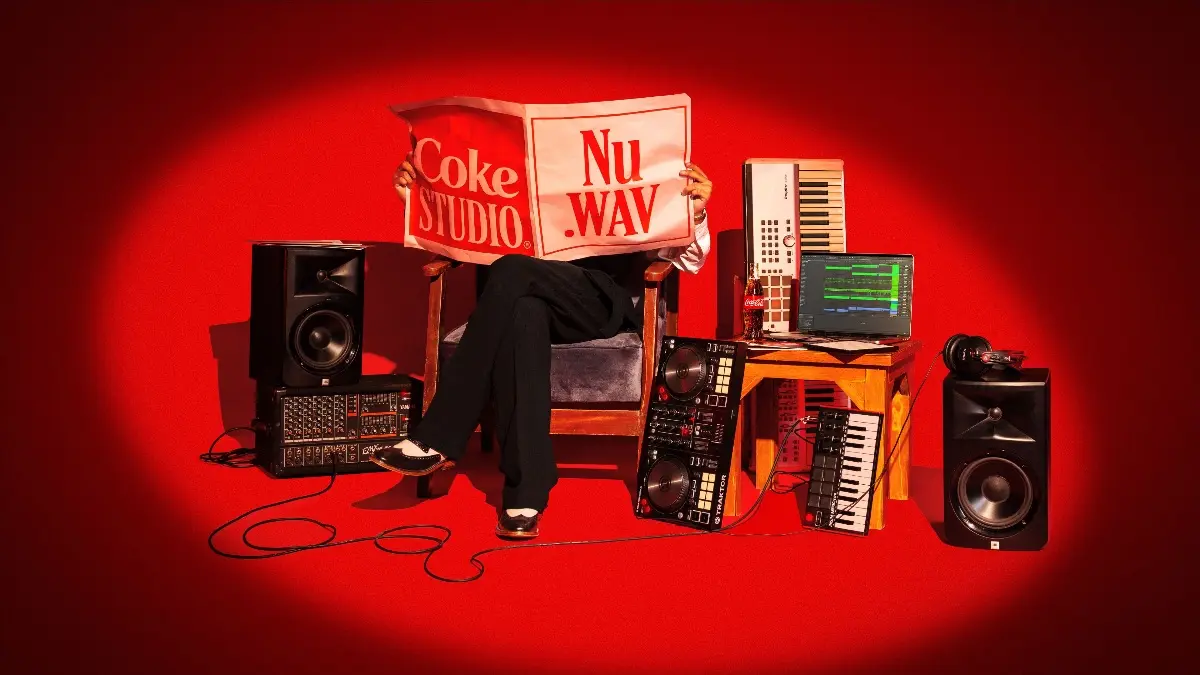
Launching this September, the iconic platform is returning in a completely reimagined format titled Coke Studio Nu.WAV.
Moving away from the centralized, curator-driven model that defined its previous successes—most notably under the artistic direction of visionary producers like Xulfi—Nu.WAV adopts a decentralized, artist-first philosophy. Instead of being funneled through a single creative lens, the upcoming series will comprise six distinct songs, each created entirely independently by unique pairings of artists and producers.
At the helm of this structural revolution is acclaimed filmmaker Kamal Khan, renowned for directing some of Coke Studio Pakistan’s most iconic music videos, including the global phenomenon “Pasoori” by Ali Sethi and Shae Gill. Tasked with executive producing the project, Khan has pivoted his role from traditional director to architectural facilitator: bringing elite talent together, fostering unhindered creative freedom, and stepping back to let authenticity take center stage.
This comprehensive report explores the genesis of Coke Studio Nu.WAV, detailing its democratic selection process, analyzing the powerhouse roster of established and emerging talent, examining the industry-wide shift toward decentralized curation, and projecting what this bold new era means for the future of Pakistani contemporary music.
Detailed Chronology: From Traditional Curatorship to the Nu.WAV Paradigm
To understand the magnitude of Coke Studio Nu.WAV, one must first examine the historical framework of the franchise. For years, Coke Studio Pakistan operated under a hierarchical, highly curated model. A singular executive producer or primary musical director—such as Rohail Hyatt, and later Zulfiqar Jabbar Khan (Xulfi)—would shoulder the immense responsibility of shaping an entire season’s sonic identity. This approach yielded legendary results, blending traditional Sufi poetry, folk melodies, and contemporary western arrangements into cohesive, cinematic masterpieces.
However, as the global music landscape shifts increasingly toward democratized, creator-led economies, the traditional pipeline began to face structural limitations. Fans and artists alike craved greater autonomy, spontaneous collaboration, and a departure from the polished, heavily produced aesthetic that occasionally overshadowed raw underground movements.
The seeds for Nu.WAV were planted earlier this year, signaling a dramatic break from convention:
- April: Coke Studio Pakistan issued an unprecedented, open-call invitation to the nation’s creative community, urging musicians, vocalists, and producers to "join the new wave." Rather than relying solely on industry insiders or scouted acts, the platform opened its digital doors to thousands of raw entries from across the country.
- May–July: A rigorous evaluation process took place behind closed doors, filtering through an overwhelming influx of submissions to unearth diamond-in-the-rough talent from diverse regional backgrounds. These emerging voices were paired with heavy-hitting industry veterans.
- August: Teasers and announcements began trickling out, building intense anticipation across digital platforms and clarifying that season sixteen would take on this radically different, decentralized avatar.
- September: The official global rollout of Coke Studio Nu.WAV, premiering six autonomous tracks that promise to shatter the conventional expectations of what a corporate-backed music platform can achieve.
This chronological pivot demonstrates a mature brand willing to cannibalize its own formula in the pursuit of genuine artistic evolution. By decentralizing the creative process, Coke Studio Pakistan has effectively transformed from a curated showcase into an open incubator for the nation’s next musical wave.
Supporting Context & Metrics: The Democratic Shift and Regional Parallels
The structural transformation of Coke Studio Pakistan does not occur in a vacuum. It mirrors a broader global reckoning within institutional music platforms—and interestingly, mirrors a parallel evolution seen across the border.
The Influence of Coke Studio Bharat
Observers of the franchise will note striking similarities between Nu.WAV and the trajectory of India’s Coke Studio Bharat. The first two seasons of the Indian counterpart were spearheaded by a singular showrunner, Ankur Tewari, who established a unifying sonic footprint. However, recognizing the hyper-diverse and rapidly mutating nature of modern South Asian youth culture, Coke Studio Bharat subsequently shifted to an artist-first, decentralized approach for its subsequent seasons.
By relinquishing curatorial control, both franchises are acknowledging a fundamental truth of the streaming era: modern audiences reject monolithic aesthetics. Gen Z and millennial listeners consume music via hyper-specific micro-genres, algorithmic rabbit holes, and independent subcultures. A single curator trying to capture the entirety of a country’s musical pulse is an increasingly obsolete concept.
Quantifying the Scale of Nu.WAV
While traditional seasons typically featured dozens of tracks recorded live in a sprawling studio setting with a massive house band, Nu.WAV takes a lean, hyper-focused approach:

- 6 Autonomous Songs: The entire season is anchored by half a dozen deeply immersive tracks.
- Thousands of Open Applications: The democratization of the entry pipeline ensured that the talent pool extended far beyond Karachi and Lahore’s traditional elite circles, capturing regional nuances from interior Sindh, Balochistan, Khyber Pakhtunkhwa, and beyond.
- Collaborative Ecosystems: Each of the six tracks operates as its own self-contained micro-universe, driven by distinct creative teams that bypass the traditional house-band bottleneck.
This metrics-and-methods shift proves that Coke Studio is no longer just documenting the Pakistani music scene—it is actively decentralizing its infrastructure to match the borderless, internet-native habits of today’s listeners.
Official Statements & Industry Perspectives
The philosophical core of Coke Studio Nu.WAV is best understood through the words of the creative minds orchestrating its release. Executive Producer Kamal Khan—whose cinematic eye previously captured the whimsical, boundary-pushing magic of “Pasoori”—articulates a philosophy of radical non-interference.
"My job was to bring the right people into the room, let them do what they do, and then get out of the way," Khan explains, reflecting on his mandate for the new series. "Each song has its own world because each artist does."
This hands-off, facilitator-first approach represents a massive departure from standard commercial television production. Rather than forcing diverse artists to conform to a house-band arrangement or a producer’s overarching aesthetic vision, Khan’s team curated micro-environments where independent pairings could experiment freely.
The Star-Studded Roster
The success of this hands-off approach relies entirely on the caliber of the talent in the room. Nu.WAV brilliantly bridges the gap between established trailblazers and raw underground innovators.
The lineup of featured vocalists includes a formidable cross-section of modern Pakistani music:
- Shae Gill: Returning to the ecosystem that made her a household name via "Pasoori," bringing her signature soulful, earthy vocal delivery.
- Asim Azhar & Hasan Raheem: Pop royalty meeting neo-R&B cool, representing the polished apex of contemporary mainstream appeal.
- Young Stunners: The hip-hop duo that fundamentally redefined Pakistan’s urban music narrative, injecting street-level poetry and rhythmic urgency.
- Maanu, Afusic, Sabaat Batin, and Zoha Waseem: Innovators driving the bleeding edge of indie-pop, alternative, and electronic landscapes.
On the production side, the series features some of the most sought-after sonic architects in the region:
- Jokhay, Rovalio, Talal Qureshi, Umair, and AliSoomroMusic: A masterclass in modern production talent, spanning heavy trap beats, atmospheric electronica, and intricate organic-electronic fusions.
By pairing these heavyweights with the unknown applicants selected through the April open call, Nu.WAV creates a peer-to-peer mentorship ecosystem that promises to elevate underground aesthetics to mainstream prominence without sanitizing them in the process.
Future Outlook: What Nu.WAV Means for the Global Music Economy
As Coke Studio Nu.WAV prepares for its September premiere, the implications of this structural experiment stretch far beyond Pakistan’s borders.
For years, institutional music shows faced criticism for over-polishing traditional folk and underground sounds, occasionally stripping them of their gritty authenticity in pursuit of commercial palatability. By handing the keys directly to independent artist-producer pairings, Coke Studio Pakistan is proving that corporate backing and raw artistic integrity do not have to be mutually exclusive. In fact, when corporate muscle is used to fund, elevate, and amplify decentralized creativity rather than dictate it, the results can be revolutionary.
If Nu.WAV succeeds—and given the pedigree of Khan, the participating artists, and the massive pent-up demand from fans, all signs point to a resounding triumph—it could permanently alter how major brands sponsor musical heritage. We may witness the death of the monolithic seasonal format across international markets, replaced instead by modular, creator-driven sonic capsules that mirror the fragmented, fast-moving habits of global youth culture.
Ultimately, Coke Studio Nu.WAV is more than just a rebranded television show or a delayed season. It is a bold declaration of faith in the artists themselves. By stepping back, clearing the path, and letting the creators build their own worlds, Coke Studio Pakistan has ensured that the next wave of South Asian music will not just be heard—it will be entirely self-authored.