

Executive Overview
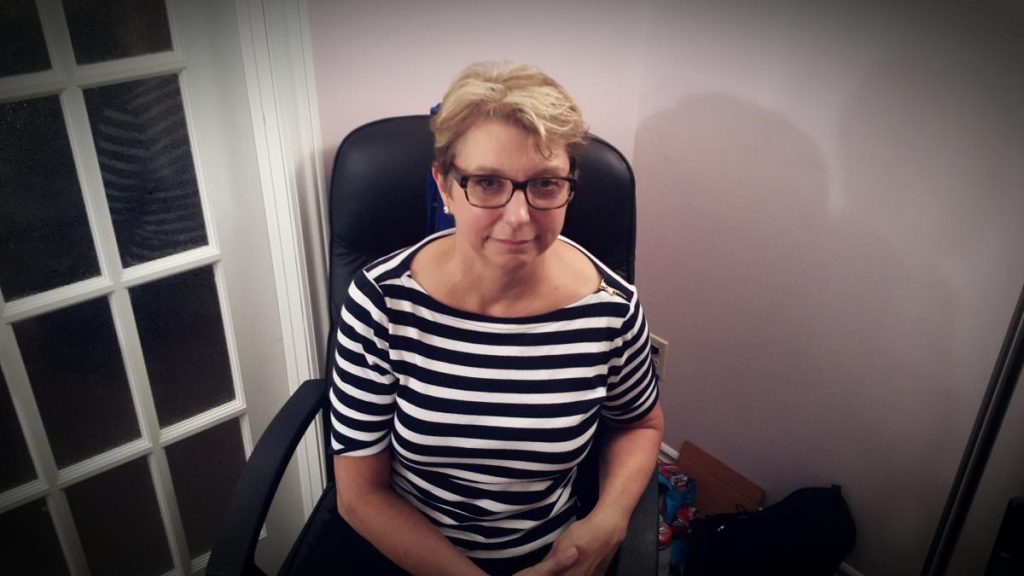
In the realm of vocal rehabilitation and performance arts, the boundary between a permanent disability and a miraculous recovery is often defined by innovation, persistence, and specialized methodology. This is the definitive account of Mary Ellen Stoll, a resident of Brockville, Ontario, whose journey stands as a testament to the extraordinary possibilities of holistic voice repair. Diagnosed with a debilitating vocal cord nodule at the age of 22 and subjected to conventional surgery that left her speaking voice permanently compromised, Stoll lived for decades with a muted ambition: the secret desire to sing in a choir.
Retirement from a demanding, high-stress career as a manager for the Government of Ontario provided Stoll with the time to pursue this long-held aspiration. However, her initial encounters with local musical directors confirmed her deepest fears—her speaking voice was damaged, raspy, and structurally unsound. Rather than accepting this limitation as an irreversible consequence of her youth, Stoll embarked on a rigorous, multi-year rehabilitation odyssey using the proprietary Vocal Science™ method.
This in-depth investigative report details Stoll’s remarkable transformation from a voice patient with a compromised vocal anatomy to a thriving, active choral performer. Through dedication, specialized speech mechanics, and relentless determination, Stoll achieved what many medical and vocal professionals would deem improbable: the complete restoration of her speaking voice and the successful unlocking of her latent singing potential.
Detailed Chronology: The Journey from Injury to Artistry
The Genesis of a Vocal Crisis
The origins of Mary Ellen Stoll’s vocal struggles date back more than four decades. At the tender age of 22, Stoll received a medical diagnosis that would alter her relationship with her own voice: a nodule had developed on her vocal cord. In an era when surgical interventions for vocal nodules were often invasive and lacked the nuanced, rehabilitative support available today, Stoll underwent a standard vocal operation.
While the surgery medically addressed the physical growth, it failed to restore the natural resonance, tonal quality, and physiological balance of her natural speaking voice. For decades, Stoll navigated professional and personal spheres with a compromised instrument. Working in a high-stress management position for the Government of Ontario required heavy vocal usage, further straining an already compromised vocal mechanism. Her voice became a daily reminder of an unresolved medical intervention.
The Retirement Catalyst and the Reality Check
Fast-forward to the spring of 2016. At 62 years of age, Stoll stepped away from her high-pressure government career into a well-earned retirement. With newfound freedom and time, she resolved to confront her secret, lifelong ambition: to learn how to sing and, ultimately, to join a community choir.
Seeking to test the waters, Stoll visited a prominent barbershop-type choir in Brockville and auditioned before the choir director. The director’s assessment was immediate and sobering. He did not evaluate her singing capability; instead, he pointed out a fundamental prerequisite. He noted that her speaking voice was visibly and audibly damaged, advising her that she needed to repair and rehabilitate her speaking voice before she could ever hope to blend into a choral arrangement.
Rather than abandoning her dream, Stoll turned to digital research to find a specialist capable of repairing severe vocal damage. Her search led her to the creator of the Vocal Science™ technique. Recognizing the urgency and uniqueness of her case, Stoll made a decisive move: she packed her bags and drove over four hours from Brockville to the specialized studio for her initial comprehensive voice assessment.
The Anatomy of Recovery: Rebuilding from the Ground Up
The rehabilitation process commenced with a rigorous focus on the foundation of human vocalization: the speaking voice. According to the foundational philosophies of the Vocal Science™ methodology, a person cannot hope to master singing if their baseline speaking voice is structurally flawed, unsupported, or mechanically inefficient.
The treatment protocol involved a synchronized regimen of specialized speech exercises coupled with deliberate body movements. These physical maneuvers were designed to achieve several critical physiological objectives:
- Proper Structural Support: Engaging the core abdominal and respiratory muscles to bear the load of sound production, thereby relieving direct friction and pressure on the delicate laryngeal tissues.
- Optimal Placement: Shifting the resonance of the voice away from the throat and vocal cords, projecting it instead into the facial masks and cranial cavities to maximize acoustic output with minimal effort.
- Enhanced Projection: Utilizing natural amplification techniques that allow the speaker or singer to project sound clearly across vast spaces without shouting or straining.
This wholesome mechanism ensures that the human voice operates at its absolute fullest capacity, achieving maximum projection and clarity completely free of pain, strain, or physical fatigue.
Supporting Context & Metrics: The Science of Voice Repair
The Historical Precedent of Vocal Science™
The methodologies applied during Stoll’s rehabilitation are not overnight phenomena; they are backed by decades of clinical and practical refinement. The rigor required in such transformative voice repair has long been a subject of public and professional interest.
As documented historically—including a feature article published by the Toronto Star newspaper titled "Not As Easy As It Sounds"—the process of true voice mechanics training demands intense physical and mental commitment. The article highlighted the intricate nature of vocal mechanics, emphasizing that manipulating the human voice safely requires an understanding of anatomy, physics, and kinesiology.
The Metrics of Dedication
Transforming a surgically scarred, decades-old vocal pattern is no small feat. The metrics defining Stoll’s journey underscore the sheer scale of her commitment:
- Geographic Commitment: Over 5 hours of driving through treacherous Canadian winter weather, traveling back and forth between Brockville and the voice studio.
- Duration of Therapy: Multi-season, continuous developmental work spanning several years of consistent, disciplined practice.
- Age Profile: Commencing intensive vocal retraining at age 62, proving that neuroplasticity and muscular re-education in the vocal tract are entirely achievable later in life.
- Acoustic Transformation: Transitioning from a raspy, unsupported, and damaged speaking voice to a "crispy clear" acoustic profile characterized by precise enunciation and crystal-clear word pronunciation.
The physical demands placed on both the client and the practitioner are immense. Yet, the resulting payoff—a restored, vibrant, and injury-free voice—is widely regarded by those who experience it as entirely priceless.
Official Statements and Perspectives
The Transformation of Perception
A crucial turning point in Stoll’s journey occurred when she returned to the Brockville choir director following months of intensive speech-focused rehabilitation. The improvement was so profound that the director immediately recognized the qualitative shift in her voice.
"Continue your vocal development," the choir director instructed her upon hearing her transformed speaking voice, "and you will be able to join the chorus."
This validation served as the green light for Phase Two of Stoll’s development: the transition from speech therapy to actual choral singing.
Reflections on the "Impossible Possible Dream"
Reflecting on the successful conclusion of this multi-year rehabilitation project, the sentiment shared between Stoll and her vocal coach encapsulated the magnitude of the achievement. What began as a medically dismissed condition and a distant, seemingly unreachable fantasy was refactored into reality through disciplined application.
"Once the ‘impossible dream’ came true, it gave my dear client and friend health of voice—not to mention health in general," notes her vocal mentor. "It also provided her with the knowledge of a completely new application of the speaking and singing voice while using the voice by design, concurrently complying with all of the components of the Vocal Science™ method and technique."
By adhering strictly to the principles of voice by design rather than voice by default, Stoll systematically dismantled the physical habits of a lifetime.
Future Outlook: A Lifetime of Choral Performance
Today, Mary Ellen Stoll stands as an inspiring beacon for retirees, vocal trauma survivors, and aspiring artists alike. Having successfully integrated into her local choir, she participates actively in regional competitions, public performances, and collaborative choral arrangements.
Key Takeaways for the Vocal Community
Stoll’s case offers several profound implications for the broader fields of vocal pedagogy, speech-language pathology, and general wellness:
- Age is No Barrier: Physiological re-education of the vocal apparatus is entirely possible well past retirement age, provided the methodology applied is precise and holistic.
- Speech Precedes Song: True vocal health and singing capability must be built upon a healthy, structurally sound speaking voice. Skipping this foundational step invites reinjury.
- Holistic Integration: Combining physical body movements with targeted speech exercises creates a sustainable vocal mechanism that protects against chronic strain and fatigue.
As Stoll moves forward into her mid-sixties and beyond, her voice remains clear, resonant, and strong. Her journey serves as an enduring reminder that with expert guidance, unwavering personal resolve, and scientifically grounded vocal mechanics, even the most deeply rooted vocal injuries can be overcome.
Way to go, Mary Ellen! Keep on singing! Wishing you the best of voice and health now, in the New Year, and ALWAYS!