
Executive Overview
In a landmark decision that bridges centuries-old artistic tradition with modern digital democratization, Milan’s world-renowned Teatro alla Scala has announced that its dedicated streaming platform, LaScalaTV, will transition to a completely free service starting September 1. Backed by the robust institutional and financial support of banking giant Intesa Sanpaolo, the platform will drop its paywall, requiring only a simple user registration to unlock a treasure trove of world-class operatic, ballet, and symphonic performances.
Launched originally in 2023, LaScalaTV was conceived as a window into the legendary Piermarini theatre, broadcasting live productions to global audiences and housing them in a growing digital repository. Up until now, viewers had to purchase individual tickets or passes to access these digital cultural assets. By eliminating financial barriers, the Teatro alla Scala Foundation is fundamentally shifting its operational philosophy. This move is not merely a promotional shift, but a calculated, mission-driven strategy designed to expand global access, enhance the visibility of Italy’s rich musical heritage, and foster a deeper, more inclusive dialogue with audiences of all demographics and geographies.
The timing of this announcement underscores a broader cultural reckoning within the performing arts sector. As institutions worldwide grapple with the post-pandemic landscape of audience retention, digital engagement, and generational turnover, LaScalaTV’s pivot offers a compelling blueprint. By combining state-of-the-art broadcast technology—enabled by an advanced system of nine remotely operated cameras—with a zero-cost access model, LaScala. The platform is positioning itself as both a global classroom and a universal stage.
This comprehensive report examines the structural evolution of LaScalaTV, dissects the financial and institutional partnerships fueling its free era, reviews the rich catalog of available performances, and outlines the strategic future outlook for one of the crown jewels of Western classical music.
Detailed Chronology: From Concept to Digital Liberation
The Genesis of LaScalaTV (2023)
The story of LaScalaTV began in early 2023, when the Teatro alla Scala Foundation recognized the urgent need to future-proof its operations and extend its physical boundaries beyond the Piazza della Scala. While La Scala had occasionally experimented with cinematic broadcasts and televised opera events, the leadership team envisioned a dedicated, on-demand digital ecosystem.
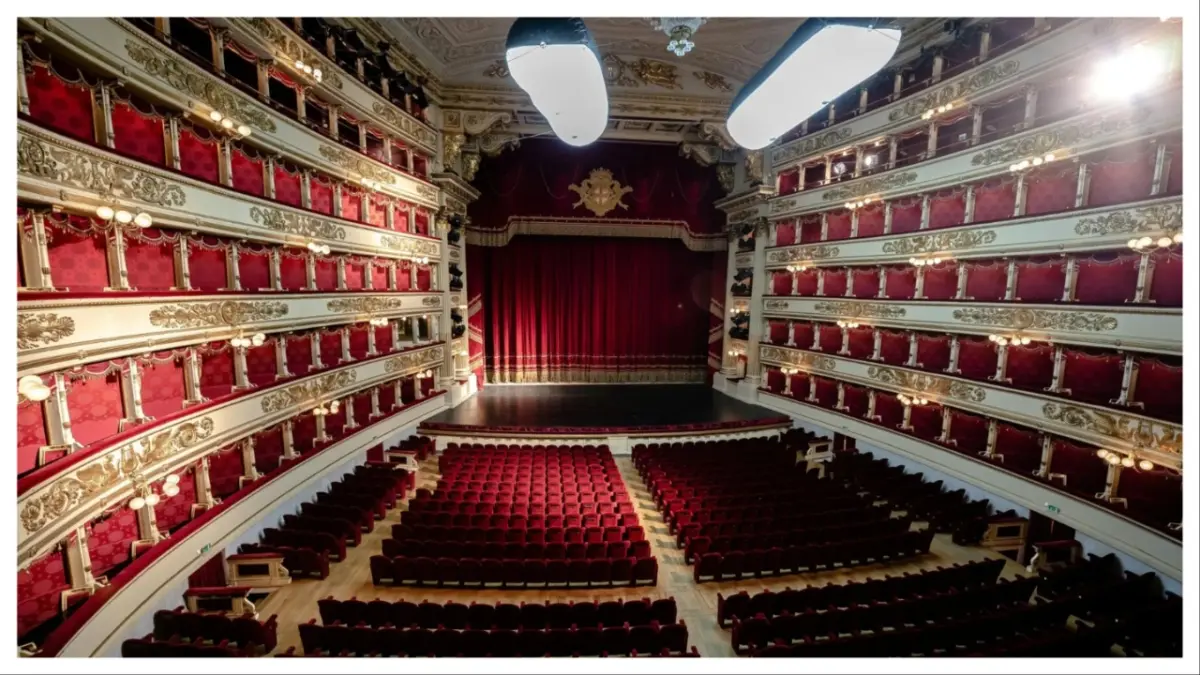
The technical realization of this vision required a massive infrastructure upgrade inside the historic Piermarini auditorium. Technicians installed a state-of-the-art array of nine remotely activated cameras. Designed to operate discreetly without disrupting the live theatrical experience or distracting the audience and performers, these high-definition cameras capture every nuance of the stage production from multiple, dynamic angles.
When LaScalaTV officially went live, it was structured similarly to commercial subscription and pay-per-view video-on-demand (VOD) services. Opera lovers from Tokyo to New York could purchase virtual tickets to live-stream opening nights, major concert events, and ballet performances. While successful in building an initial core user base, the paywall inherently limited widespread educational adoption and casual discovery—limitations that the upcoming September 1 transition aims to obliterate entirely.
Building the Archive (2023–2025)
Over its initial three-year operational window, LaScalaTV quietly amassed an extraordinary digital archive. Every live broadcast was meticulously cataloged, edited, and supplemented with metadata, creating a digital museum of contemporary and historic performances.
As the platform approaches its September 1 relaunch as a free service, its catalog boasts an impressive inventory:
- 31 Recent Operas: Capturing the pinnacle of modern staging, directorial vision, and vocal performance.
- 13 Historic Titles: Archival gems that preserve the interpretations of past masters.
- 8 Ballets: Showcasing the grace, athleticism, and precision of the La Scala Ballet Company.
- 26 Concerts: Featuring symphonic repertoires led by the world’s most formidable batons.
- Educational Content and In-Depth Studies: Curated programs designed to unpack complex musical scores, librettos, and theatrical histories for younger audiences and lifelong learners alike.
The September 1 Transformation
The shift taking effect on September 1 represents the culmination of years of strategic planning and infrastructural scaling. Supported by Intesa Sanpaolo, the platform is shedding its commercial payment gateways. Users will simply register with an email address to gain unlimited access to the entire streaming library.
According to foundation representatives, this evolution involves more than just removing a paywall; it entails a complete architectural overhaul of the user interface. The platform will feature simplified navigation, streamlined video playback, and a more dynamic content discovery engine. Furthermore, the newly freed LaScalaTV will operate in close synergy with La Scala’s other physical and digital outreach initiatives, creating an interconnected ecosystem where a digital stream might inspire a physical ticket purchase, and vice versa.
Supporting Context & Metrics: Talent, Technology, and Treasures
An Unrivaled Roster of Global Artists
The true value of LaScalaTV lies in the sheer caliber of artistry it preserves and broadcasts. The platform’s catalog is a who’s who of contemporary classical music royalty, featuring vocalists and instrumentalists who command the world’s greatest stages.
Among the celebrated sopranos and mezzo-sopranos featured prominently on the platform are:
- Eleonora Buratto, renowned for her luminous Verdi and Puccini interpretations.
- Anna Netrebko, a global superstar whose dramatic intensity electrifies the Piermarini stage.
- Camilla Nylund and Lisette Oropesa, masters of stylistic precision and vocal agility.
- Sondra Radvanovsky and Marina Rebeka, celebrated for their commanding stage presence and bel canto mastery.
- Sonya Yoncheva, whose emotionally charged portrayals have become legendary in Milan.
The tenor and baritone rosters are equally formidable, featuring world-class luminaries such as Roberto Alagna, Benjamin Bernheim, Vittorio Grigolo, Francesco Meli, and Luca Salsi. These artists represent the gold standard of Italianate phrasing and dramatic execution.
On the podium, the platform captures the visions of legendary maestros and brilliant contemporary conductors. Current musical leadership is heavily represented by Riccardo Chailly, alongside visionary conductors such as Myung-Whun Chung, Daniele Gatti, Thomas Guggeis, Fabio Luisi, Susanna Mälkki, Christophe Rousset, Speranza Scappucci, Simone Young, and Lorenzo Viotti.
Crucially, LaScalaTV does not merely look forward; it honors its past. The platform preserves historic recordings featuring legendary conductors like Claudio Abbado and Riccardo Muti, ensuring that archival performances from decades past are not lost to time but remain accessible to modern scholars and enthusiasts.
Beyond Opera: Ballet and Youth Education
While opera remains the marquee attraction of Teatro alla Scala, La Scala’s digital footprint extends far beyond vocal masterworks. The platform houses an exquisite selection of ballet performances, capturing the classical elegance and contemporary athleticism of the company.
Moreover, the foundation has prioritized youth education. Recognizing that the future of classical music depends on cultivating young audiences, LaScalaTV features dedicated educational shows and adapted concerts designed specifically for children and families. These programs break down the intimidating mystique of the opera house, presenting orchestral music, storytelling, and stagecraft in an engaging, digestible format.
Official Statements and Institutional Vision
The decision to make LaScalaTV a free, publicly accessible resource is rooted in a profound philosophical shift regarding the social responsibility of publicly funded and heavily supported cultural institutions.
In official statements released by the Teatro alla Scala Foundation, leadership emphasized that the core mission of the theater has always been the creation and dissemination of art. In the twenty-first century, dissemination can no longer be restricted solely to those fortunate enough to secure a physical seat inside the 2,000-seat horseshoe auditorium in Milan.
"Making our artistic heritage available to everyone without economic barriers is a fundamental step in our cultural strategy," the Foundation noted in its public briefing. "Art belongs to the community. By enhancing and sharing our digital archives, we are not only expanding opportunities for access and discovery, but we are actively cultivating the next generation of culture lovers. This evolution of LaScalaTV simplifies its use, diversifies its offerings, and places our digital outreach in direct, harmonious dialogue with our live theatrical mission."
This ambitious vision would not be possible without private-sector partnership. Intesa Sanpaolo, one of Italy’s premier banking institutions and a long-standing patron of Italian arts and culture, stepped forward to underwrite the transition. By providing crucial financial backing, Intesa Sanpaolo has absorbed the revenue deficit created by dropping subscription and pay-per-view fees, transforming LaScalaTV into a sustainable public utility of the arts. This partnership exemplifies how corporate philanthropy can directly empower public cultural institutions to fulfill their democratic mandates in the digital age.
Future Outlook: What to Expect Next on LaScalaTV
As LaScalaTV prepares for its September 1 relaunch, the curatorial team is already lining up an impressive array of upcoming programming designed to populate the newly freed catalog.
Upcoming Highlights from Recent Seasons
The post-September 1 catalog will immediately incorporate several standout productions from recent seasons, bringing rare and critically acclaimed works directly to global screens:
- Florian Leopold Gassmann’s L’opera seria (2025): A brilliant, satirical look at the chaotic backstage politics of eighteenth-century opera production, offering audiences a rare encounter with lesser-performed classical repertoire.
- Wolfgang Amadeus Mozart’s Requiem (2024): A transcendent, emotionally charged performance conducted by Thomas Guggeis, capturing the solemnity and architectural grandeur of Mozart’s final, unfinished masterpiece.
The Road Ahead
In the coming weeks, the Teatro alla Scala Foundation will unveil its comprehensive program of upcoming streaming events and brand-new theatrical productions slated for broadcast during the upcoming season. Industry insiders anticipate that the platform will introduce enhanced interactive features, multi-angle camera selections, and expanded multi-language subtitle options to accommodate its projected surge in global viewership.
By removing the paywall, La Scala is gambling that accessibility breeds engagement—that a student streaming L’opera seria in Buenos Aires or a retired teacher watching a Verdi broadcast in rural Canada will translate into a deeper global connection with Milan’s cultural epicenter. As the digital curtains part on September 1, Teatro alla Scala will officially step into a new era: one where the magic of the Piermarini is shared truly, freely, and universally with the world.