
Executive Overview
Vocal pedagogy, scientific research, and clinical voice therapy have long intersected at the complex phenomenon of vocal vibrato—the periodic, rapid fluctuations in pitch, timbre, and loudness that give a sustained musical tone its warmth, richness, and expressive capability. While audiences perceive vibrato as an effortless hallmark of artistic mastery, voice scientists, educators, and medical practitioners understand it as a delicate, highly coordinated physiological and neurological balancing act.
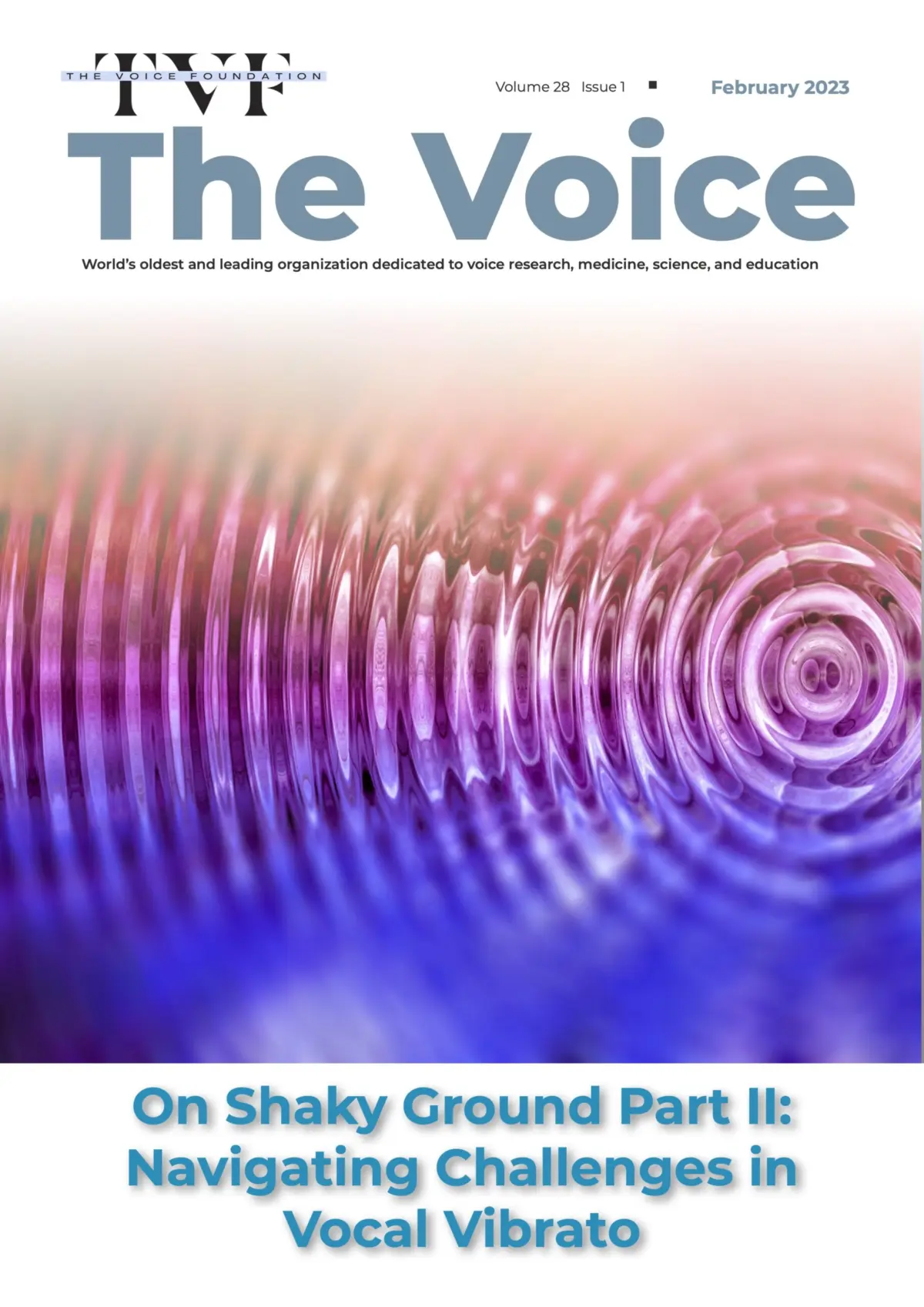
Published on February 24, 2023, by Ian DeNolfo, The Voice Foundation’s February 2023 Newsletter marked a critical milestone in this ongoing discourse. Centered around the compelling feature "On Shaky Ground Part II," this edition deep-dives into the multifaceted nature of vocal vibrato. Building upon previous explorations of laryngeal stability and neuromuscular control, the current issue brings together leading voices from diverse disciplines—scientific research, vocal pedagogy, and clinical voice pathology—to examine how vibrato is generated, taught, managed, and occasionally pathologized.
This comprehensive report synthesizes the core themes of the February 2023 publication, contextualizes the physiological and pedagogical mechanisms of vibrato, explores the diagnostic and therapeutic challenges associated with vibrato irregularities, and evaluates the broader implications for performers and voice professionals worldwide.
Detailed Chronology: The Evolution of Vibrato Discourse at The Voice Foundation
To understand the weight of the February 2023 newsletter, one must trace the trajectory of how vocal mechanics have been evaluated within professional voice communities. For decades, vocal vibrato was treated primarily as an aesthetic choice—something cultivated through imitation and traditional teaching methods. However, the advent of advanced electromyography (EMG), high-speed laryngeal imaging, and acoustic analysis shifted the paradigm, framing vibrato as a complex neuromuscular oscillation rooted in the central nervous system and the intricate interplay of intrinsic and extrinsic laryngeal muscles.
The Lead-Up to "On Shaky Ground"
The exploration leading to "Part II" began with mounting clinical observations regarding vocal tremors, excessive or insufficient vibrato rates, and the challenges faced by classical and contemporary commercial music (CCM) singers alike. Educators noted a rising prevalence of "straight tone" demands in modern choral and early music settings, contrasted with traditional demands for a rich, undulating vibrato in operatic repertoires.
Simultaneously, laryngologists and speech-language pathologists (SLPs) encountered performers suffering from vocal fatigue, spasmodic dysphonia, and benign vocal fold lesions whose symptoms directly impacted or were exacerbated by dysfunctional vibrato patterns. "On Shaky Ground Part I" laid the groundwork by identifying the instabilities that occur when respiratory, phonatory, and resonatory systems fall out of equilibrium.
The February 24, 2023 Release
Released on February 24, 2023, the newsletter arrived as a pivotal resource for the global vocal community. Featuring an in-depth cover article complete with comprehensive instructional and diagnostic breakdowns, the publication bridged the gap between academic theory and practical application. It addressed the exact physiological frequency of healthy vibrato (typically oscillating between 5.5 and 7.0 Hz) and investigated what happens when those oscillations become erratic, translating either into an undesirable "wobble" (too slow) or a tense "bleat" or tremor (too fast).
Supporting Context & Metrics: The Anatomy and Physics of Vocal Vibrato
To fully appreciate the insights presented in the February 2023 newsletter, it is essential to examine the underlying science of vocal vibrato, supported by established acoustic and physiological metrics.
1. The Physiological Engine
Vibrato is not merely a stylistic stylistic flourish; it is an organic acoustic modulation resulting from periodic variations in pitch (frequency modulation), intensity (amplitude modulation), and timbre (spectral modulation).
- Neuromuscular Oscillation: Current consensus among voice scientists points to a central nervous system rhythm—specifically micro-oscillations originating in the motor cortex or brainstem—that commands the laryngeal musculature.
- Muscle Synergy: The cricothyroid muscle (responsible for pitch regulation) and the thyroarytenoid muscle, alongside respiratory support muscles, work in a synchronized micro-fluctuation. When this balance is disrupted by excessive muscular tension (hyperfunction) or fatigue, the vibrato degrades.
2. Key Acoustic Metrics of Vibrato
Voice researchers rely on specific quantitative parameters to evaluate the health and aesthetic quality of vibrato:
- Rate (Frequency): A standard, aesthetically pleasing vibrato oscillates at approximately 5.5 to 7.0 cycles per second (Hz).
- Wobble: Rates falling below 5.0 Hz are generally perceived as sluggish or unstable.
- Tremor/Bleat: Rates exceeding 7.5 Hz often indicate hyperfunction, neurological stress, or muscular fatigue.
- Extent (Depth): The pitch fluctuation typically ranges from a quarter-tone to a half-tone above and below the nominal pitch (approximately $pm$ 50 to 100 cents).
- Wide Vibrato: An excessive extent sounds uncentered and out of tune.
- Straight Tone: An absence of extent characterizes straight-tone singing, which places unique acoustic demands on vocal fold closure and breath management.
+-----------------------------------------------------------------+
|                     VIBRATO SPECTRUM ANALYSIS                   |
+--------------------------+-------------------+------------------+
| Condition                | Frequency (Rate)  | Clinical/Aesthetic|
+--------------------------+-------------------+------------------+
| Healthy Vibrato          | 5.5 - 7.0 Hz      | Balanced, rich   |
| Wobble (Slow)            | < 5.0 Hz          | Unstable, sluggish|
| Tremor/Bleat (Fast)      | > 7.5 Hz          | Tense, fatigued  |
+--------------------------+-------------------+------------------+
3. The Triad of Perspective: Research, Teaching, and Treatment
The brilliance of "On Shaky Ground Part II" lies in its tripartite approach:
- Research Perspective: Utilizing acoustic software (such as Praat) and laryngeal electromyography to map the exact pathways of neuromuscular feedback loops.
- Teaching Perspective: Providing voice pedagogues with actionable tools to correct forced vibrato, eliminate manufactured oscillations, and restore natural physiological freedom.
- Treatment Perspective: Equipping speech-language pathologists and otolaryngologists with diagnostic markers to differentiate between functional training issues and true vocal pathologies or neurological tremors.
Official Insights and Professional Commentary
The discourse surrounding vocal vibrato requires a delicate balance between artistic interpretation and rigorous scientific inquiry. Experts featured within The Voice Foundation’s network frequently emphasize that vibrato should be the natural byproduct of a free, unencumbered vocal mechanism rather than a mechanical trick forced upon the voice.
Pedagogical Implications
Master voice teachers often warn against the artificial manipulation of vibrato. Forcing a rapid shake into the voice mimics true vibrato but builds harmful extrinsic muscle tension (engaging the suprahyoid and infrahyoid muscles inappropriately). Conversely, suppressing natural vibrato for stylistic purposes requires sustained isometric muscle contractions, which can accelerate vocal fatigue if executed with excessive force.
Clinical and Otolaryngological Standpoints
From a medical standpoint, sudden changes in vibrato characteristics serve as an essential diagnostic red flag. An unexplained widening of vibrato (wobble) or an irregular tremor can be the earliest indicator of:
- Recurrent Laryngeal Nerve (RLN) Paresis: Impaired mobility of one vocal fold disrupting smooth aerodynamic and muscular oscillation.
- Vocal Fold Atrophy: Age-related changes (presbyphonia) reducing muscle mass and tension control.
- Neurological Conditions: Essential tremor or early-stage Parkinson’s disease frequently manifest first in the delicate micro-oscillations of the singing or speaking voice.
- Phonotrauma: Swelling (edema) of the lamina propria altering the mass and pliability of the vocal fold mucosa.
Future Outlook: The Horizon of Voice Science and Pedagogy
As we look beyond the findings published in the February 2023 newsletter, the study of vocal health and artistic expression continues to evolve rapidly. Several key trends are shaping the future of voice research and clinical practice:
1. Integration of Artificial Intelligence in Voice Analysis
Machine learning algorithms are increasingly being deployed to analyze acoustic signals in real time. Future pedagogical tools may provide singers with instantaneous visual feedback on their vibrato rate, extent, and color spectrum, allowing for more precise, injury-preventative training regimens.
2. Interdisciplinary Collaboration
The traditional silos separating classical voice studios, contemporary vocal coaching, speech-language pathology, and laryngology are steadily dissolving. Publications like The Voice Foundation’s newsletter serve as vital bridges, ensuring that scientific discoveries reach the teachers working directly in the studio and that clinicians understand the artistic demands placed upon modern performers.
3. Personalized Vocal Rehabilitation
As our understanding of laryngeal biomechanics deepens, treatment protocols for aberrant vibrato will become increasingly individualized. Rather than applying a one-size-fits-all approach to vocal wobble or tremor, voice specialists will utilize advanced imaging and electromyographic profiling to target specific muscle groups and neural pathways.
Conclusion
The Voice Foundation’s February 2023 newsletter, highlighted by "On Shaky Ground Part II," underscores the profound complexity underlying what many listeners take for granted as a simple musical embellishment. By examining vocal vibrato through the synchronized lenses of scientific research, pedagogical instruction, and clinical treatment, the publication has provided an invaluable roadmap for voice professionals navigating the delicate balance between art and anatomy.
As performers strive for greater artistic versatility and clinicians seek more effective interventions for vocal dysfunction, continued exploration into the physiological foundations of vibrato remains paramount. Through rigorous scholarship and interdisciplinary dialogue, institutions like The Voice Foundation ensure that the human voice remains on steady, healthy, and brilliantly expressive ground for generations to come.