
By the Editorial Desk
Published: September 2026
Executive Overview
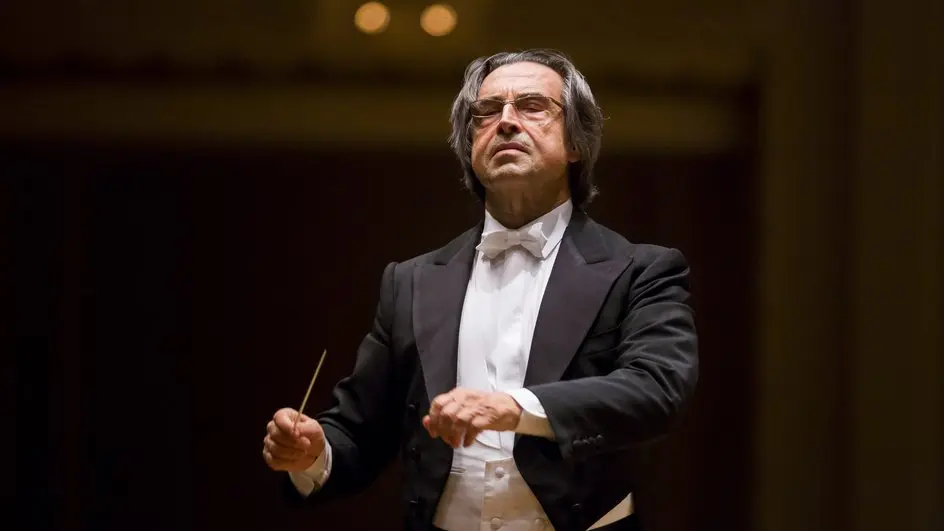
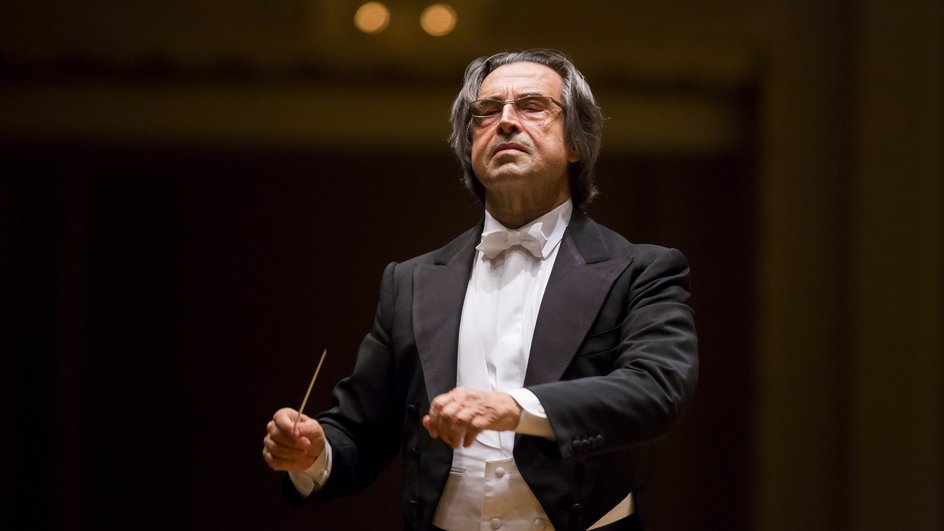
In a dramatic turn of events that has captivated the Italian cultural landscape, world-renowned conductor Riccardo Muti’s much-anticipated tribute concert at Villa Verdi—scheduled for September 12, 2026—will officially move forward. The confirmation comes after weeks of intense public debate, administrative gridlock, and a high-stakes diplomatic intervention by Italy’s Culture Minister, Alessandro Giuli.
The controversy erupted late last month when Maestro Muti and his wife, cultural entrepreneur Cristina Mazzavillani, penned a poignant open letter to the esteemed Italian daily Corriere della Sera. In the letter, the couple expressed profound public regret and sorrow over being barred from performing at the historic gates of Villa Verdi—the legendary estate of Italy’s quintessential operatic composer, Giuseppe Verdi. The exclusion initially threatened to cancel a poignant cultural gathering, casting a shadow over the preservation and public accessibility of one of Italy’s most cherished artistic shrines.
However, swift intervention from Minister Giuli bridged the divide between local administrative hurdles and national cultural imperatives. Following constructive dialogues, Cristina Mazzavillani confirmed that the dispute had been satisfactorily resolved. The September 12 event will proceed as an exclusive, intimate recital featuring Maestro Muti at the piano alongside a select group of artists. While the physical gates of the villa will remain closed to a live public audience to respect ongoing logistical and legal parameters, the entire performance will be broadcast nationwide via RAI, Italy’s public broadcasting network, ensuring that millions of classical music aficionados can partake in the historic tribute.
This comprehensive report examines the chronology of the Villa Verdi dispute, the cultural significance of the venue, the diplomatic maneuvering behind the ministerial resolution, and the broader implications for the governance of Italy’s artistic heritage.
Detailed Chronology: From Public Grievance to Ministerial Resolution
To fully understand the gravity of the September 12 concert, one must trace the rapid escalation of events that brought the iconic maestro and the Italian government into a delicate public standoff.
Late August 2026: The Open Letter in Corriere della Sera
The crisis broke into the public sphere when Corriere della Sera published a joint letter authored by Riccardo Muti and Cristina Mazzavillani. The tone of the letter was one of deep disillusionment. For Muti—a global ambassador of Italian opera and a conductor deeply intertwined with the repertoire of Giuseppe Verdi—being denied the ability to perform outside the gates of Villa Verdi felt not merely like an administrative rejection, but a cultural injury.
The estate, located in Sant’Agata di Villanova sull’Arda in the province of Piacenza, is hallowed ground for opera lovers. It was here that Verdi lived, composed masterpieces such as La Traviata, Il Trovatore, and Falstaff, and cultivated his passion for agriculture and architecture. The prospect of Muti being turned away from this sanctuary sparked immediate outrage across Italy’s cultural sector, triggering widespread debates on heritage management, public access, and the treatment of living legends.
Early September 2026: Minister Giuli Steps In
Recognizing the political and cultural fallout of the mounting controversy, Culture Minister Alessandro Giuli intervened. Stepping into the fray, Giuli initiated a series of confidential, high-level discussions with Cristina Mazzavillani and local stakeholders to untangle the web of restrictions that had initially blocked the performance.
The Ministry of Culture recognized that allowing a symbolic, high-profile event led by Muti to collapse would send a chilling message regarding the state’s stewardship of its musical legacy. Giuli’s intervention focused on finding a viable compromise—one that respected legal and administrative constraints while honoring the artistic magnitude of the occasion.
The Breakthrough and Compromise
The breakthrough came when Mazzavillani, speaking on behalf of the collaborative artistic vision, publicly acknowledged the resolution. In a statement following the dialogue with Minister Giuli, she remarked:
"I am someone who has placed herself at the service of a good and intelligent project. But I’m not speaking for my husband or for the minister, who issued such a clear statement, finally for me too, that I’m fine with it. The minister has given the final word. The concert will take place on the 12th."
Under the finalized framework, the event will bypass the logistical complications of hosting a physical audience on-site. Instead, the concert will take an intimate, concentrated form: Riccardo Muti will perform at the piano, accompanied by a select ensemble of artists. Crucially, the partnership with RAI ensures that the historic nature of the performance will not be lost to an empty courtyard, but will instead be beamed directly into homes across Italy and streamed internationally, transforming a localized administrative dispute into a nationwide broadcast event.
Supporting Context & Metrics: The Significance of Villa Verdi
To grasp why the Muti concert generated such intense national passion, one must examine the historical, architectural, and emotional weight carried by Villa Verdi.
The Sanctuary of Sant’Agata
Villa Verdi is far more than a museum; it is the physical embodiment of Giuseppe Verdi’s soul. Purchased by the composer in 1848, Sant’Agata served as his creative headquarters for decades. It was designed and modified by Verdi himself, reflecting his practical, grounded nature as well as his soaring artistic vision. Every room preserves the atmosphere of the 19th century—from the pianos upon which his greatest melodies were sketched to the personal mementos, books, and furnishings that chronicled his life alongside his companion and eventual wife, soprano Giuseppina Strepponi.
+--------------------------------------------------------------------------+
                      VILLA VERDI: AT A GLANCE
+--------------------------------------------------------------------------+
 * Location: Sant’Agata di Villanova sull’Arda (Piacenza, Emilia-Romagna)
 * Established: Acquired by Giuseppe Verdi in 1848
 * Cultural Status: Core monument of Italian Romantic opera and heritage
 * Significance: Primary composing residence for major mid-to-late career works
 * Current Challenge: Balancing private estate stewardship, public access,
   and national cultural preservation.
+--------------------------------------------------------------------------+
Riccardo Muti’s Lifelong Dedication to Verdi
Riccardo Muti’s career is inextricably linked to the music of Giuseppe Verdi. Born in Naples in 1941, Muti has served as the music director of the Maggio Musicale Fiorentino, the Teatro alla Scala in Milan, and the Philadelphia Orchestra, alongside leading the Chicago Symphony Orchestra. Throughout his decades-long tenure on the world’s most prestigious podiums, Muti has championed Verdi with an academic rigor and emotional intensity matched by few of his contemporaries.
Muti has long argued that Verdi’s scores contain precise, immutable truths that must be respected above modern directorial whims. His interpretations of Nabucco, Macbeth, Don Carlo, and Requiem are considered definitive benchmarks. Thus, a performance by Muti at Villa Verdi is not merely a concert; it is a spiritual homecoming—a master of the modern podium paying homage to the master of the romantic pen on the very soil where the notes were born.
Official Statements and Stakeholder Reactions
The resolution of the Villa Verdi dispute has elicited responses from across the spectrum of Italy’s cultural and political leadership.
Culture Minister Alessandro Giuli
Minister Giuli’s handling of the crisis has been praised as a masterclass in swift cultural diplomacy. By stepping in directly, the Ministry of Culture reasserted its role as a protector of national memory. Observers note that Giuli’s intervention averted a potentially embarrassing public relations disaster for the Italian government, framing the Ministry not as an obstacle to art, but as an enabler of cultural continuity. In official communications, the Ministry emphasized that preserving the dignity of artists of Muti’s stature is paramount to safeguarding Italy’s global brand as a cradle of classical music.
Cristina Mazzavillani’s Perspective
Cristina Mazzavillani’s public statements reflect a pragmatic and deeply relieved acceptance of the compromise. Known for her own formidable contributions to Italian arts management—including her foundational work with Ravenna Festival—Mazzavillani balanced artistic ambition with institutional realism. Her endorsement of Minister Giuli’s final word underscored the collaborative spirit required to bring the September 12 project across the finish line.
Public and Media Reception
Italian cultural journalism has reacted with overwhelming relief. Major outlets, which spent late August dissecting the bureaucratic blockages surrounding the estate, have pivoted to celebrating the upcoming broadcast. Cultural commentators have highlighted the poetic irony of a concert held without a physical audience: in an era of hyper-commercialized tourism and crowded heritage sites, a closed-door, broadcast-only recital led by Muti at the piano evokes the private salons of the 19th century, where art was shared intimately among the faithful before being transmitted to the world.
Future Outlook: What the September 12 Event Means for Italian Heritage
As the clock ticks down to September 12, 2026, attention is shifting from the administrative controversy to the artistic and structural future of Villa Verdi itself.
A Catalyst for Ongoing Debates
The standoff between local limitations, ministerial oversight, and artistic aspiration has exposed deeper questions regarding the management of private cultural properties in Italy. Many heritage experts hope that the high-profile nature of the Muti concert will serve as a catalyst for long-term solutions regarding the public accessibility, legal ownership, and financial sustainability of Villa Verdi. As generations of descendants and legal executors navigate the complex fate of the estate, ensuring that Verdi’s home remains a living altar to music—rather than a locked vault of disputed assets—remains a top priority for the Italian state.
The Broadcast Event: A Global Stage
With the physical gates closed to ticket-holders, the RAI broadcast carries immense weight. Millions of viewers across Italy and international audiences tuning in via streaming platforms will witness a unique artistic statement. Stripped of the grand orchestral forces that typically define Muti’s Verdi interpretations, the piano-centric recital promises a raw, introspective exploration of the composer’s harmonic genius.
For Riccardo Muti, the evening will be a profound personal statement—an act of artistic devotion offered at the threshold of the house that built Italian opera. And for Italy, the September 12 concert will stand as a testament to the resilience of its cultural institutions, proving that when art, politics, and passion converge, even the most stubborn gates can be opened by the unifying power of music.