Long before the modern era of digital vocal coaching apps, viral social media vocal pedagogues, and high-definition laryngeal imaging, the science of the human voice remained a mysterious, frequently misunderstood medical frontier. For centuries, singers, actors, public speakers, and broadcasters who suffered from vocal injuries faced career-ending diagnoses based on rudimentary examinations and trial-and-error treatments.
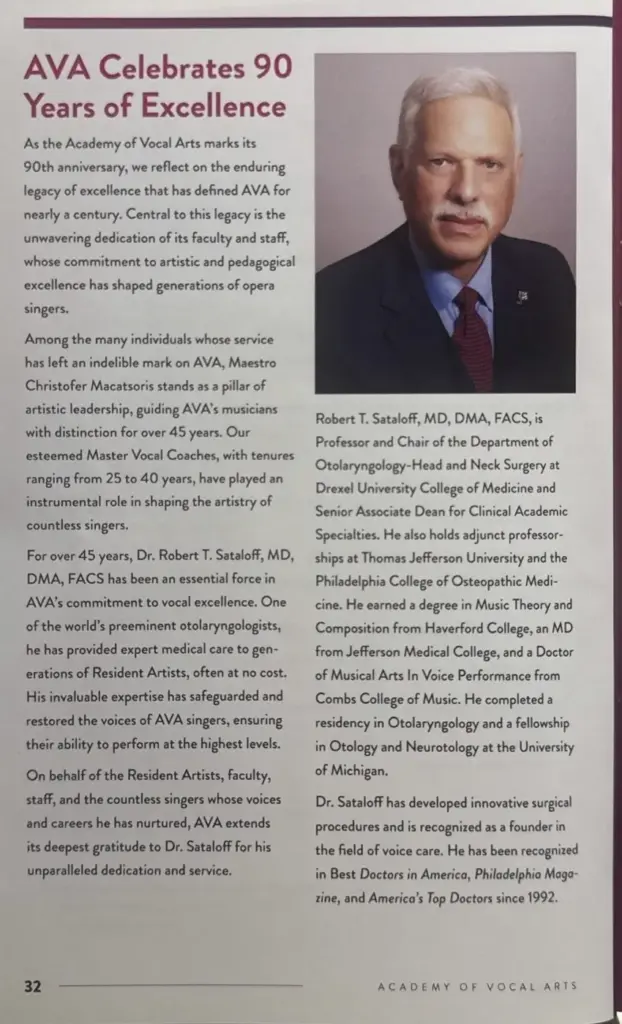
That paradigm shift accelerated dramatically in the late 20th century, largely due to the pioneering work of otolaryngologist, conductor, and educator Dr. Robert Thayer Sataloff.
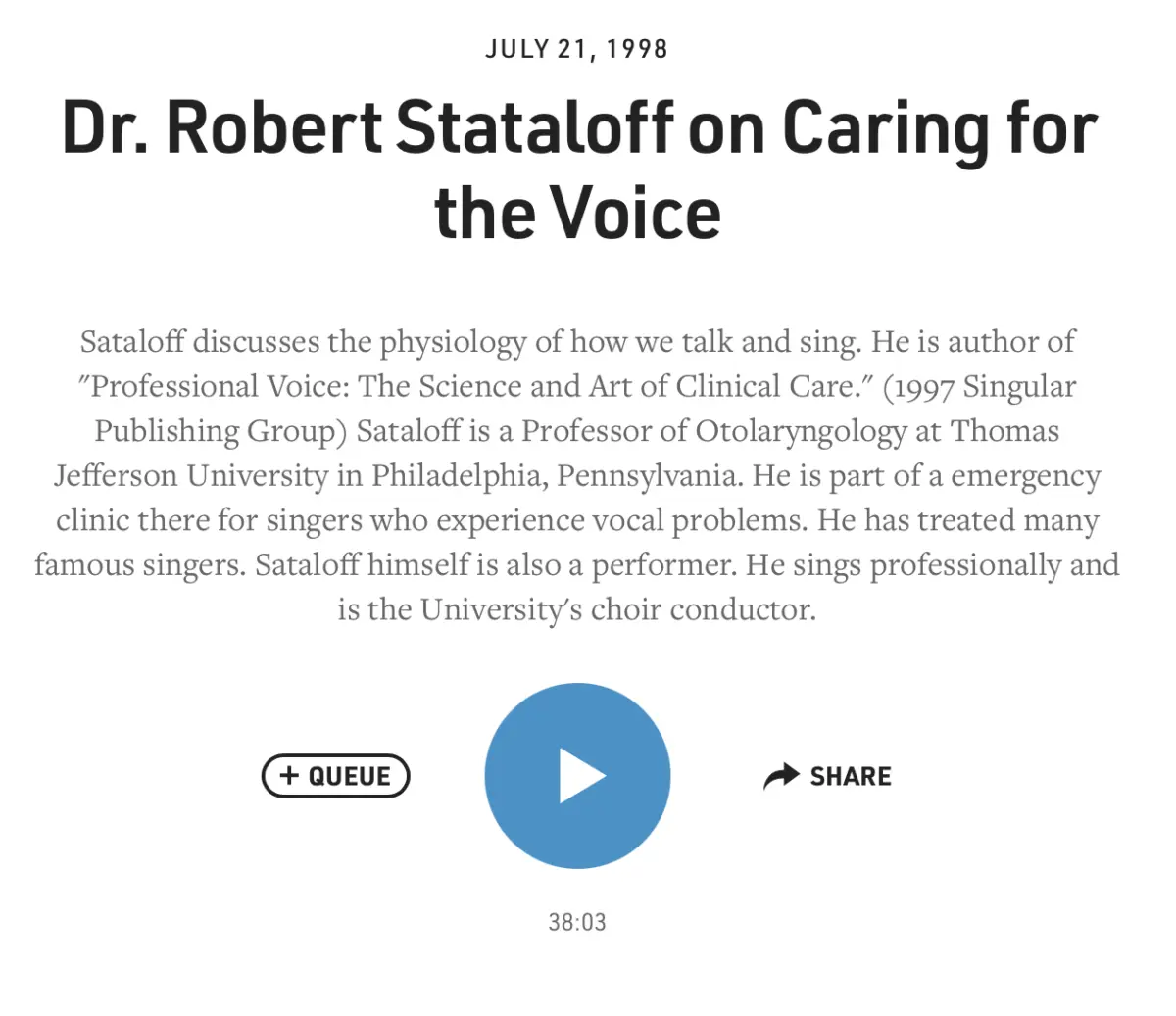
In an archival interview that continues to resonate with medical professionals, performing artists, and speech pathologists alike, Dr. Sataloff sat down in 1998 with Terry Gross, the iconic host of NPR’s Peabody Award-winning cultural interview program, Fresh Air. This wide-ranging, deeply informative conversation lifted the veil on the extraordinarily complex physiology of the human voice box (larynx), explored the profound psychological toll of vocal disorders, and detailed the groundbreaking medical technologies transforming voice care.
This article revisits that historic broadcast, expanding upon the core themes, medical breakthroughs, and cultural significance of Dr. Sataloff’s appearance. By examining the conversation through both a historical and modern lens, we gain a comprehensive appreciation of how Dr. Sataloff helped bridge the gap between high art and hard science, transforming vocal medicine into a respected, highly specialized multidisciplinary field.
Detailed Chronology: The Evolution of Voice Care and the 1998 Broadcast
To truly understand the weight of Dr. Sataloff’s 1998 interview on Fresh Air, one must contextualize the state of otolaryngology and vocal arts medicine at the close of the twentieth century.
The Pre-Multidisciplinary Era
For generations, vocal performers facing sudden hoarseness, nodules, or vocal cord hemorrhages had few places to turn. Standard otolaryngologists (ear, nose, and throat doctors) were exceptionally skilled at treating life-threatening pathologies—such as tumors, infections, and structural trauma—but they rarely understood the nuanced acoustic demands placed upon an opera singer, a Broadway performer, or a touring rock musician. Conversely, voice teachers and singing coaches possessed deep artistic insight into vocal production, yet they lacked the diagnostic tools and medical training required to identify microscopic vascular lesions or neurological impairments of the larynx.
During the 1970s and 1980s, a quiet revolution began to take shape. Pioneers like Dr. Sataloff recognized that optimal care for the professional voice required an unprecedented union of disciplines: otolaryngology, speech-language pathology, voice science, vocal pedagogy, neurology, and psychology.
The 1998 NPR Fresh Air Interview
By 1998, Dr. Sataloff was already recognized globally as a titan in the field. As a Professor of Otolaryngology at the Jefferson Medical College of Thomas Jefferson University in Philadelphia, and as the Chairman of the Board of The Voice Foundation, he had authored numerous definitive textbooks and scientific papers.
When Terry Gross welcomed Dr. Sataloff to the microphone on Fresh Air, her listeners—ranging from casual radio audiences to elite vocalists—were treated to a masterclass in human anatomy demystified. Gross, known for her incisive, deeply researched interviewing style, guided Dr. Sataloff through the mechanics of sound production.
Key thematic milestones from the 1998 broadcast included:
The Physics of Sound Generation: Explaining how breath from the lungs sets the vocal folds into rapid oscillation, creating the mucosal wave essential for clear phonation.
The Occupational Hazards of the Voice: Drawing parallels between elite vocal performers and elite athletes, noting that a professional singer’s vocal folds endure microscopic collisions hundreds of times per second.
The Stigma of Vocal Injury: Addressing the psychological devastation performers experience when their voice fails, often compounded by unfair social stigmas regarding lifestyle, substance use, or lack of discipline.
Preventative Medicine and Hygiene: Dispelling common myths about vocal health, including hydration, the impact of gastroesophageal reflux (GERD), and the dangers of whispering.
Supporting Context & Metrics: The Fragile Marvel of Vocal Physiology
To appreciate the depth of Dr. Sataloff’s insights, one must examine the astonishing biomechanics and physiological metrics that govern human speech and singing. The human voice is not produced by a single organ; rather, it is the culmination of a sophisticated, three-part aerodynamic and acoustic system:
The Power Source (The Respiratory System): The lungs, diaphragm, and abdominal musculature provide the pressurized air column necessary to drive vocal fold vibration.
The Oscillator (The Larynx): Housed within the thyroid cartilage, the two vocal folds (often historically referred to as vocal cords) open during breathing and approximate (come together) during phonation.
The Resonators (The Vocal Tract): The throat (pharynx), oral cavity, and nasal passages shape, amplify, and color the raw acoustic output generated by the larynx.
Astonishing Metrics of the Voice
Frequency of Vibration: During normal conversational speech, male vocal folds typically vibrate between 100 and 150 times per second (Hz), while female vocal folds vibrate between 180 and 220 times per second.
High-Pitch Extremes: During professional operatic singing—particularly in the coloratura soprano range—vocal folds can oscillate at frequencies exceeding 1,000 to 1,500 Hz.
Microscopic Collisions: In a single opera performance or a rigorous two-hour lecture, the vocal folds collide against one another hundreds of thousands of times. Over years of professional use, the cumulative mechanical stress is immense.
The Mucosal Wave: Healthy vocal folds rely on a delicate, gelatinous layer beneath the epithelium known as Reinke’s space. The fluid motion of this mucosal wave is critical; even microscopic scarring or stiffening can drastically alter pitch, projection, and timbre.
Official Perspectives and Expert Insights
Throughout his career—and highlighted extensively in his discussions with media outlets like NPR—Dr. Sataloff has continually emphasized that the voice is the ultimate acoustic mirror of human health and identity.
The Intersection of Medicine and Art
In his professional writings and public appearances, Dr. Sataloff has frequently noted that treating performing artists requires a distinct philosophical approach. Unlike standard medical interventions where a patient may be advised to remain completely silent or rest indefinitely, a professional singer’s livelihood, emotional well-being, and artistic identity are inextricably bound to their voice.
"When a professional singer loses their voice, they do not just lose their ability to communicate; they lose their identity, their community, and their economic survival. Treating them requires treating the whole person—physically, technically, and psychologically." — Dr. Robert Thayer Sataloff (paraphrased from clinical lectures and media archives)
The Role of The Voice Foundation
A major cornerstone of Dr. Sataloff’s enduring legacy is his leadership within The Voice Foundation, the world’s oldest and primary organization dedicated to voice education, research, and care. Founded by Dr. Wilbur James Gould in 1969 and heavily championed by Sataloff for decades, the Foundation hosts the annual Symposium: Care of the Professional Voice in Philadelphia. This gathering brings together laryngologists, speech-language pathologists, singing teachers, and basic scientists to share cutting-edge research, ensuring that medical treatments remain aligned with the highest standards of vocal pedagogy.
Future Outlook: Modern Voice Care in the 21st Century
As we look back at the 1998 interview with Terry Gross, it is remarkable to observe how far the field of laryngology has advanced, while simultaneously recognizing how foundational Dr. Sataloff’s early teachings remain.
Technological Innovations in Laryngology
Today, the diagnostic capabilities available to voice specialists far exceed what was clinically standard in the late 1990s:
Stroboscopy and High-Speed Digital Imaging (HSDI): While standard stroboscopy was available in the 90s, modern high-speed video captures thousands of frames per second, allowing physicians to visualize irregular vocal fold vibrations frame-by-frame with breathtaking clarity.
Office-Based Laser Surgery: Micro-targeted lasers allow otolaryngologists to remove benign lesions (such as small nodules, polyps, or micro-varicosities) under local anesthesia right in the clinic, minimizing tissue trauma and accelerating recovery times.
Regenerative Medicine and Stem Cell Research: Current research explores the use of stem cells and biocompatible injectables to regenerate damaged lamina propria (Reinke’s space), offering hope for patients with severe vocal fold scarring that was once deemed irreversible.
Telehealth and Preventative Vocal Health
The COVID-19 pandemic and the subsequent rise of remote communication dramatically altered how voice care is delivered. Tele-speech therapy and virtual laryngology consultations have expanded global access to specialized vocal rehabilitation. Furthermore, public awareness campaigns—inspired by decades of advocacy from organizations like The Voice Foundation—have normalized vocal hygiene. Singers and speakers now view hydration, vocal pacing, and professional medical check-ups not as emergency measures, but as standard daily maintenance.
Conclusion
Dr. Robert Thayer Sataloff’s 1998 appearance on NPR’s Fresh Air with Terry Gross stands as a timeless archival treasure. It captured a pivotal moment when the intricate science of the larynx was successfully translated for a mainstream audience, validating the struggles of performers and illuminating the profound dedication of medical specialists who treat them.
By marrying rigorous scientific inquiry with a deep reverence for the performing arts, Dr. Sataloff helped build a multidisciplinary framework that continues to save and restore the voices of countless individuals. Whether revisiting his classic media interviews or reviewing modern breakthroughs in laryngeal surgery, the core message remains unwavering: the human voice is a fragile, breathtaking marvel of nature that deserves our utmost scientific understanding, medical precision, and artistic respect.
Archival audio of the original 1998 interview remains accessible through the Fresh Air Archive and The Voice Foundation.