
Executive Overview
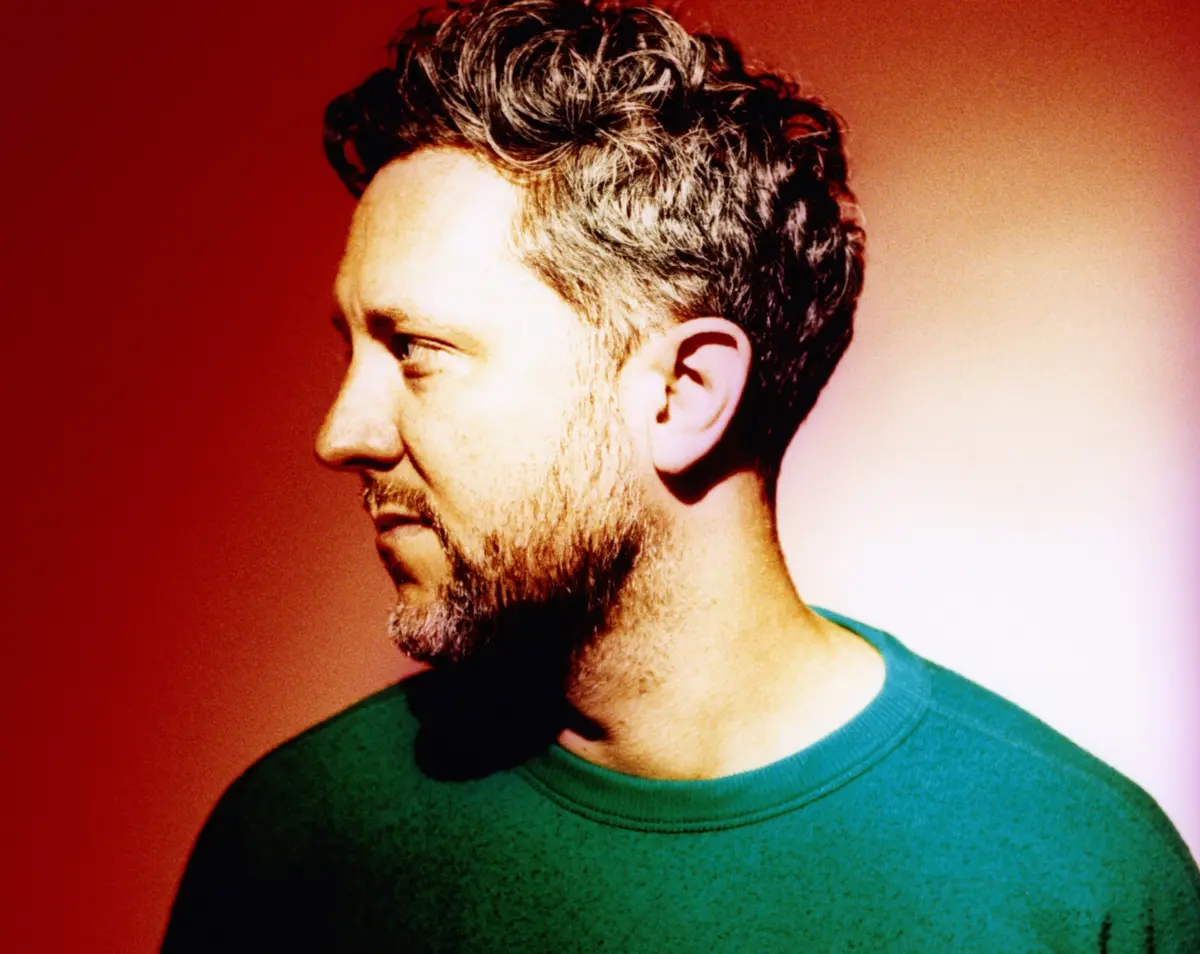
Electronic music producer FitzGerald has officially returned with his latest release, "The Ladder," marking a pivotal turning point in his evolving sonic trajectory. Arriving on the heels of a prolific string of 2024 standalone singles—including “Gild,” “Incomplete Dreaming,” and “Gleams”—this newest track serves as more than just another addition to his catalog. According to industry insiders and the artist himself, "The Ladder" represents a deliberate, thematic threshold, ushering in an entirely new chapter for the south-east London-based producer.
Infused with the distinct, hypnotic textures of early-2000s dance music, the track bridges a gap between vintage electronic nostalgia and contemporary production mastery. The creative genesis of "The Ladder" dates back to a collaborative studio session with fellow electronic innovator Ghost Culture near the historic grounds of Glastonbury, before FitzGerald meticulously finalized the production at his private studio in south-east London.
By channeling the progressive arrangements and patient emotional builds characteristic of the turn of the millennium, FitzGerald has crafted a club-ready yet deeply introspective piece. This comprehensive report explores the anatomy of "The Ladder," tracing its production chronology, contextualizing its place within the broader electronic music landscape, analyzing statements from the artist, and forecasting what this transformative release means for the future of FitzGerald’s career.
Detailed Chronology: From Glastonbury Genesis to London Completion
The story of "The Ladder" is one of organic collaboration, geographical serendipity, and meticulous sonic refinement. Understanding the track’s journey requires examining the timeline of FitzGerald’s creative output across 2024 and early 2025.
The 2024 Foundation: A Prolific Precursor
To fully appreciate the narrative arc of "The Ladder," one must first examine the groundwork laid by FitzGerald throughout 2024. During this period, the artist engaged in a deliberate campaign of experimentation, releasing a sequence of standalone singles that tested the boundaries of his production capabilities:
- “Gild”: Explored atmospheric soundscapes and intricate rhythmic interplay.
- “Incomplete Dreaming”: Focused on melancholic melodic hooks paired with driving low-end frequencies.
- “Gleams”: Showcased a brighter, more expansive palette that hinted at a shift away from darker, minimalist techno aesthetics.
These three releases served as auditory breadcrumbs, signaling to fans and critics alike that FitzGerald was shedding old habits and searching for a fresh vocabulary. However, none of these singles carried the definitive conceptual weight that "The Ladder" achieves. Where the 2024 singles were exploratory exercises, "The Ladder" is a fully realized manifesto.
The Glastonbury Countryside Sessions
The actual creation of "The Ladder" began away from the concrete expanse of the capital, unfolding in the bucolic serenity of the English countryside near Glastonbury. It was here that FitzGerald linked up with acclaimed electronic musician and producer Ghost Culture. Known for his keen ear for analog warmth and structural intricacy, Ghost Culture provided an ideal sounding board for FitzGerald’s burgeoning ideas.
During these collaborative sessions, the core DNA of "The Ladder" was forged. The artists experimented with vintage synthesizers, sequencing loops reminiscent of early-2000s progressive house and trance, and establishing a hypnotic rhythmic foundation. Rather than aiming for immediate, high-impact drop culture typical of contemporary commercial dance music, the duo leaned into patience, allowing motifs to evolve gradually over extended musical phrases.
Refining in South-East London
Following the initial rural sessions, the raw stems and structural skeletons of the track traveled back with FitzGerald to his permanent base of operations: his studio in south-east London.
In the solitude of his urban workspace, FitzGerald spent weeks editing, mixing, and polishing the track. This phase involved meticulous sound design—adjusting the resonance of filter sweeps, fine-tuning the compression on the transient hits to ensure club-system viability, and balancing the emotional weight of the mid-range melodies against a robust, pulsating sub-bass. It was in this south-east London studio that the disparate ideas captured near Glastonbury were unified into a singular, cohesive auditory journey.
Supporting Context & Metrics: The Early-2000s Electronic Revival
To contextualize "The Ladder," one must look at the broader cultural and musical landscape of the mid-2020s. The electronic music industry has experienced a massive surge of interest in the sounds of the late 1990s and early 2000s. From the commercial resurgence of trance and progressive house to the rediscovery of early-era digital workstation aesthetics, producers are increasingly looking backward to move forward.
The Aesthetic of the Early-2000s Dance Era
The period spanning roughly 1999 to 2005 was a fascinating transitionary epoch in electronic music. It sat precisely between the hardware-heavy underground rave culture of the 1990s and the hyper-compressed, software-dominated EDM explosion of the early 2010s. Key characteristics of this era included:
- Progressive Song Structures: Tracks routinely spanned seven to ten minutes, prioritizing slow-burning narrative arcs over instant gratification.
- Textural Sound Design: Extensive use of supersaw synths, lush arpeggios, and sweeping white-noise effects that created a sense of vast space.
- Emotional Ambiguity: Rather than relying strictly on euphoric peaks or dark, aggressive drops, music from this era frequently balanced melancholy with uplift, resulting in a bittersweet emotional resonance.
FitzGerald’s Place in the Contemporary Circuit
Operating out of the vibrant and fiercely competitive south-east London electronic scene, FitzGerald has carved out a reputation as a purist who refuses to pander to algorithmic short-form media trends. While many contemporary producers structure their tracks for 15-second TikTok loops, FitzGerald’s embrace of long-form progressive structures positions him alongside a discerning cadre of artists prioritizing artistic depth.
Data from independent music distributors indicates a growing listener retention rate for electronic tracks featuring extended, non-linear arrangements—a metric that validates FitzGerald’s artistic gamble with "The Ladder." By rejecting the fast-paced gratification of modern pop-dance crossover formulas, he is successfully cultivating an engaged audience of audiophiles, clubgoers, and music critics who value immersion and patience.
Official Statements & Artistic Vision
Articulative insight from the creator himself provides a vital window into the philosophy driving "The Ladder." In promotional interviews surrounding the release, FitzGerald offered a candid reflection on his personal connection to the music of his formative years and the specific goals he set out to achieve with this composition.
A Child of the Era
Reflecting on his stylistic influences, FitzGerald noted:
“I’m a child of that era, and this track echoes many of the proggy sounds I love from that period.”
This statement underscores the generational shift currently occurring in electronic music production. Artists who grew up absorbing the late-night radio broadcasts, compilation CDs, and underground club anthems of the early 2000s are now entering their creative prime as producers. For FitzGerald, referencing this period is not a cynical exercise in retro pastiche, but an authentic homage to the sounds that originally sparked his passion for electronic music.
The Anatomy of an Arc
One of the defining features of "The Ladder" is its deliberate pacing—a quality that FitzGerald consciously sought to instill during the production process. Elaborating on the structural philosophy of the song, he stated:
“There’s an arc to it: it builds slowly to an emotional high and doesn’t immediately show you its hand. Those are qualities I love in that music, and they’re what I wanted to capture with ‘The Ladder’.”
This commitment to restraint stands in stark contrast to the maximalist production trends that have dominated commercial dance charts over the past decade. By keeping certain elements obscured in the mix during the opening minutes and allowing the arrangement to unfurl organically, FitzGerald creates a psychological tension. When the track finally reaches its emotional apex, the payoff feels earned rather than manufactured, rewarding attentive listeners with a powerful cathartic release.
Future Outlook: What’s Next for FitzGerald?
The release of "The Ladder" through independent channels signals a major evolutionary milestone, but industry insiders are already looking ahead to see what the south-east London producer has planned for the remainder of the release cycle.
Anticipation for an Extended Project
While "The Ladder" has been promoted as a standalone single that caps off a transitional phase, industry speculation strongly suggests that these 2024 and 2025 releases—including “Gild,” “Incomplete Dreaming,” and “Gleams”—may be serving as precursory telemetry for a forthcoming studio album or an interconnected extended play (EP). Should FitzGerald compile these tracks alongside "The Ladder," it would present a cohesive narrative documenting his transition from exploratory beat-making to refined, progressive artistry.
Live Performance Adaptations
With its sweeping dynamic range and complex arrangement, "The Ladder" is uniquely suited for live translation. Electronic music tastemakers are eager to see how FitzGerald incorporates the track into his upcoming live hardware and DJ sets. The track’s gradual build and emotional resonance make it an ideal centerpiece for peak-hour club performances or immersive festival environments, where extended mixes can be fully appreciated by a live audience.
Final Assessment
In an era dominated by fleeting digital footprints and disposable pop-dance tracks, FitzGerald’s "The Ladder" stands as a testament to the power of patience, craftsmanship, and authentic nostalgia. By blending the progressive ethos of early-2000s dance music with modern production techniques refined between Glastonbury and south-east London, FitzGerald has not only honored his musical roots but successfully elevated his artistry to new heights. As this new chapter unfolds, "The Ladder" will undoubtedly be remembered as the definitive stepping stone that carried FitzGerald into a bold, exciting future.